Companion Appendix to The Battle Within
A Father’s Epilogue
A Legacy Message
Discussion Questions
Reflections on Spiritual Warfare
A Genealogy for Future Generations
A Dedication and Remembrance
Written by John Hargrove
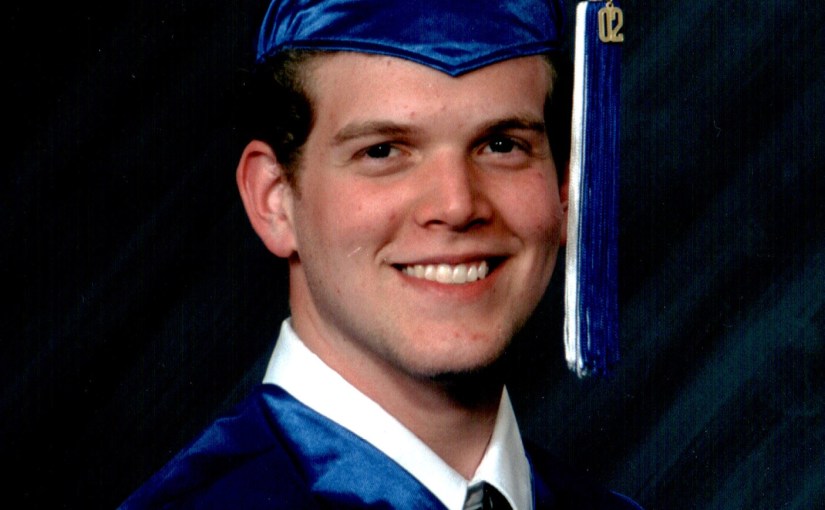
Father of Joshua Blake Hargrove
2025
SECTION ONE
A Father’s Epilogue
In my son’s voice, I found my own calling
I never expected to finish my son’s story.
When Joshua died on June 22, 2002, I thought his words died with him. The pages he left behind—poems about spiritual warfare, fragments of a novel about a young man awakening to the battle between light and darkness—felt too sacred to touch, too painful to read. For years, I kept them in memory, the pages lost in time, unable to recall them, unable to forget.
But grief has a way of transforming. What began as a loss slowly became a legacy. What started as silence eventually demanded a voice.
Twenty-three years after Joshua’s passing, I finally opened that box again. I read his poems—really read them, not just skimmed through tears. I recalled the outline of his unfinished novel. I remembered the conversations we’d had about his vision: a story about ordinary teenagers fighting an extraordinary war, armed not with superpowers but with truth, prayer, and the kind of stubborn love that refuses to let go.
And I realized something that changed everything: Joshua’s story wasn’t just about fictional characters. It was about him. It was about the battle he was fighting in his own heart—the weight he carried, the whispers he heard, the darkness that sometimes felt like it would swallow him whole. His poetry reveals a young man who understood spiritual warfare not as metaphor but as daily reality. He knew the Accuser’s voice. He knew the temptation to give up. And he chose, again and again, to stand in the light.
The night he died, Joshua announced that he had been called to ministry. That declaration haunts me still—not as a tragedy of what might have been, but as a testimony of what was. Joshua was already in ministry. Every poem was a sermon. Every conversation with a struggling friend was pastoral care. Every moment he chose hope over despair was an act of worship.
So I decided to finish what he started. Not to put words in his mouth—I could never do that—but to carry forward the vision he left behind. To take the themes that burned in his heart and give them the story they deserved. To let Micah Thorne walk the path Joshua imagined, face the battles Joshua knew, and find the victory Joshua believed in.
This book is not a replacement for my son. Nothing could be. But it is, I hope, an echo of his voice—a way for his words to keep speaking long after his earthly life ended.
Joshua wrote: “What we do in life echoes in eternity.”
I believe that. I have to believe that. Because if it’s true, then Joshua’s life—brief and beautiful and broken and redeemed—is still resonating somewhere. Still mattering. Still fighting the good fight.
And now, through this story, maybe you can hear the echo too.
* * *
To those who read this book and recognize themselves in Micah—in his confusion, his pain, his awakening—I want you to know: you’re not alone. You’re not crazy. You’re not broken.
You’re waking up.
And there are others who have walked this path before you. Joshua was one of them. I am another. The war is real, but so is the Light. And the Light has already won.
All you have to do is stand in it.
With love and hope,
John Hargrove
Buna, Texas
2025
SECTION TWO
A Legacy Message About Joshua
For future generations who will carry his name
To my grandnephews and nieces, and their children, and all who come after:
You carry the blood of a warrior.
His name was Joshua Blake Hargrove. He was born on April 9, 1984, in Beaumont, Texas, and he died on June 22, 2002, in Buna—the small East Texas town where generations of your family have lived, worked, worshipped, and been buried. He was eighteen years old. He was my son. And he was one of the most remarkable people I have ever known.
Joshua was not remarkable in the way the world counts such things. He was never famous. He never made a fortune. He never held high office or won great awards. By the standards of achievement that our culture celebrates, his life might seem small—brief and unfinished, a story cut short before it could reach its climax.
But those standards are lies. And Joshua knew it.
What made Joshua remarkable was his depth. From a young age, he saw things others couldn’t see. He felt things others refused to feel. He asked questions most people spend their whole lives avoiding: Who am I? Why am I here? What happens when I die? Is there a God, and if so, what does He want from me?
He didn’t just ask these questions. He wrestled with them. He wrote about them—in poetry, in essays, in the fragments of stories he left behind. He studied the Bible not as a textbook but as a letter from someone who loved him. He prayed not as ritual but as conversation. He believed—truly believed—that there was a war being fought in the unseen places, and that every human soul was a battlefield.
And he chose to fight on the side of light.
* * *
Here is what I want you to know about your ancestor:
Joshua was kind. He noticed people who were hurting—the quiet ones, the invisible ones, the ones everyone else overlooked. He sat with them. He listened. He didn’t try to fix them. He just refused to let them be alone.
Joshua was creative. He played piano and saxophone. He practiced karate and danced ballet. He loved video games—especially ones with complex stories and moral choices. He drew pictures of knights standing tall with swords raised, and he wrote poetry that could break your heart and rebuild it in the same breath.
Joshua was honest. He wrote openly about his struggles—about feeling lost, about depression, about the darkness that sometimes felt like it would swallow him. He didn’t pretend to be perfect. He didn’t hide behind a mask. His words were raw and real and brave.
Joshua was faithful. He started a Bible study in our home that grew from five young people to fifteen in just two months. That Bible study continued for twenty years after his death. The seeds he planted kept growing long after he was gone.
And Joshua was called. The night before he died, he told us that he had decided to enter ministry. He never got to pursue that calling in the traditional sense. But looking back, I see now that he had already been answering it his whole life.
* * *
You will face your own battles. Every generation does. The enemy will whisper lies to you—that you’re worthless, that you’re alone, that God doesn’t care. He will try to isolate you, discourage you, and convince you to give up.
When that happens, remember Joshua.
Remember that you come from a line of people who fought the darkness and refused to be overcome. Remember that the war is real, but so is the victory. Remember that what you do in life echoes in eternity.
And remember that you are not alone.
Joshua is part of the great cloud of witnesses now. He’s cheering for you. He’s praying for you. And his legacy—carried through this book, through our family, through you—is still fighting the good fight.
Carry it well.
Your forefather in faith,
John Hargrove
SECTION THREE
Discussion Questions for Family Readers
For reflection, conversation, and passing the faith forward
These questions are designed for family discussions—across generations, around dinner tables, in quiet moments of reflection. There are no wrong answers. The goal is not to test knowledge but to open hearts.
On Spiritual Warfare
1. Micah begins to sense things others cannot see—the weight people carry, the whispers beneath their words. Have you ever felt that you could perceive something beneath the surface of a situation? How did you respond?
2. Eli teaches Micah that demons don’t need to possess you—they just need access through “splinters” of unhealed wounds and believed lies. What “splinters” might the enemy use to gain access in our family? How can we help each other heal them?
3. The story presents the Accuser’s primary strategy as doubt, isolation, and condemnation rather than dramatic possession. Do you recognize these tactics in your own life? In our culture?
4. Joshua’s poem “The Unknown War” describes humans as “angels from above, training for a fight.” What do you think about this perspective? How does it change how you see your daily challenges?
On Faith and Family
5. Eli tells Micah, “You’re not the light. You’re the lamp. Let Me shine.” What does this mean for how we should see ourselves and our role in the world?
6. The Hargrove family has roots going back through generations of faith, from Texas pioneers to colonial settlers to medieval nobility. How does knowing your ancestry affect your sense of identity and purpose?
7. Joshua started a Bible study that continued for twenty years after his death. What seeds are you planting now that might grow long after you’re gone?
8. “What we do in life echoes in eternity.” Do you believe this? How does this belief (or struggle with it) shape the way you make decisions?
On Pain and Presence
9. Joshua’s poetry reveals his own struggles with darkness and despair. Why do you think he was so honest about his pain? Is this kind of honesty valuable, or risky, or both?
10. Aislin is “the girl who couldn’t cry”—someone whose grief has hardened into armor. Do you know anyone like this? How can we “hold space” for people who are frozen in pain without trying to fix them?
11. Micah chooses to miss the party with Aislin to go find Cole at the bridge. He sacrifices what he wants for what someone else needs. Have you ever had to make a similar choice? How did it turn out?
12. Eli says, “Light always costs something.” What has carrying light cost you? Was it worth it?
On Legacy and Memory
13. Joshua died at eighteen, yet his impact continues decades later. What does this tell us about how legacy is measured?
14. If someone wrote a story inspired by your life, what themes would it contain? What battles would the protagonist face?
15. What is one thing you want your descendants—people you will never meet—to know about you?
16. How can our family continue to carry Joshua’s legacy forward? What practical steps can we take?
For Personal Reflection
17. Have you ever felt like you were “waking up” to something you couldn’t explain? What happened?
18. What is the hardest thing about standing in the light when darkness feels easier?
19. Who has been an “Eli” in your life—someone who saw what you were becoming before you did?
20. The story ends with the words: “The war never ends. But neither does the light.” What do you think this means for your life right now?
SECTION FOUR
Reflections on Spiritual Warfare
Based on a lifetime of experience
I am not a theologian. I am a pastor now, and I have served in ministry. I am simply a man who has lived long enough to know that the war is real.
When I was young, I thought spiritual warfare was a metaphor—a dramatic way of describing the struggle between good and evil that plays out in human hearts. I believed in God, in Jesus, in the Holy Spirit. But demons? Angels? An actual war being fought in unseen places? That seemed like superstition. The stuff of medieval imagination, not modern faith.
Then I watched my son wrestle with something I couldn’t name.
Joshua felt things deeply—too deeply, sometimes. He could walk into a room and sense the tension others worked hard to hide. He could sit with a friend and feel the weight of secrets never spoken. He wrote poems about darkness that didn’t read like teenage angst but like battlefield dispatches—reports from someone who was actually fighting.
At the time, I didn’t have the framework to understand what he was experiencing. Now, looking back through the lens of Scripture and decades of reflection, I believe Joshua was one of those rare souls who could perceive the spiritual realm more clearly than most. He saw the war. He felt it. And he chose to fight it—with words, with prayer, with the stubborn insistence that light was stronger than darkness.
* * *
Here is what I have learned about spiritual warfare over a lifetime:
The enemy is real, but his power is limited. Satan and his forces cannot create; they can only corrupt. They cannot compel, only tempt. They cannot destroy what is surrendered to God, only harass it. The enemy works through lies, accusations, and the exploitation of our wounds—but he has no authority over those who stand in Christ. When we resist, he flees. That’s not poetry. It’s a promise.
The battlefield is the mind. Most spiritual warfare doesn’t look like exorcisms in horror movies. It looks like a whisper that says “You’re worthless” and a choice about whether to believe it. It looks like an impulse toward despair, along with a decision about whether to follow it. It looks like doubt, isolation, and shame—the enemy’s favorite weapons. The battle is won or lost in the thoughts we entertain and the truths we declare.
Wounds are entry points. Every unhealed hurt, every unforgiven offense, every lie we’ve believed about ourselves—these become “splinters,” as Joshua’s story calls them. Places where the enemy can gain a foothold. Healing isn’t optional for spiritual warriors. It’s essential. We cannot fight effectively while carrying open wounds that the enemy can exploit.
Community is armor. The enemy loves to isolate. He whispers that no one understands, that we’re the only ones struggling, that we’ll be rejected if people know the truth. These are lies. We are designed for fellowship, for accountability, for the mutual bearing of burdens. A soldier who fights alone is a soldier who falls.
The victory is already won. This is the great mystery of Christian spiritual warfare: we fight for victory, not for victory. Christ has already defeated the enemy. The cross was the decisive battle. What we experience now is a desperate rearguard action by a conquered foe. He can still wound us, but he cannot win. The outcome is certain. We stand in a triumph that has already been accomplished.
* * *
I share these reflections not as an expert but as a fellow soldier. I have known seasons of doubt and seasons of faith. I have felt the darkness press close and watched the light break through. I have buried a son who understood these things better than I did at his age—and I have spent two decades learning from his legacy.
The war is real. But so is the Commander. So is the armor. So is the victory.
Stand firm.
SECTION FIVE
A Genealogy for Future Generations
Tracing the Hargrove line from Joshua back through the centuries
Joshua Blake Hargrove did not appear out of nowhere. He was the product of generations—a long line of pioneers, settlers, warriors, and believers whose faith and resilience shaped the young man he became. This genealogy traces his lineage through several major branches, connecting him to the soil of East Texas, the history of the American South, and even the royal courts of medieval Europe.
Understanding this heritage is not mere curiosity. It is a way of understanding ourselves. We are not isolated individuals floating in time. We are links in a chain that stretches back centuries and forward into futures we will never see. Joshua knew this. He was fascinated by his ancestry, and he saw in it a pattern of purpose—a calling that ran through generations.
Direct Lineage to Joshua Blake Hargrove
Joshua Blake Hargrove (1984–2002) — Son of John and Leisa Hargrove. Born in Beaumont, Texas. Raised in Buna. Poet, theologian, warrior of light.
John Edwin Hargrove (b. 1958) — Son of Robert and Lavee Hargrove. Born in Kirbyville, Texas. Carried forward the family legacy in Jasper County.
Robert Edwin Hargrove (1927–2013) — Son of James Gaius “Gay” Hargrove. Central figure in the Buna community. Man of faith and service.
James Gaius “Gay” Hargrove (1884–1964) — Son of Hardy Hargrove. Established the family’s influence in Buna, Texas.
Hardy Hargrove (1862–1932) — Son of Wiley Bradley Hargrove. Born in Buna, Jasper County, Texas. Married Clara Cochran.
Wiley Bradley Hargrove (1838–1888) — Born in Mississippi. Migrated to Texas. Married Nancy Richardson. Pioneer of the Texas Hargrove line.
Hardy Hargrove Sr. (1815–1856) — Born in Mississippi. Moved to Jasper County, Texas. Founded the family’s presence in East Texas.
The Richbourg Line
Through his maternal ancestry, Joshua connected to the Richbourg family—French Huguenots who fled religious persecution to build a new life in America.
George Truman Richbourg (1911–1983) — Continued the family’s Texas chapter in Buna.
Charles Benjamine Richbourg (1881–1947) — Raised family in Wood County, Texas.
Benjamin Rufus Richbourg (1833–1907) — Born in South Carolina. Moved to Texas after the Civil War.
Claudius Phillipe DeRichbourge — French Huguenot who emigrated from France to South Carolina in the early 1700s. Founder of the American Richbourg line.
Connections to European Nobility
Through the Richardson, Richbourg, and allied lines, Joshua’s ancestry traces to medieval European nobility—including Welsh royalty and even the Plantagenet dynasty of England. While these connections are distant, they speak to a heritage of leadership, faith, and resilience that echoed through the centuries.
Rhodri Mawr (Rhodri the Great) (c. 820–878) — King of Gwynedd, unifier of much of Wales. Ancestor through the Richardson line.
Llywelyn Fawr (Llywelyn the Great) (c. 1173–1240) — Prince of Gwynedd, greatest of the Welsh rulers.
Plantagenet connections — Through various intermarriages, the family connects to the De Mowbray, Fitzalan, and Howard families, which in turn connect to the royal house of England.
The Cochran and Denman Lines
Additional branches contributed to Joshua’s heritage:
Clara Cochran (1868–1940) — Married Hardy Hargrove. Daughter of Adam E. Cochran, early Texas settler.
Mary Melvina Denman (1887–1981) — Connected the Denman family’s Mississippi and Texas roots to the Hargrove line.
The Lineage Path
Tracing from ancient times to Joshua:
Caractacus (Caradog) — Leader of the Catuvellauni and Silures, resisted Roman invasion
Cunedda Wledig — Founder of the Kingdom of Gwynedd
Rhodri Mawr — Welsh unifier
Integration with Anglo-Norman and Plantagenet nobility
Richbourg family — Huguenot settlers in America
Richardson family — Colonial settlers in Georgia, Mississippi, and Texas
Nancy Richardson + Wiley Bradley Hargrove
Robert Edwin Hargrove → John Hargrove → Joshua Blake Hargrove
* * *
This genealogy is not complete—no genealogy ever is. It is a beginning, an invitation for future generations to continue the research, to add new branches, and to remember that they stand on the shoulders of those who came before.
Joshua saw himself as part of this great chain. In his imagination, he was the “Celestial Knight”—the inheritor of a noble bloodline, called to carry forward a legacy of faith and courage. It wasn’t vanity. It was vision. He understood that his life had meaning because it was connected to something larger than himself.
May you understand the same.
SECTION SIX
Dedication and Remembrance
In Loving Memory of
JOSHUA BLAKE HARGROVE
April 9, 1984 – June 22, 2002
Poet. Warrior. Son of Light.
This book is dedicated to everyone who loved Joshua and was loved by him:
To Leisa, his mother, who held him before anyone else and carries him still.
To his cousin Eli, born one day before Joshua—more brother than cousin, more twin than relative.
To Jonah, Pierre, and Chris Bob—his closest friends, who walked with him through the best and hardest years.
To the five friends who attended Chrysalis Flight #12 in his place, carrying his spirit into that sacred weekend.
To every young person who attended the Bible study Joshua started, and to those who continued it for twenty years after his passing.
To the teachers who recognized his gifts and the coaches who shaped his discipline.
To the church that nurtured his faith and the community that mourned his loss.
And to every reader who picks up this book and hears, in its pages, the echo of a voice that still speaks.
* * *
Joshua never got to finish his story. He never got to see it in print, to hold it in his hands, to know that his words would reach people he never met.
But I believe he knows now.
I believe that somewhere beyond the curtain of this life, in the place where faith becomes sight and hope becomes home, Joshua is watching. I believe he is cheering for every person who reads these pages and finds strength. I believe he is praying for every soul who recognizes themselves in Micah’s confusion and Aislin’s grief and Cole’s desperation.
And I believe he is at peace—not because his work is done, but because he has joined the great cloud of witnesses who surround us, encourage us, and remind us that the race can be finished.
* * *
If you take nothing else from this book, take this:
You are not alone. You are not broken. You are not worthless.
You are waking up.
And the Light that shone through Joshua’s brief life is the same Light that wants to shine through yours.
Let it.
We are one and the same, you and I,
And though death may take us we will never die,
For I’m only a soul, like yourself,
Just another book on the shelf.
And though losses I will have, I am surely certain,
That on life’s stage, beyond the curtain,
My destiny will be found with great discernity,
For what we do in life echoes in eternity.
— Joshua Blake Hargrove
“Alive in Christ”
January 9, 2001
THE END
 John Hargrove Seeking Truth and Reality