
Beholding the Lamb A Learning Resource for John 1:19-51 December 21 Deeper Dive Session

This resource is designed to help you prepare for a session that addresses real questions while keeping Christ at the center. The December 14 discussion surfaced important concerns—some spoken, some carried quietly.
This document names those concerns, explains how John’s Gospel responds to them, and equips you to lead with pastoral confidence rather than defensive anxiety.
The goal is not to answer every question or win every argument. The goal is to create space where people can encounter Jesus as He reveals Himself in this passage—and where faith can grow without shame or pressure.
1. What the Text Is Actually Doing
John’s Purpose in This Passage
John 1:19–51 is not primarily a doctrinal treatise or a prophetic timeline. It is an introduction to Jesus through testimony, encounter, and invitation. John the Gospel writer is showing us how people come to recognize who Jesus is—not through argument or explanation, but through witness and presence.
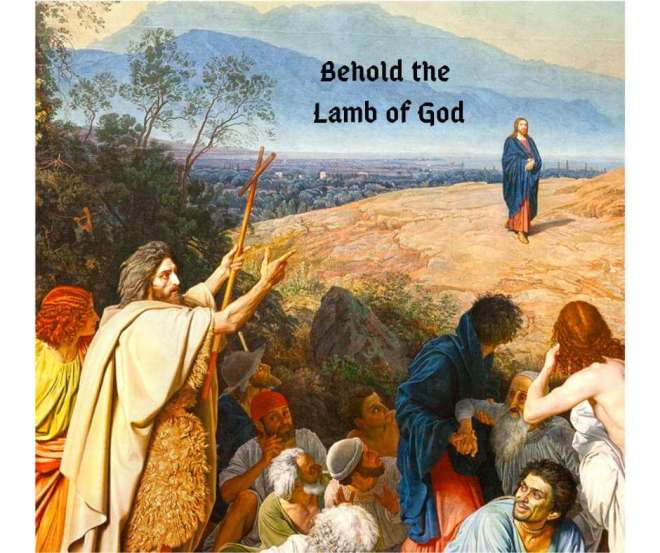
The passage moves through a series of encounters: religious authorities questioning John the Baptist, John pointing to Jesus as the Lamb of God, disciples following Jesus and staying with Him, Andrew bringing Peter, Philip inviting Nathanael. Each encounter builds on the previous one. Each involves testimony passed from person to person. Each results in deeper recognition.
This is not accidental. John is teaching us something about how faith works. People do not come to Jesus by mastering theology first. They come through invitation, through witness, through encounter. Understanding deepens afterward.
Identity Precedes Explanation
Notice what Jesus does not do in this passage. He does not explain the sacrificial system before John calls Him the Lamb of God. He does not lecture on messianic prophecy before Nathanael confesses Him as the Son of God and King of Israel. He does not provide a systematic theology before the disciples follow Him.
Instead, Jesus reveals Himself. He allows people to encounter Him. He speaks words that resonate with what they are seeking. He demonstrates knowledge that could only come from God. And He invites: Come and see.
“What are you seeking?” — John 1:38

This question is not a test. It is an invitation to honesty. Jesus asks what they are looking for before He tells them what He offers. This pattern repeats throughout John’s Gospel. Jesus meets people where they are, not where they should be.
Testimony, Invitation, Encounter
The structure of the passage reveals three movements that shape belief:
Testimony: John the Baptist bears witness. He does not explain everything; he points. He says, ‘Behold, the Lamb of God.’ He identifies Jesus publicly and repeatedly. His role is not to convince through argument but to direct attention.
Invitation: When disciples begin to follow, Jesus invites them to come and see. When Philip finds Nathanael, he does not argue; he invites. When Nathanael objects (‘Can anything good come from Nazareth?’), Philip does not debate. He says, ‘Come and see.’
Encounter: Belief deepens through presence. The disciples stay with Jesus. Jesus knows Nathanael before he speaks. Recognition happens not through information transfer but through relational encounter.

This is how John’s Gospel teaches us how to work faith. It is relational before it is intellectual. It is responsive before it is comprehensive.
2. The Questions People Ask Out Loud
Several questions surfaced explicitly in the December 14 session. These deserve direct, pastoral, and historically grounded responses—but responses that point back to the text rather than away from it.
Who is Jesus claiming to be, and why does this not match common Messianic expectations?
The first-century Jewish world expected a Messiah who would restore Israel’s political independence, defeat Rome, and establish a visible kingdom. This expectation was rooted in real Scripture—promises of a Davidic king, a throne, a reign of justice. The expectation was not invented; it was incomplete.
When John the Baptist calls Jesus the ‘Lamb of God who takes away the sin of the world,’ he is not reinforcing the warrior-king expectation. He is reframing it entirely. A lamb does not conquer through force. A lamb is sacrificed. The sin of the world is not political oppression; it is the deeper corruption that no army can address.
This reframing continues throughout the passage. Jesus does not arrive with armies or announce a political program. He gathers a few followers. He asks questions. He demonstrates divine knowledge. He promises ‘greater things’—but the greater things are heavenly revelation, not military victory.
“You will see heaven opened, and the angels of God ascending and descending on the Son of Man.” — John 1:51

Jesus is claiming to be the meeting place between heaven and earth—the ladder Jacob saw in his dream, now embodied. This is a cosmic claim, not a political one. It redefines what ‘Messiah’ means by expanding it beyond what anyone expected.
The text itself answers the identity question: Jesus is more than a political deliverer. He is the revelation of God, the sacrifice for sin, the bridge between heaven and earth.
What does ‘Lamb of God’ actually mean?
This title carries layers of meaning rooted in Israel’s story:
The Passover lamb (Exodus 12) was sacrificed so that Israel could be delivered from Egypt. Its blood on the doorposts marked the households that would be spared from judgment. This imagery connects Jesus to deliverance through sacrifice.
The daily temple sacrifices included lambs offered morning and evening for the sins of the people. This imagery connects Jesus to ongoing atonement and the removal of guilt.
Isaiah 53 describes a servant who is ‘led like a lamb to the slaughter’ and who ‘bore the sin of many.’ This imagery connects Jesus to substitutionary suffering—one who takes the place of others.
John the Baptist does not explain all of this when he speaks. He simply points and names. But the title carries all of this weight. For Jewish listeners, ‘Lamb of God’ would evoke sacrifice, deliverance, and covenant. For the reader of John’s Gospel, it anticipates the cross.
The title ‘Lamb of God’ means that Jesus came not to kill enemies but to die for sinners. This redefines power, victory, and salvation.
Can Scripture be trusted given different canons, Bible versions, and texts like Enoch?
This question often arises from genuine curiosity mixed with anxiety. People encounter claims online—that the Bible was assembled by councils with political agendas, that books were ‘removed,’ that other canons contain hidden truths. These claims are usually exaggerated or historically inaccurate, but they can feel destabilizing.
Here is what can be said clearly and calmly:
The 27 books of the New Testament were recognized—not invented—by the early church. By the late second century, the core of the New Testament was already widely received and read in worship. The councils that later formalized the canon were confirming what churches had already been using, not selecting from a wide-open field of options.

Different Bible translations exist because translation is interpretation. Moving from ancient Hebrew and Greek into modern English requires choices about how to render words, idioms, and grammar. But these translations work from the same underlying manuscripts. The differences between the ESV, NIV, and CSB are differences of translation philosophy, not different source texts.
The Ethiopian Bible includes additional books, including 1 Enoch. This reflects the historical development of the Ethiopian Orthodox Church, which preserved texts that fell out of use elsewhere. These texts are historically interesting and sometimes quoted by New Testament authors (Jude briefly references Enoch). But their inclusion in one tradition does not mean they were ‘hidden’ from others. Different communities made different judgments about what belonged in Scripture.
The Book of Enoch was known in the ancient world. It was valued by some Jewish communities. It was not included in the Hebrew Scriptures that Jesus and the apostles used. When Jude quotes it, he is using a familiar reference—the way a modern preacher might quote a hymn or a poem—not declaring it to be Scripture.
Scripture’s reliability does not depend on uniformity across every tradition. It depends on whether the core witness to Christ has been faithfully preserved. It has.
How important are end-times interpretations, and are modern systems shaping how Scripture is read?
This is an honest and important question. The answer requires some historical perspective.
For the first eighteen centuries of church history, Christians expected Christ to return, believed in resurrection and judgment, and hoped for the renewal of all things. But they did not organize their faith around detailed prophetic timelines. The elaborate systems that many modern churches treat as essential—rapture sequences, tribulation periods, dispensational charts—are largely products of the 1830s and later.
This does not mean those systems are necessarily wrong. It means they are recent. Christians followed Jesus faithfully for centuries without them. The early church fathers emphasized endurance, faithfulness, and hope—not prediction or escape.
John’s Gospel in particular resists timeline-driven reading. John does not organize his material around prophetic sequences. He organizes it around Jesus’ identity and the response of faith. The ‘greater things’ Jesus promises in John 1:51 are not a prophetic calendar; they are the ongoing revelation of who Jesus is.
End-times hope is meant to sustain faithfulness, not replace it. When eschatology becomes the center, Christ gets displaced. John keeps Christ at the center.
3. The Questions People Carry Quietly
Not every question gets spoken. Some concerns are carried silently because they feel too vulnerable to voice. Recognizing these unspoken anxieties helps you teach with pastoral sensitivity.
Fear that something essential has been hidden or lost
Some participants may worry that the Bible they hold is incomplete—that councils or translators removed something crucial, or that other traditions have access to truths they lack. This fear is often amplified by internet content that presents itself as ‘exposing’ hidden knowledge.
The pastoral response is not to mock or dismiss but to ground. The witness to Christ in the Gospels, the letters of Paul, the testimony of the early church—this witness is consistent, public, and accessible. There is no secret Christianity available only to initiates. The gospel has always been proclaimed openly. The Scriptures have always been read in community. What we have is what the church has always had.
John’s Gospel itself addresses this. Jesus says, ‘I have spoken openly to the world… I have said nothing in secret’ (John 18:20). The pattern of secrecy and hidden knowledge belongs to other religious movements, not to the way of Jesus.
Fear of trusting Scripture without mastering every argument
Some participants feel pressure to understand every scholarly debate, every textual variant, every historical controversy before they can trust the Bible. This pressure is exhausting and often paralyzing.
The pastoral response is to normalize trust that precedes mastery. The disciples in John 1 did not understand everything when they followed Jesus. They followed first. Understanding came later. This is not anti-intellectual; it is honest about how faith actually works.
You do not need to resolve every question before you can trust Christ. You can trust Him while questions remain open. In fact, this is how most mature believers live. They have learned to hold questions and confidence together.
Pressure to perform knowledge in class discussion
In a mixed group with vocal participants and quieter ones, some people feel pressure to contribute visibly—to demonstrate that they are keeping up, that they belong. This pressure can make Bible study feel like a test rather than a gift.
The pastoral response is to honor silence. Silence in a Bible study is not failure. It can be reflection, conviction, or awe. Not everyone processes verbally. Not everyone is ready to speak. Creating space for quiet participation—through written reflection, through unhurried pauses, through questions that do not require immediate answers—allows the whole room to engage.
You might say something like: ‘Some of what we’re exploring today may sit with you quietly. That’s fine. You don’t have to have words for it yet.’
Confusion about whether faith requires certainty before following
Some participants believe—perhaps unconsciously—that they must achieve certainty before they can truly follow Jesus. They feel stuck because certainty has not arrived. They wonder if their doubts disqualify them.
John 1 directly addresses this. The disciples follow before they understand. Nathanael’s skepticism (‘Can anything good come from Nazareth?’) does not prevent him from encountering Jesus. Philip’s response is not ‘Let me prove it to you.’ It is ‘Come and see.’
Faith in John’s Gospel is not the absence of questions. It is the willingness to come, to stay, to see. Certainty is not the prerequisite; encounter is.
Uncertainty about how much theological precision is actually required
Some participants wonder: How much do I need to know? How precise must my theology be? What if I believe the wrong thing about a secondary issue?
The pastoral response is to distinguish primary from secondary. The primary confession—that Jesus is the Christ, the Son of God—is what John’s Gospel is written to produce (John 20:31). Secondary questions—about church governance, end-times sequences, worship styles—matter but do not determine salvation.
You might say: ‘The question John cares about is not whether you have every doctrine perfectly sorted. The question is whether you are coming to Jesus and trusting Him. That’s where we start. Everything else builds from there.’
4. Why Jesus Resists Our Systems
One of the most important things to communicate in this session is that Jesus consistently resists being captured by human systems—whether those systems are religious, political, or theological. This is not a failure of clarity on His part. It is intentional.
The Pattern in John 1
Watch what happens in this passage. The religious authorities send delegates to John the Baptist with a clear set of categories: Are you the Messiah? Elijah? The Prophet? They have a system. They want to place John in a box they already understand.
John refuses every category. ‘I am not the Christ. I am not Elijah. I am not the Prophet.’ He defines himself only as ‘a voice’—someone pointing beyond himself. The authorities’ system cannot contain what is happening.
Then Jesus appears, and the same pattern continues. He does not fit the expected Messiah template. He is a Lamb, not a lion. He gathers fishermen, not soldiers. He speaks of heaven opening, not Rome falling. The categories people brought are not wrong—they are incomplete. Jesus is more than any system can hold.
Why This Matters for Canon and Translation Questions
When people worry about different canons or Bible versions, they are often looking for a system that provides absolute certainty—a guarantee that removes all risk from faith. But the way God preserved Scripture does not work that way.
There is no single, pristine manuscript that descended from heaven. There are thousands of manuscripts, carefully copied and compared, that together witness to the same message. There is no single translation that captures every nuance perfectly. There are many faithful translations that render the same truths in different ways.
This is not a problem to be solved. It is the nature of how God works through human instruments. The consistency of the witness across manuscripts and translations is remarkable—not because humans are infallible, but because God is faithful.
The invitation is to trust the witness, not to master the system.
Why This Matters for Eschatology
End-times systems often promise certainty: If you understand the chart, you will know what is coming and when. This promise is appealing because it offers control in an uncertain world.
But Jesus explicitly resisted this. ‘It is not for you to know times or seasons that the Father has fixed by his own authority’ (Acts 1:7). The disciples wanted a timeline. Jesus gave them a mission: ‘You will be my witnesses.’
John’s Gospel points in the same direction. The ‘greater things’ Jesus promises are not calendar events but ongoing revelation. The hope John offers is not escape from history but eternal life that begins now and extends forever.
Systems that promise to decode the future often distract from the present call to faithfulness. Jesus offers something different: Himself.
What Jesus Offers Instead of Systems
Instead of a system that provides certainty, Jesus offers Himself. Instead of a timeline that predicts the future, He offers presence that sustains the present. Instead of categories that contain Him, He provides an encounter that transforms.
This is what John 1:19–51 models. The disciples do not receive a curriculum. They receive an invitation: Come and see. They do not get answers first. They get Jesus first. The answers come as follows.
This is the posture John’s Gospel invites: not mastery, but trust. Not control, but encounter. Not systems, but relationships.
5. Pastoral Re-Centering
The goal of this session is not to win arguments or close every question. The goal is to re-center the class on Jesus as He reveals Himself in John 1:19-51 and to create space for faith to grow without shame or pressure.
Come and See as a Valid Response
Philip’s invitation to Nathanael—’ Come and see’—is not a failure of apologetics. It is a model of how faith spreads. Philip does not have all the answers. He has encountered someone, and he invites others to experience Him too.
This is what you are offering in this session. You are not claiming to resolve every debate about canon, translation, or eschatology. You are inviting the class to look at Jesus as John presents Him. You are saying, in effect, ‘Come and see.’
This is enough. It is what the first disciples received. It is what produced faith then. It can produce faith now.
Incomplete Understanding Is Normal
The disciples in John 1 followed Jesus without understanding who He entirely was. Peter did not know he would deny Jesus. Nathanael did not think he would witness the crucifixion. They followed with incomplete knowledge, incomplete faith, incomplete commitment.
Jesus accepted them anyway. He did not wait for them to achieve theological precision. He did not test them before allowing them to stay. He invited them, and they came.
This is what you can offer the class: permission to follow with an incomplete understanding. Permission to trust before every question is resolved. Permission to be in process.
You might say: ‘You do not need to have everything figured out to be here. Jesus invited the first disciples before they understood who He was. He invites you the same way.’
Trust in Christ and Scripture
Confidence in the Bible does not require mastering every scholarly argument. It requires recognizing that Scripture consistently points to Christ, and that Christ is trustworthy.
The Bible is not a puzzle to be solved or a code to be cracked. It is a witness to be received. It tells us who God is, what God has done, and how we are invited to respond. When we read it with that posture—seeking Christ rather than seeking control—it does what it was written to do.
John says explicitly: ‘These are written so that you may believe that Jesus is the Christ, the Son of God, and that by believing you may have life in his name’ (John 20:31). That is the purpose. That is the invitation.
Inviting Reflection, Not Debate
As you close the session, invite reflection rather than discussion.
What expectations about Jesus might I need to release?
Where is God inviting me to trust before I fully understand?
What would it look like this week to ‘come and see’?
Closing
Have calm confidence in the One who invites.
Jesus is who He says He is. Scripture is trustworthy. Questions are welcome, but they do not have the final word. Jesus does.
That is enough to move forward. That is enough to study John together. That is enough to follow.
—
A Closing Prayer
Lord Jesus, You are the Lamb of God who takes away the sin of the world.
You invited the first disciples to come and see.
You invite us the same way.
Meet us in our questions. Steady us in our doubts.
Help us to see You more clearly than we see our own confusion.
Give us the courage to follow before we fully understand.
And keep our eyes fixed on You—the author and finisher of our faith.
Amen.
 John Hargrove Seeking Truth and Reality