Overview
John 2 is a pivot. In chapter 1, Jesus was introduced through John the Baptist’s witness, and the first disciples gathered around Him with incomplete understanding. They called Him “Messiah” and “Son of God,” but their understanding was still forming.
In chapter 2, Jesus steps into action. He performs His first sign. He confronts the temple authorities. He speaks in riddles. And the passage ends with a crucial observation: many people “believed” in His name when they saw the signs He performed, yet Jesus “did not commit himself to them, for he knew all people” (John 2:23-24).
This is the central tension of John 2: What kind of belief is being described? And why does Jesus withhold trust from those who “believe”?
The answer matters not only for understanding Jesus’ identity, but for understanding what it means to believe at all. It also matters for how we think about Scripture, authority, and the nature of faith in a world where multiple claims compete for our allegiance.

Part One: The Wedding at Cana (John 2:1-11)
The Text: What John Explicitly Says
John 2:1-11 reads:
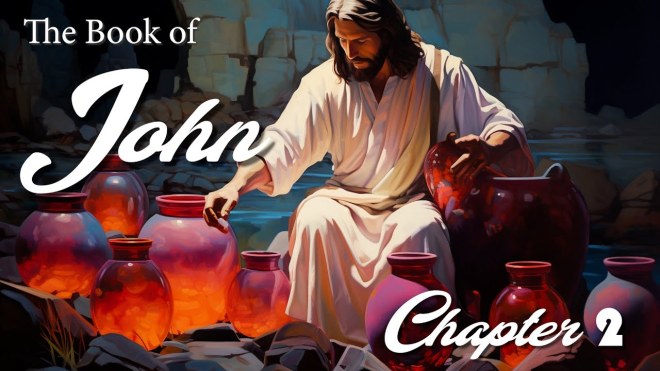
On the third day a wedding took place at Cana in Galilee. Jesus’ mother was there, and Jesus and his disciples had also been invited to the wedding. When the wine was gone, Jesus’ mother said to him, “They have no wine.” “Woman, why do you involve me?” Jesus replied. “My hour has not yet come.” His mother said to the servants, “Do whatever he tells you.” Nearby stood six stone jars, the kind used by the Jews for ceremonial washing, each holding from twenty to thirty gallons. Jesus said to the servants, “Fill the jars with water.” So they filled them to the brim. Then he told them, “Now draw some out and take it to the master of the banquet.” They did so, and the master of the banquet tasted the water that had been turned into wine. He did not realize where it had come from, though the servants who had drawn the water knew. Then he called the bridegroom aside and said, “Everyone brings out the choice wine first and then the cheaper wine after the guests have had too much to drink; but you have kept the best till now.” This, the first of his miraculous signs, Jesus performed at Cana in Galilee. He thus revealed his glory, and his disciples believed in him.
Key Observations:
- The Setting: A wedding feast at Cana in Galilee
- The Problem: Wine ran out—a social shame for the bridegroom
- The Initiative: Mary approached Jesus
- The Resistance: Jesus said His “hour has not yet come”
- The Obedience: Mary told the servants to do whatever Jesus said
- The Material: Six stone jars used for Jewish ceremonial washing
- The Transformation: Water became wine—better quality wine, at that
- The Result: Disciples’ belief deepened; the miracle was hidden from the banquet master; only the servants knew the source
- The Framework: John labels this the “first of his miraculous signs” and states that through it, Jesus “revealed his glory”
Historical and Cultural Context: The Significance of Water, Wine, and Ceremony
Jewish Ceremonial Washing and Purification
The six stone jars were not empty decorations. They were essential to Jewish ritual life in the first century.
Why stone? According to Jewish law (derived from Levitical purity codes), stone could not become unclean the way pottery could. If you wanted to store water for purification purposes, you used stone jars. Ceramic jars could become contaminated and render the water unusable for ritual washing.
This detail is theologically significant. John is describing jars designed to preserve ritual purity—tools of a system meant to keep people clean before God. Jesus fills these jars and transforms their contents into wine.
What does this mean? It’s not an accidental detail. John is pointing to a transformation within the Jewish purification system itself. But we need to hold this lightly—John doesn’t explain the significance directly. He shows us the action and lets it work on us.
Wine in Jewish Tradition
Wine in Jewish culture was not primarily about festivity, though celebration mattered. Wine was:
- Covenantal: Wine sealed covenants and marked sacred moments
- Eschatological: Wine was associated with the future kingdom—the Messianic age was imagined as a time of abundance, joy, and the finest wine
- Ritual: Wine was used in Temple worship and Passover observance
When Jesus provides wine—and not just wine, but the best wine—He is making an implicit claim about the kingdom of God. The abundance He offers exceeds what the old system could provide.
The Social Context of Wedding Shame
Running out of wine at a wedding was not a minor inconvenience. In first-century Mediterranean culture, hospitality was sacred. The bridegroom’s failure to provide adequate wine for the entire celebration would have been humiliating—a mark against his honor and his family’s standing.
Jesus’ intervention was not merely a miracle of power. It was an act of restoration. He prevented public shame. He honored the host. He gave joy to the celebration.
For people rebuilding their lives and their sense of dignity, this detail is important: Jesus cares about human shame and honor. He intervenes—not ostentatiously, but practically—to prevent humiliation.
Theological Significance: What the Sign Reveals
“Revealed His Glory”
John writes that through this sign, Jesus “revealed his glory.” This phrase—doxa in Greek—means more than “showed Himself off.” Glory is the visible manifestation of who someone is. When the Bible speaks of God’s glory, it means the tangible revelation of God’s character, power, and presence.
Jesus revealed His glory by:
- Responding to need (His mother’s concern about the wine)
- Acting with creative power (transforming the basic substance)
- Providing abundance (not just wine, but wine so good the master marveled)
- Acting with humility (no announcements, no seeking credit, the servants alone knew the source)
This is crucial. Jesus does not demand recognition. The banquet master never learns the source of the wine. The transformation happened in jars meant for washing—items no one would think to draw from during a celebration. The servants knew, but they kept quiet. The disciples witnessed the connection.
What does this teach us about belief? Jesus is not seeking the kind of belief that depends on public spectacle or mandatory acknowledgment. The disciples deepened their faith through what they saw and understood. The master of ceremonies experienced goodness without knowing its source. Both experiences are real—but one is chosen trust, the other is unconscious blessing.
Signs and the Development of Belief
John 2:11 says the disciples “believed in him” after witnessing this sign. But this is not the disciples’ first encounter with Jesus. In John 1, they were already following Him, already calling Him Messiah.
What changed? The sign deepened their belief. It moved them from intellectual recognition (“You are the Messiah”) to experienced trust (“We have seen what He can do”).
This distinction matters deeply for understanding how faith grows:
- Information can be received secondhand. Someone tells you Jesus is the Messiah, and you may assent intellectually.
- Encounter requires presence. You witness something that changes how you see the world.
- Trust requires vulnerable obedience. Like Mary telling the servants, “Do whatever he tells you”—before you know the outcome.
The wedding at Cana invites us into each of these movements.
Mary’s Role: Obedience Before Understanding
Mary’s statement—”Do whatever he tells you”—is striking. She does not explain what will happen. She does not assure the servants that Jesus will fix the problem. She simply directs them toward obedience.
What did Mary know? The text does not say Mary knew Jesus would turn water into wine. His response—”Woman, why do you involve me? My hour has not yet come”—suggests that even He was signaling hesitation. Yet Mary proceeded as though she knew He would act.
This is the posture John repeatedly emphasizes: Trust precedes understanding. Obedience comes before you see the outcome.
For people in recovery, in crisis, or rebuilding lives from trauma, this is both comforting and challenging. Mary models faith that says, “I don’t know what will happen, but I trust the direction.” She does not demand an explanation before acting.
Discussion Questions for Section One
- Observation: What details in the Cana story does John emphasize, and which does he leave out? (For example: the bride and bridegroom are barely mentioned; we don’t hear Jesus explain what He’s doing.)
- Interpretation: Why might John describe the jars as “the kind used by the Jews for ceremonial washing”? What is he suggesting about the relationship between Jesus and Jewish ritual practice?
- Interpretation: Mary tells the servants, “Do whatever he tells you” without knowing what Jesus will do. What does this teach us about the nature of faith? Can you think of times in your own experience when trust had to come before understanding?
- Personal: The banquet master never learns the source of the wine. He experiences goodness without knowing its origin. Does faith always require you to know and acknowledge the source of blessing? What’s the difference between receiving something good and trusting the giver?
- Theological: John says this sign “revealed his glory.” What aspects of Jesus’ character and power does this sign make visible?
Part Two: Authority, Cleansing, and the Temple (John 2:12-22)
The Text: What John Explicitly Says
John 2:12-22 reads:
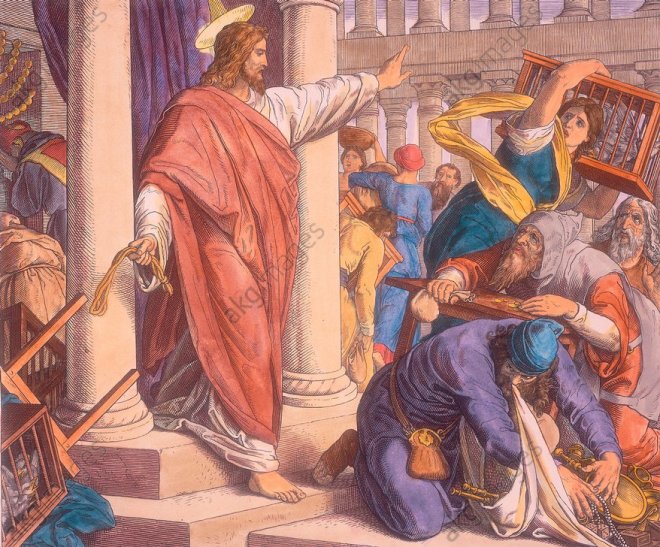
After this he went down to Capernaum with his mother and brothers and his disciples. There they stayed for a few days. When it was almost time for the Jewish Passover, Jesus went up to Jerusalem. In the temple courts he found people selling cattle, sheep and doves, and others sitting at tables exchanging money. So he made a whip out of cords, and drove all from the temple courts, both sheep and cattle; he scattered the coins of the money changers and overturned their tables. To those who sold doves he said, “Get these out of here! Stop turning my Father’s house into a market!” His disciples remembered that it is written: “Zeal for your house will consume me.”
Then the Jews [i.e., Jewish leaders] demanded of him, “What sign can you show us to prove your authority for doing all this?” Jesus answered, “Destroy this temple, and I will raise it again in three days.” The Jews replied, “It has taken forty-six years to build this temple, and you are going to raise it in three days?” But the temple he had spoken of was his body. After he was raised from the dead, his disciples remembered what he had said. Then they believed the Scripture and the word that Jesus had spoken.
Key Observations:
- The Setting: The Jerusalem temple during Passover—the holiest time, the most crowded time
- The Action: Jesus physically disrupted commerce in the temple courts
- The Claim: He called the temple “my Father’s house” and condemned its transformation into a market
- The Memory: The disciples recalled Psalm 69:9—”Zeal for your house will consume me”
- The Demand: Temple authorities demanded a sign to prove His authority
- The Riddle: Jesus spoke of destroying and rebuilding the temple in three days
- The Misunderstanding: Leaders interpreted this literally; John explains it as referring to Jesus’ body
- The Delayed Understanding: Only after the resurrection did the disciples understand both the riddle and Scripture itself
Historical Context: Temple Economics, Pilgrimage, and First-Century Jewish Practice
Why the Temple Courts Needed Sacrificial Animals
The temple was not merely a place of prayer. It was the center of Jewish ritual sacrifice. According to Levitical law, certain offerings required:
- Cattle, sheep, and goats for the main sacrifices
- Doves for those who could not afford larger animals—especially women after childbirth, people with skin conditions, and the poor
Pilgrims arriving from across the Jewish world could not bring animals from home. Transportation alone would have been impractical and ritually risky—an animal could become unfit for sacrifice during travel.
So the system made sense: Merchants provided animals. Money changers converted foreign currency into Temple currency (regular money could not be used in the Temple). The whole operation facilitated access to worship.
The Problem Jesus Identified
Jesus did not object to the existence of the system. He objected to something deeper: that the system had become an end in itself rather than a means to encounter God.
The “market” had corrupted the purpose. The temple, meant to be a house of prayer for all nations, had become a place where profit mattered more than purity. Where economic transaction had replaced spiritual encounter.
How did this happen? The priests and merchants had created what seemed like a practical solution. But over time, the solution became the problem. The means became the obstacle to the end.
This pattern is worth recognizing: Systems designed to help people encounter God can, over time, become barriers to that encounter. Rules meant to preserve holiness can become legalistic obstacles. Institutions built to serve can become self-serving.
Jesus’ Action: Not Polite Correction
Matthew, Mark, and Luke also record this event (the “Synoptic Gospels”). John’s version emphasizes the violence of it—Jesus made a whip, drove out animals, scattered coins.
This was not a gentle suggestion. It was a dramatic disruption. Jesus was exercising authority in the holiest place, challenging the most powerful institution in Jewish life.
Why did He do this? Because the problem required more than words. You cannot gently suggest that an entire institutional system recalibrate its purpose. You must disrupt it. You must make the problem visible and undeniable.
Scripture and Authority: Jesus’ Use of Psalm 69
The disciples remembered Psalm 69:9: “Zeal for your house will consume me.”
This is theologically significant because:
- Jesus is claiming to fulfill Scripture. The psalmist speaks of consuming zeal for God’s house. The disciples recognize that Jesus is living out this Scripture.
- Jesus is identifying Himself with the psalmist’s passion. The passion in the psalm is for God’s honor and the purity of worship. Jesus embodies that passion.
- The disciples are doing hermeneutics. They are reading Scripture and recognizing how Jesus fulfills it. This is how first-century believers understood Scripture—not as a closed book of proof texts, but as a living narrative that finds its meaning in Christ.
Here’s where the earlier research on Scripture authority becomes crucial: In Jesus’ time, there was textual plurality. Different manuscript traditions existed. The Septuagint (Greek translation) and the Hebrew text sometimes differed. Yet this did not paralyze faith. Believers recognized Scripture’s core authority even amid textual variation.
Similarly, the disciples could quote and remember Scripture without having a physical Bible in hand. Memory and community transmission were primary. Written texts existed (in synagogues, among the learned), but they were not the only way Scripture lived.
This matters for modern churches: We sometimes assume that confidence in Scripture requires having a perfectly preserved, absolutely uniform text. But the first-century believers had neither. What they had was recognition that God’s Word was speaking through these texts, despite variations and interpretive differences.
Jesus did not wait for a standardized canon or perfect manuscript tradition before acting on His understanding of Scripture. He quoted, applied, and lived out Scripture with the textual pluralism of His time.
The Riddle of the Temple: Immediate Misunderstanding, Later Understanding
When Jesus said, “Destroy this temple, and I will raise it again in three days,” the Jewish leaders heard a literal claim about the physical building.
Why wouldn’t they understand it differently? The temple was under construction. Herod the Great had begun a renovation project around 19 BC, and work was still ongoing in Jesus’ time (and would continue until 63 AD). The building was a source of pride—a massive, magnificent structure. The idea that Jesus could rebuild it in three days was absurd.
But the disciples—who initially missed the point just as much as the leaders did—later understood: Jesus was speaking about His body, about resurrection.
This delayed understanding is crucial to John’s theology. Multiple times in John’s Gospel, Jesus says something that His followers do not understand in the moment, but later grasp after encountering the risen Jesus.
- John 2:22 says the disciples believed Scripture and Jesus’ word only after the resurrection
- John 12:16 describes similar delayed understanding
- John 13:7 has Jesus telling Peter, “You don’t understand now, but later you will”
What does this teach us? Full understanding of Jesus requires encountering the risen Christ. It is not available from information alone. The disciples had Jesus in front of them—the greatest possible proximity—and still could not grasp His deepest claims until after resurrection.
This is humbling. It suggests that faith is not primarily about intellectual mastery of doctrine. It is about trust in the Person, with understanding growing over time.
The Question of Authority
The Jewish leaders asked, “What sign can you show us to prove your authority for doing all this?”
This is a legitimate question. Jesus had just disrupted the temple—the center of Jewish religious authority. The priests and leaders had legitimate institutional power. By what authority did Jesus act?
Jesus’ answer was a riddle, not a direct proof. He did not say, “I have authority because I am the Messiah” or “Because God sent me.” He spoke in mystery: Destroy this temple, and I will rebuild it in three days.
Why respond with a riddle instead of a clear statement? Because faith cannot be coerced by proof. If Jesus had said plainly, “I am God’s son, and that’s why I have authority,” the leaders would have had to choose: believe or reject. A riddle invites interpretation. It requires the listener to work, to wonder, to come to their own understanding.
But it also protects against a kind of belief that is based on forced intellectual assent. A riddle respects the freedom of the listener.
Discussion Questions for Section Two
- Observation: What specifically does Jesus object to in the temple? Is it the existence of the commercial system, or something about how the system is functioning?
- Historical Context: Why would Passover pilgrims need to purchase sacrificial animals? How does understanding this help us see what Jesus is addressing?
- Interpretation: When the disciples remember Psalm 69:9 after witnessing Jesus’ action, what are they doing? How does this show how first-century believers engaged with Scripture?
- Interpretation: Jesus speaks about destroying and rebuilding the temple in three days. Why would He speak in a riddle rather than stating plainly what He meant? What does this tell us about how Jesus approaches belief?
- Theological: The disciples only understood Jesus’ temple saying after the resurrection. What does this suggest about the relationship between proximity to Jesus and understanding? Can you be physically near someone and still not grasp what they’re saying?
- Application: Are there ways that systems meant to help people (in church, in recovery programs, in institutions) can sometimes become obstacles to the very thing they’re designed to serve?
Part Three: Belief and the Human Heart (John 2:23-25)
The Text: What John Explicitly Says
John 2:23-25 reads:
Now while he was in Jerusalem at the Passover Festival, many people saw the signs he performed and believed in his name. But Jesus would not entrust himself to them, for he knew all people. He did not need anyone to testify about mankind, for he knew what was in each person.
Key Observations:
- Widespread Belief: Many people believed in Jesus’ name because of the signs
- Jesus’ Reserve: Despite this belief, Jesus “would not entrust himself to them”
- The Reason: Jesus’ knowledge of the human heart
- Jesus’ Self-Sufficiency: He needed no testimony or external validation about humanity
- Divine Omniscience: Jesus knew the interior condition of each person
What Is Being Described: Two Types of Belief
This passage draws a critical distinction. People believed in His name—they were convinced that He was the Messiah or at least a figure of great significance. Yet Jesus would not entrust Himself to them.
The Greek word pisteuō (believe) can mean:
- Intellectual assent: Agreement that something is true
- Trust: Reliance on a person or promise
- Commitment: Pledging oneself to a cause or person
The first type of belief is present in John 2:23. The second—trust and commitment—Jesus withheld.
This is the fundamental insight of John 2: Belief based on signs alone is incomplete.
Why Signs Alone Are Insufficient
Throughout John’s Gospel, the term sēmeion (sign) appears repeatedly. Jesus’ miracles are not mere wonders; they are signs—they point beyond themselves to meaning. The wedding at Cana revealed Jesus’ glory. The temple cleansing demonstrated His authority and concern for true worship.
But here’s the problem with sign-based belief:
Signs can be misinterpreted. They can appeal to self-interest. A crowd that sees a miraculous feeding might follow Jesus hoping for more free food, not because they recognize who He is. A crowd that sees a miraculous healing might want to be healed, not to submit their lives to the healer.
Jesus understood this. His knowledge of “what was in each person” meant He could see the motives behind the belief. He could perceive whether someone was following Him because they trusted His person, or because they wanted benefits from His power.
This applies beyond the first century: Sign-based belief—belief because God answered a prayer, healed an illness, or provided something you needed—can be genuine. But it can also be transactional. “I believe in God because my life got better” is different from “I trust God even if my life doesn’t get better.”
Jesus was not rejecting the people’s faith. He was refusing to stake His mission on it. He knew it was unstable.
The Knowledge of Hearts: Divine Omniscience
John 2:25 states that Jesus “did not need anyone to testify about mankind, for he knew what was in each person.”
This is a claim about divine knowledge. Jesus had direct insight into human interiority that no human being possesses. He could see past words to motives. Past behavior to character. Past professions of faith to actual allegiance.
This is both comforting and unsettling:
- Comforting because it means you cannot deceive God through performance or pretense. Your deepest self is known and (ultimately) loved.
- Unsettling because it means your hidden thoughts, secret doubts, and unexamined motives are visible.
For people in recovery or rebuilding faith, this matters: The God revealed in John is not fooled by your persona. He knows the difference between the person you present and the person you are. This means:
- You don’t have to perform for God
- You can be honest about doubt, fear, and incomplete faith
- God is not surprised by your struggles
- The invitation is to genuine relationship, not to maintained appearance
Connection to Scripture Understanding
Here’s where the broader project work on Scripture becomes relevant. In Part Two, we saw that even the disciples—present with Jesus, watching His actions, hearing His words—did not fully understand until after the resurrection. Their proximity did not guarantee comprehension.
Similarly, here in 2:23-25, we see that many believed, yet Jesus did not fully commit to them.
The lesson is this: Confidence in Scripture and trust in Jesus do not depend on perfect understanding or complete certainty.
The disciples had textual plurality, interpretive disagreement, and incomplete doctrine. Yet they believed in Jesus and trusted Scripture. They could say, “We don’t understand everything, but we trust Him.”
In our context: You do not need to have all questions answered before committing your life to Christ. You do not need perfect textual certainty or exhaustive theological clarity. What you need is honesty about what you do see and trust in the One you see it in.
The earliest believers had gaps in their knowledge. Gaps in their understanding of how the pieces fit together. Yet they believed. They staked their lives on Jesus.
Discussion Questions for Section Three
- Observation: John says people “believed in his name” but Jesus “would not entrust himself to them.” How is this possible? Can you believe in someone without that person trusting you?
- Interpretation: What is the difference between believing something to be true (that Jesus is the Messiah) and trusting someone (committing your allegiance to them)?
- Personal: Can you think of times when you believed something or believed in someone based on external signs or benefits, versus times when your belief ran deeper?
- Theological: Jesus knew “what was in each person.” What does this suggest about the nature of genuine faith? Does it mean you have to be spiritually mature or psychologically healthy to truly believe?
- Application: If Jesus did not fully commit to those who believed only because of signs, what kind of belief is He inviting? What does it look like to move from sign-based belief to trust-based belief?
Part Four: Synthesis – John 2 and the Nature of Belief, Authority, and Scripture
What John 2 Teaches Us About Belief
The chapter moves through three encounters:
- Cana: Jesus provides abundance and reveals His glory through a sign. The disciples believe; the crowds do not know the source.
- Temple: Jesus claims authority over the holiest place and speaks in riddles. The leaders demand a sign to validate His authority. The disciples later understand, after resurrection.
- Passover: Many believe because of signs, yet Jesus does not fully commit to them. His knowledge of human hearts governs His trust.
The arc is clear: Belief that depends on external validation, on signs, on proof, is incomplete. True belief is trust in the Person—even before full understanding. Trust in Jesus’ knowledge of who He is, even when you do not fully grasp it.
Authority Without Coercion
One of the most striking features of John 2 is that Jesus exercises authority without demanding acknowledgment.
At the wedding, the banquet master never learns where the wine came from. At the temple, Jesus disrupts the system, but He does not stay to enforce compliance. He speaks a riddle, not a command that must be obeyed.
Authority in John’s Gospel is not about forced submission. It is about the power to act according to who you are. Jesus has authority because He is the Son of God. He does not need the recognition of crowds to validate this. He does not need the endorsement of leaders.
This is radically different from earthly authority. Earthly authority requires acknowledgment. A king needs his authority recognized; without it, he is just a person making claims. But Jesus’ authority is ontological—it flows from who He is, not from who believes in Him.
This has implications for how we think about Scripture’s authority. Scripture’s authority does not depend on perfect manuscripts, universal acceptance, or complete understanding. Scripture is authoritative because it reliably conveys God’s Word, regardless of textual variations or interpretive differences. Our faith in Scripture’s authority can be solid even amid scholarly debate about details.
Understanding Delays Until Encounter with the Risen Jesus
A recurring pattern in John 2 is delayed understanding. The disciples did not grasp the temple saying until after resurrection. They did not fully believe Scripture in connection with Jesus until after Easter.
This suggests that complete understanding of Jesus requires more than information. It requires encounter. It requires the shock and transformation of resurrection. It requires being met by the risen Christ and having your whole framework recalibrated.
For modern believers: This should guard us against two errors:
- Intellectual pride: The assumption that enough studying, enough doctrinal clarity, enough theological education will give you complete understanding of Jesus. It won’t. Understanding requires encounter.
- Passive waiting: The assumption that you should wait for perfect clarity before committing. The disciples did not wait. They followed before they understood. They believed Scripture before they fully grasped how it connected to Jesus. Then encounter deepened understanding.
Comfort for Those Rebuilding Faith
For people who have experienced spiritual harm, betrayal by leaders, or disillusionment with institutions, John 2 offers something important:
- Jesus cares about human dignity and shame. The wedding story shows Him concerned with preventing humiliation, with providing joy. He is not primarily a judge; He is a restorer.
- Jesus has authority independent of institutional approval. He did not need the temple leadership’s endorsement to act in the temple. His authority did not derive from their validation. So your faith does not depend on whether church institutions are perfect. It depends on Jesus.
- Jesus knows your heart. He is not fooled by performance or persona. You can be honest with Him about doubt, anger, and disillusionment. You do not have to pretend to be more certain than you are.
- Understanding grows over time, in community. The disciples did not understand alone. They understood together, with each other, and with the risen Jesus. Recovery of faith happens in community, not in isolation.
Discussion Questions for Synthesis
- Big Picture: What is the difference between the kind of belief John describes at Cana (disciples believe when they see the sign) and the kind described at Passover (many believe because of signs, but Jesus does not commit to them)?
- Authority: What does it mean that Jesus exercised authority in the temple without demanding that people acknowledge His authority? How is this different from how power usually works?
- Scripture: Throughout John 2, John shows Jesus engaging with Scripture (Psalm 69) and Jewish religious practice (temple commerce, purification). How does this shape your understanding of Jesus’ relationship to Scripture and tradition?
- Understanding: The disciples did not understand the temple saying until after the resurrection. What does this tell us about what complete faith requires? Can you commit to Christ before you understand Him fully?
- Personal: Where in your own faith are you still waiting for complete understanding? Where are you being invited to trust before you fully comprehend?
Part Five: Modern Church and the Temple Principle
A Careful Examination: When Systems Become Obstacles
Jesus’ temple cleansing raises an uncomfortable question for modern churches: Are there ways that our systems, structures, and practices have become obstacles to genuine encounter with God?
This is not a question to answer quickly or polemically. It requires honest self-examination.
The Temple Problem, Restated
The temple merchants were not evil. The money changers were not con artists. The system served a purpose—it made sacrifice possible for pilgrims who arrived without animals. But over generations, the purpose had shifted. The system meant to enable worship had become the focus of attention.
How does this happen?
- Gradual drift: No one decides suddenly, “Let’s corrupt the temple.” Instead, small compromises accumulate. A merchant asks for a slightly higher price; leaders allow it. A convenience becomes normalized. A practice becomes tradition.
- Institutional self-protection: Once a system exists, it protects itself. Merchants depend on the income. Priests depend on the order. Challenging the system means challenging people’s livelihoods. So they defend it.
- Confusion of means and ends: The original purpose is forgotten. The system becomes the point. You come to church and participate in the institution, and if the institution is functioning smoothly, it feels like everything is working.
Where Modern Churches Might Examine Themselves
Examples of possible drift (without claiming judgment about any particular church):
- Consumerism: The church becomes a vendor of spiritual goods—inspiring music, compelling teaching, programs that meet needs. The institution becomes a business. Attendance is treated as market share. Leadership becomes a kind of performance. The focus shifts from encounter with God to consumer satisfaction.
- Professionalism: The church becomes managed by professionals. Laity is disempowered. Only ordained clergy or credentialed leaders can lead. Spiritual authority becomes institutionalized. People participate in a system run by experts rather than encountering God in community.
- Institutional survival: The church becomes focused on maintaining itself—keeping the building running, keeping attendance up, keeping the budget balanced. Energy goes into institutional health rather than spiritual transformation. The system becomes the point.
- Doctrinal performance: The church becomes a place where correct belief is performed. You must say the right things, believe the right doctrines, present yourself as having the right spiritual status. Doubt, questions, and honest struggle are marginalized. Authenticity is replaced by correctness.
- Power dynamics: The church becomes a place where power accumulates in leaders. Questioning is discouraged. Accountability is minimal. Leaders are protected. The system serves the leaders rather than the people.
None of these are unique to the modern church. The temple faced them. Medieval churches faced them. Reformation churches faced them. Every institution faces the risk of drift.
Safeguards: What John 2 Suggests
John does not offer a detailed program for church reform. But the temple story suggests some principles:
- Return to purpose: Constantly ask, “What is the actual purpose here?” For the temple, the purpose was encountering God and making offerings. For the church, the purpose is encountering Jesus and becoming His disciples. Do our practices serve that? Or have they become self-perpetuating?
- Question authority: The temple leadership defended the status quo. Jesus questioned it. Healthy institutions need people willing to ask hard questions about whether current practices serve the original purpose. This is not rebellion; it is fidelity.
- Protect the vulnerable: Jesus was concerned with those who were being harmed—in this case, the poor who needed doves for sacrifice but were being exploited by merchants. Healthy churches ask: Who is being marginalized? Who is being harmed? Who lacks voice?
- Expect resistance: When Jesus disrupted the temple, He faced resistance. If a church questions its practices, it will face resistance from those invested in the current system. Healthy questioning requires courage.
- Allow time for understanding: The disciples did not understand the temple saying immediately. Modern church change is also not immediate. People need time to process, to grieve, to adapt. Change requires pastoral care.
A Word of Caution
This examination should not become:
- Judgment of specific churches: Without intimate knowledge of a community’s context, it is easy to misread what is happening. What looks like “institutional drift” from outside might be faithful stewardship from inside. Humility is required.
- Cynicism about institutions: Institutions are not inherently corrupt. They are human structures, and they face real challenges. The critique is not “institutions are bad,” but “institutions require constant examination to remain faithful.”
- Excuse for spiritual isolation: Some people use criticism of churches as justification for not participating in community. Jesus was deeply engaged with the temple, even as He critiqued it. Belonging to a church, even an imperfect one, is part of Christian discipleship.
Discussion Questions for Modern Application
- Discernment: In your own church experience, where have you seen systems that originally served a good purpose? Have you noticed any drift in how those systems function?
- Honesty: What makes it difficult to question institutional practices? What are the costs of asking hard questions? What are the costs of not asking them?
- Authority: How does your church structure authority? Who has voice? Who is protected from accountability? How does this compare to what you see in John 2?
- Purpose: What would it look like for your church to regularly examine itself against its stated purpose? How often does this happen? What would change if it happened more intentionally?
- Personal: How do you personally navigate between commitment to a faith community and honest critique of that community? Is it possible to do both?
Conclusion: Beholding in John 2
John 2 shows Jesus as:
- Abundantly generous: Providing not just wine, but the best wine
- Boldly authoritative: Claiming authority over the sacred center without needing validation
- Humbly hidden: Allowing the banquet master to receive good without knowing its source; allowing the disciples to understand only over time
- Deeply knowing: Understanding what is in human hearts, not fooled by external profession
The invitation of John 2 is to move from sign-based belief to trust-based belief. From needing external validation to learning to trust a Person you are still coming to know. From demanding complete understanding to committing yourself over time.
For those rebuilding faith, recovering from spiritual harm, or simply wrestling with what it means to follow Jesus in a complicated world, John 2 offers this: Your incomplete understanding does not disqualify your faith. Your honest doubts do not invalidate your trust. Your questions can coexist with commitment.
Jesus knows what is in your heart. He is not fooled by performance. He is inviting you not to a system or an institution, but to a Person. That Person is not diminished by textual plurality, scholarly debate, or institutional imperfection. That Person stands, as He stood in the temple, with authority and compassion.
The invitation remains: “Come and see.”
Additional Resources for Continued Study
For deeper engagement with John 2 and its contexts:
- On first-century temple practice: E.P. Sanders, Judaism: Practice and Belief; Darrell Cole, The “Other” in Jewish Thought and History
- On John’s Gospel method: Gilbert Lennox and John Lennox, How to Read John’s Gospel (the methodology used throughout this study)
- On Scripture and authority: The research materials in your broader project on canon, textual transmission, and reliability
- On embodied faith: N.T. Wright, Simply Christian (on what Christian faith looks like in practice)
For small group discussion: Consider showing photographs of the Second Temple’s layout. Hearing the story with a visual sense of space can deepen understanding of Jesus’ dramatic action.
For personal reflection: Journaling on the question, “In what areas of my faith am I waiting for complete understanding before committing? Where am I being invited to trust first, understand later?”
I. Wedding at Cana (John 2:1–11)
Belief Begins Quietly
Observational Questions
- Why does John open Jesus’ public ministry with a private, hidden miracle rather than a public declaration?
- Who actually knows what Jesus has done at the wedding, and who does not?
Interpretive Questions
- What does Mary’s instruction—“Do whatever He tells you”—assume about Jesus before any miracle occurs?
- Why might Jesus use jars meant for purification rather than something neutral or celebratory?
Discernment Questions (from Dec 7 & 21 themes)
- Where in your own faith have you been asked to obey without knowing the outcome?
- How does this story challenge the expectation that belief should be reinforced by visible proof?
II. Purpose of Signs (John 2:11)
What Signs Are—and Are Not—for
- Why does John call this miracle a sign rather than simply a miracle?
- What do signs reveal, and what do they not guarantee?
- How does this connect to the group’s earlier discussion about believing because of experience rather than trust?
III. The Temple Cleansing (John 2:13–22)
Authority Without Permission
Observational Questions
- What specifically does Jesus object to in the temple?
- What language does Jesus use to describe the temple, and why does that matter?
Interpretive Questions
- Why do the leaders respond by demanding a sign instead of addressing the accusation?
- What does it mean that Jesus does not defend Himself, but speaks in a riddle?
Discernment Questions (from Dec 21 themes)
- What systems originally designed to help people encounter God can quietly become obstacles?
- How do we personally respond when authority challenges something we depend on?
IV. “Destroy This Temple” (John 2:19–22)
Understanding Comes Later
- Why do neither the leaders nor the disciples understand Jesus’ statement at the time?
- Why does John emphasize that understanding came after the resurrection?
- What does this say about the relationship between faith and understanding?
Connection to earlier sessions:
- How does this reinforce the idea that faith is often practiced before clarity, not after it?
V. Belief at Passover (John 2:23–25)
Belief Exposed
Observational Questions
- Why does John say many people believed, yet Jesus did not entrust Himself to them?
- What does Jesus’ knowledge of the human heart imply about surface-level belief?
Interpretive Questions
- What is the difference between believing that Jesus is powerful and trusting Him with one’s life?
- Why might Jesus withhold commitment from those who believe only because of signs?
Discernment Questions (from Dec 28 discussion)
- Where do we see conditional belief in ourselves?
- How does this passage speak to seasons of doubt, fear, or rebuilding faith?
VI. Scripture and Authority (Integrative Question from All Sessions)
- How does Jesus’ confidence in Scripture shape His actions, even when misunderstood?
- What does it mean to trust Scripture—and Jesus—without perfect understanding or certainty?
- How does this challenge modern expectations that faith should feel settled and complete?
VII. Closing Integrative Questions (Choose One)
These are best used to end the session:
- Where is Jesus inviting me to move from sign-based belief to trust-based obedience?
- What would it look like to follow Jesus even if some things remain unresolved?
- How do I respond when Jesus acts in ways that disrupt my expectations?
Facilitator Note (Important)
Do not attempt to answer every question.
Choose 2–3 per section depending on time and group engagement.
The goal is not resolution, but faithful wrestling.
Disciples Present with Jesus at the Wedding at Cana (John 2)
Short answer:
John’s Gospel does not name the individual disciples who were present at Cana. It simply says that Jesus’ disciples were there (John 2:2). However, based on the narrative flow in John 1–2, we can identify who was most likely present, with appropriate historical caution.
What the Text Explicitly Says
“Jesus and his disciples were also invited to the wedding.” (John 2:2)
John does not list names in chapter 2. Any identification must therefore be inferred from John 1, not asserted dogmatically.
Disciples Most Likely Present (Based on John 1)
By the end of John 1, the following disciples have already been called and are actively following Jesus Christ:
- Andrew
- Simon Peter
- Philip
- Nathanael
- John (the unnamed “other disciple” in John 1 is traditionally understood to be John himself)
These men are all called before John 2 begins and are traveling with Jesus in Galilee, making them the most historically plausible group present at Cana.
Who Was Almost Certainly Not Present
- Matthew (Levi) – called later (Synoptic tradition)
- Thomas – not introduced until John 11
- James son of Zebedee – not explicitly mentioned in John until later
- Judas Iscariot – not named until John 6
Their absence cannot be proven, but there is no textual reason to assume they were present.
Why John Leaves Them Unnamed (Theological Reason)
This omission is deliberate and consistent with John’s style:
- The focus is not on which disciples
- The focus is on what the sign does:
- “He revealed His glory”
- “His disciples believed in Him” (John 2:11)
- “He revealed His glory”
John emphasizes the effect of the sign on belief, not the credentials of the witnesses.
Teaching Insight
The first sign:
- Is seen by only a few
- Produces deeper belief, not mass acclaim
- Happens before the disciples fully understand who Jesus is
This reinforces a major Johannine theme:
Faith grows through encounter and obedience, not visibility or certainty.
Bottom Line
- Named disciples are not specified in John 2
- Likely present: Andrew, Peter, Philip, Nathanael, and John
- Purpose of the text: to show belief beginning, not to catalog witnesses
What the Gospels Explicitly Tell Us
The Temptation
The forty days of temptation occur immediately after Jesus’ baptism and before the start of His public ministry:
- Matthew 4:1–11
- Mark 1:12–13
- Luke 4:1–13
All three Synoptic Gospels place the temptation before Jesus begins calling disciples and performing signs.
John’s Sequence
John 1 unfolds like this:
- John the Baptist testifies after Jesus’ baptism
- Jesus is already recognized as:
- “Lamb of God”
- “Son of God”
- “Lamb of God”
- Disciples are called (Andrew, Peter, Philip, Nathanael)
- Jesus is already moving freely and intentionally in Galilee
Then John 2 opens:
“On the third day there was a wedding at Cana in Galilee…” (John 2:1)
This “third day” refers to the sequence of days John has been marking since after the baptism and testing period.
Why Scholars Are Confident About the Order
- The temptation is a pre-ministry event
- John 2 presents Jesus:
- Publicly active
- Calling disciples
- Performing His first sign
- Publicly active
- The wilderness testing is about identity and obedience
- Cana is the first outward expression of a settled identity
In other words:
The wilderness answers who Jesus is in private.
Cana reveals who Jesus is in public.
Theological Significance of the Order
This order matters.
- In the wilderness, Jesus refuses shortcuts to glory
- At Cana, Jesus reveals glory without spectacle
- In the wilderness, Satan tempts Him to prove Himself
- At Cana, Jesus acts without needing recognition
That sequence reinforces a core Johannine theme:
Authority and obedience precede signs—not the other way around.
Harmonized Timeline:
From Baptism → Temptation → Cana → Early Ministry
1. Jesus’ Baptism
All Gospels (Explicit or Assumed)
Synoptics
- Matthew 3:13–17
- Mark 1:9–11
- Luke 3:21–22
Jesus is baptized by John the Baptist.
The Spirit descends; the Father’s voice identifies Jesus as Son.
John
- John does not narrate the baptism itself
- John the Baptist testifies after the fact:
- “I saw the Spirit descend…” (John 1:32–34)
- “I saw the Spirit descend…” (John 1:32–34)
Harmonization Insight
John presumes the baptism has already occurred.
2. The 40 Days of Temptation in the Wilderness
Synoptics Only (Explicit)
- Matthew 4:1–11
- Mark 1:12–13
- Luke 4:1–13
Immediately after baptism:
- Jesus is led by the Spirit
- Tested regarding identity, obedience, authority
- Refuses shortcuts to glory
John
- No wilderness narrative
- Assumes Jesus emerges tested, resolute, and mission-ready
Timeline Placement
✔ Occurs after baptism
✔ Occurs before any public signs or discipleship
3. John the Baptist’s Testimony (Post-Temptation)
Gospel of John 1:19–34
John the Baptist:
- Identifies Jesus as “Lamb of God”
- Declares Him “Son of God”
- Testifies based on prior revelation (baptism event)
Harmonization Insight
This testimony occurs after the wilderness testing, not before it.
4. First Disciples Called
John 1:35–51
Sequence over several days:
- Andrew
- Simon Peter
- Philip
- Nathanael
Jesus is already:
- Teaching
- Calling followers
- Exercising discernment
Synoptics
- Later narrate broader calling scenes (e.g., fishermen by the sea)
- These are not contradictions, but later formal callings
Timeline Placement
✔ After temptation
✔ Before Cana
✔ Early, informal discipleship phase
5. Wedding at Cana — First Sign
John 2:1–11
“On the third day there was a wedding at Cana…”
Jesus:
- Performs His first sign
- Reveals His glory quietly
- Disciples believe more deeply
Synoptics
- Do not narrate Cana
- Do not deny it
- Focus instead on Galilean preaching and healings
Harmonization Insight
Cana is the first public sign, but not a mass-public ministry moment.
6. Short Stay in Capernaum
John 2:12
Jesus, His family, and disciples remain briefly in Capernaum.
Synoptics
- Capernaum later becomes a ministry base (Matt 4:13; Mark 1:21)
7. First Passover & Temple Cleansing
John 2:13–22
Jesus goes to Jerusalem:
- Cleanses the temple
- Claims authority
- Speaks of His body as the true temple
Synoptics
- Place a similar cleansing at the end of Jesus’ ministry
- Many scholars conclude:
- Either two cleansings
- Or John places it early for theological reasons
- Either two cleansings
What Matters for Timeline
✔ This occurs after Cana
✔ Clearly part of Jesus’ early public ministry
8. Early Judean Ministry & Rising Attention
John 2:23–25
- Many believe because of signs
- Jesus does not entrust Himself to them
- He knows the human heart
This sets up:
- Nicodemus (John 3)
- Samaritan woman (John 4)
Summary Timeline (Compressed)
- Baptism (All Gospels)
- 40-day temptation (Synoptics)
- John the Baptist’s testimony (John 1)
- First disciples follow Jesus (John 1)
- Wedding at Cana — first sign (John 2:1–11)
- Brief stay in Capernaum (John 2:12)
- First Passover & temple cleansing (John 2:13–22)
- Early belief and resistance (John 2:23–25)
Theological Significance of This Order
- Identity is settled before activity
- Obedience precedes signs
- Authority is exercised before recognition
- Belief develops gradually, not instantly
Jesus does not perform signs to discover who He is.
He performs signs because He already knows who He is.
Glossary of Key Terms — John Chapter 2
Belief (Pisteuō)
In John’s Gospel, belief can mean intellectual agreement, trust, or commitment. John 2 highlights belief based on signs that has not yet matured into full trust.
Sign (Sēmeion)
A miracle that points beyond itself to reveal who Jesus is. Signs reveal meaning and identity; they are not meant to coerce belief.
Trust
Relational reliance on Jesus as a person, not merely agreement with facts about Him. Trust grows over time and may exist before full understanding.
Glory (Doxa)
The visible manifestation of God’s character, presence, and power. At Cana, Jesus reveals His glory quietly through generosity and restraint.
Authority
Jesus’ right to act based on who He is, not on recognition or permission from institutions or crowds. His authority is inherent, not granted.
Obedience
Faithful action taken in response to Jesus’ direction, often before outcomes are known. Mary’s instruction to the servants models obedience before understanding.
Purification
Jewish ritual practices intended to maintain ceremonial cleanliness. The stone jars at Cana symbolize an old system that Jesus transforms rather than abolishes.
Temple
The central place of worship and sacrifice in Jewish life. In John 2, Jesus both cleanses the physical temple and redefines the temple as His body.
Cleansing of the Temple
Jesus’ deliberate disruption of temple commerce to expose corruption and reclaim God’s purpose for worship. An act of judgment and authority, not impulse.
Riddle / Figurative Speech
Jesus’ indirect way of speaking that invites reflection rather than forcing belief. “Destroy this temple…” is understood only later, after resurrection.
Delayed Understanding
A recurring theme in John: disciples do not fully grasp Jesus’ words or actions until after the resurrection. Faith often precedes clarity.
Human Heart
In John 2:24–25, the inner motives, fears, and instability of people. Jesus knows the heart fully and does not entrust Himself to shallow belief.
Sign-Based Belief
Faith grounded primarily in visible outcomes or benefits. It may be sincere but unstable and incomplete.
Relational Faith
Faith rooted in knowing and trusting Jesus Himself, even when outcomes are uncertain or understanding is partial.
Scripture (Hebrew Scriptures)
The Law, Prophets, and Writings trusted by Jesus and His disciples as the authoritative Word of God, encountered through reading, memory, and teaching.
Textual Plurality
The reality that multiple faithful manuscript traditions existed in Jesus’ time. This did not undermine Scripture’s authority.
Temple Drift
When systems designed to help people encounter God become obstacles to that encounter. A key warning drawn from Jesus’ temple action.
Shame / Honor Culture
The first-century social framework in which public failure brought lasting disgrace. Jesus’ action at Cana restores honor and prevents humiliation.
 John Hargrove Seeking Truth and Reality