Historic truth explored for today
Our Latest Posts
• • •
THE WORD MADE FLESH
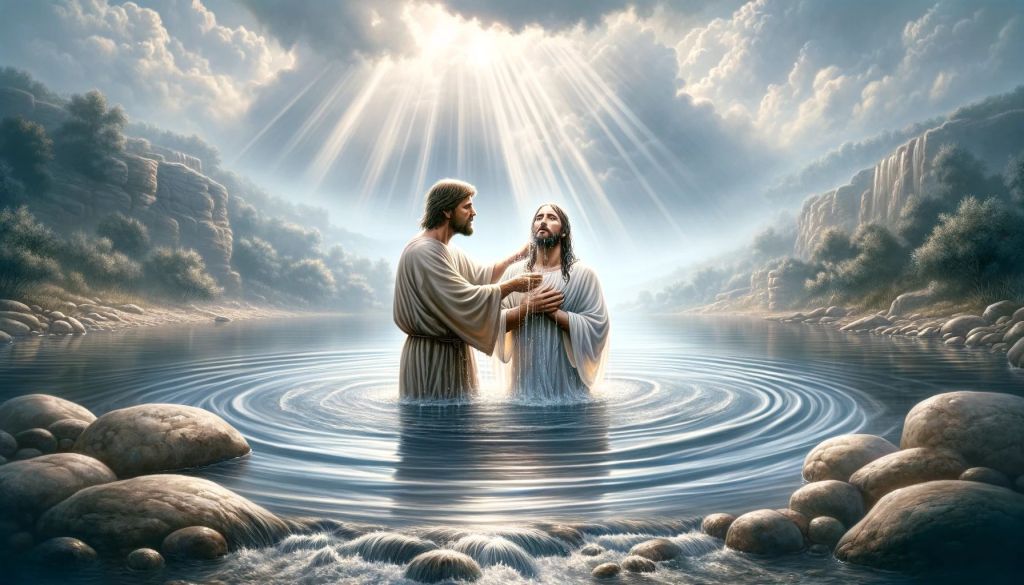
John 1:1–18 | Participant Handout | Dec 7
WHAT WE COVER TODAY
• The Word in the beginning
• True light vs. false lights
• God made visible (incarnation)
• Grace upon grace
• Becoming children of God
• The only Son reveals the Father
KEY IDEAS
Jesus is the Eternal Word
Not a teacher who came later. The Word who spoke creation into being, who has always existed, who contains God’s creative power. He is before everything and everyone.
True Light vs. False Lights
Many lights promise to illuminate your path: philosophies, religions, systems. John says Jesus alone is the true light—because only he has seen God fully and reveals God as he actually is.
God Made Visible
The Word didn’t send a representative. The Word became flesh. God entered human reality. Touchable. Knowable. Real.
Grace Upon Grace
Jesus brings gift stacked on gift—not earned, not limited, not a competition. This replaces scarcity with abundance, law with grace.
Chosen, Not Earned
‘To all who received him, he gave the right to become children of God’—not because of your lineage, not because of your effort, not because someone gave permission. Because God chose you.
The Trinity: Distinct Yet One
Father, Son, and Spirit—three persons in real relationship with each other. The prologue sets up this mystery: the Word is distinct from God yet is God.
REFLECTION QUESTIONS
(Sit with one or more of these before or after our gathering)
1. What false lights have you been following? What made them seem true?
2. What shifts when you hear ‘grace upon grace’ instead of ‘never enough’?
3. What does it mean to be a ‘child of God’—chosen by God, not earned?
4. When you think of God, do you see the God Jesus reveals (as grace, truth, light)? Or do you still see a false image?
5. How does the Trinity—Father, Son, and Spirit—change your understanding of God’s nature?
THIS WEEK
Practice receiving grace ‘upon grace’ without earning it.
• Say yes to something joyful
• Accept a gift without repaying it
• Speak one truth about yourself from belonging to God
Notice what resistance comes up. Notice what relief.
OLD TESTAMENT CROSS REFERENCES FOR JOHN 1:1–18
1. THE LOGOS — GOD’S WORD AS CREATIVE POWER
(John 1:1–5)
Creation & Divine Speech
• Genesis 1:1–3 – “In the beginning… God said, ‘Let there be light.’”
• Psalm 33:6, 9 – “By the word of the LORD the heavens were made… He spoke, and it came to be.”
• Psalm 107:20 – “He sent out His word and healed them.”
• Isaiah 55:11 – “My word… shall accomplish what I purpose.”
• Psalm 148:5 – Creation exists because God commanded.
Wisdom & Preexistence (Jewish background for Logos)
• Proverbs 8:22–31 – Preexistent divine Wisdom participating in creation.
• Psalm 119 – God’s word as eternal, powerful, sustaining.
2. TRUE LIGHT VS. FALSE LIGHT
(John 1:4–5, 9)
Light in Creation & Revelation
• Genesis 1:3–5 – God’s first creative act is light overcoming darkness.
• Psalm 27:1 – “The LORD is my light and my salvation.”
• Psalm 36:9 – “In your light we see light.”
• Psalm 97:11 – “Light is sown for the righteous.”
• Psalm 119:105 – “Your word is a lamp to my feet.”
• Isaiah 9:2 – “The people walking in darkness have seen a great light.”
• Isaiah 42:6; 49:6 – The Servant as a light to the nations.
Darkness as spiritual blindness
• Isaiah 60:1–2 – Light rises upon God’s people while darkness covers the earth.
3. INCARNATION — GOD DWELLING WITH HUMANS
(John 1:14)
John’s “The Word became flesh and tabernacled among us” directly echoes OT tabernacle theology.
God dwelling with His people
• Exodus 25:8–9 – “Let them make me a sanctuary, that I may dwell among them.”
• Exodus 33:14 – God’s presence will go with His people.
• Exodus 40:34–38 – The glory of the LORD fills the tabernacle.
• 1 Kings 8:10–11 – The glory of God fills the temple.
Glory revealed
• Exodus 16:7, 10 – Israel “shall see the glory of the LORD.”
• Exodus 33:18–23 – Moses asks to see God’s glory; God reveals His goodness.
• Exodus 34:6–7 – God reveals His character: grace and truth (the background for John’s “full of grace and truth”).
• Isaiah 40:5 – “The glory of the LORD shall be revealed.”
4. GRACE UPON GRACE — LAW AND GRACE
(John 1:14–17)
Law through Moses
• Exodus 19–20 – Covenant and the giving of the law.
• Deuteronomy 5 – The Ten Commandments restated.
• Deuteronomy 33:2 – Moses delivers God’s revelation.
Grace and covenant love (ḥesed)
John’s phrase “grace and truth” echoes God’s covenant self-revelation:
• Exodus 34:6 – “Abounding in steadfast love and faithfulness.”
• Psalm 85:10 – Steadfast love and faithfulness meet.
• Psalm 103:8–12 – God abounds in mercy and gracious forgiveness.
5. BECOMING CHILDREN OF GOD — NEW IDENTITY & REBIRTH
(John 1:12–13)
God’s people called His children
• Exodus 4:22 – Israel called “My firstborn son.”
• Deuteronomy 32:6 – God as Father who created and established His people.
• Psalm 103:13 – A father showing compassion to his children.
• Hosea 1:10 – “In the place where it was said, ‘You are not my people,’ it shall be said, ‘Children of the living God.’”
Birth by God’s initiative, not human effort
• Ezekiel 36:25–27 – God gives a new heart and new spirit.
• Jeremiah 31:31–34 – The new covenant written on the heart.
6. TRINITY & THE RELATIONAL NATURE OF GOD
(John 1:1–2, 14, 18)
The Son distinct yet one with the Father
• Genesis 1:26 – “Let us make man in our image” (plurality hints).
• Psalm 110:1 – “The LORD said to my Lord…”
• Isaiah 48:16 – The Lord God and His Spirit send the Servant (Trinitarian echoes).
• Isaiah 63:9–10 – The Father, the Angel of His Presence, and the Holy Spirit active together.
The Glory of God reflected / revealed
• Numbers 14:21 – The earth filled with God’s glory.
• Habakkuk 2:14 – The earth filled with the knowledge of God’s glory.
7. THE ONLY SON REVEALS THE FATHER
(John 1:18)
No one can see God fully except the one who reveals Him
• Exodus 33:20 – “Man shall not see me and live.”
• Exodus 33:18–23 – Moses sees only God’s afterglow, not His face.
• Job 9:11 – God passes by but cannot be seen.
• Isaiah 6:1–5 – Isaiah sees the Lord’s glory in a mediated vision.
The promise that God Himself will come
• Isaiah 40:9–11 – God Himself will come to shepherd His people.
• Malachi 3:1 – “The Lord whom you seek will suddenly come to His temple.”
John 1:18 declares that Jesus fulfills and surpasses all of these—He makes the unseen God known.
8. MESSIANIC & SUFFERING THEMES CONNECTED TO QUESTIONS RAISED (Psalm 22)
Jesus’ cry, “My God, my God, why have You forsaken me?”
• Psalm 22:1–31 – The Messianic suffering text Jesus quotes; ends in vindication.
This reinforces your teaching point: the Son is not abandoned by the Father; He enters the full cost of redemption.
9. OTHER OT THEMES INDIRECTLY PRESENT IN THE PROLOGUE
Creation renewed through the Word
• Isaiah 65:17; 66:22 – New heavens and new earth.
• Ezekiel 37:1–14 – God giving new life by His word and Spirit.
God choosing His people (not by lineage)
• Deuteronomy 7:6–8 – God chooses Israel because of love, not merit.
• 1 Samuel 16:7 – God sees differently than humans :
Creation & Word: Gen 1:1–3; Ps 33:6, 9; Ps 107:20; Isa 55:11
Light: Gen 1:3–5; Ps 27:1; Ps 36:9; Isa 9:2; Isa 49:6
Incarnation/Glory: Ex 25:8; Ex 33:18–23; Ex 34:6; Isa 40:5
Grace & Law: Ex 19–20; Ex 34:6; Ps 103:8–12
Children of God: Ex 4:22; Hos 1:10; Jer 31:31–34; Ezek 36:25–27
Trinity Echoes: Gen 1:26; Ps 110:1; Isa 48:16
Revelation of the Father: Ex 33:20; Isa 40:9–11; Mal 3:1
Psalm 22 Reference: Ps 22:1–31
• • •
Awake to the Coming Light — An Advent 1 Reflection
Date: First Sunday of Advent, Year A
Primary Scripture: Romans 13:12

The season of Advent does not begin with celebration—it begins with longing. It opens not in bright light but in the quiet, honest darkness of real life, where people carry grief, illness, recovery, fatigue, and the complex history of family and community. Advent speaks precisely into these places and invites us to lift our eyes toward the hope of Christ.
Our congregation reflects this reality well. Some among us are grieving recent losses. Some are navigating serious health challenges. Others are walking faithfully through recovery from addiction. Many carry responsibilities that feel heavy. And many more carry the deep history and legacy of this church’s founding families. Into this very real mixture of pain, perseverance, and hope, Advent speaks clearly: The Light is coming.
A Vision That Pulls Us Forward — Isaiah 2:1–5
In the first reading of the season, Isaiah gives God’s people a vision large enough to carry them through dark times. He describes a future where nations stream to the mountain of the Lord and where weapons of violence become tools of growth. It is a world transformed by the peace of God.
Isaiah’s call—“Come, let us walk in the light of the Lord”—is not an invitation to pretend everything is fine. It is a summons to move, one step at a time, toward the future God promises. Advent is never passive. It is an active walk toward hope.
Finding Gladness and Peace in Worship — Psalm 122
Psalm 122 echoes Isaiah’s vision but turns it into a song of gathering. The psalmist rejoices to be with God’s people and prays for the peace of Jerusalem.
In our setting, that becomes a prayer for the peace of this congregation, for the families who carry decades of shared memories, for those who minister to the sick and grieving, for the children and teens growing in faith, and for every person who walks through our doors longing for God’s presence. Advent reminds us that worship is not simply a routine—it is a pilgrimage toward peace.
Wake Up—The Dawn Is Near — Romans 13:11–14
Paul speaks to believers who are tired, discouraged, or tempted to drift spiritually. His message is strikingly direct: “It is now the moment for you to wake from sleep… the day is at hand.”
Rural communities know what it is to rise before dawn. You stand on the porch, look out at the dark pasture, and trust that light is coming even when you cannot yet see it. Paul’s message resonates here: no matter how long the night has felt, God assures us that dawn is drawing near.
To “put on the armor of light” is to live with purpose and clarity:
- Choosing steps toward healing and recovery.
- Letting go of habits that harm us.
- Forgiving old wounds.
- Encouraging those who struggle.
- Living in a way that reflects hope rather than despair.
Advent calls us to spiritual wakefulness.
Living Ready for Christ — Matthew 24:36–44
Jesus reminds His disciples that His coming will be unexpected, and His point is not to create fear but to cultivate readiness. In the days of Noah, people were absorbed in everyday routines—good routines, ordinary routines—but they became spiritually numb.
That can happen to all of us. Work, illness, grief, family burdens, schedules, and stress can slowly lull us to sleep. Jesus urges us to stay awake and live ready—not anxious, but alert; not afraid, but purposeful.
Readiness means shaping daily life around the reality that Christ truly matters.
Advent for Real People
Taken together, these readings paint a powerful picture of Advent:
- Isaiah shows us God’s promised future.
- The Psalm invites us into community and peace.
- Romans calls us to awaken and put on the armor of light.
- Jesus urges us to live ready for His return.
And all of this meets us in our real world, not in an ideal one.
 John Hargrove Seeking Truth and Reality