A Faithful, Fair, and Lawful Approach to Immigration Policy

Introduction

The immigration debate in the United States remains one of the most complex moral and policy challenges of our time. It touches on national security, economic stability, human dignity, and the very identity of our nation. This paper seeks to integrate several vital frameworks—rule of law, compassion, fairness, and Christian moral teachings—into a coherent position on illegal immigration. It draws upon recent commentary by Eli (June 2025), policy critiques from across the spectrum, and the biblical values shared by many American citizens.


I. Rule of Law Is Non-Negotiable

The foundation of any functional society is the rule of law. U.S. immigration law is clear in its categories of legal entry, enforcement priorities, and consequences for unlawful presence. To disregard these laws—either through selective enforcement or policy loopholes—is to undermine the very principle of fairness that legal immigrants rely on. As former Senator Barack Obama said in 2005, “Those who enter the country illegally and those who employ them disrespect the rule of law and show disregard for those who are following the law.” Flashback 2005_ Sen.

Policy Alignment:

  • Immigration enforcement must continue to prioritize border integrity and penalize employers who exploit undocumented labor.
  • Clear distinctions must be made between economic migrants, asylum seekers, and criminal actors.
  • Reform must include modernizing immigration court backlogs to uphold legal timeliness and due process. Illegal Immigration_ En….

II. Compassion Must Be Real, Not Reckless

Christian teachings call for the protection of the vulnerable—including immigrants (Leviticus 19:33–34, Matthew 25:35). However, compassion does not require the erasure of law; it requires discernment. A blanket leniency undermines justice, just as blind enforcement ignores human dignity. Compassion must be applied case by case, particularly to children, asylum seekers, and those who have established peaceful, productive lives in our communities.

Balanced Policy Suggestion:

  • Create earned legalization pathways for long-term, law-abiding undocumented residents.
  • Expand humanitarian parole and asylum processing centers outside U.S. borders to reduce unauthorized entry and unnecessary trauma. Post on immigration by ….
  • Prioritize legal representation for minors and vulnerable individuals to ensure just outcomes.

III. Fairness in Process and Policy

Our legal immigration system is fundamentally unfair to many who seek to follow the rules. Wait times can exceed 20 years for applicants from high-demand nations. At the same time, undocumented individuals who crossed the border outside the legal process may remain in limbo for decades with no pathway to legal status.

Reform Recommendations:

  • Update legal immigration caps to reflect modern labor needs and demographic trends.
  • Create a new visa category for essential laborers with no legal pathway.
  • Enforce employer accountability to prevent job-market exploitation of undocumented workers. PESTLE Analysis of Ille….

IV. Taxpayer Fairness and Economic Sustainability

With over $34 trillion in national debt, the U.S. cannot afford policies that ignore long-term fiscal impact. Undocumented immigrants contribute significantly through ITIN-based tax payments—over $90 billion in 2023 alone—but also strain local education, healthcare, and legal systems. Any policy must reconcile these contributions with costs and protect programs like Social Security that depend on a growing legal workforce.

Fiscal Integrity Requires:

  • Legal status pathways that include tax compliance, not amnesty.
  • Reduced spending on ineffective border tactics like walls in favor of smart surveillance and interdiction tools.
  • Penalties for employers who offload their tax burdens by exploiting undocumented labor markets. Post on immigration by ….

V. Christian Moral Teaching: Justice and Mercy Together

A Christian approach to immigration combines the call to love the stranger (Deut. 10:19) with the call to obey the law (Romans 13:1). It does not justify open borders or sanctify cruelty. It acknowledges the sanctity of each life while affirming national responsibility to protect and regulate entry. Christians are called to act justly, love mercy, and walk humbly (Micah 6:8), which includes advocating for immigration laws that are both fair and compassionate.

Christian Application Includes:

  • Standing against racial prejudice and fear-based policies.
  • Supporting reform that offers dignity to the undocumented without rewarding lawlessness.
  • Offering sanctuary in a spiritual and humanitarian sense, without undermining public orderChristian views on immi….

Conclusion: A Path Forward

America must not choose between law and love. It must pursue both. That means building a system where:

  • Laws are clear, enforceable, and respected.
  • Immigrants are treated with dignity, not suspicion.
  • Citizens and legal immigrants are not punished for following the rules.
  • Taxpayers are protected through smart, sustainable policy.

We need not accept the false choice between border anarchy and brutal enforcement. A faithful, fair, and lawful approach is possible—and it is the one America, and its Christian conscience, must pursue.
Redemption 2025

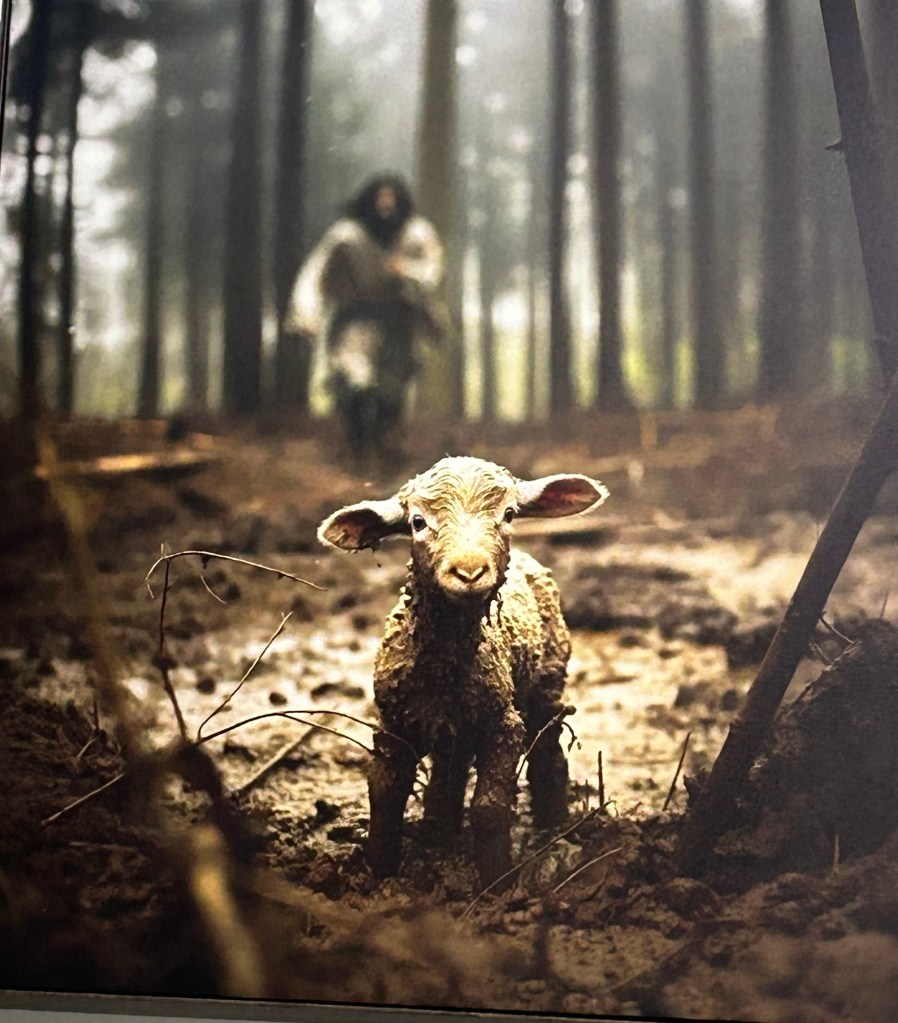
There was a time I didn’t know how far I had wandered.

At first, it was just a few small steps—away from peace, away from purpose, away from the heart of the Shepherd. I didn’t call it rebellion. I called it survival. The terrain of life had grown rough, filled with disappointments and losses too sharp for easy answers. One day blurred into the next, and slowly, I drifted—quietly, steadily—until I couldn’t see home anymore. I couldn’t even hear the others calling.

I didn’t know I was the lost lamb.

But He did.

Through the darkest places, the Shepherd came for me. Not with a shout, not with punishment, not even with demands—but with mercy. With memory. With the sound of grace carried on the wind. I remember moments when I felt something stir in my chest at the sight of a sunrise, or in the sound of an old hymn, or in a kind word that cut through the numbness. That was Him. I see it now.

He never stopped pursuing me.

When I lost my son, I thought the pain would silence everything. A part of me died that day. The shepherd’s voice grew faint under the weight of grief. I wore anger like armor. For years, I wandered further still, all the while convincing myself I was fine. Capable. Standing. But inside, I was lost—aching and unfinished.

And still, He pursued.

He found me in places I never thought He’d go—on the Emmaus road of sorrow, in the Chrysalis of rebirth. Through the testimonies of others, through gentle hands that offered grace, through a thousand ordinary moments that added up to one extraordinary truth: I wasn’t alone.

He carried me back.

Not with force, but with love so persistent it broke through my shame. He carried me not because I had earned it, but because He chose me—always had. Like the parable told long ago, He left the ninety-nine to find the one. Me.

And even now, when I stray in mind or spirit, when the ache resurfaces or the weight returns, I remember: I am still the one He came for. Not just once, but every time I begin to drift.

I once was the lamb who wandered.

Now I am the one who was found. And still, He walks with me.

This is the story of Chrysalis. The story of Emmaus. The story of redemption told not just in words, but in the footsteps of a Savior who never stops walking toward the lost.

It is my story

The Day I Returned Again

Personal Prayer: The Day I Returned Again

June 7, 2025

God,

I come to You today not as the man who got it all right—

but as the man who didn’t walk away.

I come not with clean hands,

but with open ones.

You know where I’ve failed.

You’ve seen the moments I stayed silent when I should have spoken,

pushed forward when I should have been still,

held on too tightly when You were asking me to release.

I confess it.

I carry it.

But I do not hide it.

Because I believe You are not asking for perfection—

You are asking for presence.

And so today, I show up.

Not with all the answers,

but with all the willingness I have left.

Take my uneven steps,

my tender longing,

my fractured love—

and make it something holy again.

Thank You for never turning away.

Thank You for waiting through the silence.

Thank You for writing a story in me, even when I lost the page.

Let me serve with humility.

Let me love without demand.

Let me carry what I carry with grace.

And if there is still more for me to do,

then let me do it with a clearer heart,

a gentler presence,

and a deeper trust in You.

In Jesus name – Amen.

Autobiography of John E. Hargrove, P.E.

A Life of Purpose: Faith, Engineering, and the Quiet Work That Lasts

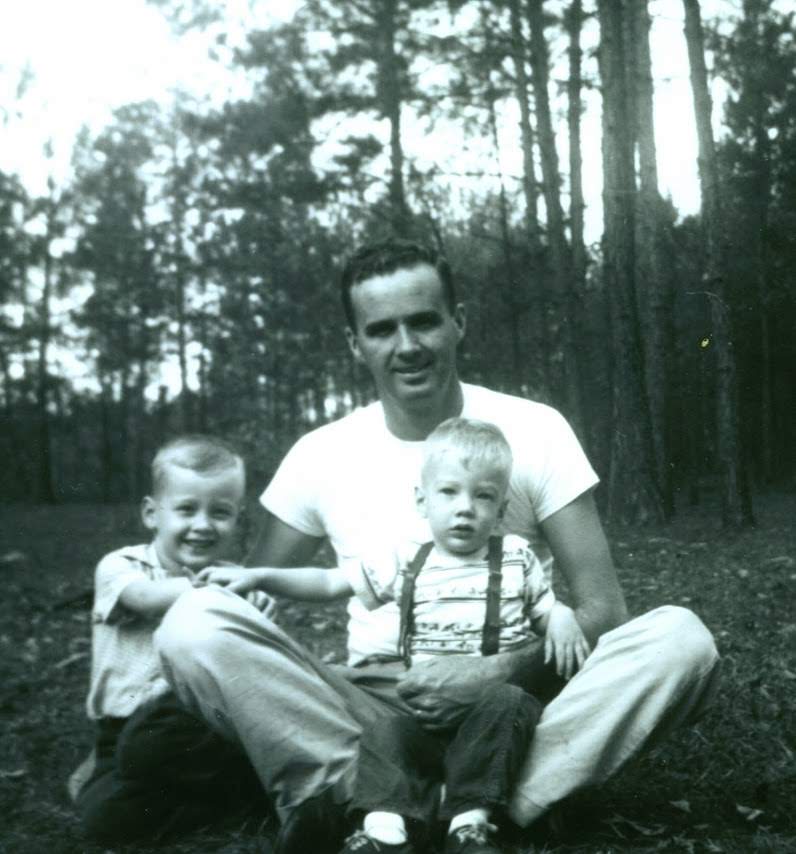
I was born in Kirbyville, Texas, in 1958, and raised in the small town of Buna—a place that grounded me in the values of family, faith, and responsibility. My father, Robert Hargrove, was a Korean War veteran and a man of quiet integrity. He spent 35 years at Dupont and taught me what it means to work hard and keep your word. My mother, Lavee Richbourg Hargrove, gave me a sense of belonging to something larger—both in faith and in heritage. Her family line traces back to early Texas settlers and the French Huguenots of the South.

I met Leisa, the love of my life, in high school. She was graceful, kind, and full of life. I was the quiet boy from a working-class family. But something clicked, and we started dating just before graduation in 1975. We married in 1980 during college, and that was the beginning of a lifelong partnership built on love, faith, and perseverance. Our son, Joshua Blake Hargrove, was born in 1984—a bright, compassionate young man whose life, though short, touched many. Losing him in 2002 changed everything. Grief rearranged my soul, but it also deepened my sense of calling.

My professional life began in earnest in 1978, when I took a student engineering position at Gulf States Utilities (GSU) while finishing my degree in electrical engineering at Lamar University. I earned my BSEE in 1981 and went on to spend 15 years with GSU, eventually leading telecommunications engineering for a multi-state electric utility network. My work supported SCADA, microwave, PBX, and protective relaying systems across more than 30 locations. It was formative, high-pressure, and rewarding—an environment that shaped how I see systems, risk, and people.

In 1993, I left GSU as the utility prepared for the Entergy merger. I joined Lockard & White in Houston for two years, managing major infrastructure projects. One of the most memorable was a 100-hop analog-to-digital microwave upgrade for Transcontinental Gas Pipeline. That experience reignited my entrepreneurial spirit. I wanted to serve clients directly and build something of my own.

In 1995, I founded New Signals Engineering Corporation. The early days were lean and intense—every project mattered, and I wore every hat. But the work was good, and God opened doors. In 1996, my former boss at GSU, Bob Pohl, hired my firm to design and implement a 100 Mbps fiber ring for the City of College Station. That project not only cemented my credibility—it changed the trajectory of my life. Bob introduced me to Sam Houston Electric Cooperative, and that single referral began a 25-year journey of trust, engineering, and service.

At Sam Houston EC and other East Texas co-ops, I designed SCADA communications, built microwave paths, engineered dispatch and tone relaying systems, and integrated critical infrastructure. I helped these utilities bridge from legacy systems into modern IP networks. Much of it was quiet work—done in rural counties, far from headlines—but it mattered. People depended on it.

From 1997 through 2014, I ran New Signals full time, serving electric cooperatives, municipalities, pipeline operators, and Fortune 500 clients. My work extended to public safety radio systems, oil and gas SCADA, offshore communications in Africa, and early cybersecurity practices. Whether it was a remote fire tower in the Big Thicket or an urban fiber buildout, I showed up with one aim: to serve well and solve the right problem.

In 2015, I joined Sam Houston Electric Cooperative as Engineer II. My largest project there was leading the design and deployment of a 72,000-meter Advanced Metering Infrastructure (AMI) system. The system required RF planning, cyber segmentation, and deep coordination across IT, SCADA, and operational leadership. I also re-architected the cooperative’s WAN into a Layer 3 structure, introducing OSPF and BGP protocols to support network resilience. I helped establish NERC CIP cyber compliance zones and built trusted systems for the grid of the future.

In 2019, I stepped into the role of Chief Technology Officer at East Texas Electric Cooperative. I provided strategic guidance for ten member co-ops and their G&T provider, leading projects that integrated 24/7 network monitoring, cybersecurity analytics, and OT/IT convergence. We addressed real-time threat detection, failover redundancy, and data visibility—modernizing how co-ops protect and manage grid operations in an increasingly complex world.

In 2020, during the COVID-19 pandemic, I was approached by a group of former clients who needed help. With schools closed and remote work rising, rural families in Buna had no access to reliable broadband. They asked me to build a wireless internet service provider (WISP) from scratch. I accepted.

For the next two years, I worked over 3,900 hours of overtime—designing backhaul, erecting towers, integrating routers, and building a support and billing system from the ground up. By 2022, we had 725 customers and were generating $55,000 a month in revenue. But more than that, we were changing lives. Kids could attend school online. Families could work from home. Businesses could stay open. We turned crisis into connectivity, and it remains one of the projects I’m proudest of.

In 2023, I returned to Lockard & White as a Senior Telecommunications Engineer and took on the role of Chief Operating Officer at Evergreen Technology Solutions. At Evergreen, I lead our broadband buildout across Jasper and Newton counties. Our work includes VOIP integration, public safety radio, library infrastructure, and digital equity partnerships. We’re building not just networks—but bridges for rural communities to access opportunity.

Alongside all this, I’ve never stopped serving locally. I was President of the Buna Chamber of Commerce and co-founded Buna Regional Economic Development LLC. I serve on the board of the Buna Public Library and help guide it toward becoming a digital and cultural hub. I lead Bible studies, support Chrysalis and Emmaus ministries, and do what I can to serve the people and places God put in my path.

When I look back, what I see is not a career, but a calling. A life built on systems, yes—but more than that, a life built on faith, integrity, and quiet service. I’m still learning. Still building. Still showing up.

And that, for me, is enough.

“To Love Without Holding On” – A Reflection on Agape

Devotional Essay: “To Love Without Holding On” – A Reflection on Agape

Agape is not the kind of love we see most often in the world. It is not transactional. It does not demand to be noticed, rewarded, or returned. It is the kind of love that gives, and keeps giving—not because it gets something back, but because it is rooted in the very character of God.

Agape love says: I care about your well-being more than I care about my comfort.

It says: I will walk beside you, even if you cannot walk with me.

It whispers: You do not have to earn this. You are already worthy of it.

This is the kind of love that Jesus modeled. He loved the broken, the betrayers, the ones who didn’t understand Him, the ones who abandoned Him. And still, He loved. Without bitterness. Without demand.

There may come a time in your life when you love someone who cannot receive it. Someone whose wounds are so deep they mistake love for pressure, or care for control. Someone who pulls away, not because they don’t feel something, but because they feel too much—and it scares them.

In those moments, the temptation will be to retreat, to harden your heart, to convince yourself that the love was wasted. But agape never wastes itself. Love like this leaves something holy behind. It plants seeds that may never bloom in your sight, but God sees.

Agape is not weakness. It is strength held in restraint.

It is choosing someone’s peace over your longing.

It is blessing them from a distance.

It is still hoping the best for them, even when they’ve gone silent.

It is praying not for your reunion, but for their healing.

It is letting them go, and still loving them in Christ.

As Paul wrote in 1 Corinthians 13:

“Love is patient, love is kind.

It does not envy, it does not boast, it is not proud.

It does not dishonor others, it is not self-seeking…

It always protects, always trusts, always hopes, always perseveres.

Love never fails.”

That kind of love may break your heart. But it will never break your spirit—if it is grounded in Christ.

So love them. Pray for them. Honor them.

And if they cannot stay—let them go without bitterness.

Not because they weren’t worthy.

But because love like this doesn’t need to possess.

It just needs to be offered—gently, reverently, like a candle on the altar.

Reflection Questions:

Have you ever been called to love someone without expecting anything in return? What does “protecting someone’s peace” look like in your life? How does Jesus’ model of agape challenge your natural responses to rejection or silence? Is there someone you need to quietly bless and release into God’s hands?

Closing Prayer:

God of perfect love,

Teach me how to love without clinging,

To give without demanding,

To bless without controlling.

Let me hold others with reverence,

Even when I must let them go.

Shape my heart with Your kind of love—

The love that heals, the love that honors,

The love that does not fail.

Amen.

Discernment

Sometimes when people talk about “hearing from God,” it can feel a little overwhelming—especially if you’re not sure what that’s supposed to sound like. In our Bible study, Finding God’s Will, Session 3 focuses on how we hear God not just by ourselves, but together—in community, through conversation, prayer, and trusted relationships. That’s actually something John Wesley cared a lot about too.

Wesley preached a sermon called The Nature of Enthusiasm back in the 1700s. And in that message, he warned people not to mistake their feelings or private ideas for God’s voice. Back then, “enthusiasm” didn’t mean excitement like it does today—it meant a kind of spiritual self-deception. People would say, “God told me this” or “I know this is from the Spirit,” when really it was just emotion or imagination. Wesley was concerned because that kind of thinking often led people away from the Bible, away from their church family, and even into harm.

What he taught is still true now: God can speak to our hearts, yes—but His voice is always consistent with Scripture, and it’s usually confirmed in community. That’s why we need each other. That’s why Christian friendships, prayer groups, and church life matter. They help us test what we’re feeling, slow down, and listen with wisdom.

The Global Methodist Church says something similar in its Book of Doctrines and Discipline. Worship, prayer, and study are things we do together, not just alone. And there’s a reason we meet, pray, talk, and study the Word in groups—it’s one of the main ways God leads us clearly, not just emotionally. One paragraph in the BODD says worship is a “divine encounter” that’s shaped by the whole church, not just personal preference. That’s how we stay grounded.

So if you’ve ever wondered, “Am I hearing God right?”—you’re not alone. That’s why we need community. You don’t have to figure it out all on your own. When we pray, read Scripture, and share together, God’s voice often becomes clearer—not louder, just more steady.

Let’s keep listening, together.

I’ve been thinking a lot lately about how we talk about God’s will—like it’s some hidden map we have to solve. But what if it’s more like a daily walk with someone who loves us and wants us to trust Him?

Over the past few weeks at FMC Buna, we’ve been in a Bible study called Finding God’s Will, and it’s been unexpectedly rich. Not just answers—but real conversations. Real stories. A lot of grace.

Here’s what I’m learning (or relearning):

God’s will isn’t just about the big decisions.

It’s about trust when we don’t see the outcome.

It’s about community when we feel alone.

And sometimes… it’s just about showing up.

If you’ve ever wrestled with “What’s next?” or “What does God want from me?”—you’re not the only one. And you don’t have to figure it out alone.

.

You Are Part of God’s Will for the Church

You Are Part of God’s Will for the Church

Too often we think of “God’s will” in private terms. My calling. My direction. My purpose. But Scripture paints a broader picture. God’s will is also about us—His people. His Church.

Ephesians 2:10 says we were created “for good works, which God prepared in advance for us to do.” Those “works” aren’t just individual assignments. They’re part of a collective mission.

At FMC Buna, God’s will isn’t just for pastors or leaders. It’s for each person who walks through the doors.

You matter to what God is doing here.

You are not too late, too tired, too wounded, or too new to contribute.

The question isn’t, Does God have a will for the church?

It’s, Are you willing to be part of it?

Because the church doesn’t grow from programming—it grows from people like you saying,

“God, use me. However You want. Wherever You want.”

That’s how renewal begins.

When God’s Will Is Hard to Hear

When God’s Will Is Hard to Hear

We’ve all had moments where God feels silent. Prayers go unanswered. Decisions weigh heavy. The path forward looks foggy.

That doesn’t mean you’re doing it wrong. It might mean you’re being invited to trust deeper.

Isaiah 55:8 reminds us, “My thoughts are not your thoughts, neither are your ways my ways.” That’s not meant to frustrate us. It’s meant to free us. God is not confused. Even when we are.

Sometimes His will is silence—because we need to stop striving.

Sometimes His will is waiting—because He’s preparing us.

Sometimes His will is community—because we’re not meant to figure it out alone.

If you’re in a season where God’s will feels hidden, you’re not lost. You’re being led—just more by presence than by answers.

Keep praying. Keep showing up. Keep surrendering.

His silence is not His absence.

Is God’s Will a Mystery—or a Relationship?

Is God’s Will a Mystery—or a Relationship?

We often talk about “finding God’s will” like it’s buried treasure—something hidden, hard to find, and reserved for the spiritually elite. But what if God’s will isn’t a riddle to solve, but a relationship to walk in?

The Bible tells us, “Do not conform to the pattern of this world, but be transformed by the renewing of your mind. Then you will be able to test and approve what God’s will is” (Romans 12:2). In other words, God’s will becomes clearer as we draw closer to Him.

God’s will isn’t just about big decisions—it’s about the posture of your heart. He’s less interested in which job you take or which town you live in, and more interested in whether you’re becoming the kind of person who loves, forgives, serves, and obeys.

So the real question is not just What should I do?

It’s Who am I becoming?

God’s will starts with that. And it grows from there.