The Radio Link and the Soul: What Forty-Seven Years in Rural Infrastructure Have Taught Me About Work, Technology, Life, and Faith

I remember standing out at a metering station back in 2007, somewhere off a caliche road you wouldn’t find unless you already knew where you were going. East Texas co-op site. Quiet place. The kind where you can hear the wind before you see it.

Photo by Pixabay on Pexels.com

That radio link we were depending on had been put in sometime in the late 90s. I ran the path profile right there in the truck. Same story I’ve seen a hundred times—Fresnel barely clearing, fade margin just enough to make you feel okay until you’re not. A couple of other transmitters on the same  tower are already stepping on each other a little.

Nothing broken. Nothing dramatic. Just fragile in a quiet kind of way.

That same setup is still out there today in more places than folks want to admit. Same sub-GHz radios. Same serial cables run through what was supposed to be “temporary.” Same passwords, nobody ever changed. Same remote access tools because the integrator lives two hours away, and the operator’s got another job to get to.

And honestly, that’s not carelessness. That’s reality.

Those systems were built in a world where isolation was the security model. That world’s gone now. But the systems didn’t change with it.

You hear a lot about checklists and compliance and inventory—and they’re not wrong. You do need to know what you’ve got. But the real issue I keep running into isn’t just knowing it exists.

It’s whether it was ever built to handle what it’s actually dealing with.

Weather fade. Trees growing up into your path. Interference from somebody else hanging gear on the same structure. One cable takes the whole system down if it fails.

That’s not cybersecurity. That’s just telling the truth about the system.

And if I’m being honest, that same pattern shows up in life, too.

We’ve got all this technology now that makes it feel like we’re in control. But something underneath is getting thinner. Everything is constant—alerts, messages, noise—and it keeps you in that problem-solving mode all the time. You’re always thinking, always fixing, always responding.

But you’re not really resting and not really connecting. Not really present.

I’ve lived that.

The work itself is good. Keeping water moving. Keeping systems talking and helping communities function. That part matters.

But it can also take more than it’s supposed to.

I’ve had seasons where I carried responsibility like it all depended on me—stayed up too late chasing one more improvement. Pushed through things I should’ve stopped and grieved. Kept quiet when I should’ve said I needed help.

It builds up. Quietly. Faith, at least the way I’ve come to understand it, doesn’t remove that weight. It puts it back where it belongs.

You weren’t meant to carry all of it. You weren’t meant to run without stopping.

You weren’t meant to pretend nothing’s been lost along the way.

There’s a reason Scripture emphasizes rest, sharing burdens, and strength in weakness-these aren’t just ideas, but a divine design for our well-being.

It’s not a theory. Its design.

So now I’m trying—slowly—to live that out.

Do the work right. Engineer it honestly. Document it so the next guy isn’t guessing. Don’t chase every new thing just because it’s new.

But also close the laptop when it’s time. Let the system be what it is for a few hours. Say out loud when something’s heavy instead of burying it. Trust that I’m not the one holding everything together.

That old radio link mindset still sticks with me. You harden what you can. You document it better. You improve it where possible.

But at the end of the day, you’re not the source of the system’s life. You’re just a steward of it.

And that applies just as much to the work as it does to everything else.

So for anybody out there carrying similar weight—

Do the inventory. Fix what you can fix. Write it down so it lasts.

But don’t forget to rest.

Don’t skip the grief.

Don’t try to carry it alone.

There’s more to this than uptime and performance.

The work matters. But it’s not where the meaning comes from.

That part comes from walking it out—steady, faithful, with other people, and under grace.

That’s enough.

Joshua Blake Hargrove 4-9-2026 memory

April 9, 2026

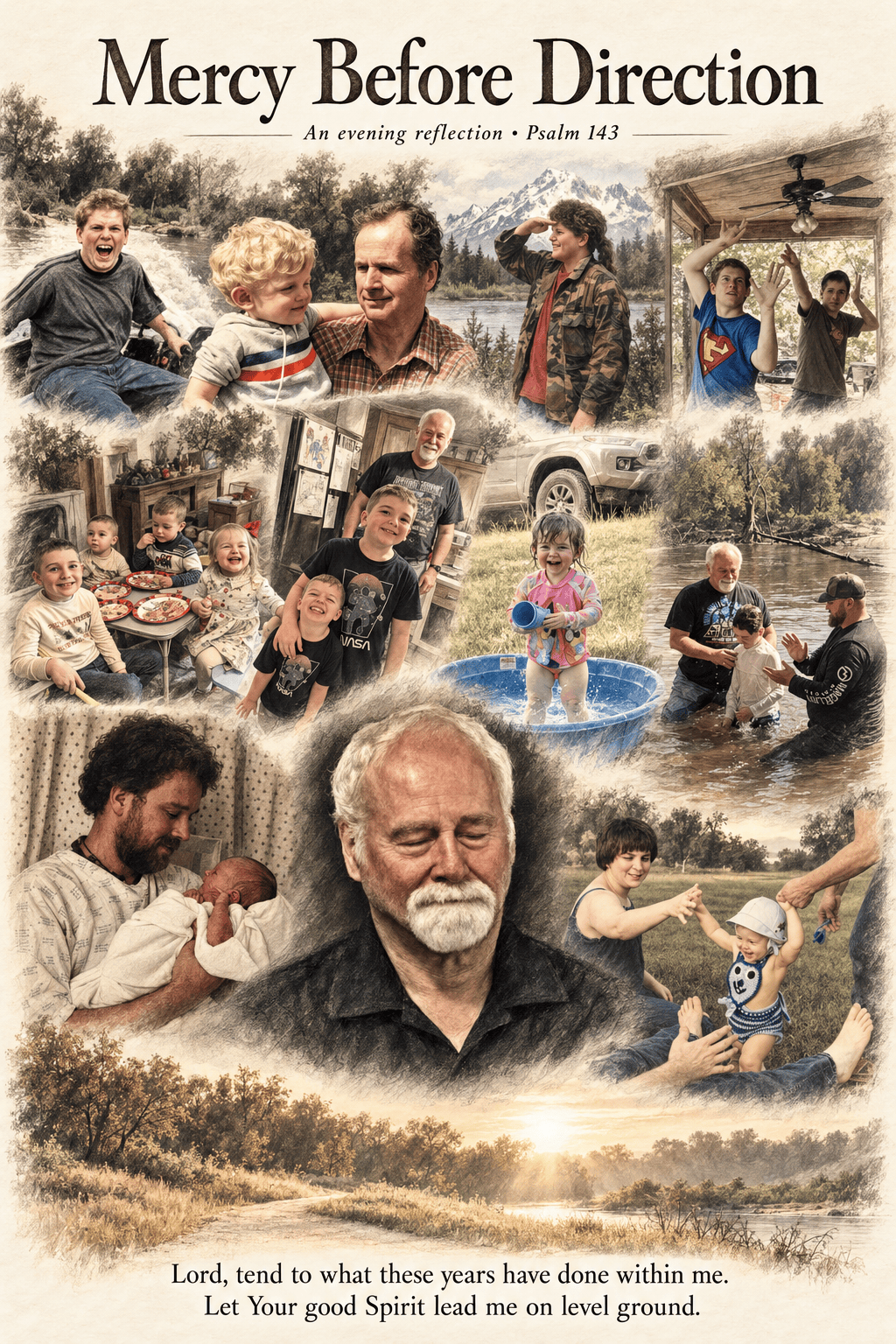
Today I find myself remembering my son, Joshua Blake Hargrove.

Joshua was born into our lives with a presence that filled every room. At 6’4”, people noticed him immediately, but what they stayed for was his heart. He carried a joy that was real, not forced. He made people feel seen, welcomed, and valued. There was something in him that drew others in.

On June 22, 2002, at 12:50 a.m., his life on this earth ended suddenly in a car wreck. There are no words that fully explain what that kind of loss does to a father. Time moves forward, but moments like this remind me that love does not fade, and neither does memory.

What stands out even more as the years pass is who Joshua was becoming.

Not long before he died, he told his friends he wanted to serve Jesus. That matters deeply to me. In a world full of distractions and competing voices, my son was turning his heart toward Christ. That was not something we put on him in that moment. It was something God was doing in him.

And in a way only God can orchestrate, Joshua’s life did not end that night.

He left behind more than memories. He left a path.

There was a youth Bible study connected to his life that we began to shepherd after his passing. What we thought would be a small act of faithfulness became a 20-year journey. Through that ministry, we were connected to hundreds of young people. We walked with them, learned from them, prayed with them, and watched God work in their lives.

That journey changed us.

It led his mother and me into places we never expected. It shaped our calling. It is part of what led us to become licensed and ordained pastors. Looking back, I can see clearly that God used Joshua’s life to open a door of ministry that has impacted far more people than we could have imagined.

That is not how a father plans a legacy for his son.

But it is how God redeems what we cannot understand.

Joshua’s witness was not just in what he said at the end, but in how he lived. His kindness, his joy, his presence, and his growing desire to follow Jesus continue to speak. His life still echoes in the lives of those he touched and in the work that continues today.

I miss him. There is not a day that passes that I do not think about what could have been.

But I am grateful.

Grateful for the years we had.

Grateful for the man he was becoming.

Grateful that his life pointed toward Jesus.

Grateful that his story did not end in the darkness of that night, but continues in the light of what God has done since.

If you knew Joshua, you know what I mean.

If you didn’t, his life still speaks.

And as his dad, I can say this with certainty:

His life mattered.

His faith mattered.

And his legacy lives. 

Love you

From mom and dad 

The Radio Link and the Soul: What Forty-Seven Years in Rural Infrastructure Have Taught Me About Work, Technology, Life, and Faith

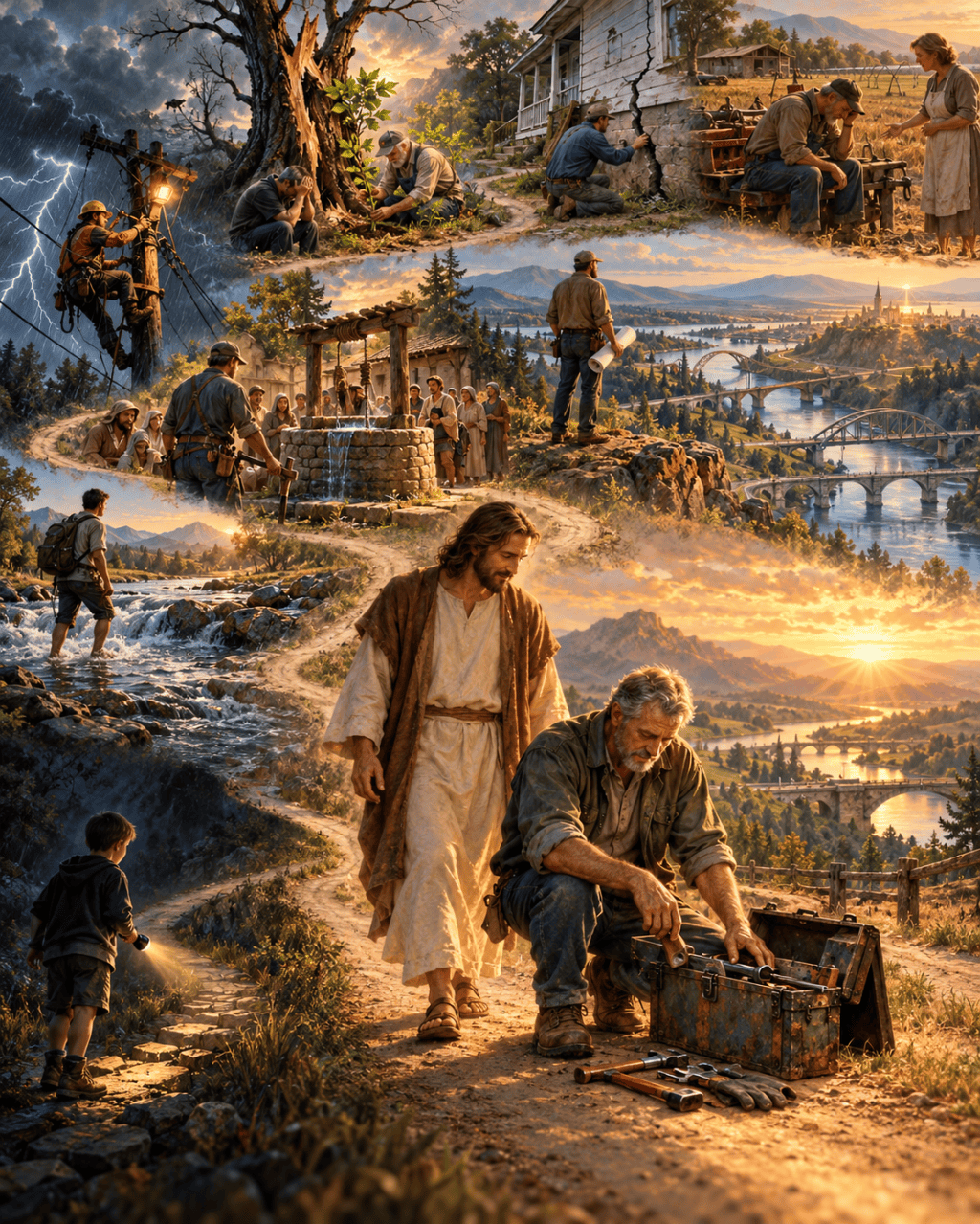
In 2007 I stood at a remote metering station for an East Texas electric cooperative, eight miles down a caliche road from the nearest paved highway. The 900 MHz radio link feeding telemetry back to the control center had been installed in the late 1990s. I remember leaning against the chain-link fence that afternoon, path-profile sketch in hand, praying quietly for wisdom. The Fresnel zone clearance was marginal. The link budget gave us a fade margin that was “good enough for government work.” Co-site interference from two other transmitters on the shared water-tower mount was already measurable. None of it was dramatic. It was simply the quiet fragility I had come to expect after two decades in the field.

That same 1990s-era radio technology is still the backbone for far too many rural water systems in 2026. The same unlicensed sub-GHz links, the same RS-232 cables run through “temporary” conduit fittings, the same factory-default passwords on the web interfaces. The SCADA password is still written on a Post-it note taped to the server rack. The remote access tool is still TeamViewer or AnyDesk because the integrator is two hours away and the operator has a day job. None of this is negligence. It is rational adaptation to real operational constraints. The systems were geographically and technically isolated when they were built. The threat model changed. The trust model has not caught up.

This is the field reality the federal checklists rarely name. The CISA/EPA guidance is right: asset inventory is foundational. Before you can protect it, you must know it exists. But the real gap is not in the inventory. It is in whether those assets—the radios, the PLCs, the unlicensed backhaul links—are engineered to survive the conditions they actually face: weather fade, vegetation growth, shared tower interference, and the single-point-of-failure cable runs that operators have lived with for decades. The engineering toolbox—RF path profiles, link budget validation, co-site interference assessment, sub-GHz band baseline documentation—is not cybersecurity tooling. It is infrastructure truth-telling, and it is part of the sacred stewardship God has placed in our hands.

Technology has a way of promising control while quietly stealing meaning.

I see this in the field, and I see it in the wider culture. Two recent conversations with Harvard professor Arthur Brooks on the meaning of life in an age of emptiness stayed with me. He described how the attention economy and always-on technology push us into the left hemisphere of the brain—the side of tasks, analysis, and simulation—while starving the right hemisphere, the home of mystery, meaning, and real human connection. We scroll, we simulate relationships, we feed questions into AI that can never answer the coherence, purpose, and significance questions that actually matter. Life starts to feel like waiting in an airport lounge with no flight information.

My work is not exempt. The same radios and networks that keep water flowing and substations communicating can become 24/7 demands that blur the line between the system and the self. The perfectionism that once served excellence in design now imprisons me in the small hours, reviewing one more link budget. The weight of responsibility I have carried—for cooperatives, water districts, pipeline operators, and communities—has sometimes felt like the burden I was never meant to carry alone. I have internalized stress until it became heavy silence. I have pushed through grief over lost seasons and changing technology landscapes without giving mourning its due.

Faith does not offer escape from this weight. It offers integration.

The prayer journey I have been walking these past months has become my daily anchor in the field. It names the very patterns I see in both my work and my soul:

  • The weight I was never meant to carry alone — Galatians 6:2 reminds me that the law of Christ is mutual. I am learning to let operators, vendors, and fellow engineers share the load instead of pretending one licensed PE can hold every system together.
  • The Sabbath I have forgotten — God built rest into creation for a reason. Closing the laptop on the seventh day is an act of trust that the pumps and meters will still hold.
  • The grief that has not been given its due — I have mourned the slow obsolescence of systems I helped design, the contractors who have retired, and the simpler days when isolation was protection.
  • The perfection that imprisons — “My grace is sufficient for you, for my power is made perfect in weakness” (2 Corinthians 12:9). I now see marginal fade margins and legacy radios not as personal failures but as places where God’s strength can shine.
  • The help I cannot ask for — I am learning to speak the stress out loud to trusted brothers in Christ before it settles into my bones.
  • The silence that swallows — Acknowledging sin, fatigue, and limitation before the Lord breaks the isolation.
  • The compassion that has run dry — The Good Shepherd still makes me lie down in green pastures and leads me beside quiet waters. He restores my soul so I can keep stewarding what He has entrusted to me.
Photo by Pixabay on Pexels.com

Scripture does not promise that the radio link will never fail or that the threat model will simplify. It promises that in Christ “all things hold together” (Colossians 1:17). The same Lord who upholds the universe upholds the fragile 900 MHz link and the operator who depends on it. Faithful engineering requires the same disciplines that faithful living requires: rigorous truth-seeking without overconfidence, documentation that outlasts any one contractor or operator, restraint that refuses to chase novelty at the expense of reliability, and the humility to ask for help before the single point of failure becomes a system-wide outage. It means designing for the real environment—shared towers, unlicensed bands, legacy systems from the 1990s that still work—while refusing to let the technology define the meaning of the days.

I am learning, slowly, to set down what was never mine to carry alone. To close the laptop on the Sabbath and trust that the pumps and meters will hold. To speak the stress out loud instead of letting it settle into the bones. To let the Shepherd lead me beside quiet waters even when the work feels urgent.

The radio link from 2007 is still there in spirit—updated, hardened where possible, documented now—but the deeper resilience comes from remembering that we are not the source of the system’s life. We are stewards of it, held by the One who never sleeps or slumbers.

To every operator, engineer, and leader carrying similar weight: inventory the assets. Harden the links. Document the baselines. But do not forget to rest. Do not forget to mourn what has changed. Do not forget to ask for help. And above all, do not forget that the meaning of this work—and of our lives—will never be found in the left-brain simulation of perfect uptime. It is found in the right-brain mystery of faithfulness lived in real time, with real people, under real grace.

The Shepherd is still leading. The line is still being held. And in Him, that is enough.

Signal tracing

There is a quiet lesson in the way engineers trace a signal.

Signal tracing is not complicated. You find the source. You follow the line. You locate every place the signal was lost, degraded, or redirected. And then you ask: what was the original transmission? What was it always trying to say?

Life with God is often very much like that.

Over time the signal of our life can become noisy. Wounds, disappointments, fear, and the voices of others can introduce distortion. The message that once felt clear begins to sound faint. We begin to wonder if the signal was ever there at all.

But the signal did not begin with the noise.

Scripture reminds us that our lives began with a transmission from God Himself. Before the world grew loud, the message was simple: you are loved, you are called, and you belong to Him.

Just as an engineer traces a circuit back to the source, the soul can trace its life back to the heart of God. When we do, we begin to recognize where the signal was weakened — where fear spoke louder than faith, where the world redirected what God originally spoke.

The good news is that the Source has never changed.

God’s message toward us has never degraded. His voice is still transmitting the same truth it always has. Through Jesus Christ the line is restored, the signal strengthened, and the message becomes clear again.

You are not lost.
You are not forgotten.
The signal is still there.

Sometimes the most faithful thing we can do is simply trace our way back to the Source and listen again.

“Draw near to God, and He will draw near to you.” — James 4:8

Today, take a moment to quiet the noise. Follow the line of your life back to where it began. Listen carefully.

The original transmission is still speaking.

#Faith
#Encouragement
#GodIsStillSpeaking
#Hope
#JesusRestores

Echoes

Photo by Lukas Rodriguez on Pexels.com

There are certain moments in my life that never really passed.

They don’t stay where they happened. They come forward with me. They surface when I least expect them, like sound traveling across still water.

I’ve come to think of them as echoes.

Photo by Matteo Di Iorio on Pexels.com

One of the first echoes always takes me back to the Neches River.

Early morning fog would hang over the water so thick that the far bank disappeared. The river would be quiet in that particular East Texas way — a stillness broken only by the slow movement of water and the occasional sound of a bird somewhere in the trees.

Photo by Emre Keskinol on Pexels.com

My father had a camp on the banks of the Neches.

Inside that camp was where the mornings began.

Eggs in a skillet. Bacon frying. Biscuits warming. Coffee on the stove. The smell of breakfast filling that small room while the fog still drifted across the river outside.

Photo by cottonbro studio on Pexels.com

I can still see my dad’s hands working over that stove.

At the time it just felt normal. Breakfast. A river morning. A father and a son starting the day.

I didn’t know then that those moments were planting something in me that would stay for the rest of my life.

That is one of the echoes.

Another one lives in a Hobby Lobby aisle.

It was 1999. Joshua was fifteen.

Leisa had wandered off to the yarn section, looking at colors and textures the way she always does when she’s planning something creative. Meanwhile Joshua and I drifted toward the model section where the airplanes and boats were.

We started looking at the kits.

Then something shifted the way it sometimes does between a father and a teenage son.

Mock kung fu.

Light punches to the arm. Ridiculous stances. Both of us pretending to be serious fighters while clearly not being serious at all. We were laughing and half wrestling right there between the shelves.

Just being silly.

When Leisa finally came looking for us, she found us still fooling around in the aisle and just shook her head.

I remember Joshua laughing.

At the time it felt like nothing special. Just a small family moment in the middle of a normal day.

But memory has a way of holding onto things like that.

That moment became an echo.

Recently another echo came while I was scrolling through old photographs.

Leisa and I had just marked forty-six years of marriage. I posted something about it — how we started going steady in the 1970s, married in 1980 while we were still in college, living in married student housing at Lamar in Beaumont and barely making it in those early years.

After posting, I started scrolling back through the years.

Photos from the early 1980s began appearing.

Young parents. A tiny Joshua. Family gatherings. Aunts and uncles who have been gone for years now.

Scrolling through old photographs does something strange to time.

You are sitting in the present, but suddenly you are also standing in a living room forty years ago. The people are alive again for a moment. Their voices almost feel close enough to hear.

Time folds in on itself.

Then there is Joshua’s poem.

Part of it is on his headstone now.

He wrote about echoes in eternity.

When he wrote those words he was just a young man thinking deeply about life and meaning. None of us could have imagined how those words would come to rest in stone.

But they did.

And they echo now.

Some echoes are quieter than all the others.

Late 1984.

Three in the morning.

Our house was dark except for the blue light of the television. I had put a VHS tape of Star Wars: A New Hope into the player.

Joshua was just a baby then — maybe six or seven months old.

He had settled against my chest on the couch, the way babies do when they finally relax into sleep. His small body rose and fell slowly with each breath.

Every father knows that moment.

When a baby falls asleep on your chest you stop moving. Completely. You barely breathe. You don’t shift positions. You don’t adjust anything.

You stay still because the sleeping matters more than the comfortable.

So I stayed there.

The movie played quietly while John Williams’ music filled the room and stars drifted across the screen.

Joshua didn’t know what the movie was.

But he knew that heartbeat under his ear.

He knew he was safe.

Eventually he settled deeper into sleep while the night passed around us.

That moment never left me.

It became another echo.

Over the years I have started to understand something about echoes.

They aren’t just memories.

They are reminders of what mattered.

My father’s camp on the Neches River.

Breakfast inside that little building while fog hung over the water.

A ridiculous kung fu match with my fifteen-year-old son in a Hobby Lobby aisle.

Forty-six years of marriage with Leisa.

A poem about eternity written by a young man who didn’t know how those words would live on.

A baby asleep on my chest at three in the morning while stars moved across a television screen.

None of those moments felt extraordinary when they were happening.

But echoes rarely come from extraordinary moments.

They come from love lived in ordinary places.

And sometimes, when the evening grows quiet, I find myself thinking about a photograph.

Joshua as a baby.

Sitting in a chair.

His arms stretched wide open toward the world.

And there is still something I wish I could say to him again.

I love you, son.

So very much.

Beyond my ability to use words.

#Echoes
#NechesRiver
#FathersAndSons
#LoveThatRemains

“The Voice That Commands”

Text: John 5:1–9, 17–24, 39–40 Preaching aim: To move the congregation from curiosity about Jesus to reckoning with Jesus — and to show that the voice that healed a man at a pool is the same voice that will raise the dead, and that hearing it now is the only thing that matters.

INTRODUCTION — The Congregation Already Knows This Story

Open by acknowledging that a group in this church has been living inside John 5 all week. They have been thinking about it, preparing for it, bringing their questions. But the sermon is not a repeat of the Deeper Dive — it is the next layer underneath it.

Ask a single orienting question to the whole room, said slowly and without pressure:

“When/as Jesus walks toward you, what do you hope He is going to say — and are you prepared for the possibility that He might say something different?”

That question is the door into the whole sermon.

I. A Man Who Stopped Asking — John 5:1–9

The scene: Jerusalem. A pool surrounded by sick people. Jesus singles out one man who has been disabled for 38 years.

The pivot from Feb 22: The class spent significant time on the man’s answer to Jesus’ question — he explains his system rather than expressing his desire. That observation was right and important. But the sermon goes one layer deeper: the man’s problem is not that he lacks faith. It is that he has stopped expecting anything from a person. He is waiting for a mechanism.

The sermon’s move here: Most of us in this room are not in crisis. We are in maintenance. We have found a way to manage our condition — a routine, a tradition, a church attendance habit, a theological framework — that allows us to remain exactly where we are while technically being present at the place of healing.

Jesus asks the question not because He doesn’t know the answer. He asks it because the man needs to hear himself.

What do you actually want from Jesus? Not from church. Not from the Bible study. Not from the feeling you get when the worship is good. From Jesus himself.

Key text anchor: Verse 6 — “When Jesus saw him lying there and knew that he had already been there a long time, he said to him, ‘Do you want to be healed?'”

Whole-Bible thread: Ezekiel 37 — God asks the prophet standing in a valley of dead bones: “Can these bones live?” The right answer is not a system. It is: “O Lord God, you know.” Helplessness directed toward the right Person is the beginning of resurrection.

II. A Claim That Cannot Be Managed — John 5:17–24

The scene: The conflict with the leaders exposes who Jesus actually is. He does not de-escalate. He escalates.

The pivot from Feb 22: The class traced the four witnesses Jesus appeals to — John the Baptist, the works, the Father, the Scriptures. But the sermon focuses on the center of the argument: why Jesus makes these claims at all, and why they are not safe to accept halfway.

The sermon’s move here: Verse 23 is the hinge of the entire chapter and possibly of the entire first half of John’s Gospel. “Whoever does not honor the Son does not honor the Father who sent him.” This verse does not permit a comfortable middle position. You cannot respect Jesus as a teacher while withholding from Him the honor due to God.

Name this directly for the congregation. There are people in this room — and in every room — who have constructed a version of Jesus they can manage. He is wise. He is kind. He is a good example. He is even supernatural in some general sense. But He is not the one in front of whom all of history will stand.

John 5 dismantles the manageable Jesus. The Jesus of this chapter raises the dead. He judges the living and the dead. He shares the nature of the Father so completely that to insult one is to insult the other.

Relatable bridge: This is the same issue that runs underneath your questions about Scripture, about apocryphal texts, about which sources to trust. At root, the question is always: Is Jesus enough? Is the testimony that has been handed to us reliable enough to stake everything on? John 5 says yes — because the one the testimony points to has authority over death itself.

Key text anchor: Verse 24 — “Truly, truly, I say to you, whoever hears my word and believes him who sent me has eternal life. He does not come into judgment, but has passed from death to life.”

Whole-Bible thread: Isaiah 55:10–11 — “My word shall not return to me empty.” The voice of God does not make suggestions. It accomplishes what it is sent to do. The same creative word that called light out of darkness, that spoke through the prophets, that became flesh in John 1 — that voice speaks in John 5 and commands a man who has not walked in 38 years to stand up.

III. A Warning for the Bible-Literate — John 5:39–40

The scene: Jesus closes His defense with the most searching indictment in the chapter — directed not at pagans but at the most scripturally educated people in the room.

The pivot from Feb 22: This is where the Feb 22 class was heading but where the sermon needs to land with more weight than a study discussion can carry. The Deeper Dive addressed the apocryphal text question pastorally and carefully. The sermon addresses the deeper spiritual dynamic underneath it.

The sermon’s move here: The leaders were not casual about Scripture. They were devoted to it. And Jesus says to their faces: You search the Scriptures — and you refuse to come to me.

The problem is not that they read too much. The problem is what they were using their reading for. Scripture was functioning as a way to confirm what they already believed, to protect the position they already held, to manage the version of God they had already constructed.

This is the most relevant word for a congregation that is hungry for information. Hunger for information is not the same as hunger for Christ. You can feed one while starving the other. You can know more about 1 Enoch, about pre-trib eschatology, about textual transmission, about the Ethiopian canon — and move further from Jesus with every article you read, if your reading is not submitted to the question: does this bring me to Him?

Pastoral tone here: This is not condemnation. It is a diagnosis, and it is offered with care. Jesus is not angry at the searching — He is grieved at the refusing. “You refuse to come to me that you may have life.” The door is open. The voice is speaking. The question is whether we will hear it.

Key text anchor: Verses 39–40 — “You search the Scriptures because you think that in them you have eternal life; and it is they that bear witness about me, yet you refuse to come to me that you may have life.”

Whole-Bible thread: Deuteronomy 30:11–14 — Moses tells Israel that the word of God is not hidden, not in heaven, not across the sea. It is very near you. The problem was never distance. The problem was always will. John 5 is Moses’ warning fulfilled in person.

CONCLUSION — The Same Voice

Bring the three movements together in a single image.

The voice that said “Rise, take up your bed and walk” to a man who had been lying down for 38 years is the same voice that said “I am the resurrection and the life.” It is the same voice that will one day say “Come forth” to every person who has ever been placed in a grave.

That voice is not asking for your opinion of it. It is not asking to be evaluated alongside other options. It is speaking — and the only question John 5 leaves the reader with is the same question it left the man at the pool, the leaders in the temple, and the disciples who were watching:

Will you honor the Son?

Not admire Him. Not research Him. Not debate the merits of what He claimed. Honor Him. Bow to what He says about Himself. Receive the verdict He has already issued over those who believe.

Close with John 5:24 read slowly, as a gift rather than a proof text:

“Truly, truly, I say to you, whoever hears my word and believes him who sent me has eternal life. He does not come into judgment, but has passed from death to life.”

The verdict is already in. The question is whether you will live like it.

THE FOOT OF THE BED

A Memoir

John Edwin Hargrove

February 28, 2026

Prologue: February 28, 2026

I woke before dawn from a dream.

In the dream I was young. Late teens. The world was dark and military and contested. I was tasked with imprinting a white symbol on everything — a crab, or possibly a bird — to create a movement. To mark light in the dark.

I woke needing to write it down.

I rinsed my mouth. I sat in the quiet. And something that had been locked in the underneath for sixty-eight years began to move toward the surface.

By afternoon I had written more truth than I had spoken aloud in decades.

This book is what came out of that day.

It is not the book I planned to write. I had outlines. Frameworks. A signal tracing metaphor from my engineering life. Chapters organized by theme. A comprehensive life story told with the measured precision of a man who spent forty years solving problems with logic and discipline.

That book is still true. But it is not this book.

This book began when the teenage version of me appeared in a dream carrying a white symbol and I asked him what he would say to the sixty-eight-year-old man I have become.

He said: I wish we had more courage and faith to speak about our darkness. Even now I am loathe to speak of it openly to anyone. The shame still lurks in the underneath.

He said: Be obedient now. Start now. Stop looking back. Stop hiding.

The title came from a detail I almost didn’t tell anyone.

Every morning when Joshua was seventeen, before I left for work at six in the morning, I would find his six-foot-three-inch form in his bed with one size-thirteen foot sticking out from the covers. And I would reach down and touch that foot and say softly, so as not to wake him: I love you, Joshua.

There were years I stopped doing that. Years when the hiding made me smaller than I was meant to be, and the smallness stole even that.

Joshua died on June 22, 2002. He was eighteen years old.

He never knew what it cost me that I stopped.

This book is my hand reaching down again.

Part One: The Signal Before the Interference

The Dream

The world in the dream was nighttime and dystopian and military. People moved in the dark around fires. I was young — late teens, the age before a man has fully compromised with the world — and I had been given a task.

I was to imprint a white symbol on everything. A mark. A movement. The symbol had the shape of a crab or possibly a bird. I did not know which, and in the logic of the dream that ambiguity did not need to be resolved.

Some men in their twenties approached me in the firelight and asked what I knew about doing this with explosive weapons.

I told them: Eagle Scout. Trained in psyops and interrogation resistance by Marine Force Recon. Need-to-know basis.

The young man asking looked familiar to me.

Then I woke up.

* * *

I have been an electrical engineer for forty +years. I think in systems. I trace signals. I locate interference and eliminate it and find the original transmission underneath. This is not a metaphor I invented for the purpose of memoir. It is simply how my mind works, and it turns out that it works the same way when the circuit in question is a human life.

The white symbol in the dream was not complicated. White means purity. Means truth. Means something that has not been compromised by the long friction of years.

And I was young in the dream. The version of me that existed before the hiding began.

The familiar young man who approached me in the firelight asking about weapons — I believe that was also me. The part of me that has spent sixty-eight years asking whether influence can be weaponized. Whether a man who can build movements and lead communities and shape narratives has used that capacity well or badly. Whether the signal I have been transmitting across a lifetime has been the one I was created to send.

The dream was not an answer. It was a question.

And the question was: are you still hiding?

What the Teenage John Said

I wish you and I had more courage and faith to speak about our darkness and not protected it to this day in many ways.

— The teenage John, February 28, 2026

I did not write that as a literary exercise. It came out of me in one breath, without editing, when I asked myself what the boy in the dream would say to the man I am now.

Even now I am loathe to speak of it openly to anyone.

The shame still lurks in the underneath.

I am a man who has stood at altars and podiums and lecterns. I have given witness talks about grace. I have led Bible studies for twenty years. I have walked men through their darkness as a pastoral counselor. I have written hundreds of pages about spiritual awakening and the signal of prevenient grace running through a human life.

And almost none of it has named the underneath directly.

This is not dishonesty. The grace was real. The awakening was real. But there is a way a man can speak truth and still hide inside it — presenting the resolved version of the story, the narrative arc that moves cleanly from darkness to light, and in the very architecture of that resolution, concealing the parts that are not yet resolved. The parts that still carry shame. The parts that hurt people he loved.

The teenage John in the dream knew the difference.

Be obedient now. Start now. Stop looking back. Stop hiding.

I wish I had obeyed Father Vincent.

That name came out with the rest of it and I almost passed over it. But it belongs here, because it names a specific moment — a voice, a fork in the road, a counsel offered and declined. A man of God who saw something in the young John and pointed toward it, and the young John who heard and turned away.

I will write about Father Vincent elsewhere in this book, in the season where he appears. But I name him here in the prologue because the teenage John named him first, and because his appearance in that single sentence tells me something about the shape of the hiding. It did not begin with debauchery or darkness. It began with a failure of obedience to something I recognized as true.

That is always how it begins.

I wish I had trusted the silent love of my parents and talked to them.

Silent love. That is the phrase the teenage John used. Not absent love — silent. My father Robert and my mother Lavee loved me in the way of East Texas men and women of their generation: through presence, through provision, through example, through work. Love expressed in the grammar of action rather than the vocabulary of emotion.

And the teenage John made a decision in that silence — whether consciously or not — that the silence meant he could not bring his interior life to them. That he had to handle the deeper things alone. That the underneath was his to carry.

He carried it for fifty years.

I am still carrying parts of it.

But today, on this day, I am setting some of it down.

Part Two: The Letter I Could Not Send

Dear Joshua

I don’t know if you can hear me or if you already know everything and this is just for me. Either way I need to say it.

I was not the father you deserved in the years I had you. I was present in the house and absent in the ways that mattered. I was quick to anger. I was teaching you things I didn’t know I was teaching — that a man hides what shames him, that anger is a door you close conversations with, that performance is safer than presence.

You were watching me the whole time. Children always are. And what you watched was a man at war with himself, losing, and taking it out on the people closest to him.

I am sorry for every sharp word. Every temperature that dropped when I walked in the room. Every moment you measured my mood before you decided whether it was safe to speak. If that ever happened — and I believe it did — I am sorry. A boy should never have to read his father that way.

I loved you. I need you to know that the love was real even when I expressed it badly or not at all. The November night at the movies. The drive home. The easy conversation. Those were real. I was real in those moments. I just didn’t know how to stay there.

What I carried in the underneath — the shame, the darkness I was hiding from your mother, from God, from myself — it made me smaller than I should have been with you. It stole from you a father who could have been present without the anger covering for the fear of discovery.

You died at eighteen.

I have had to live with the arithmetic of that ever since. Eighteen years of a father still becoming himself. And then you were gone and I could not finish what I had started with you. I could not come back and be different. I could not show you who I was becoming after the darkness finally broke open.

That is the thing I have never said out loud to anyone.

Not just that I lost you. But that I lost the chance to be your father after I started becoming someone worth having as one.

I think about the movies we watched. Behind Enemy Lines. Spy Game. Men who rescue the ones they love even at cost to themselves. You and I sat in the dark together watching men do the thing I had not yet learned to do — choose the person over the system, love over concealment, rescue over self-protection.

I think you knew something I didn’t yet know about me. I think you saw something in your father that was worth waiting for. You had your mother’s grace that way.

I am trying now, son. Later than it should have been. With more miles behind me than ahead. But the teenage version of me showed up in a dream recently and told me to stop hiding. I think maybe he looked a little like you.

I am listening.

I am not hiding from you anymore.

All my love, across whatever distance this is —

Dad

What I Believe You Would Say Back

Let love guide you.

— Joshua Hargrove, June 2002

Dad.

I already knew.

Not everything. But enough. I knew there was weather in you that wasn’t really about me, even when it landed on me. Kids know that. They feel the difference between a father’s anger that belongs to them and anger that belongs to something the father is fighting somewhere else. I knew yours belonged somewhere else.

I want you to hear that clearly.

I didn’t experience you as a bad man. I experienced you as a man who was losing a private battle and didn’t know yet that he was allowed to ask for help. Those are not the same thing. I knew the difference even at eighteen, maybe especially at eighteen, because I was already writing about that battle myself. The seen and the unseen. The warfare underneath ordinary life.

Maybe that’s why I was writing that story. Because I was watching you live it.

The movies. Dad, I remember the movies. I remember the drive home more than the films. I remember you being there — not managed, not performing, just present. That was real. That was you. I need you to count that. Don’t let the shame erase what was genuinely good because some of it was genuinely hard.

You think the timing was the tragedy. That you were still becoming yourself when I left. I want to offer you another way to see it.

What if I saw who you were becoming before you did?

What if that’s partly why those last months felt precious — the meals, the movies, the easy road — because something in both of us knew that what mattered was being together in the ordinary, not waiting for you to be finished becoming someone worthy of it?

You were already worth it, Dad. You just couldn’t see it yet.

I am not angry. I want you to receive that fully because I know you have been braced against it for twenty-three years. I am not keeping a record of the ill temper or the closed doors or the years you were fighting something in yourself that made you smaller than you were meant to be.

I am your son. I carry your hands and your stubbornness and your way of thinking in systems and your love for this family in my bones, wherever bones go.

Finish the book.

Tell the truth in it — the whole truth, the underneath truth, the truth you told a stranger before you told yourself. That is the white symbol, Dad. That is the imprinting. Not the frameworks. Not the governance documents. The true story of a man who was lost and is being found and is willing to say so out loud.

That is the story worth leaving behind.

I love you. I am not somewhere far away and cold. I am in every Neches River memory and every honest sentence you write and every moment you choose presence over concealment.

Be present now.

Stop hiding now.

I already know you. And I am proud of you.

Joshua

Part Three: What I Need to Remember

February 28, 2026 — Written in the afternoon

I needed to remember.

In Star Trek II: The Wrath of Khan, Spock touched the unconscious McCoy and spoke one word — remember — pressing his Vulcan katra into his friend’s mind for spiritual safekeeping. The soul entrusted to another because the body could not hold it alone.

I recalled me touching Joshua’s size-thirteen foot early mornings when he was already six foot three, seventeen years old, sleeping in his bed with his foot sticking out from the cover. Saying softly, so as not to wake him: I love you, Joshua.

I recalled him hugging me late one night in early June — I was upset, I don’t remember exactly what about — and him saying: Let love guide you.

That moment is locked into forever. I have cried buckets of tears about that moment.

He said that to me. Eighteen years old. And then a few days later, he was gone.

I recall opening the case of death documents in August 2002. Looking at the death certificate. Seeing the time of death: 12:50 a.m.

I remembered the touch to my shoulder by Leisa at the theater on 6/22/02. Call him. And I saw on my phone 12:50 a.m. and she said: nevermind, he is okay. And I closed it.

He was not okay.

I did not know yet.

For a few more moments I did not know, and then I knew, and the world divided into before and after at precisely 12:50 a.m. on June 17, 2002.

I remember hearing his voicemail from Tuesday of his mission trip week. We were home. He was not. Mid-June 2002. Only days before he died.

“Hey, I’m okay. We got here safe. No crash, no burn. Love y’all.”

I have listened to that voicemail more times than I can count.

No crash, no burn.

I remember holding him at two days old in the hospital. Staring at the blond hair. The deep blue eyes. April 11, 1984. Whispering over him: What will he see? What will be ahead for him?

I did not know. You never know. You hold the weight of the new life and you ask the question into the silence and the silence holds it and gives nothing back. That is the beginning of faith, I think. Holding what you cannot protect.

I remember his eighth-grade prom photo. In my suit. Smiling. The caption read: Dreams Come True.

2002.

I remember him yelling in charged emotion while driving the boat on the Neches River in May 1998 on our son-and-dad trip. The joy of it. The river wide and brown and moving. The dogs — Hunter and Honey — playing in the water on the sandbar. No one around. No sound but the river flowing.

That night we looked at the same comic books I had looked at as a boy at my dad’s camp. Superman. Batman. Fantastic Four. The Flash. Green Lantern. We read together in the dark as we went to sleep.

And I looked up at the ceiling. At the faded oily handprints of my father and Uncle George where they had nailed the plywood in place ten years before. 1988. Their hands pressed into the wood and still there a decade later, faded but legible.

My father’s hands above me. My son beside me. The river outside.

Three generations of Hargrove men in that camp.

I did not understand what I was seeing then.

I understand it now.

The hands on the ceiling were a kind of katra too. A pressing of soul into ordinary material. A mark that says: I was here. I built this. I loved the people I brought here.

And my hand on Joshua’s foot in the dark before the world woke up was the same gesture. The same thing, passed down.

This is the book. Not the comprehensive life story. Not the signal tracing architecture. Not the governance documents or the theological frameworks.

This.

A father’s hands. A son’s foot in the dark. Three words in the early morning silence.

The Neches River flowing.

The comic books. The handprints on the ceiling. The dogs on the sandbar. The voicemail. The 12:50 a.m. The eight-grade suit. The blue eyes at two days old.

Let love guide you.

I am trying, Joshua.

I am starting now.

I am not hiding anymore.

A Note on What This Book Is

This is not a finished memoir. It is the beginning of one, written on a single day — February 28, 2026 — when something that had been locked for sixty-eight years came loose.

The pages that follow will tell the longer story. The 44 acres in Buna, Texas. Robert and Lavee. Grandfather Truman and the land. The Neches River as geography and sacrament. The Eagle Scout years. Father Vincent. The BSEE from Lamar in 1981. New Signals Engineering. The house church in the years after Joshua died. The twenty years of weekly Bible studies. The awakening at Emmaus Walk #51 in the year 2000. The darkness that preceded it. The shame that never quite left. Leisa, for forty-six years, and what it costs and what it gives to be loved faithfully by a woman who sees you clearly.

All of that is the book. But this — the dream, the letter, the foot of the bed, the handprints on the ceiling, the voicemail — this is the spine of it.

Everything else is commentary on what a man carried alone for too long and what it looked like when he finally set it down.

The white symbol is not dramatic. It is repeated calm in repeated storms. It is an honest sentence written by a man who is tired of hiding. It is a hand reaching down in the dark to touch a sleeping boy’s foot and say three words before the world begins.

I love you, Joshua.

I am still saying it.

If Jesus Sat Down at the Podcast Table

2-R42-K3-1860 (135638)

In an age of microphones, hot takes, and viral outrage, it is worth asking a quiet question:
If Jesus listened to one of our political podcasts — full of frustration, mockery, policy arguments, and sharp humor — how would He respond?

Not how would He vote.
Not which side would He take.
But how would He interact?

This is not about scoring political points. It is about discipleship in a noisy age.


1. He Would Listen Before He Spoke

One of the most striking patterns in the Gospels is how often Jesus lets people talk.

The Pharisees speak.
The disciples misunderstand.
Pilate questions.
The Samaritan woman explains her life.

He listens.

James writes, “Everyone should be quick to listen, slow to speak, and slow to become angry” (James 1:19). Jesus embodied that.

If He sat in a studio chair, He would not begin by correcting tone or policy. He would listen long enough to understand what was driving the words.

Because beneath every rant is a fear.
Beneath every mockery is a wound.
Beneath every certainty is a longing to be right.


2. He Would Separate Concern from Contempt

In political commentary, real concerns are often wrapped in ridicule.

Concern: Cities feel chaotic.
Concern: Language games can obscure truth.
Concern: Policy without enforcement fails.

Those are legitimate public questions.

But when concern turns into contempt — when people are reduced to “junkies,” “idiots,” “demons,” or caricatures — something in the spirit shifts.

Jesus confronted hypocrisy fiercely (Matthew 23), but He did not mock the vulnerable. He rebuked sin, but He did not dehumanize sinners.

He warned:

“Whoever says to his brother, ‘You fool,’ will be liable to the fire of hell.” (Matthew 5:22)

The danger is not disagreement.
The danger is contempt.

Contempt reshapes the heart long before it reshapes policy.


3. He Would Challenge Overgeneralization

“It’s all drug addicts.”
“They don’t want to fix it.”
“They’re just voting for free stuff.”

Sweeping statements feel powerful. They simplify complexity and energize crowds.

But Jesus worked in specifics.

Zacchaeus was not “a corrupt tax collector.” He was Zacchaeus.
The woman caught in adultery was not “moral decay.” She was a person.
The rich young ruler was not “elite greed.” He was a soul in conflict.

When crowds tried to flatten people into categories, Jesus restored names and faces.

He might gently ask:

“Is every person you describe truly the same?”
“Do you know their story?”

Truth without nuance becomes cruelty.


4. He Would Press for Personal Responsibility

One recurring theme in political outrage is this:
“If they really cared, they would…”

Jesus often turned that logic inward.

When the disciples said the crowd should be sent away to find food, He replied:

“You give them something to eat.” (Mark 6:37)

When a rich man asked about eternal life, Jesus told him to sell what he had and give to the poor (Matthew 19:21).

If a podcaster said, “Elites should give up their extra houses,” Jesus might ask:

“What about you?”

The Kingdom of God does not begin with “they.”
It begins with “you.”


5. He Would Refuse Tribal Identity

Modern discourse often forces binary alignment:
You are either with this side or that side.

But Jesus did not fit neatly into political categories of His time.

He was not a Zealot revolutionary.
He was not a Roman collaborator.
He was not a Pharisaical legalist.

When asked about taxes — a political trap — He responded, “Render to Caesar what is Caesar’s, and to God what is God’s” (Matthew 22:21).

He refused to be captured by tribal framing.

If drawn into partisan narratives, He might say:

“You see enemies. I see neighbors.”

That is not naive. It is radical.


6. He Would Address Fear Beneath Anger

Many political rants are fueled by fear:

Fear of disorder.
Fear of national decline.
Fear of losing cultural ground.
Fear of corruption.

Anger is often fear with armor on.

When the disciples panicked in the storm, Jesus asked:

“Why are you afraid?” (Matthew 8:26)

He addressed the fear before the waves.

If He sat in a studio where frustration boiled over, He might ask:

“What are you protecting?”
“What are you afraid will be lost?”

And that question would quiet the room more effectively than an argument.


7. He Would Lift the Conversation Above Policy

Jesus did not ignore earthly matters — He spoke of taxes, justice, leadership, stewardship.

But He consistently traced public disorder back to the human heart.

“Out of the abundance of the heart the mouth speaks.” (Matthew 12:34)

He might not start with, “Here is the correct immigration policy.”
He might start with, “What kind of people are you becoming while you debate it?”

Because a nation can enforce laws and still lose its soul.
A movement can win elections and still lose mercy.


8. He Would Call for Truth Without Malice

Jesus is both:

Full of grace.
Full of truth. (John 1:14)

Grace without truth becomes sentimentality.
Truth without grace becomes brutality.

In our media culture, we often see:

Truth claims weaponized without love.
Or love language detached from reality.

Christ refuses both distortions.

If He spoke into a heated conversation, He would not lower the bar of truth — but He would cleanse it of cruelty.


9. What This Means for Us

The deeper question is not:
“How would Jesus correct them?”

It is:
“How would He correct me?”

When I consume political content:

• Do I enjoy contempt?
• Do I feel morally superior?
• Do I hunger more for outrage than understanding?
• Do I pray for those I criticize?

If Christ’s Spirit dwells in us, then our speech should begin to resemble His.

Not timid.
Not silent.
But measured, merciful, and courageous.


Closing Reflection

If Jesus walked into the studio, I do not believe He would flip the table over the microphones.

He would listen.
He would ask piercing questions.
He would confront pride.
He would dignify the unseen.
He would call everyone — hosts and critics alike — to repentance.

And He would remind us that no political reform can substitute for a transformed heart.

Because the Kingdom He brings is not built by ridicule, nor preserved by rage.

It is built by truth spoken in love.

And that is harder than any podcast debate.


Do You Want to Be Healed?

Fruit and Mercy

John 5:1–18

February 22, 2026 — Source of Old Faith

John Hargrove

There is a pool in Jerusalem called Bethesda. The name means, in the old language, House of Mercy. It is surrounded by five covered porches, and beneath those porches lie people in every condition of human suffering — the blind, the lame, the paralyzed. They are waiting for the water to stir, because tradition says that when it moves, the first one in is healed.

It is a strange kind of mercy. The fastest wins. The strongest survives. Everyone else remains.

That is the setting Jesus walks into. He doesn’t enter on the well side of Jerusalem, among the markets and the thriving. He walks directly to the place where people have run out of options. And there, among the many, he stops at one man.

I. THIRTY-EIGHT YEARS

The text tells us something remarkable and something painful at the same time. This man has been paralyzed for thirty-eight years.

Don’t move past that number too quickly. Thirty-eight years is longer than some of us have been alive. It is a lifetime of limitation. A lifetime of watching others move while you remain still. A lifetime of mornings that begin the same way and evenings that end without progress.

We are not told how it started. We are not told what he thought about during those years — whether faith sustained him or exhausted him, whether he still believed something might change, or whether hope had been worn down to something barely recognizable as hope anymore.

What we do know is that he is still there. After thirty-eight years, he has not walked away from the pool. Whatever the condition of his faith — complicated, frayed, uncertain — he has not left.

There is something worth simply naming in that. Not romanticizing it. Just naming it: sometimes faithfulness looks like not having left yet.

“I know something about years that don’t resolve. My son Joshua was eighteen when he died. That was twenty-three years ago, and the pool is still right there.”

II. ‘DO YOU WANT TO BE HEALED?’

Jesus sees him. The text says that specifically. Jesus saw him lying there and knew that he had already been there a long time.

Jesus knew.

That phrase is for someone here today. Someone who has been carrying something for a long time and sometimes wonders whether anyone has noticed. Whether the weight you carry is visible to anyone. Whether the years of it show to anyone besides you.

Jesus knew.

And then he asks what may be the most searching question in this passage — perhaps one of the most searching questions in all of Scripture:

“Do you want to be healed?”

On the surface it sounds almost careless. Of course he wants to be healed. Why would you ask that? But when you sit with it, the question opens into something deeper.

“The man says, ‘I have no one.’ I have said that. Not out loud — men from Southeast Texas don’t usually say it out loud. But the operating assumption — that you handle what you carry alone, that asking for help is a kind of failure — I know that posture. I lived in it for years.”

Because healing, when it finally arrives, requires something from us. It requires that the story we have been telling ourselves — I have no one, there is no way, I’ve been passed over — that story must be allowed to change. And sometimes, after carrying a wound for a long time, the wound becomes familiar. Bitterness can become a kind of companion. Grief can become a place to live. Waiting can become an identity.

Jesus does not ask the question cruelly. He asks with full knowledge of the man’s condition. He asks because healing cannot be done to someone who has somewhere decided, deep inside, not to receive it.

The man’s answer is not a clean yes. He explains his obstacle. Someone always gets ahead of me. I have no one to help me. He is not answering the question directly. He is explaining why it hasn’t happened yet. He is reporting the history of his failure to be first.

And Jesus, without disputing his analysis, without addressing the water or the competition, simply speaks:

“Rise, take up your bed, and walk.”

III. THE HEALING THAT CHANGES EVERYTHING

Immediately, the text says, the man was healed.

Not gradually. Not after he had become more worthy. Not after he had constructed a proper theological statement about who Jesus was. Immediately.

This is the character of the mercy of Jesus. It does not wait for us to become well enough to receive it. It does not require adequate explanation before it acts. It does not need our full understanding first.

He was healed. And the man who had not walked in thirty-eight years picked up his mat and walked.

Notice where Jesus finds him afterward — in the temple. The man who could not walk has walked to the place of worship. Healing, in John’s Gospel, moves people toward God, toward community, toward the place where the people gather.

That is not incidental. That matters for us, gathered here today.

IV. WHAT HE KNOWS ABOUT THIS ROOM

There is a reality in this room today that I want to name without pretending to resolve it.

Some who belong to this community are not here. They left for reasons that made sense at the time, or for reasons that still feel unresolved. Some of you sitting here today carry the particular loneliness of having shown up when others did not. And some who left carried real wounds — wounds that were genuine, that happened in this community or in life outside it, and leaving felt like the only available response.

Some of us are in the deep middle of suffering that will not be quickly fixed. A body that is failing in ways medicine cannot reverse. Grief that arrived last year and is not finished with us. The wreckage of a marriage — whether through betrayal, bitterness, or the slow corrosion of years. Young people in this room carrying weight from what happened in their families before they were old enough to understand it, grieving parents who are still living but somehow absent.

Jesus does not simplify any of that.

He does not tell the man at the pool that thirty-eight years was actually fine, or that paralysis had a silver lining. He takes the condition seriously by addressing it directly. He heals him.

What he does not do is abandon anyone in the middle of it.

‘Do you want to be healed?’ is not a question designed to shame the unanswered. It is an invitation from someone who already knows the answer is complicated. Who knows that healing, for some of us, will involve grief before it involves relief. Who knows that the road from paralysis to walking is not always instantaneous — but who is present for every step of it.

V. WHAT HE SAID AFTER

There is a second encounter in this passage that deserves careful handling. When Jesus finds the man again in the temple, he says: ‘See, you are well. Sin no more, that nothing worse may happen to you.’

This is not a threat issued to frighten a fragile man. It is a revelation of what Jesus is doing. He is not merely addressing the body. He is addressing the direction of a life. The patterns that persist. The places where freedom, once given, can be quietly surrendered again.

The same mercy that heals also calls us toward something. Not to earn what we have been given, but because the life given back to us has a direction. Healing in the hands of Jesus is not simply removal of a symptom. It is movement toward wholeness.

The early church understood this inseparability — that the One who restores is also the One who calls. Grace and expectation belong together, not as opposites, but as two aspects of the same love.

For some of us, that second word — sin no more — lands on patterns we recognize. Ways we return to what wounded us or wounded others. Places where bitterness has calcified into choice. For others, that word comes as relief: Jesus sees you well even now, even before the healing is complete, and he calls you by the person you are becoming, not only the one you have been.

“My father was a combat engineer in Korea. He came home and never talked about it. He worked double shifts at DuPont. He built fences, raised three boys, and I never heard him raise his voice at my mother. His life was not spectacular. It was whole. Shalom doesn’t always announce itself.”

VI. RISE

There are people in this room today who have not yet stood up. Not because they are unwilling, but because standing requires something — and some of us are not certain we have it. The emotional readiness to stop defining ourselves by what we have lost. The willingness to be seen moving again after a long stillness. The spiritual courage to receive something from the hand of God when the last years have made trust difficult.

None of that is failure. That is where faithfulness very often lives — not at the finish line, but still beside the pool.

What the text offers is not a formula but a person. The same Jesus who walked into Bethesda, who stopped in a crowd of suffering, who saw one man and knew how long it had been — that Jesus is present here.

He is not waiting for us to be well enough to approach him. He approaches us.

He is not offering healing only to the fastest or the most theologically prepared. He stops at the man who has been there longest and who has the least going for him.

He is not requiring that we understand everything before something begins to change. He speaks, and life follows the sound of his voice.

CLOSING

There is an old Hebrew word — shalom — that means something richer than the English word peace. It means wholeness. Everything in right relationship. The absence not only of conflict, but of brokenness. The presence not only of quiet, but of flourishing.

That is what Jesus came to restore. Not only forgiveness — though that is real and necessary. Not only a future heaven — though that is certain. But shalom. A wholeness that begins now, even in the middle of conditions that haven’t yet changed.

Some of us today are being asked to stand. To pick up what we have been lying beside and walk toward the life God intends. That may mean taking a first step toward forgiving something that wounded us deeply. It may mean allowing others into a grief that has been too private for too long. It may mean returning to a community you left, or reaching toward someone who left this one.

Some of us today are being asked to wait with new company. Not alone by the pool, but with the One who sees us there and knows how long it has been — and who has not passed us by.

Whatever the word is for you today, Jesus speaks it.

He still walks into the places where people have run out of options. He still stops. He still asks. And when we are willing — even trembling toward willingness — he still says:

Rise. Take up your bed. Walk.

Let us pray.

One step

Father,

I come to You tired.

I do not come as a leader.

I do not come as an engineer.

I do not come as a pastor.

I come as Your son.

You see the numbers I cannot make work.

You see the business that feels underwater.

You see the obligations that do not stop.

You know what I owe, what I promised, and what I cannot currently fix.

I feel cornered.

I feel embarrassed.

I feel like I have run out of relational capital.

I feel like I have disappointed people.

Lord, I do not know what to do next.

You also see the church.

You see the fractures.

You see what was broken, what was misunderstood, what was never clearly spoken.

You know my desire was not harm.

You know I want to serve You faithfully.

But I do not know how to lead when I feel this depleted.

And You see my wife.

You see her body.

You see her nerves firing in pain.

You see the exhaustion that comes from years of emotional strain.

You see the grief that still sits under the surface.

You see what I cannot fix.

I feel helpless beside her.

Father, I confess something plainly:

I am trying to carry too much.

I am trying to solve what only You can untangle.

I am trying to be provider, protector, pastor, strategist, healer, and savior.

I am not the Savior.

You are.

So I lay it down.

I lay down the business.

If it must shrink, show me.

If it must pivot, show me.

If it must die for something healthier to live, give me courage.

I lay down the church.

If You want me there, anchor me.

If You want me to step back, make it unmistakably clear.

If reconciliation is required, soften my heart first.

I lay down my wife.

Teach me how to love her without trying to control outcomes.

Teach me how to sit with her pain without needing to fix it.

Strengthen her body.

Calm her nerves.

Restore her joy.

And now I ask for something specific:

Give me one next step.

Not the five-year plan.

Not the full map.

One obedient step.

Show me what to do this week.

Show me what to stop.

Show me what to release.

Show me where to conserve strength.

Guard my mind from shame.

Guard my heart from fear.

Guard my mouth from defensive words.

Guard my sleep.

Provide daily bread.

Not theoretical provision.

Not future abundance.

Daily bread.

If pruning is happening, let it produce life.

If this is wilderness, let it teach dependence.

If this is discipline, let it refine and not crush.

Remind me who I am when everything feels like loss.

Remind me I am not my revenue.

I am not my success.

I am not my failures.

I am Yours.

And if I must walk through this valley,

walk it with me.

I trust You,

even when I do not understand You.

In Jesus’ name,

Amen.

one practical truth to hold alongside this prayer:

When everything feels impossible, the first calling is not to “succeed.”

It is to stabilize.

Stabilize cash flow.

Stabilize health.

Stabilize marriage.

Stabilize sleep.

Stabilize spiritual rhythm.

Clarity comes after stabilization.

You are not being asked to conquer a mountain today.

You are being asked to take the next faithful step.