
With Reflections from Various Theologies, Early Church Fathers, and Zola Levitt Studies
Names & Meaning
Adam means “earth” or “ground,” referencing his formation from the dust.
Eve means “life” or “living,” reflecting her role as “the mother of all who live” (Genesis 3:20).
Scriptural Origin
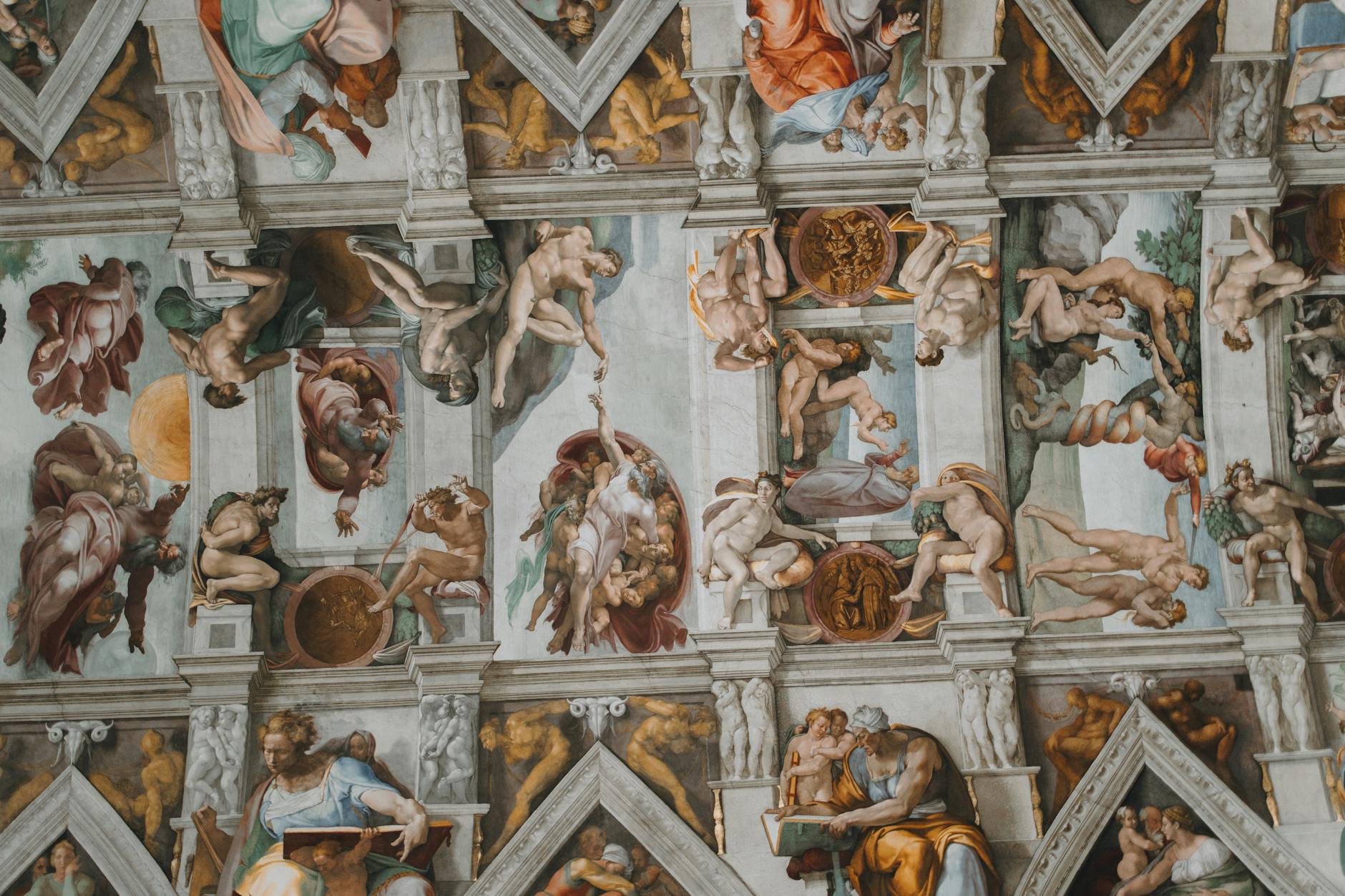
Genesis 1–5 tells the story of Adam and Eve: the first humans, created in God’s image (Genesis 1:27), given the sacred task of stewardship over creation (Genesis 2:15), and placed in the Garden of Eden to live in communion with God and one another.
God formed Adam from dust and breathed into him the breath of life (Genesis 2:7). Eve was created from Adam’s side (Genesis 2:22), indicating not inferiority, but equality and partnership. Their union represented the first human covenant and family.
The Fall and the First Gospel
Tempted by the serpent, Eve ate from the tree of the knowledge of good and evil and gave the fruit to Adam, who ate knowingly (Genesis 3:6). Their eyes were opened, shame entered the world, and they hid from God. Yet, even in judgment, God sought them out (Genesis 3:9) and promised redemption through the “seed of the woman” (Genesis 3:15)—the first gospel.
Christian Perspectives
John Wesley, in Sermon 44: Original Sin, wrote that Adam’s disobedience “infected the very root of our nature,” but that God’s grace “goes before” to awaken us. He insisted on shared guilt and shared grace. Adam was passive; Eve was deceived. Both sinned and both were recipients of prevenient grace.
For Wesley, the story of Adam and Eve is not about assigning blame, but about recognizing the universal condition of sin and the universal availability of redemption. Their expulsion from Eden was not the end—it marked the beginning of God’s saving work.
Early Church Fathers
Irenaeus of Lyons (2nd century)
Irenaeus taught that Adam’s sin introduced corruption into humanity, not merely by imitation but by a real distortion of human nature.
He emphasized that humanity fell “in Adam” because Adam was the head of the human race.
Simultaneously, Irenaeus introduced the earliest full articulation of prevenient grace through the theme of “recapitulation”: God moves first to heal what Adam broke, and Christ retraces Adam’s steps to restore human freedom.
Eve is portrayed as genuinely deceived; Adam knowingly chose disobedience.
Tertullian (late 2nd–early 3rd century)
Tertullian argued that Adam transmitted guilt and corruption biologically (“seminal identity”).
He stressed the seriousness of the Fall and saw all humans as implicated in Adam’s act.
He also affirmed that divine grace initiates repentance—though not systematically developed.
Origen (3rd century)
Origen taught that humanity inherited a condition of moral weakness because of Adam, even if he avoided later Western language of “imputed guilt.”
He explicitly states that God’s grace must “precede and assist” the soul’s turning to God.
Eve’s deception and Adam’s disobedience are both treated as components of the Fall, but Adam carries the headship responsibility.
Athanasius (4th century)
In On the Incarnation, Athanasius depicts Adam’s sin as plunging humanity into corruption and death.
He presents grace as wholly prior—God must act first to restore the human will, because the human will has lost its capacity to return to God unaided.
Augustine of Hippo (late 4th–early 5th century)
Augustine is the most decisive early voice on inherited guilt and divine initiative:
- Adam’s sin caused a real corruption of human nature inherited by all.
- Humans are morally unable to initiate faith or love of God.
- Grace must come first—gratia praeveniens—to awaken the will.
Augustine also distinguished between Eve’s deception and Adam’s knowing rebellion (1 Tim. 2:14), but he held both fully responsible.
John Cassian (5th century)
Cassian moderated Augustine slightly: humanity is wounded by Adam, unable to save itself, but still retains some capacity to cooperate when grace first stirs the soul.
He preserved the idea that grace initiates, but emphasized synergy.
Medieval Christian Writers
Anselm of Canterbury (11th century)
In Cur Deus Homo, Anselm presents original sin as the loss of original righteousness and the inheritance of guilt.
Anselm is firmly Augustinian: the will cannot return to God without God beginning the work.
Thomas Aquinas (13th century)
Aquinas taught that Adam’s sin deprived humanity of supernatural grace and disordered human nature.
Original sin is both guilt and the “privation of original justice.”
He emphasizes that actual grace precedes every movement of the will—a clear affirmation of prevenient grace.
He distinguishes the modes of Adam and Eve’s sin: Eve fell by deception; Adam by consent; both equally contributed to humanity’s corruption.
Bonaventure (13th century)
Bonaventure strongly emphasized that grace is always prior to human action and that no one can reach God unless God first inclines the heart.
Reformation-Era Voices (16th century)
Martin Luther
Luther held that original sin corrupts the entire human nature and that no part of the will remained untainted.
He described fallen humanity as spiritually “dead.”
Grace—specifically the work of the Holy Spirit—must awaken faith; it always precedes.
He kept the distinction of Eve’s deception and Adam’s headship responsibility.
John Calvin
Calvin articulated that Adam’s disobedience “contaminated” human nature.
Original sin is both guilt and corruption.
The will is so bound that it cannot even desire God unless God first acts—praeveniens gratia is implicit in his doctrine of regeneration.
Both Adam and Eve sinned, but Adam’s role as covenant head made his act determinative.
Seventeenth and Eighteenth-Century Writers (Wesley’s Context)
Jacobus Arminius (1560–1609)
Arminius, whom Wesley later followed, taught that original sin leaves humanity totally unable to turn to God without grace.
But he insisted on a universal, enabling grace restorative to free will—“prevenient grace”—given through the Spirit on the basis of Christ’s atonement.
Adam and Eve jointly sinned; Adam, as representative head, transmitted the fallen condition.
The Arminian Remonstrants (17th century)
They reinforced:
- corrupted human nature inherited from Adam;
- salvation’s first movement from God;
- universal enabling grace restoring the ability to believe.
Richard Baxter (1615–1691)
Baxter accepted inherited corruption and affirmed that God must first stir the will.
He drew heavily from Augustine but maintained human response as genuinely free, once grace awakens it.
Jeremy Taylor (1613–1667)
Taylor taught that humanity inherits the consequences of Adam’s sin (mortality and corruption), and that divine grace precedes repentance.
He leaned toward the Eastern emphasis: human nature is wounded, not annihilated.
Jonathan Edwards (1703–1758)
A contemporary of Wesley with a sharply different view.
Edwards asserted:
- Adam’s sin causes a “moral inability” for humans to choose good.
- Depravity is total and affects affections, not just intellect.
- Only sovereign, effectual grace can awaken the soul.
He did not affirm universal prevenient grace; he affirmed monergistic regeneration.
John Fletcher (1729–1785)
Wesley’s closest theological ally.
Fletcher defended prevenient grace as universally extended to all humanity and described it as the restorative presence of the Spirit enabling repentance, faith, and obedience.
He affirmed inherited corruption but rejected imputed guilt in the strict Calvinist sense.
Across the Centuries
Wesley’s position in Sermon 44 stands in a long Christian tradition with several consistent themes:
- Humanity inherits a real corruption from Adam.
From Irenaeus to Aquinas to Arminius, this is nearly universal. - Adam and Eve share responsibility, though in different modes.
The distinction (Eve deceived, Adam knowingly choosing) is common, but shared sin and shared consequences remain. - Grace always initiates.
Augustine, Aquinas, Cassian, Luther, Calvin, Arminius, and Wesley all affirm that God must move first—though they differ on whether this grace is universal (Arminius, Wesley) or selective (Calvin, Edwards). - Wesley fits into the synergistic, grace-first tradition rooted in the East, moderated Augustine, and developed through Arminian theology.
His emphasis on universal prevenient grace is deeply indebted to both the early fathers (Irenaeus, Cassian) and Reformation-era Arminians.
- Terms
Life After Eden
Outside the garden, Adam and Eve lived long lives. They worked the land, bore children, and experienced grief, especially after Cain murdered Abel. Yet in the birth of Seth (Genesis 4:25), hope continued. Through Seth’s line came Noah, Abraham, and eventually Christ (Luke 3:38).
The apocryphal Life of Adam and Eve imagines their post-Eden life as one of repentance, fasting, and longing for restoration—resonant with early Christian and Wesleyan themes of grace-empowered transformation.
Zola Levitt Connections
In A Christian Love Story, Zola Levitt draws on Jewish wedding imagery to show how God’s covenant with humanity began in Eden and will culminate in the marriage supper of the Lamb. Adam and Eve’s creation and separation mirror the model of bride and groom—God forming a people for Himself.
In The Seven Feasts of Israel, the Eden narrative foreshadows the structure of God’s redemptive calendar. The Passover feast points to the need for blood to cover sin—a concept introduced when God clothed Adam and Eve with garments of skin (Genesis 3:21).
Theological Legacy
Adam and Eve are not merely figures of failure. They are the beginning of both the problem and the promise. Their lives teach us:
- That sin breaks relationships—with God, others, and creation.
- That shame does not stop God from pursuing us.
- That redemption is planned, promised, and possible from the very beginning.
Application for Today
Here and beyond, their story reminds us that every broken moment is also an invitation to return to God. The church becomes a new garden—where grace grows, forgiveness is cultivated, and the promise of full restoration blooms.
Glossary of Terms – Adam and Eve Study
Biblical and Theological Terms
Image of God (Imago Dei)
The unique identity given to humans reflects God’s nature—reason, moral agency, relational capacity (Genesis 1:27).
- Hebrew: tselem (צֶלֶם) – “image,” “likeness,” “representation.”
Adam
The first human, created from the earth. Represents both an individual and humanity as a whole.
- Hebrew: adam (אָדָם) – “man,” “human,” “mankind”; related to adamah (אֲדָמָה) meaning “ground” or “earth”
Eve
The first woman, formed from Adam’s side. Mother of all the living (Genesis 3:20).
- Hebrew: chavah (חַוָּה) – “life,” “living one”
Fall
The event in Genesis 3 where Adam and Eve disobeyed God, introducing sin and death into the world.
- No direct Greek or Hebrew word; theological term based on the narrative of disobedience and expulsion.
Original Sin
The doctrine that all human beings inherit a corrupted nature from Adam.
- Referenced in Romans 5:12–19.
- Greek (NT): hamartia (ἁμαρτία) – “sin,” “missing the mark”
Prevenient Grace
A Wesleyan term referring to the grace of God that goes before any human action, enabling repentance and faith.
Justifying Grace
The grace by which God forgives sin and declares a person righteous through faith in Christ.
Covenant
A solemn agreement initiated by God. In Genesis, God’s covenant with Adam (implicit) and Noah (explicit) shows divine commitment to humanity.
- Hebrew: berit (בְּרִית) – “covenant,” “agreement”
Redemption
God’s action to buy back or restore what was lost. The promise in Genesis 3:15 is the first sign of redemption.
- Hebrew: ga’al (גָּאַל) – “to redeem,” “to act as kinsman-redeemer”
- Greek: apolutrōsis (ἀπολύτρωσις) – “release,” “ransom,” “liberation”
Protoevangelium
Latin term meaning “first gospel,” referring to Genesis 3:15—the promise that the seed of the woman would crush the serpent.
Terms from Church History and Wesleyan Thought
Second Adam
A title for Christ, used in 1 Corinthians 15:45, to describe His role in reversing the sin of the first Adam.
- Greek: eschatos Adam (ἔσχατος Ἀδάμ) – “last Adam”
Typology
A theological method where Old Testament persons or events (types) foreshadow New Testament fulfillment (antitypes). Eve–Mary and Adam–Christ are classic examples.
Sanctification
The process by which a believer is made holy. In Wesleyan thought, this includes entire sanctification, a heart perfected in love.
Exile
The condition of being separated from one’s rightful place. Adam and Eve’s removal from Eden foreshadows Israel’s exile and humanity’s spiritual separation from God.

 John Hargrove Seeking Truth and Reality