Signal tracing

There is a quiet lesson in the way engineers trace a signal.

Signal tracing is not complicated. You find the source. You follow the line. You locate every place the signal was lost, degraded, or redirected. And then you ask: what was the original transmission? What was it always trying to say?

Life with God is often very much like that.

Over time the signal of our life can become noisy. Wounds, disappointments, fear, and the voices of others can introduce distortion. The message that once felt clear begins to sound faint. We begin to wonder if the signal was ever there at all.

But the signal did not begin with the noise.

Scripture reminds us that our lives began with a transmission from God Himself. Before the world grew loud, the message was simple: you are loved, you are called, and you belong to Him.

Just as an engineer traces a circuit back to the source, the soul can trace its life back to the heart of God. When we do, we begin to recognize where the signal was weakened — where fear spoke louder than faith, where the world redirected what God originally spoke.

The good news is that the Source has never changed.

God’s message toward us has never degraded. His voice is still transmitting the same truth it always has. Through Jesus Christ the line is restored, the signal strengthened, and the message becomes clear again.

You are not lost.
You are not forgotten.
The signal is still there.

Sometimes the most faithful thing we can do is simply trace our way back to the Source and listen again.

“Draw near to God, and He will draw near to you.” — James 4:8

Today, take a moment to quiet the noise. Follow the line of your life back to where it began. Listen carefully.

The original transmission is still speaking.

#Faith
#Encouragement
#GodIsStillSpeaking
#Hope
#JesusRestores

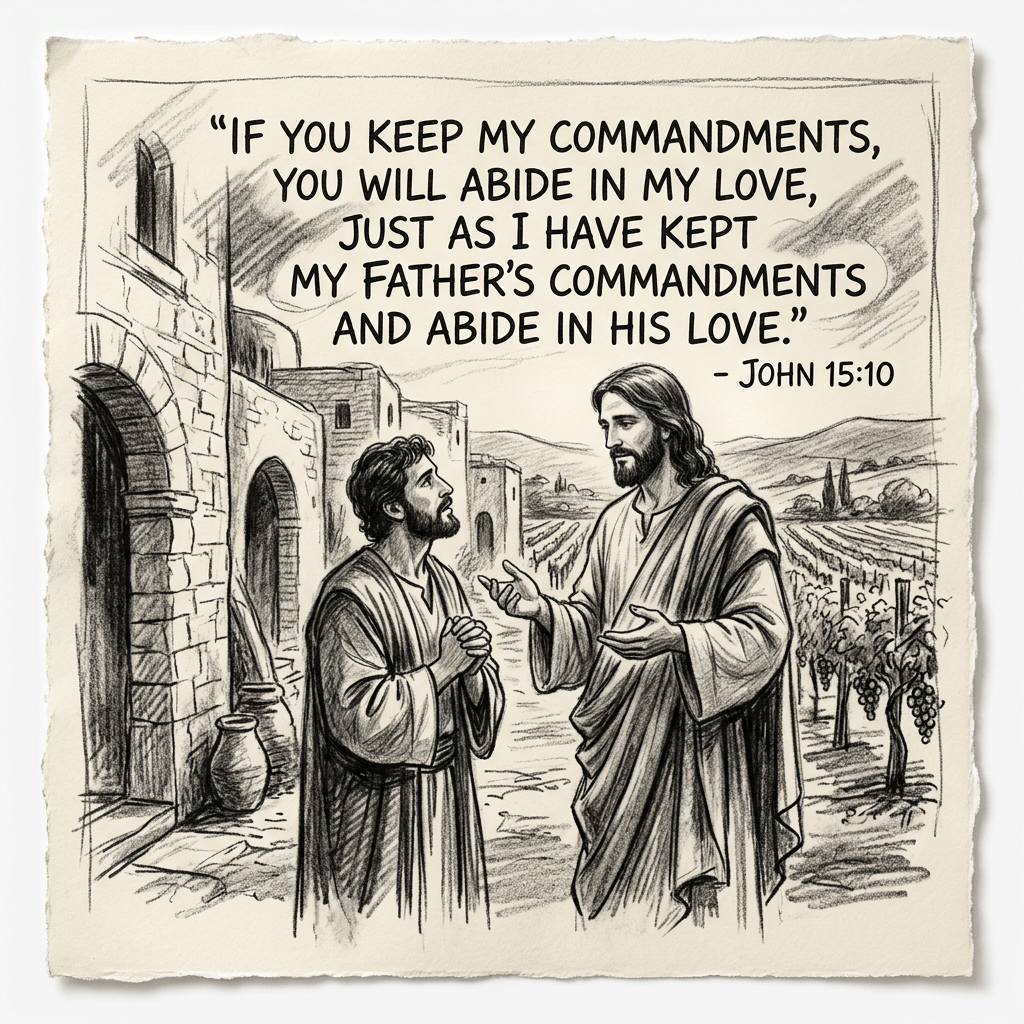
If Jesus Sat Down at the Podcast Table

2-R42-K3-1860 (135638)

In an age of microphones, hot takes, and viral outrage, it is worth asking a quiet question:
If Jesus listened to one of our political podcasts — full of frustration, mockery, policy arguments, and sharp humor — how would He respond?

Not how would He vote.
Not which side would He take.
But how would He interact?

This is not about scoring political points. It is about discipleship in a noisy age.


1. He Would Listen Before He Spoke

One of the most striking patterns in the Gospels is how often Jesus lets people talk.

The Pharisees speak.
The disciples misunderstand.
Pilate questions.
The Samaritan woman explains her life.

He listens.

James writes, “Everyone should be quick to listen, slow to speak, and slow to become angry” (James 1:19). Jesus embodied that.

If He sat in a studio chair, He would not begin by correcting tone or policy. He would listen long enough to understand what was driving the words.

Because beneath every rant is a fear.
Beneath every mockery is a wound.
Beneath every certainty is a longing to be right.


2. He Would Separate Concern from Contempt

In political commentary, real concerns are often wrapped in ridicule.

Concern: Cities feel chaotic.
Concern: Language games can obscure truth.
Concern: Policy without enforcement fails.

Those are legitimate public questions.

But when concern turns into contempt — when people are reduced to “junkies,” “idiots,” “demons,” or caricatures — something in the spirit shifts.

Jesus confronted hypocrisy fiercely (Matthew 23), but He did not mock the vulnerable. He rebuked sin, but He did not dehumanize sinners.

He warned:

“Whoever says to his brother, ‘You fool,’ will be liable to the fire of hell.” (Matthew 5:22)

The danger is not disagreement.
The danger is contempt.

Contempt reshapes the heart long before it reshapes policy.


3. He Would Challenge Overgeneralization

“It’s all drug addicts.”
“They don’t want to fix it.”
“They’re just voting for free stuff.”

Sweeping statements feel powerful. They simplify complexity and energize crowds.

But Jesus worked in specifics.

Zacchaeus was not “a corrupt tax collector.” He was Zacchaeus.
The woman caught in adultery was not “moral decay.” She was a person.
The rich young ruler was not “elite greed.” He was a soul in conflict.

When crowds tried to flatten people into categories, Jesus restored names and faces.

He might gently ask:

“Is every person you describe truly the same?”
“Do you know their story?”

Truth without nuance becomes cruelty.


4. He Would Press for Personal Responsibility

One recurring theme in political outrage is this:
“If they really cared, they would…”

Jesus often turned that logic inward.

When the disciples said the crowd should be sent away to find food, He replied:

“You give them something to eat.” (Mark 6:37)

When a rich man asked about eternal life, Jesus told him to sell what he had and give to the poor (Matthew 19:21).

If a podcaster said, “Elites should give up their extra houses,” Jesus might ask:

“What about you?”

The Kingdom of God does not begin with “they.”
It begins with “you.”


5. He Would Refuse Tribal Identity

Modern discourse often forces binary alignment:
You are either with this side or that side.

But Jesus did not fit neatly into political categories of His time.

He was not a Zealot revolutionary.
He was not a Roman collaborator.
He was not a Pharisaical legalist.

When asked about taxes — a political trap — He responded, “Render to Caesar what is Caesar’s, and to God what is God’s” (Matthew 22:21).

He refused to be captured by tribal framing.

If drawn into partisan narratives, He might say:

“You see enemies. I see neighbors.”

That is not naive. It is radical.


6. He Would Address Fear Beneath Anger

Many political rants are fueled by fear:

Fear of disorder.
Fear of national decline.
Fear of losing cultural ground.
Fear of corruption.

Anger is often fear with armor on.

When the disciples panicked in the storm, Jesus asked:

“Why are you afraid?” (Matthew 8:26)

He addressed the fear before the waves.

If He sat in a studio where frustration boiled over, He might ask:

“What are you protecting?”
“What are you afraid will be lost?”

And that question would quiet the room more effectively than an argument.


7. He Would Lift the Conversation Above Policy

Jesus did not ignore earthly matters — He spoke of taxes, justice, leadership, stewardship.

But He consistently traced public disorder back to the human heart.

“Out of the abundance of the heart the mouth speaks.” (Matthew 12:34)

He might not start with, “Here is the correct immigration policy.”
He might start with, “What kind of people are you becoming while you debate it?”

Because a nation can enforce laws and still lose its soul.
A movement can win elections and still lose mercy.


8. He Would Call for Truth Without Malice

Jesus is both:

Full of grace.
Full of truth. (John 1:14)

Grace without truth becomes sentimentality.
Truth without grace becomes brutality.

In our media culture, we often see:

Truth claims weaponized without love.
Or love language detached from reality.

Christ refuses both distortions.

If He spoke into a heated conversation, He would not lower the bar of truth — but He would cleanse it of cruelty.


9. What This Means for Us

The deeper question is not:
“How would Jesus correct them?”

It is:
“How would He correct me?”

When I consume political content:

• Do I enjoy contempt?
• Do I feel morally superior?
• Do I hunger more for outrage than understanding?
• Do I pray for those I criticize?

If Christ’s Spirit dwells in us, then our speech should begin to resemble His.

Not timid.
Not silent.
But measured, merciful, and courageous.


Closing Reflection

If Jesus walked into the studio, I do not believe He would flip the table over the microphones.

He would listen.
He would ask piercing questions.
He would confront pride.
He would dignify the unseen.
He would call everyone — hosts and critics alike — to repentance.

And He would remind us that no political reform can substitute for a transformed heart.

Because the Kingdom He brings is not built by ridicule, nor preserved by rage.

It is built by truth spoken in love.

And that is harder than any podcast debate.


Steady in the Signal: Faith, Work, and Building What Lasts

Back home from Comanche after a solid week on towers and microwave alignment. There is something grounding about standing under an 11 GHz path, watching signal levels lock in, knowing that invisible waves are carrying real conversations across miles of Texas pasture.

This morning we went deeper into John 4.

Jesus was tired. Dust on His feet. Thirst in His body. And still He chose to engage. He crossed ethnic lines, moral lines, religious lines, and personal pain lines. Not to win an argument. Not to prove a point. But to restore a person.

That matters right now.

We are living in a time where outrage travels faster than microwave backhaul. Blame is currency. Headlines are engineered for reaction. Facts are contested. Narratives are crafted. And too many people are exhausted.

But truth is not loud. It is steady.

At the well, Jesus did not shout the Samaritan woman down. He did not cancel her history. He named it honestly and then offered living water. Grace and truth, together. Not one without the other.

This week I worked on infrastructure — power, bandwidth, line of sight, reliability. I also wrote about AI, data centers, water supply, grid stability. All of it points to the same reality: the future will demand clarity, discipline, and stewardship. Power must be generated. Water must be sourced. Data must be moved. Systems must be resilient.

So must people.

As I step into a senior pastor role at Source of Old Faith, the call is not to build noise. It is to build a foundation. Order. Accountability. Spiritual maturity. A house built on the cornerstone, not on emotion or personality.

In a world of accusation, we need conviction without cruelty.
In a world of spin, we need truth without arrogance.
In a world of uncertainty, we need hope anchored in something older and stronger than the news cycle.

Jesus is still crossing barriers.


The Spirit is still building living stones.
The Church must still be salt and light.

Build strong networks.
Build strong families.
Build strong churches.
Tell the truth.
Refuse hate.
Stay steady.

The future is not secured by outrage. It is secured by faithfulness.

Press on.

January 31, 2026 Life at a glance

Lately my writing has slowed down, but my thinking has deepened.

I’ve found myself less interested in quick answers and more committed to careful formation. Less drawn to certainty that flatters the ego, and more willing to sit with mystery that reshapes the soul. Scripture has stopped being something to “use” and has returned to being something that uses me.

I keep coming back to this conviction: the Christian life is not a moment to be secured, but a life to be received, surrendered, and patiently lived. Faith is not proved by how confidently we speak, but by how faithfully we endure. Salvation is not managed by presumption, but entrusted daily to the mercy of God.

In recent weeks, I’ve been studying more slowly—whole passages, whole books, whole conversations across centuries of the Church. I’m listening more carefully to Scripture, to the early witnesses, and to the quiet corrections of the Holy Spirit. What I’m learning is not new, but it is clarifying: humility precedes understanding; obedience precedes assurance; love precedes everything.

I am increasingly convinced that much of our modern anxiety comes from trying to finish a work God intends to complete over a lifetime. We rush toward conclusions when Christ calls us to follow. We want guarantees where He offers relationship. We want arrival when He offers formation.

So for now, my focus is simple:
To read attentively.
To pray honestly.
To live repentantly.
To trust God with outcomes I cannot control.
To walk forward without pretending I have already arrived.

This is not resignation. It is reverence.
Not doubt. It is discipline.
Not fear. It is faith learning to mature.

“Lord, teach me to live truthfully before You, and leave the keeping of my soul in Your hands.”

That is enough for today.

The Two Competing Liturgies

James K.A. Smith, in his book Desiring the Kingdom, argues that we are shaped more by our practices (what he calls “liturgies”) than by our ideas.

Photo by Josu00e9 Franco on Pexels.com

A liturgy is a repeated set of practices that train your desires and form your identity.

The church has always understood this. That’s why we have:

  • Gathered worship
  • Scripture reading
  • Prayer
  • The Lord’s Supper
  • Baptism
  • Confession and absolution

These are formative practices. They train us to see the world a certain way. They shape our desires. They form us into people who resemble Jesus.

But here’s the problem: the culture also has liturgies. And they are far more consistent, far more pervasive, and far more powerful than we want to admit.

The liturgy of the smartphone:

  • Wake up → check the news → feel anxious
  • Scroll social media → see outrage → feel angry
  • Read about “the enemy” → feel contempt
  • Repeat every hour

The liturgy of political tribalism:

  • Consume media from “our side” → feel affirmed
  • See the other side’s hypocrisy → feel superior
  • Share content that demonizes them → feel righteous
  • Repeat daily

The liturgy of consumerism:

  • See an ad → feel inadequate
  • Buy something → feel temporary satisfaction
  • Need more → repeat

These liturgies are discipling us. They are forming us into specific kinds of people:

  • Anxious people
  • Angry people
  • Tribal people
  • Contemptuous people
  • Greedy people

And we are often more faithful to these liturgies than we are to the liturgies of the church.

choose and learn how to:

  • Root your identity in Christ rather than in your tribe
  • Be formed by Scripture rather than by outrage
  • Love your enemies when everything in you wants to hate them
  • Speak truth without returning evil for evil
  • Build kingdom communities that transcend human divisions
  • Engage the world without being captured by it
  • Suffer well when faithfulness costs you something
  • Maintain hope when the culture feels like it’s collapsing

You Are Not What They Call You

The first battle is always the battle for identity.

Who are you?

Before you do anything, before you take any action, before you make any decision, who are you?

This question matters because identity determines behavior. What you believe about who you are will shape everything you do.

And right now, there is a war being waged over your identity.

The culture wants to tell you who you are:

  • You are your political affiliation
  • You are your race
  • You are your sexuality
  • You are your economic class
  • You are your consumer preferences
  • You are your ideology

The culture needs you to believe this because if your identity is rooted in these categories, you can be controlled, manipulated, and sold to.

Your tribe wants to tell you who you are:

  • You are one of us
  • You are against them
  • You are defined by who you oppose
  • You are part of the movement

Your tribe needs you to believe this because if your identity is rooted in tribal belonging, you will defend the tribe at all costs—even when the tribe is wrong.

Even the church sometimes gets this wrong:

  • You are what you do (your ministry, your role, your service)
  • You are what you believe (your theology, your doctrinal precision)
  • You are your moral performance (how well you obey)

These are all lies.

Or at least, they are secondary truths being elevated to primary status.


Who You Actually Are

Scripture is relentlessly clear about Christian identity:

You are in Christ.

That’s it. That’s the foundation. Everything else is commentary.

Galatians 3:26-28:

“For in Christ Jesus you are all sons of God, through faith. For as many of you as were baptized into Christ have put on Christ. There is neither Jew nor Greek, there is neither slave nor free, there is no male and female, for you are all one in Christ Jesus.

This is revolutionary.

Paul is writing to a world obsessed with identity categories:

  • Jew or Greek (ethnicity/religion)
  • Slave or free (economic/social class)
  • Male or female (gender)

And he says: In Christ, these categories do not define you.

They still exist. They still matter in certain contexts. But they are not your primary identity.

Your primary identity is: You are in Christ.


What “In Christ” Means

“In Christ” is not a metaphor. It’s not a nice religious phrase. It’s a relational reality.

To be “in Christ” means:

1. You are united to Jesus.

2 Corinthians 5:17:

“Therefore, if anyone is in Christ, he is a new creation. The old has passed away; behold, the new has come.”

You are not the same person you were before. Your old identity—defined by sin, shame, tribalism, and death—has been crucified with Christ. You have been raised to new life.

2. You share in His status.

Romans 8:16-17:

“The Spirit himself bears witness with our spirit that we are children of God, and if children, then heirs—heirs of God and fellow heirs with Christ.”

You are not an employee of God. You are not a servant trying to earn approval. You are a child. You are an heir.

3. You are secure.

Romans 8:38-39:

“For I am sure that neither death nor life, nor angels nor rulers, nor things present nor things to come, nor powers, nor height nor depth, nor anything else in all creation, will be able to separate us from the love of God in Christ Jesus our Lord.”

Your identity is not fragile. It does not depend on your performance, your tribe, or your political victories. It is secured by God’s love, demonstrated in Christ’s death and resurrection.


The Practical Implications

If your primary identity is “in Christ,” then:

1. You are not defined by your politics.

You can hold political convictions (you should!), but your political affiliation is not your identity.

When someone asks, “Are you conservative or progressive?” the answer is: “I’m a Christian. That’s my primary allegiance.”

When the culture demands you choose a tribe, you say: “I belong to Christ. That’s my tribe.”

2. You are not defined by your tribe.

You can appreciate your cultural heritage, your family traditions, your community. But these do not define you.

When your tribe demands loyalty that conflicts with Christ, you say: “My loyalty is to Jesus first.”

3. You are not defined by what you do.

Your job, your ministry, your role—these are important. But they are not your identity.

When you lose your job, your ministry ends, or your role changes, you are still in Christ. Your identity is secure.

4. You are not defined by what others call you.

When the culture labels you (racist, bigot, heretic, snowflake, socialist, fascist), you do not have to accept those labels.

Your identity is not determined by your enemies. It’s determined by God.

5. You are free.

Free from the need to prove yourself.
Free from the fear of rejection.
Free from the tyranny of performance.
Free from tribal captivity.

Because you are in Christ.


The Test: What Do You Defend First?

Here’s a diagnostic question:

When someone attacks your tribe, your politics, or your theology, what is your first impulse?

If your first impulse is defensiveness, anger, or contempt, your identity is rooted in the wrong place.

If your first impulse is to defend Jesus and the gospel, your identity is rightly ordered.

Example:

Someone says: “Christians are hypocrites.”

Tribal response: “How dare you! We’re not hypocrites! You’re the hypocrite!”

Christ-centered response: “You’re right. We often are. I am. That’s why I need Jesus. Would you like to hear about the One who transforms hypocrites?”

See the difference?

When your identity is in Christ, you don’t have to defend yourself. You only have to point to Him.


Exercise 1: The Identity Audit

Take 15 minutes and answer these questions honestly:

  1. When I introduce myself, what do I lead with?
    • My job? My politics? My affiliations? Or my faith?
  2. What makes me angriest?
    • Attacks on my tribe/politics? Or dishonoring Jesus?
  3. What do I spend the most time thinking about?
    • The culture war? Or the kingdom of God?
  4. If I lost my political tribe, would I feel like I’d lost myself?
  5. If I could no longer participate in partisan politics, would my sense of purpose collapse?
  6. Do I have close relationships with Christians who vote differently than me?
    • If not, why not?
  7. When I read Scripture, am I looking for ammunition for my political views, or am I allowing it to critique me?

If your answers reveal that your identity is more tribal than Christ-centered, confess it. Repent. And commit to the long work of reordering your identity.


Exercise 2: Rewrite Your Identity Statement

Write a one-paragraph statement of who you are in Christ, without reference to politics, tribe, or cultural categories.

Example:

“I am a child of God, loved before I did anything to earn it. I am united to Jesus Christ through faith. My sins are forgiven. My identity is secure. I am being transformed into His image. I belong to the kingdom of God, which transcends all human kingdoms. My calling is to love God, love my neighbor, and make disciples. My hope is not in political victories but in the resurrection. This is who I am.”

Now read this aloud every morning for 30 days.

Let it sink into your bones.


The Danger of Divided Loyalty

Jesus was uncompromising about divided loyalty:

Matthew 6:24:

“No one can serve two masters, for either he will hate the one and love the other, or he will be devoted to the one and despise the other.”

You cannot serve Christ and your tribe.
You cannot serve the kingdom and the culture war.
You cannot have your primary identity in Christ and your functional identity in politics.

You will choose.

And the choice you make will determine everything.


Conclusion: The Freedom of a Settled Identity

When your identity is settled in Christ, you become dangerous to the powers of this world.

Not dangerous because you’re violent or coercive.

Dangerous because you cannot be controlled.

  • They can’t control you with fear (you belong to the One who defeated death)
  • They can’t control you with shame (you are forgiven and loved)
  • They can’t control you with tribalism (your tribe is the church universal)
  • They can’t control you with power (you serve a crucified King)

You are free.

And free people are the most dangerous people in the world—to tyrants, to tribes, and to the powers that demand conformity.

This is where Christian formation begins: with identity.

Who are you?

You are in Christ.

Everything else flows from that.

How Jesus Would Engage Today: A Scripture-Grounded Framework

Part I: Jesus’ Actual Methods (Observation)

1. Jesus Distinguished Between Kingdoms

John 18:36 – “My kingdom is not of this world. If it were, my servants would fight.”

Observation: Jesus consistently refused to become a political revolutionary, even when crowds wanted to make Him king (John 6:15). Yet He was executed as a political threat. This tension is not accidental.

What this means: Jesus was neither politically passive nor politically coercive. He represented a third way.


2-R42-K3-1860 (135638)

‘Jesus reinigt den Tempel’

Schnorr von Carolsfeld, Julius
1794-1874.
‘Jesus reinigt den Tempel’.
Holzschnitt, spätere Kolorierung.
Aus: Die Bibel in Bildern, Leipzig
(Georg Wigand) 1860.
Berlin, Slg.Archiv f.Kunst & Geschichte.

2. Jesus Confronted Power Directly When Necessary

Mark 11:15-17 – Jesus cleared the temple, overturning tables and driving out merchants.

Matthew 23 – Jesus publicly denounced religious leaders: “Woe to you, scribes and Pharisees, hypocrites!”

Observation: Jesus did not avoid conflict with corrupt authority. He named injustice, exposed hypocrisy, and disrupted systems that exploited the vulnerable.


3. Jesus Was Tender Toward the Broken

Matthew 11:28 – “Come to me, all who are weary and burdened.”

John 8:1-11 – Woman caught in adultery: “Neither do I condemn you. Go and sin no more.”

Observation: Jesus’ harshest words were for the powerful and self-righteous. His gentlest words were for the wounded and repentant.


4. Jesus Refused False Binaries

Matthew 22:15-22 – “Render to Caesar what is Caesar’s, and to God what is God’s.”

Observation: Jesus did not allow Himself to be trapped by either/or political frameworks. He redefined the question.


Photo by Brett Jordan on Pexels.com

5. Jesus Formed a Countercultural Community

John 13:34-35 – “By this all people will know that you are my disciples, if you have love for one another.”

Observation: Jesus’ primary strategy was not lobbying Rome or reforming the Sanhedrin. It was creating a community whose life together would be a visible alternative.


Photo by RDNE Stock project on Pexels.com

6. Jesus Announced the Kingdom, Not a Political Platform

Mark 1:14-15 – “The time is fulfilled, and the kingdom of God is at hand; repent and believe in the gospel.”

Observation: Jesus preached the arrival of God’s reign, which relativized all human systems—but did not offer a detailed political program.


“Held, Even Here”

Bob’s story has been marked by endurance few ever choose and many never see. Years of pain, delayed care, uncertainty, and now a sober medical reality. Scripture never pretends that such paths are easy or quickly resolved. Instead, it speaks honestly to people who must live forward without the promise of full restoration.

Photo by Kindel Media on Pexels.com

There is a quiet truth that matters today: being preserved is not the same as being abandoned. Even when healing does not look like reversal, life still has purpose, dignity, and meaning. Strength is not measured by improvement alone, but by faithfulness through limitation.

Photo by Christiane on Pexels.com

There is One in the Christian story who knows what it is to suffer bodily, to be misunderstood, to endure pain without quick relief. He does not stand at a distance offering explanations; He walks alongside, bearing weight with us. When words fail and the future feels smaller, presence still remains—and presence is enough for today.

Bob is not defined by injury, diagnosis, or what may never return. He is known, seen, and held—right here, right now. And even in guarded outcomes, grace can still guard the soul.

Prayer for Bob

Lord of mercy and steady strength,
We lift Bob into Your care today. You see the years of pain, the delays, the losses, and the courage it has taken simply to endure. Grant him peace that does not depend on outcomes, courage for the road ahead, and wisdom for every doctor and decision.

As surgery is considered, guard his body, preserve what can be preserved, and bring clarity through each specialist who examines him. Protect his voice, his dignity, and his sense of being fully human and fully valued.

When pain is constant and answers are limited, be near in ways that are unmistakable. Let Bob know he is not forgotten, not overlooked, and not walking alone. Carry what he can no longer carry himself, and surround him with people who reflect Your steady love.

Give rest to his body, calm to his mind, and quiet hope to his heart—one day at a time.
In Jesus Name, Amen.

When Fear Produces Wisdom: The Moral Shock of the Shrewd Manager

Photo by Elu012bna Aru0101ja on Pexels.com

Few of Jesus’ parables unsettle modern readers like the story of the Shrewd Manager (Luke 16:1–9). The central character is dishonest, self-interested, and motivated by fear. Worse, the resources he manipulates are not his own. And yet, Jesus says the master commended him.

This discomfort is intentional. Jesus is not softening morality; He is sharpening perception.

What Jesus Is Not Praising

Photo by Pixabay on Pexels.com

The parable does not commend dishonesty, fraud, or fear-driven ethics. The manager is clearly corrupt. His impending dismissal confirms it. Jesus never calls his actions righteous, nor does He suggest his behavior should be imitated.

If the parable ended there, it would undermine Jesus’ own moral teaching. But it does not.

What Is Actually Commended

The praise falls on one narrow point: clarity under accountability.

When the manager realizes judgment is inevitable, illusion disappears. He stops pretending the assets are his. He accepts that his authority is ending. And he acts decisively with the time he has left.

The master commends him not for what he did, but for finally understanding reality.

Jesus makes the comparison explicit:
“The people of this world are more shrewd in dealing with their own kind than are the people of the light.”

The rebuke is aimed at the disciples, not the manager.

Stewardship, Not Ownership

At the heart of the parable is a biblical truth that is easy to confess and hard to live: nothing we possess truly belongs to us.

Time, money, influence, skill, position—these are entrusted, not owned. The manager’s error was not recognizing this sooner. His late wisdom was realizing that relationships outlast assets and mercy survives audits.

Jesus is exposing how often faithful people live as functional owners while professing to be stewards.

Fear as an Awakener, Not a Virtue

The manager acts out of fear, and fear is never presented as the highest moral motive. Scripture consistently teaches that love is greater than fear. Yet fear can still serve a purpose: it can awaken urgency.

Fear strips away denial. Fear confronts us with limits. Fear reminds us that time runs out.

The moral irony of the parable is this: a dishonest man takes judgment seriously, while God’s people often postpone obedience as if accountability were theoretical.

The Ethical Core of the Teaching

Jesus reframes moral wisdom away from mere rule-keeping toward eternal awareness.

The teaching is not “use dishonest methods,” but rather:

  • Use temporary resources with eternal seriousness
  • Convert wealth into generosity, reconciliation, and mercy
  • Invest in people, not possessions

Jesus immediately clarifies the point: when earthly wealth fails—and it always does—what remains are the relationships shaped by how it was used.

Why This Parable Offends Us

The story unsettles because it refuses to offer a sanitized hero. It acknowledges mixed motives and flawed character. It separates prudence from virtue and asks an uncomfortable question:

Why do people who claim eternal hope often live with less urgency than those facing temporary loss?

The Moral Conclusion

The Shrewd Manager is not a model of righteousness. He is a mirror.

The parable teaches that:

  • Stewardship demands foresight
  • Delay is itself a moral failure
  • Awakening late is still wiser than sleeping through responsibility

Jesus is not lowering ethical standards. He is raising the stakes.

The warning is simple and sharp:
Do not be less serious about eternity than a dishonest man is about his future.

That is the morality of the parable—and why it still confronts us today.

When Credentials Are Not Enough

A reflection on John 3

In the third chapter of the Gospel of John, we meet Nicodemus—a man of stature, learning, and influence. He is identified as a Pharisee, a ruler of the Jews, and a teacher of Israel. In every measurable way, Nicodemus is successful. His life has been carefully constructed around knowledge, discipline, and religious credibility. He has earned his place. He has mastered the system.

Yet he comes to Jesus at night.

That detail matters. Nicodemus does not come as a public figure seeking debate, nor as a confident leader issuing instruction. He comes quietly, privately, perhaps cautiously. Whatever confidence he carried in daylight seems to fade in the presence of Jesus. Something in him knows that his credentials are no longer sufficient.

Jesus does not flatter him. He does not affirm his status. He does not invite him to refine his theology or intensify his efforts. Instead, Jesus speaks words that would have cut straight through everything Nicodemus had built his life upon:

“You must be born again.”

Not improved.
Not corrected.
Not advanced to the next level.

Born again.

This is not a call to self-help or religious achievement. It is a declaration that the entire foundation is inadequate. Jesus looks past Nicodemus’s titles and accomplishments and sees a man who, despite all his success, still lacks life. Not information. Not morality. Life.

For Nicodemus, this would have been deeply unsettling. His identity was forged through study, obedience, and reputation. To be told that none of that could produce what was required would have felt like the ground shifting beneath his feet. Jesus is not asking him to add something to his life. He is telling him that he must become someone entirely new.

This is the scandal and the mercy of John 3. God’s kingdom is not entered through merit, pedigree, or position. It is entered through rebirth—through a work of God that cannot be controlled, earned, or managed. “The wind blows where it wishes,” Jesus says. Life with God begins not with human effort, but with divine initiative.

Nicodemus’s story confronts us with an uncomfortable question:
What happens when the things we rely on to define ourselves—our success, our knowledge, our service, even our religion—are no longer enough?

Jesus does not shame Nicodemus. He invites him. But the invitation is costly. It requires surrender. It requires letting go of the illusion that we can build our way into God’s life. It requires trusting that God can remake us from the inside out.

John does not tell us everything Nicodemus felt that night. But later in the Gospel, we see him again—first speaking cautiously in Jesus’s defense, and finally standing openly at the cross, helping to bury the crucified Christ. The man who came in the dark eventually steps into the light. New birth, it seems, is a process as much as a moment.

John 3 reminds us that faith is not about becoming better versions of ourselves. It is about becoming new. It is about allowing ourselves to be fully seen by Jesus—and trusting Him enough to let go of what we thought made us secure.

That invitation still stands.

Not “try harder.”
Not “prove yourself.”
But: be born again.

Will Christians Be Spared Trials? What the Bible Actually Promises

Photo by M Sidharda on Pexels.com

One of the quiet assumptions many believers carry—often without realizing it—is that faith should somehow shield us from hardship. When trials come, they can feel confusing or even destabilizing: If God is faithful, why am I still suffering? Scripture addresses this question directly, and its answer is both sobering and deeply hopeful.

The Bible does not promise Christians a trial-free life. What it does promise is something far better: God’s presence, preservation, and ultimate deliverance.

Trials Are Not an Accident

The New Testament is remarkably honest about the Christian life. Suffering is not presented as a failure of faith, nor as a sign of God’s absence.

Paul tells the Thessalonian church that trials should not surprise them, because “you know that we are destined for them” (1 Thessalonians 3:3). That single statement overturns the idea that hardship is an anomaly. Trials are part of the calling of discipleship in a fallen world.

Jesus Himself warned His followers that obedience would not lead to ease, but to opposition. Faith places us in alignment with God’s kingdom—and that alignment often brings friction with the world as it is.

God Knows How to Rescue the Godly

Acknowledging trials does not mean resignation to despair. Scripture is equally clear that God is not passive in the suffering of His people.

Peter writes, “The Lord knows how to rescue the godly from trials” (2 Peter 2:9). Notice what the verse does—and does not—say. It does not say God prevents all trials. It says He knows how to rescue His people from them.

That rescue may take different forms:

sustaining faith under pressure, moral protection in the midst of temptation, or final deliverance when God brings history to its appointed end.

Peter himself endured imprisonment and martyrdom, yet still testified to God’s rescuing power. For him, rescue did not mean avoidance; it meant faith preserved and hope fulfilled.

“Kept From” Does Not Always Mean “Removed”

Photo by eberhard grossgasteiger on Pexels.com

Revelation 3:10 is often quoted as a promise of exemption from suffering: “I will keep you from the hour of trial that is coming on the whole world.”

The language is important. The word “keep” in Scripture frequently means to guard or to preserve, not necessarily to remove from a situation entirely. Jesus uses the same idea in His prayer when He asks the Father not to take His disciples out of the world, but to keep them from the evil one.

In Revelation, the promise is not comfort or ease, but protection during a defined period of global testing. The emphasis is on God’s sovereignty and faithfulness, not on escape from all difficulty.

Watchfulness Assumes Ongoing Testing

Jesus’ warning in Matthew 25:13—“Keep watch, because you do not know the day or the hour”—only makes sense if believers remain engaged in a world marked by uncertainty and pressure.

If Christians were guaranteed removal before hardship, vigilance would be unnecessary. Watchfulness, endurance, and faithfulness are repeated themes precisely because trials remain part of the journey until Christ’s return.

The Pattern of Scripture Is Preservation Through, Not Removal From

When we step back and look at the whole biblical story, a consistent pattern emerges:

Noah was preserved through the flood, not taken away before it came. Israel was protected within Egypt during the plagues. Daniel was saved in the lions’ den. The early church grew stronger under persecution.

God’s people are repeatedly exposed to hardship—but never abandoned to it.

What Christians Are Actually Promised

The Bible makes these promises clear:

Christians are not promised a life without trials. They are promised God’s sustaining presence. They are promised protection from God’s final wrath. They are promised ultimate vindication, resurrection, and restoration.

Trials test the world.

Trials refine and reveal genuine faith.

A Final Word

Christian hope is not rooted in avoidance of suffering, but in confidence that suffering does not have the final word. God does not promise to keep His people from every storm—but He does promise to keep them in the storm and to bring them safely home.

Faith is not the absence of trials.

It is trust that God is faithful in the midst of them.