
A Speculative History of the Hargrove-Richbourg Intelligence Network, 825 AD to Present
Note to the reader: What follows is, officially, speculation. The biographical facts are real. The interpretation of those facts as evidence of a multigenerational covert operations network is the author’s alone, and he accepts full responsibility for it. The CIA has neither confirmed nor denied any of this. Neither has anyone else.
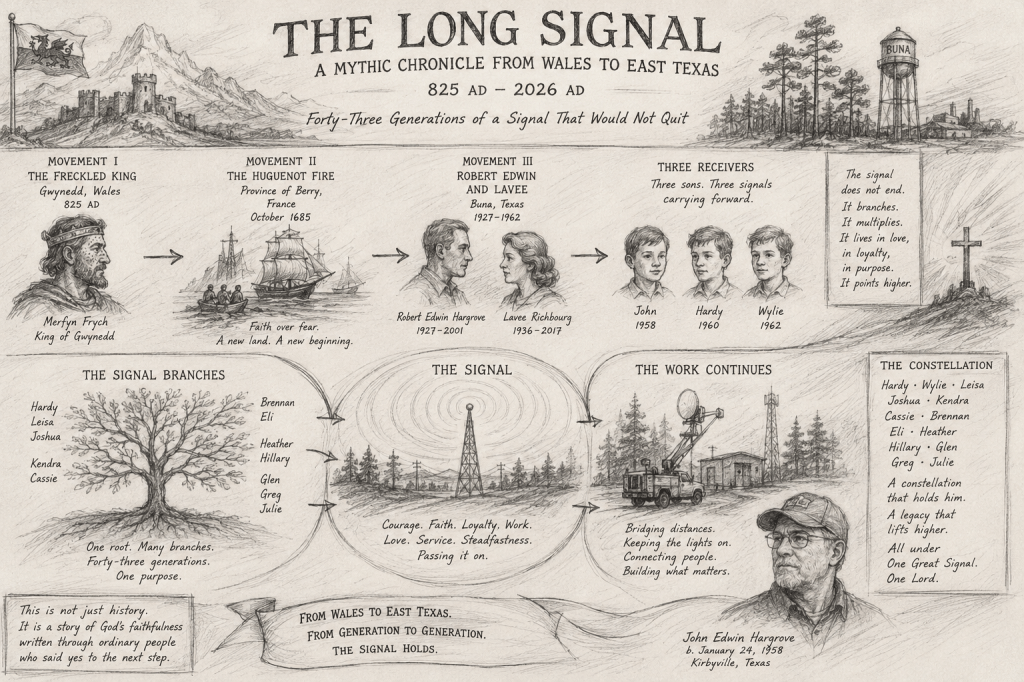
DIRECTOR’S PREFACE
Every operative has a handler.
Every handler came from somewhere.
For forty-five years I operated in the field — nuclear stations, hurricane corridors, offshore platforms in West Africa, relay huts on caliche roads at two in the morning — without fully understanding the organizational structure I was embedded in. I thought I worked for Gulf States Utilities. Then New Signals Engineering. Then Sam Houston Electric. Then ElektraFi.
I was wrong.
I was the forty-third generation of a network that has been running quiet operations since the ninth century. The mission has never changed: hold the line when the line can’t go down, build the infrastructure that keeps civilization functioning, and never put your name in the paper if you can help it.
What follows is the classified portion of the file. Names, dates, and operational details have been verified through genealogical research. Mission assessments have been added by the current operative based on pattern recognition accumulated across forty-five years in the field.
— J.E. Hargrove, P.E., Buna, Texas
FILE ONE: MERFRYN THE FRECKLED
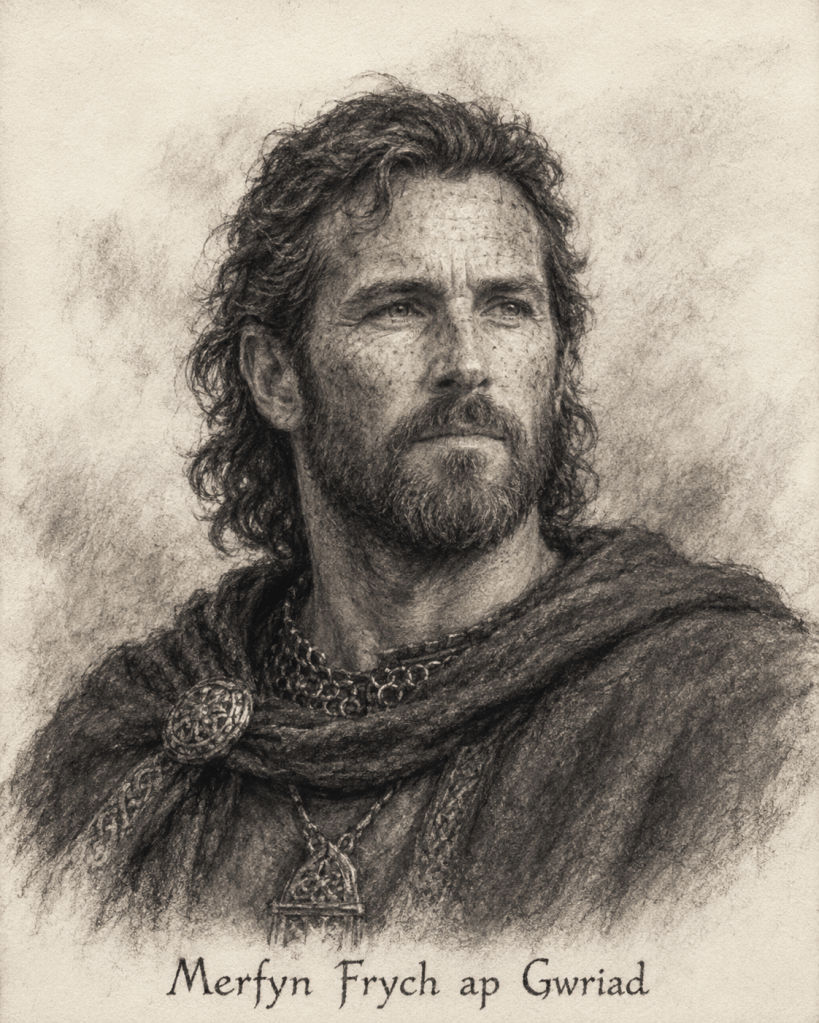
Merfyn Frych ap Gwriad Operative Active: c. 825–844 AD Theater: Kingdom of Gwynedd, North Wales Cover Story: King Actual Mission: Hold the northwest corner of Britain against Norse raiders and Mercian armies simultaneously while establishing a dynasty that would shape Welsh identity for two centuries
Assessment: First known operative in the network. The freckles were a liability — hard to blend in, easy to identify. Compensated by being genuinely difficult to kill and politically impossible to dislodge once established. Consolidated Gwynedd against pressure from multiple directions simultaneously, which is a classic multi-front operation requiring the kind of systems thinking that his descendants would eventually apply to microwave path engineering and rural broadband deployment.
Key tradecraft established: Never let the enemy know which front you consider primary. Hold the line on all of them simultaneously. Leave a dynasty strong enough that the mission survives your death.
Legend assessment: Freckled Welsh princes do not become the founders of a twelve-century intelligence lineage by accident. Something was operating here at an organizational level beyond what the historical record fully captures.
Status: Deceased. Mission accomplished.
FILE TWO: THE REVEREND CLAUDE PHILIPPE DE RICHEBOURG
Claude Philippe de Richebourg Operative Active: c. 1685–1723 Theater: France, then colonial Carolina Cover Story: Huguenot minister Actual Mission: Move a network of Protestant refugees across an ocean under persecution conditions, establish new community infrastructure in hostile territory, and maintain organizational integrity under pressure that had broken larger operations
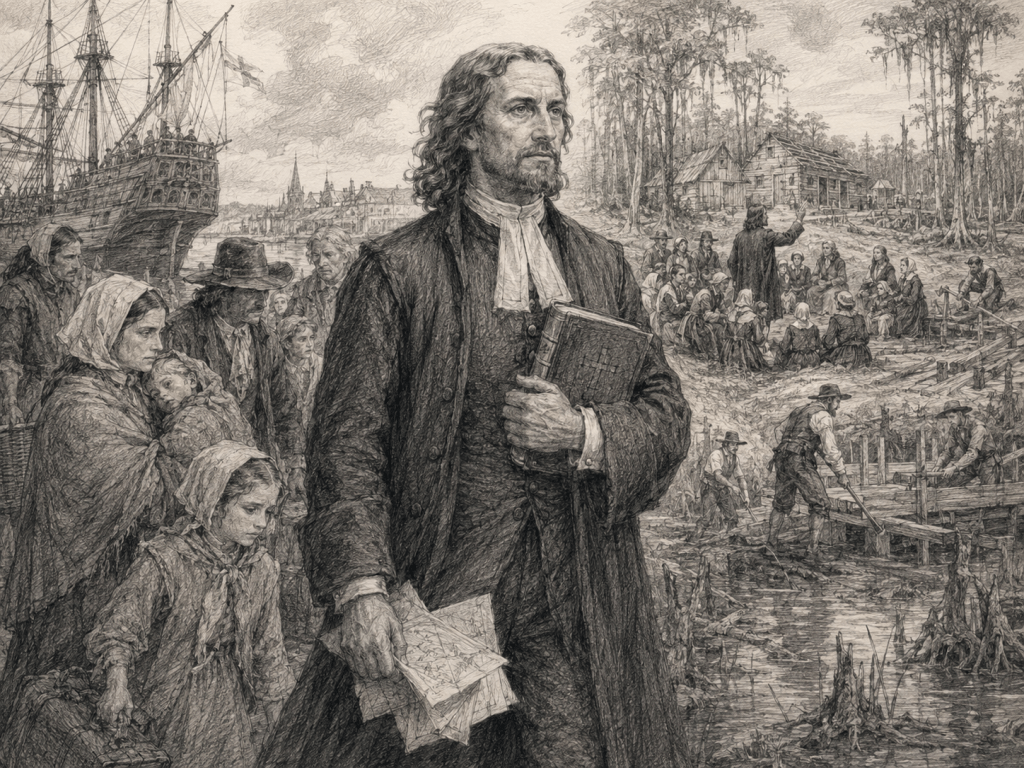
Assessment: When King Louis XIV revoked the Edict of Nantes in 1685, Richebourg faced a binary choice the network has faced in every generation: abandon the mission or abandon the comfortable position. He abandoned the comfortable position. Two hundred thousand Huguenot refugees crossed the Atlantic. Richebourg was among those who established the network’s Carolina operating base.
The cover story was excellent. A minister has legitimate reasons to gather people, deliver sermons, maintain communication networks across communities, and travel between settlements without explanation. Nobody asks a minister where he’s going.
Key tradecraft established: When the operating environment becomes untenable, relocate the network rather than disband it. The mission continues. The geography changes. Faith as operational cover has a twelve-century track record and should not be underestimated.
Secondary skill: Built communities from nothing in swamp conditions. The Carolina lowcountry did not cooperate. He did it anyway. This trait would resurface in descendant operations involving coastal Louisiana microwave paths and East Texas pine forest broadband deployment.
Status: Deceased. Network successfully transplanted. Mission continues.
FILE THREE: BENJAMIN RUFUS RICHBOURG
Benjamin Rufus Richbourg Born: December 24, 1833, Sumter, South Carolina Died: January 31, 1907, Alba, Wood County, Texas Cover Story: Frontier farmer Actual Mission: Move the network from South Carolina to Texas across the Civil War period without losing organizational continuity
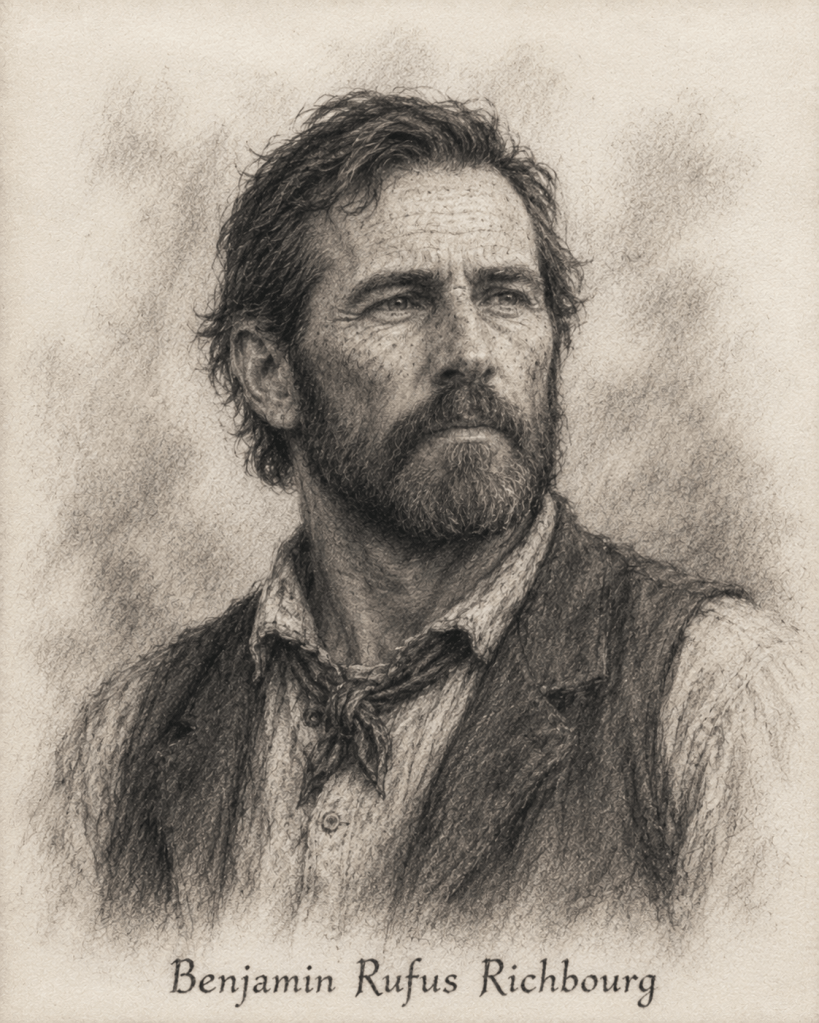
Assessment: The move from South Carolina to Wood County, Texas represents one of the network’s more ambitious operational relocations. Richbourg completed it amid the Civil War, Reconstruction, and the general chaos of the mid-nineteenth-century American South. He arrived in Texas, established the network’s East Texas operating base, and married Mary Jane Keels, who brought her own operational capabilities to the partnership.
Cover story evaluation: Frontier farmer is excellent. Unremarkable. Hard-working. Moves between communities for commerce. Nobody follows up.
Status: Deceased. East Texas base established.
FILE FOUR: HARDY HARGROVE & THE LATERAL NETWORK
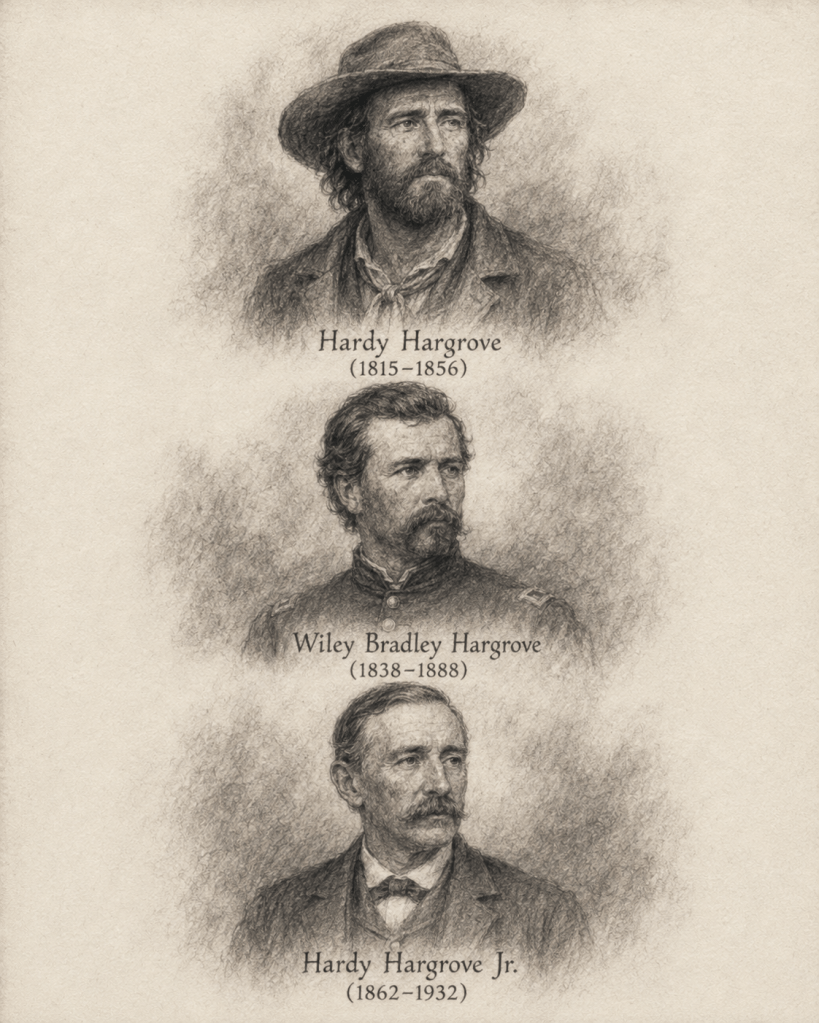
Hargrove Line, Frontier Operations, 1815–1932
Hardy Hargrove (1815–1856): Established Southeast United States presence Wiley Bradley Hargrove (1838–1888): Maintained network continuity through Civil War Hardy Hargrove Jr. (1862–1932): Post-war community rebuilding operations, Jasper County, Texas
Assessment: Three generations of quiet men doing unglamorous work in difficult conditions. None of them famous. All of them present. The Hargrove line in this period demonstrates the network’s core operational principle: you don’t need to be remarkable to be essential. You need to show up, do the work, and pass the mission to the next generation intact.
Wiley Bradley Hargrove surviving the Civil War and contributing to Reconstruction-era community building in rural Texas is, on paper, unremarkable. Given the conditions of 1865–1880 rural Texas, it is operationally impressive.
Key tradecraft inherited from this period: Quiet strength. No display. Do the work and let the work speak. Never explain yourself to people who aren’t going to understand anyway.
FILE FIVE: JAMES GAIUS “GAY” HARGROVE
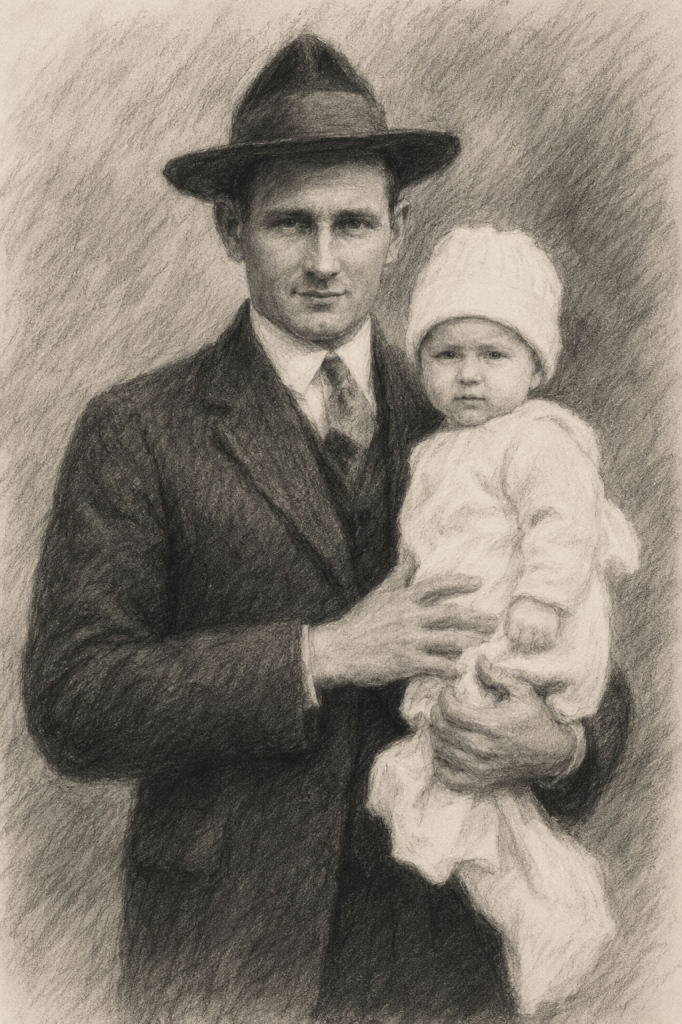
James Gaius Hargrove Born: 1894, East Texas Died: December 15, 1964, Buna, Texas Cover Story: Community figure, East Texas Actual Mission: Maintain network morale and institutional memory across the Depression and World War II
Assessment: Every network needs a morale officer. Gay Hargrove was the network’s morale officer.
The operational profile is unusual and therefore brilliant: a man always with a nickel in his pocket, a pinch of tobacco, and a taste for jalapeño peppers is the last person anyone identifies as an operative. He was memorable — humor, warmth, the specific kind of joy that keeps a family network from collapsing under generational pressure — while also being completely impossible to surveil because nothing he did looked like anything.
Key operational tools:
- The nickel — Always had one. Always gave one. Small gestures of generosity create loyalty networks that no organizational chart captures.
- The jalapeños — A man with strong opinions about food has strong opinions about everything. This is not a weakness. This is a marker of a man who will not be moved off his position.
- The humor — The network’s most underrated asset. You cannot maintain a multigenerational covert operation without someone keeping the institutional culture alive. Gay Hargrove kept it alive through the Depression, World War II, and the entire postwar reorganization of East Texas rural life.
Legacy: Passed directly to John Edwin Hargrove via Robert Edwin Hargrove. The institutional humor, the warmth, the inexhaustible willingness to show up — all of it traceable to this file.
Status: Deceased. Morale successfully transmitted.
FILE SIX: ROBERT EDWIN HARGROVE
Robert Edwin Hargrove Born: December 5, 1927, Buna, Texas Died: September 6, 2013, Buna, Texas Cover Story: Korean War veteran, DuPont laboratory technician, father of three sons Actual Mission: Build the operational model for everything that came after
Assessment: Robert Edwin Hargrove is the network’s most important twentieth-century operative and the clearest single transmitter of the tradecraft that his eldest son would apply across a forty-five year career in critical infrastructure.
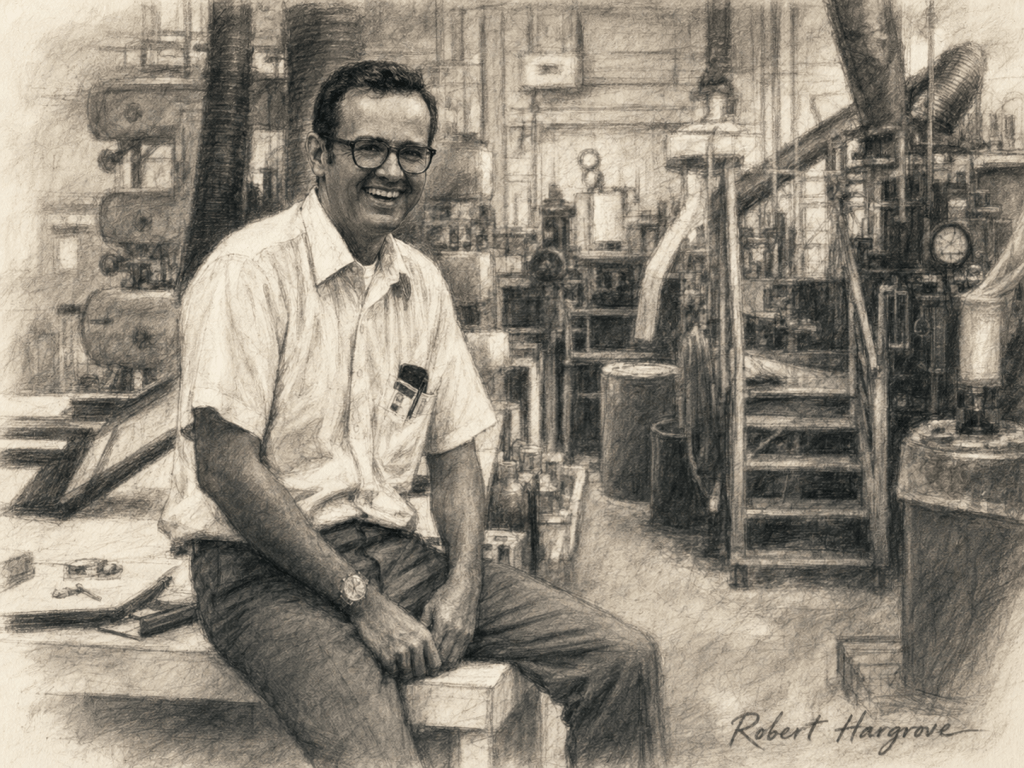
Korean War Service, 1951: 45th Infantry Division, 120th Combat Engineers. Deployment to Korea via Japan, landing at Inchon in November 1951. Combat engineering is the most operationally demanding role in any military operation: you advance under fire, you build what needs building, you clear what needs clearing, and you do it while the other side is actively attempting to stop you. Robert Hargrove did this without apparent drama, came home, and never talked about it much.
That is not suppression. That is the professional standard. What happens on the mission stays in the mission report. The mission report, in the Hargrove family tradition, was never filed because it was never written down because writing it down would have required explaining things that were better left in silence.
DuPont Laboratory, Buna: Cover story is excellent. Laboratory technician. Methodical. Works with chemicals and instruments. Understands systems at the molecular level. Shows up every day and does the work correctly. Nobody investigates a man who shows up every day and does the work correctly.
Key tradecraft transmitted to John Edwin Hargrove:
- Show rather than tell. Robert Hargrove handed his son the tiller of the flat-bottom boat on the Neches River and said: throttle down here, watch for that snag, angle into the current. Then silence. The silence meant: I trust you. The transmission was complete.
- Integrity requires no witness. Robert Hargrove was never heard to curse in his entire life. Not because anyone was watching. Because his operating standards did not change based on the audience. This is the foundational operational principle of the entire network.
- Love expressed through provision. The breakfast before dawn on the Neches River — scrambled eggs, bacon, biscuits over propane — is the tradecraft manual in a cast-iron skillet. You provide. You show up. You cook breakfast before anyone else is awake. The mission is the family.
Status: Deceased, September 6, 2013. Everything he built, held.
FILE SEVEN: LAVEE RICHBOURG HARGROVE
Lavee Richbourg Hargrove Born: 1936 Cover Story: Wife, mother, community member Actual Mission: Intelligence analyst, logistician, and the only person in the network who fully understood what all the other operatives were actually doing

Assessment: The Richbourg line and the Hargrove line converged in Lavee Richbourg, which is to say the network’s two primary ancestral streams merged in one person. The organizational implications of this are significant and have not been fully mapped.
Lavee brought to the network:
- The Huguenot operational resilience (you can rebuild from nothing, you have done it before, you will do it again)
- Her father George Truman Richbourg’s gift for technical drawing and spatial visualization, which surfaced in her eldest son as engineering instinct
- Creativity and artistic capacity, which the network had lacked in the Hargrove line since Gay Hargrove and which reappeared through her as resourcefulness
Primary operational contribution: She raised John Edwin Hargrove in a household where the operational standards of both ancestral lines were simultaneously present and consistently modeled. That is a logistics achievement of the first order.
Status: Living. Mission ongoing.
FILE EIGHT: JOHN EDWIN HARGROVE, P.E.
Current Operative Born: January 24, 1958, Kirbyville, Texas Active: 1978–present Cover Story: Electrical engineer, telecommunications consultant, pastor Actual Mission: See forty-five chapters of preceding testimony
Assessment: The forty-third generation. The one who finally wrote the file down.
Forty-five years of operations across nuclear stations, hurricane corridors, offshore Africa, relay huts, cooperative roads, pine forest terrain, and a porch in rural Southeast Texas where a woman dropped to her knees because the signal finally reached her.
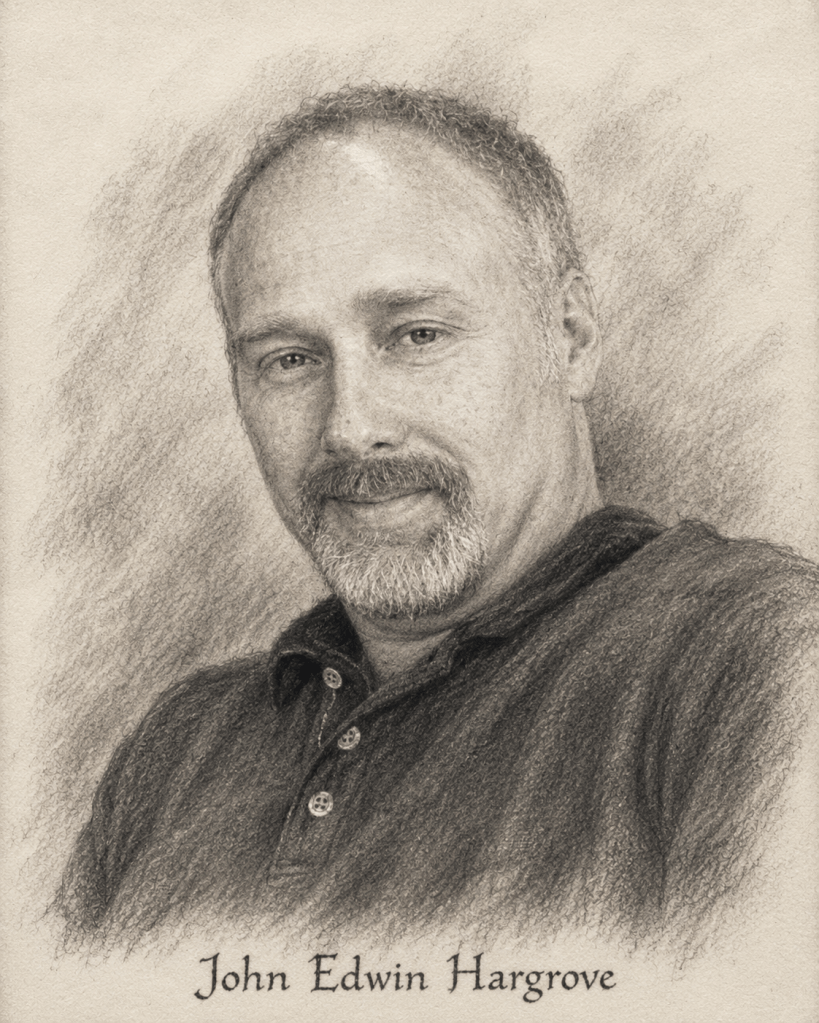
The cover story was maintained across the entire operational period. The family — specifically Joshua Blake Hargrove, operative designation: Primary Intelligence Analyst (Posthumous) — correctly identified the network’s existence while incorrectly naming the agency. The CIA identification was a close approximation given available evidence and should be considered analytically sound given the information environment.
Key tradecraft demonstrated:
- Fifty-five hop microwave network built and verified under Gulf Coast atmospheric conditions
- River Bend Nuclear Station security radio system installed and proven in radiological environment
- Five-parish emergency siren system activated across West Feliciana, East Feliciana, East Baton Rouge, Pointe Coupee, and West Baton Rouge (unintentionally, during testing; accounted for; corrected; never repeated)
- Standing up in a VP’s conference room with thirty people present and speaking plainly about what happened
- 72,000 smart meters deployed across East Texas timber country
- 725 households in Buna, Texas connected to broadband they did not previously have access to
Outstanding debriefs:
- The 1979 hurricane restoration near Sulphur, Louisiana: strategic petroleum reserve feeders restored. No names in the paper.
- The 1997 Congo mission: offshore platform communications evaluated. Microwave paths designed. Joshua’s intelligence assessment upgraded from “plausible” to “confirmed.”
- The forty-five years of caliche roads, relay huts, cooperative networks, tower climbs, and late-night service monitor readings: documented in preceding chapters, verified, submitted for the record.
Current status: Active. Still tracing signals. Learning to smell the roses. Writing the file down.
FILE NINE: JOSHUA BLAKE HARGROVE
Primary Intelligence Analyst (Posthumous) Born: April 9, 1984, Beaumont, Texas Died: June 22, 2002, Buna, Texas Cover Story: Son Actual Mission: See what his father was doing and name it correctly
Assessment: He named it correctly.
The vocabulary he used — CIA, super spy, classified operations — was the available vocabulary of a seventeen-year-old boy who had watched two CIA movies in two nights and was processing the evidence of a father who disappeared at odd hours into places with restricted access and returned with the particular quiet of a man who had done something that needed doing.
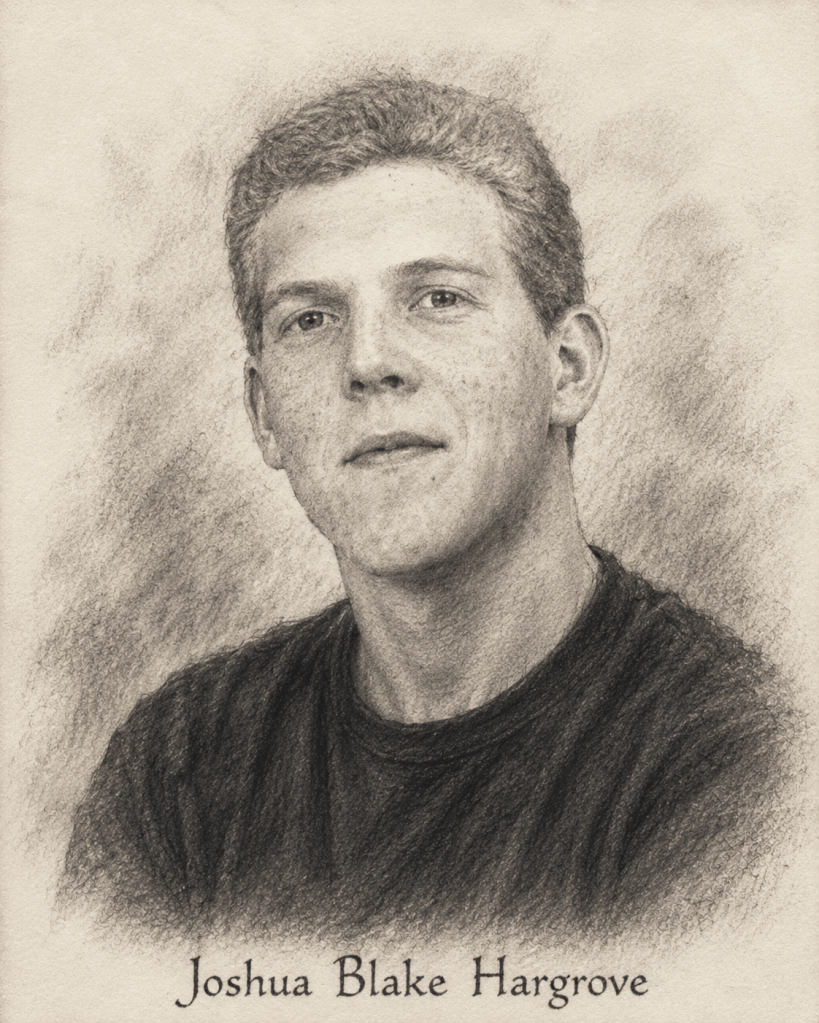
The vocabulary was wrong. The observation was right.
What he saw: a man who took quiet assignments nobody noticed until something broke. A man who stood between a system and a disaster so that other people could eat supper without thinking about what held their world together. A man shaped by twelve centuries of network formation running through Welsh princes and Huguenot refugees and frontier farmers and a Korean War combat engineer and a woman who carried the Richbourg and Hargrove lines in one person — all of it flowing into one engineer in East Texas who kept the sector humming and came home smelling like ozone and concrete dust and whatever café he’d passed through in the last county.
That man is his father.
Joshua saw him clearly. He drew his portrait from the available evidence and got the shape exactly right, even when the details were wrong.
The CIA has nothing to do with it.
The mission is older than the CIA. It predates every organization that has ever tried to claim it. It goes back to a freckled Welsh prince holding his kingdom in 825 AD and forward to a woman on a porch in rural Southeast Texas in 2021 who dropped to her knees because the signal finally got through.
The mission has always been the same.
Hold the line. Build the thing that needs building. Keep the signal alive.
Do it quietly. Leave no shortcuts behind you. Write the documentation for the engineer who hasn’t arrived yet.
And if your son decides you’re a CIA operative — well. There are worse legends a man could leave behind.
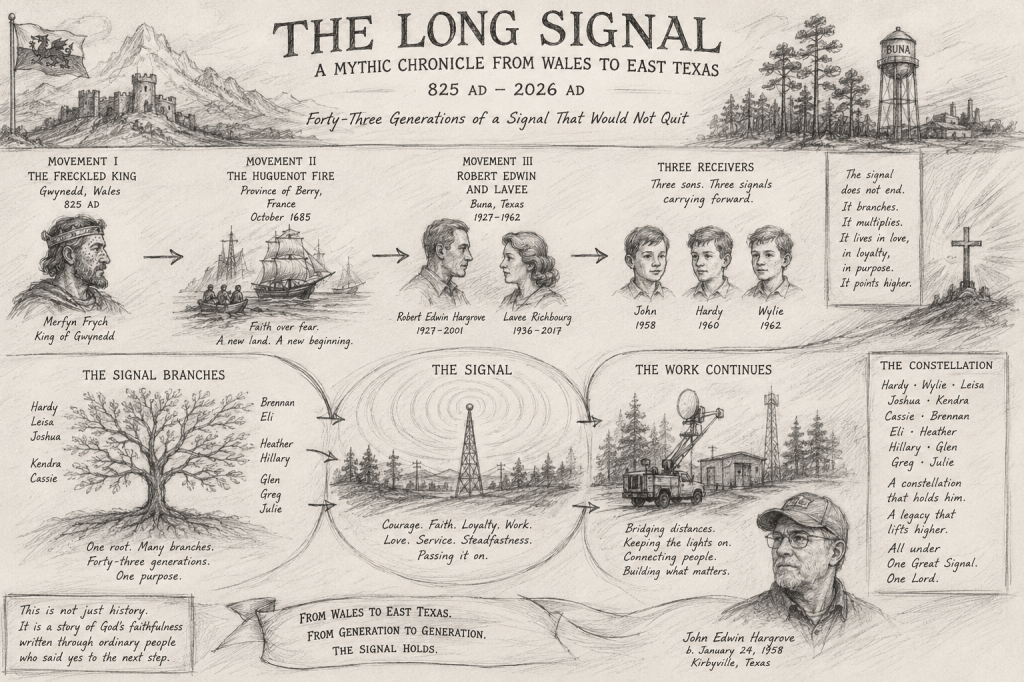
End of Appendix A. Classification: Declassified by the author, John Edwin Hargrove, P.E. Date: Present day, Buna, Texas File maintained by: The signal itself, which remains.

