The Radio Link and the Soul: What Forty-Seven Years in Rural Infrastructure Have Taught Me About Work, Technology, Life, and Faith
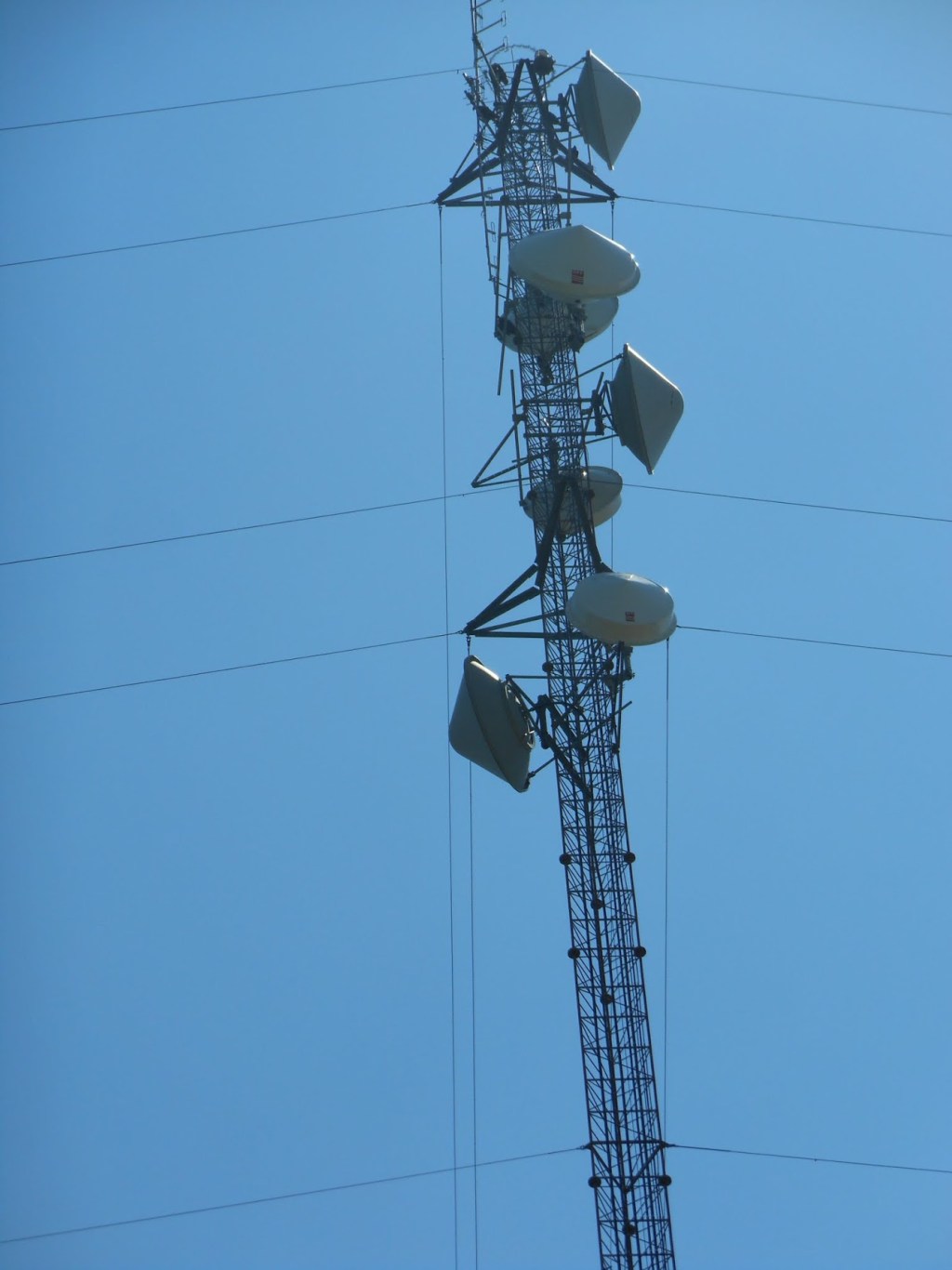
I remember standing out at a metering station back in 2007, somewhere off a caliche road you wouldn’t find unless you already knew where you were going. East Texas co-op site. Quiet place. The kind where you can hear the wind before you see it.

Photo by Pixabay on Pexels.com

That radio link we were depending on had been put in sometime in the late 90s. I ran the path profile right there in the truck. Same story I’ve seen a hundred times—Fresnel barely clearing, fade margin just enough to make you feel okay until you’re not. A couple of other transmitters on the same  tower are already stepping on each other a little.

Nothing broken. Nothing dramatic. Just fragile in a quiet kind of way.

That same setup is still out there today in more places than folks want to admit. Same sub-GHz radios. Same serial cables run through what was supposed to be “temporary.” Same passwords, nobody ever changed. Same remote access tools because the integrator lives two hours away, and the operator’s got another job to get to.

And honestly, that’s not carelessness. That’s reality.

Those systems were built in a world where isolation was the security model. That world’s gone now. But the systems didn’t change with it.

You hear a lot about checklists and compliance and inventory—and they’re not wrong. You do need to know what you’ve got. But the real issue I keep running into isn’t just knowing it exists.

It’s whether it was ever built to handle what it’s actually dealing with.

Weather fade. Trees growing up into your path. Interference from somebody else hanging gear on the same structure. One cable takes the whole system down if it fails.

That’s not cybersecurity. That’s just telling the truth about the system.

And if I’m being honest, that same pattern shows up in life, too.

We’ve got all this technology now that makes it feel like we’re in control. But something underneath is getting thinner. Everything is constant—alerts, messages, noise—and it keeps you in that problem-solving mode all the time. You’re always thinking, always fixing, always responding.

But you’re not really resting and not really connecting. Not really present.

I’ve lived that.

The work itself is good. Keeping water moving. Keeping systems talking and helping communities function. That part matters.

But it can also take more than it’s supposed to.

I’ve had seasons where I carried responsibility like it all depended on me—stayed up too late chasing one more improvement. Pushed through things I should’ve stopped and grieved. Kept quiet when I should’ve said I needed help.

It builds up. Quietly. Faith, at least the way I’ve come to understand it, doesn’t remove that weight. It puts it back where it belongs.

You weren’t meant to carry all of it. You weren’t meant to run without stopping.

You weren’t meant to pretend nothing’s been lost along the way.

There’s a reason Scripture emphasizes rest, sharing burdens, and strength in weakness-these aren’t just ideas, but a divine design for our well-being.

It’s not a theory. Its design.

So now I’m trying—slowly—to live that out.

Do the work right. Engineer it honestly. Document it so the next guy isn’t guessing. Don’t chase every new thing just because it’s new.

But also close the laptop when it’s time. Let the system be what it is for a few hours. Say out loud when something’s heavy instead of burying it. Trust that I’m not the one holding everything together.

That old radio link mindset still sticks with me. You harden what you can. You document it better. You improve it where possible.

But at the end of the day, you’re not the source of the system’s life. You’re just a steward of it.

And that applies just as much to the work as it does to everything else.

So for anybody out there carrying similar weight—

Do the inventory. Fix what you can fix. Write it down so it lasts.

But don’t forget to rest.

Don’t skip the grief.

Don’t try to carry it alone.

There’s more to this than uptime and performance.

The work matters. But it’s not where the meaning comes from.

That part comes from walking it out—steady, faithful, with other people, and under grace.

That’s enough.

The Radio Link and the Soul: What Forty-Seven Years in Rural Infrastructure Have Taught Me About Work, Technology, Life, and Faith

In 2007 I stood at a remote metering station for an East Texas electric cooperative, eight miles down a caliche road from the nearest paved highway. The 900 MHz radio link feeding telemetry back to the control center had been installed in the late 1990s. I remember leaning against the chain-link fence that afternoon, path-profile sketch in hand, praying quietly for wisdom. The Fresnel zone clearance was marginal. The link budget gave us a fade margin that was “good enough for government work.” Co-site interference from two other transmitters on the shared water-tower mount was already measurable. None of it was dramatic. It was simply the quiet fragility I had come to expect after two decades in the field.

That same 1990s-era radio technology is still the backbone for far too many rural water systems in 2026. The same unlicensed sub-GHz links, the same RS-232 cables run through “temporary” conduit fittings, the same factory-default passwords on the web interfaces. The SCADA password is still written on a Post-it note taped to the server rack. The remote access tool is still TeamViewer or AnyDesk because the integrator is two hours away and the operator has a day job. None of this is negligence. It is rational adaptation to real operational constraints. The systems were geographically and technically isolated when they were built. The threat model changed. The trust model has not caught up.

This is the field reality the federal checklists rarely name. The CISA/EPA guidance is right: asset inventory is foundational. Before you can protect it, you must know it exists. But the real gap is not in the inventory. It is in whether those assets—the radios, the PLCs, the unlicensed backhaul links—are engineered to survive the conditions they actually face: weather fade, vegetation growth, shared tower interference, and the single-point-of-failure cable runs that operators have lived with for decades. The engineering toolbox—RF path profiles, link budget validation, co-site interference assessment, sub-GHz band baseline documentation—is not cybersecurity tooling. It is infrastructure truth-telling, and it is part of the sacred stewardship God has placed in our hands.

Technology has a way of promising control while quietly stealing meaning.

I see this in the field, and I see it in the wider culture. Two recent conversations with Harvard professor Arthur Brooks on the meaning of life in an age of emptiness stayed with me. He described how the attention economy and always-on technology push us into the left hemisphere of the brain—the side of tasks, analysis, and simulation—while starving the right hemisphere, the home of mystery, meaning, and real human connection. We scroll, we simulate relationships, we feed questions into AI that can never answer the coherence, purpose, and significance questions that actually matter. Life starts to feel like waiting in an airport lounge with no flight information.

My work is not exempt. The same radios and networks that keep water flowing and substations communicating can become 24/7 demands that blur the line between the system and the self. The perfectionism that once served excellence in design now imprisons me in the small hours, reviewing one more link budget. The weight of responsibility I have carried—for cooperatives, water districts, pipeline operators, and communities—has sometimes felt like the burden I was never meant to carry alone. I have internalized stress until it became heavy silence. I have pushed through grief over lost seasons and changing technology landscapes without giving mourning its due.

Faith does not offer escape from this weight. It offers integration.

The prayer journey I have been walking these past months has become my daily anchor in the field. It names the very patterns I see in both my work and my soul:

  • The weight I was never meant to carry alone — Galatians 6:2 reminds me that the law of Christ is mutual. I am learning to let operators, vendors, and fellow engineers share the load instead of pretending one licensed PE can hold every system together.
  • The Sabbath I have forgotten — God built rest into creation for a reason. Closing the laptop on the seventh day is an act of trust that the pumps and meters will still hold.
  • The grief that has not been given its due — I have mourned the slow obsolescence of systems I helped design, the contractors who have retired, and the simpler days when isolation was protection.
  • The perfection that imprisons — “My grace is sufficient for you, for my power is made perfect in weakness” (2 Corinthians 12:9). I now see marginal fade margins and legacy radios not as personal failures but as places where God’s strength can shine.
  • The help I cannot ask for — I am learning to speak the stress out loud to trusted brothers in Christ before it settles into my bones.
  • The silence that swallows — Acknowledging sin, fatigue, and limitation before the Lord breaks the isolation.
  • The compassion that has run dry — The Good Shepherd still makes me lie down in green pastures and leads me beside quiet waters. He restores my soul so I can keep stewarding what He has entrusted to me.
Photo by Pixabay on Pexels.com

Scripture does not promise that the radio link will never fail or that the threat model will simplify. It promises that in Christ “all things hold together” (Colossians 1:17). The same Lord who upholds the universe upholds the fragile 900 MHz link and the operator who depends on it. Faithful engineering requires the same disciplines that faithful living requires: rigorous truth-seeking without overconfidence, documentation that outlasts any one contractor or operator, restraint that refuses to chase novelty at the expense of reliability, and the humility to ask for help before the single point of failure becomes a system-wide outage. It means designing for the real environment—shared towers, unlicensed bands, legacy systems from the 1990s that still work—while refusing to let the technology define the meaning of the days.

I am learning, slowly, to set down what was never mine to carry alone. To close the laptop on the Sabbath and trust that the pumps and meters will hold. To speak the stress out loud instead of letting it settle into the bones. To let the Shepherd lead me beside quiet waters even when the work feels urgent.

The radio link from 2007 is still there in spirit—updated, hardened where possible, documented now—but the deeper resilience comes from remembering that we are not the source of the system’s life. We are stewards of it, held by the One who never sleeps or slumbers.

To every operator, engineer, and leader carrying similar weight: inventory the assets. Harden the links. Document the baselines. But do not forget to rest. Do not forget to mourn what has changed. Do not forget to ask for help. And above all, do not forget that the meaning of this work—and of our lives—will never be found in the left-brain simulation of perfect uptime. It is found in the right-brain mystery of faithfulness lived in real time, with real people, under real grace.

The Shepherd is still leading. The line is still being held. And in Him, that is enough.

A THOUGHT EXPERIMENT FOR EVERY AMERICAN, REGARDLESS OF PARTY


The Founders called this republic an experiment. Madison said so explicitly. Hamilton opened the Federalist Papers asking whether societies of men are capable of governing themselves by “reflection and choice” — or whether they are forever destined to be governed by “accident and force.”

That question has never been permanently answered. It gets re-answered by each generation’s behavior.

Here is the experiment. Four variables. Be honest with yourself about all four.


Variable 1: The Constitution was built to change — but HOW you change it matters.

Article V provides two deliberate pathways for amendment. The Founders used them immediately — the Bill of Rights was ratified within three years of the Constitution itself. They were not building a frozen monument. They were building a process. Madison wrote that the greatness of the American people is that they “have not suffered a blind veneration for the past.”

The experiment: When you want the Constitution to mean something different, do you use the process — or do you use power to bypass the process? One is self-government. The other is the thing self-government was designed to prevent.


Variable 2: The Founders themselves were never unanimous — and they knew it.

Three delegates refused to sign the Constitution. Rhode Island boycotted the convention entirely. Ratification was close and contentious in nearly every state. Loyalists — perhaps a third of the colonial population — were never part of the founding consensus at all. Hamilton acknowledged in Federalist 1 that “wise and good men” would be found on both sides of the ratifying debate, and that honest opposition would “spring from sources blameless at least, if not respectable.”

The experiment: If the Founders — who had fought a war together, knew each other personally, and shared enormous common ground — could not achieve unanimity, why do we treat the other side’s disagreement as evidence of bad faith rather than honest difference?


Variable 3: Facts versus narrative — the one problem the Founders did not solve.

Madison’s great structural cure for faction was the extended republic — the idea that geographic distance and diversity would prevent any single passion from simultaneously inflaming the entire country. A pamphlet in Virginia took weeks to reach Massachusetts. The friction of distance cooled factional contagion.

That friction is gone. Every citizen now receives the same emotional signal simultaneously, curated for maximum reaction. Madison in Federalist 63 wrote that the Senate’s purpose was to protect the people “against their own temporary errors and delusions” until “reason, justice, and truth can regain their authority over the public mind.” He assumed truth would regain authority, given time and space.

The experiment: What happens to a republic designed around deliberation when the information environment is specifically engineered to prevent deliberation — and when “news” and “fact” have become functionally indistinguishable to millions of citizens? This is the one variable the Founders anticipated but could not design around. It is ours to solve or to fail.


Variable 4: The permanent political class — the pig at the trough problem.

Hamilton in Federalist 1 identified the most dangerous class of men in any republic: those who “aggrandize themselves by the confusions of their country” — men whose personal interest is permanently tied to the perpetuation of conflict rather than its resolution. He was describing the career politician before the career politician existed as a recognizable type.

The Constitution sets no term limits on Congress. The Founders debated this and chose not to impose them, trusting the election mechanism to rotate citizens in and out. What they did not anticipate was a professional class for whom holding office is the vocation — not a temporary sacrifice of a productive citizen, but a permanent extraction from the republic’s resources.

Madison in Federalist 47 called the accumulation of all power in the same hands “the very definition of tyranny.” A legislator who has held office for thirty years, whose personal wealth has multiplied through that tenure, who has converted public power into private benefit through earmarks and special interests — is not serving the republic. By Madison’s own definition, they are the faction.

The experiment: Does this apply only to the career politicians on the other side — or does it apply equally to the ones you keep re-electing?


The control variable — the one that determines whether the experiment succeeds or fails:

Orwell noticed, in Animal Farm, that the pigs did not become what they replaced by dramatic revolution. They became it gradually, by the slow logic of occupying power long enough that the distinction between serving the farm and owning the farm disappeared.

Hamilton’s question — reflection and choice, or accident and force — is not asked once at the founding and answered forever. It is asked again every time a citizen decides whether to apply their principles consistently or only when convenient.

The republic is not a partisan inheritance. It was built by people who disagreed profoundly, on a framework designed to contain disagreement without destroying the disagreers.

It will be kept — or lost — by whether we can still do the same.


Sources: Federalist No. 1 (Hamilton), Federalist No. 10, 47, 51, 63 (Madison) · Article V, United States Constitution · Madison, Federalist 14 on constitutional change · Hamilton, Federalist 1 on the permanent political class

Steady in the Signal: Faith, Work, and Building What Lasts

Back home from Comanche after a solid week on towers and microwave alignment. There is something grounding about standing under an 11 GHz path, watching signal levels lock in, knowing that invisible waves are carrying real conversations across miles of Texas pasture.

This morning we went deeper into John 4.

Jesus was tired. Dust on His feet. Thirst in His body. And still He chose to engage. He crossed ethnic lines, moral lines, religious lines, and personal pain lines. Not to win an argument. Not to prove a point. But to restore a person.

That matters right now.

We are living in a time where outrage travels faster than microwave backhaul. Blame is currency. Headlines are engineered for reaction. Facts are contested. Narratives are crafted. And too many people are exhausted.

But truth is not loud. It is steady.

At the well, Jesus did not shout the Samaritan woman down. He did not cancel her history. He named it honestly and then offered living water. Grace and truth, together. Not one without the other.

This week I worked on infrastructure — power, bandwidth, line of sight, reliability. I also wrote about AI, data centers, water supply, grid stability. All of it points to the same reality: the future will demand clarity, discipline, and stewardship. Power must be generated. Water must be sourced. Data must be moved. Systems must be resilient.

So must people.

As I step into a senior pastor role at Source of Old Faith, the call is not to build noise. It is to build a foundation. Order. Accountability. Spiritual maturity. A house built on the cornerstone, not on emotion or personality.

In a world of accusation, we need conviction without cruelty.
In a world of spin, we need truth without arrogance.
In a world of uncertainty, we need hope anchored in something older and stronger than the news cycle.

Jesus is still crossing barriers.


The Spirit is still building living stones.
The Church must still be salt and light.

Build strong networks.
Build strong families.
Build strong churches.
Tell the truth.
Refuse hate.
Stay steady.

The future is not secured by outrage. It is secured by faithfulness.

Press on.

Using Spark Leadership to Avoid Dysfunction and Burnout

Photo by Felix Mittermeier on Pexels.com

Leadership frameworks usually focus on how to inspire others. What they talk about far less is how leaders quietly burn out while doing it.

That risk is especially high for people who are competent, dependable, and willing to step in when things start to wobble. In small organizations, rural communities, nonprofits, utilities, and volunteer-driven environments, leadership often defaults to whoever will carry the load. Over time, that turns into chronic over-functioning.

Spark leadership, used intentionally, can be a way out of that trap — not by doing more, but by doing less of the wrong things.

Here is how I have come to think about it.

Spark is ignition, not sustained combustion

A spark is meant to start something, not keep it burning forever. If the same person is constantly supplying the heat, the system never develops its own energy. Burnout is not a personal failure; it is often a signal that the leader has become the permanent engine.

Using Spark leadership well means learning when to ignite and when to step back.

Share information as a boundary, not a burden

Transparency is often framed as kindness or trust-building. In practice, it is also a boundary-setting tool.

When I share information clearly — risks, constraints, tradeoffs, consequences — I am doing my part. What I no longer assume is responsibility for what others choose not to do with that information.

There is a difference between clarity and rescue.

Clarity says, “Here is what is happening.”

Rescue says, “And I will make sure it doesn’t hurt anyone.”

If discomfort follows clarity, that is not dysfunction. That is a system waking up.

Ask for input, then require ownership

Inviting input without requiring ownership creates a subtle form of burnout. Ideas get shared, refined, and improved — and then quietly added to one person’s workload.

A healthier Spark practice is to follow every request for input with a simple question:

Who is willing to own this?

Not who agrees with it. Not who likes it. Who will carry it.

Ideas without owners are not commitments. Letting them remain ideas protects both the leader and the organization.

Play to strengths without covering for gaps

Strength-based leadership is often misunderstood as smoothing everything out. In reality, it means aligning people where they are effective and allowing gaps to be visible elsewhere.

When leaders constantly compensate for missing skills, unclear roles, or weak follow-through, the system learns the wrong lesson: that someone else will always fix it.

Letting gaps stay visible creates pressure for growth, re-design, or honest conversation. Absorbing those gaps just delays the inevitable — at your expense.

Keep commitments, but stop making implied ones

Reliability builds trust. It also attracts dependency.

One of the most important burnout-prevention moves I’ve learned is to stop making implied commitments. If I did not explicitly say yes, it is not mine. If no one asked, I am not obligated. If ownership was unclear, I am not the default.

Keeping commitments does not mean keeping everyone else’s.

Let Spark develop others, not replace them

The healthiest use of Spark leadership is developmental, not compensatory. The question is not “How do I keep this from failing?” but “Who needs to grow so this doesn’t depend on me?”

That shift feels risky at first. Things may wobble. Some people may resist. A few may leave. But what emerges is a system that can breathe without one person holding it together.

Burnout thrives in silence and substitution. Spark leadership, used well, replaces both with clarity and shared responsibility.

And in the long run, that is not just better leadership — it is more sustainable life.

Keeping Going When No One’s Listening?

Photo by Zetong Li on Pexels.com

I’ve been thinking a lot lately about what it means to do work that matters when it feels like no one cares.

For the past few years, I’ve been advocating for rural East Texas communities—places like Buna, Newton, San Augustine. I’ve built communication frameworks, written strategic plans, installed digital kiosks, organized meetings, drafted policy briefs. I’ve tried to give voice to communities that have been systematically left out of planning conversations, to help people shape their own futures instead of having decisions made for them from far away.

Photo by Etha on Pexels.com

Most days, it feels like pushing a boulder uphill alone.

The Generational Game

I’m starting to realize this work isn’t measured in months or even years—it’s generational. The infrastructure I’m building, these communication frameworks and pilot models and community briefs, they’re seeds that may not fully mature in my lifetime. And I think I’ve been measuring success wrong.

Photo by Pixabay on Pexels.com

Maybe success isn’t getting county commissioners to read every brief I send. Maybe it’s that one local leader who picks up this work five years from now and has a template to start from. Maybe it’s just that these documents exist at all—proof that someone saw what was happening, cared enough to name it, and offered solutions.

That’s not failure. That’s foundation-building.

Celebrating What’s Actually There

When the big wins feel impossible, I’m learning to notice the small ones:

  • A county commissioner who actually responded to a community brief
  • A kiosk that’s been running for six months without breaking down
  • One new business owner who showed up to learn about the community
  • The fact that I’ve created templates other rural organizers can use

These aren’t nothing. They’re evidence of progress, even if they’re not transformation yet.

Finding My People

The San Augustine meeting this year reminded me of something important. Sitting around that table with Eddie, Nancy, Tania, and Marianne—people doing similar work in their own communities—I didn’t feel alone. We shared frustrations, traded contacts, problem-solved together.

I’ve been spending too much energy seeking alignment “up”—with county officials, state agencies, foundations—and not enough building lateral relationships with peers. Those relationships aren’t just strategic. They’re sanity-preserving. They remind me I’m not crazy for thinking this work matters.

Photo by Tairon Fernandez on Pexels.com

The Documentation Matters

Even when nothing changes immediately, these reports I’m writing serve a purpose:

  • They validate what communities are experiencing
  • They create a record for future organizers
  • They protect against institutional amnesia (“we didn’t know there was a problem”)

I need to remember that documentation is activism. Recording what’s happening, naming the gaps, proposing solutions—that’s meaningful work even when it doesn’t produce immediate results.

Photo by Tom Fisk on Pexels.com

Letting Go of Universal Buy-In

Not everyone is going to get it. Some officials will remain indifferent. Some developers will keep ignoring community input. Some residents will stay skeptical of any change.

That’s okay. The goal isn’t to convince everyone—it’s to build enough of a coalition to create momentum. I don’t need universal support for this work to matter.

Taking Real Breaks

I’m bad at this one. I need to take actual breaks—not performative self-care, but real disengagement. Days where I don’t mention rural development. Weeks where the kiosks can wait.

This work will always be there. It’s generational, remember? Burning out doesn’t serve anyone.

Photo by Kaique Rocha on Pexels.com

What Does “Enough” Look Like?

I’m trying to get more specific about what meaningful progress would look like in the next year. Not transformation—just progress:

  • Three communities actually using the communication framework I built
  • One successful regional roundtable where rural leaders are at the table
  • Maybe a single rural navigator position gets funded somewhere

When I make it concrete like that, I can tell the difference between “not enough impact yet” and “actually making progress.” They’re not the same thing.

Photo by Pixabay on Pexels.com

Why I Keep Going

Buna, Newton, San Augustine—these aren’t abstractions to me. They’re people who deserve to shape their own futures. The work I’m doing affirms their dignity and their right to be heard.

That has value independent of whether it produces immediate systemic change.

The fact that I keep showing up, keep documenting, keep building frameworks when no one asked me to—I don’t think that’s naivete anymore. I think it’s moral courage. Or stubbornness. Maybe both.

The question isn’t whether to keep going. It’s how to keep going sustainably, strategically, with enough support to avoid burning out completely.


Photo by Pixabay on Pexels.com

I don’t have all the answers yet. But writing this helps. Naming what’s hard helps. Remembering I’m building foundations, not finished structures—that helps too.

If you’re doing similar work somewhere else—advocating for a place everyone else overlooks, building infrastructure no one asked for, showing up when it feels pointless—you’re not alone. And you’re not crazy.

Photo by Visual Tag Mx on Pexels.com

Keep going. The work matters.

The Pain We Carry

– Lament with Jeremiah & the Psalmist

There’s a weight we don’t often talk about in church life—the grief that lingers in the soul when things don’t work out the way we prayed they would. Jeremiah knew that weight. He wrote, “Oh, that my head were a spring of water and my eyes a fountain of tears! I would weep day and night for the slain of my people” (Jeremiah 9:1). The psalmist prayed something similar: “Help us, O God of our salvation, for the glory of your name; deliver us, and forgive our sins, for your name’s sake” (Psalm 79:9).

Both voices remind us that lament is not just personal sadness—it’s a holy act of naming the pain before God.

Lament in Scripture, Lament in Life

When I read Jeremiah’s words, I hear echoes of seasons in my own journey. There have been moments where I’ve had to sit across from friends, colleagues, or family members, knowing that words couldn’t fix the brokenness we were facing. Times when projects I poured years into were stalled by forces beyond my control. Times when communities I love were fractured, and I felt powerless to heal the divides.

I’ve often carried those burdens quietly, as an engineer, a leader, a brother, a son. Like many men, I was taught to just keep going, solve the next problem, make the next call. But Scripture teaches that silence isn’t the only response—lament is.

What Lament Looks Like

Lament is not despair. It’s not quitting. It’s a turning of the heart toward God when life feels too heavy to carry. It’s saying out loud what we’d rather keep inside:

This hurts. I don’t understand. God, why does it seem like you’re far away?

Lament opens a door to hope because it refuses to let pain have the last word.

Carrying Pain in a World of Injustice

The prophet Amos points out that part of our pain comes from living in a world where injustice is real. He names those who trample the needy and cheat the poor. I’ve seen versions of that play out in Southeast Texas—families weighed down by the unfair cost of living, workers underpaid while corporations thrive, small towns overlooked when resources are allocated.

My own work in rural broadband has been shaped by that reality. It grieves me that whole communities are still left behind in an age where connection determines opportunity. That’s not just a technical problem—it’s a justice issue. And lament, at its heart, is agreeing with God that this isn’t how things should be.

Learning to Pray the Pain

Paul urges us in 1 Timothy to pray “for all people—for kings and all who are in high positions.” That’s not easy when leaders disappoint us, but it’s part of carrying pain rightly. Prayer puts lament into motion, turning grief into intercession.

I’ve had to learn this the hard way. In seasons where leadership at church or in business felt uncertain, I wanted to either fix everything or walk away. Instead, God has gently reminded me to pray—not just for outcomes, but for people. Prayer doesn’t erase pain, but it transforms how we carry it.

Choosing the Treasure That Lasts

Jesus’ parable of the dishonest manager ends with this line: “You cannot serve God and wealth.” For me, that lands like a compass point. All the work, all the projects, all the energy—none of it can become the ultimate treasure. Pain has a way of reminding us what really matters.

When I’ve lost deals, faced setbacks, or been misunderstood, the Spirit has pressed me back to what lasts: relationships, faith, hope, and love. Those are eternal treasures.

Walking Forward with Honest Hearts

So what do we do with the pain we carry? We learn to lament. We give voice to Jeremiah’s tears and the psalmist’s cries. We name injustice, we pray for people in power, and we re-orient our hearts to the treasure of God’s kingdom.

If you’re carrying something heavy today, don’t bury it. Pray it. Cry it. Write it. Let lament be your way of standing before God honestly. Because in the end, lament is not just about pain—it’s about trust. Trust that God hears. Trust that God heals. Trust that His kingdom will come, even in Southeast Texas, even in my life and yours.

A Life Cut Short: Reflections on Charlie Kirk 

Charlie Kirk was just 31 years old. A speaker about faith in God, a passionate advocate for what he believed, and—beyond all titles—a human being. Like every one of us, he was a unique creation, fashioned in the image of God. That truth alone makes his death tragic.

I am deeply saddened that someone felt motivated to murder him instead of speaking to him, listening, or even debating with him. Words may cut, but they can also build bridges. To bypass dialogue and take a life is to step into the place of God—as judge and executioner for the universe. That is a role none of us are worthy to assume.

This act is more than political. It is a wound in the fabric of our humanity. Violence against any person—friend, foe, or stranger—reveals how far we fall when we stop seeing each other as God’s handiwork. Every life is sacred, and when one is taken unjustly, we are all diminished.

As Christians, we are called to something higher. We are reminded:

“Beloved, never avenge yourselves, but leave it to the wrath of God, for it is written, ‘Vengeance is mine, I will repay, says the Lord.’” (Romans 12:19)

Judgment belongs to God. Our call is to love, to bear witness to truth with grace, and to pray for those we disagree with—even when it feels impossible.

So let us grieve. Let us pray for Charlie’s family, friends, and the countless young people who looked to him for guidance. Let us also pray for our nation, that words might replace weapons, and conversations might replace condemnation.

And let us remember: in God’s eyes, no person is disposable. Each of us carries eternal worth. May that truth shape how we speak, how we act, and how we disagree.

Origin meaning morality destiny

Four questions everyone has

Origin meaning morality destiny

Apologist Ravi Zacharias offers what he calls the 3-4-5 method of analyzing worldviews. I would like to share it with you because it will provide you a method with which to judge worldview options.
First, there are three tests that a worldview must pass. It must be:
1. logically consistent – Its teachings cannot be self-contradictory.
2. empirically adequate – Its teachings must match what we see in reality.
3. existentially relevant – Its teachings must speak directly to how we actually live our lives.
Second, each worldview must address the following fourultimate questions:
1. origin – Where do the universe and human beings come from?
2. meaning – What is the meaning or purpose of life?
3. morality – How do we know what is right and what is wrong?
4. destiny – What happens to us after we die?
Third, there are five academic disciplines that must be employed to study a worldview:
1. theology – the study of Godchurch
2. metaphysics – the study of what is ultimately real
3. epistemology – the study of how we can know things
4. ethics – the study of moral right and wrong
5. anthropology – the study of what and who humans are
Why do I believe that the worldview of biblical Christianity is the best choice? Its teachings are logically consistent, they accurately describe reality as it is, and they speak directly to the human condition.
In addition, Christianity provides compelling and powerful answers to the questions of origin, meaning, morality, and destiny.
Finally, the theology, metaphysics, epistemology, ethics, and anthropology of the Christian worldview are expansively rich and deeply profound – unsurpassed by any other worldview.
If you are a Christian and you haven’t analyzed Christianity using the 3-4-5 method, you are truly missing out. Read, and read some more. Dig into your faith, as it provides comprehensive answers to life’s most important questions.
If you are not a Christian, I plead with you to open your heart and mind, and study the Christian worldview. Apply the 3-4-5 method described above, but never forget that Christian doctrine always revolves around a person, Jesus Christ. He is the embodiment of our faith, and it is to him that we look.