Genesis 1:1–2:3
Here is an experiment worth trying. Read Genesis 1 aloud, slowly, out loud, and notice what is actually there before you notice what you have always been told is there.
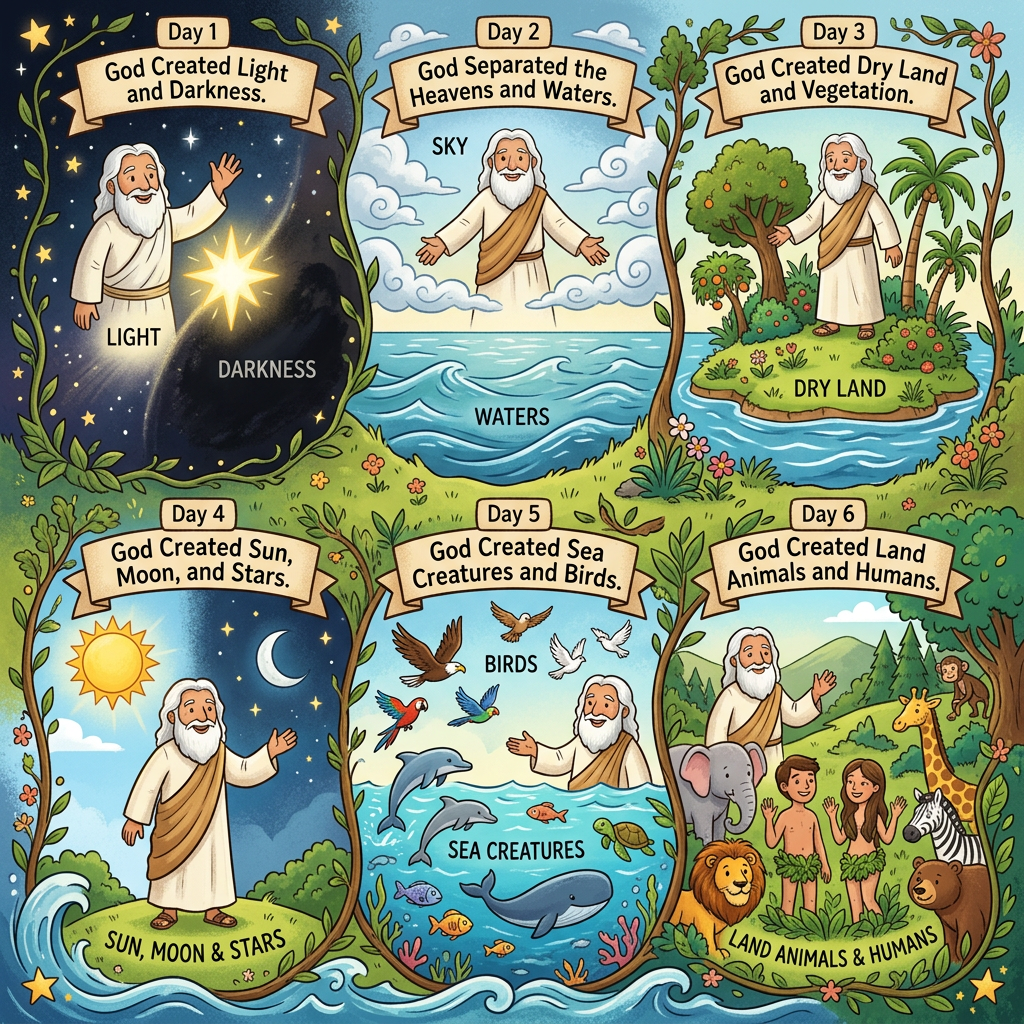
What you will find, if you let yourself read it fresh, is a text with an unusual amount of repetition and a very deliberate shape. God speaks. It happens. God sees that it is good. There is evening and there is morning. Then it repeats. And repeats. And repeats. The whole account has the feel of something carefully composed — a hymn, almost, or an architectural blueprint. It moves from formless emptiness to filled, ordered space. It moves from light to the man and the woman who will image the God who made the light. And then, after all the making, it ends in rest.
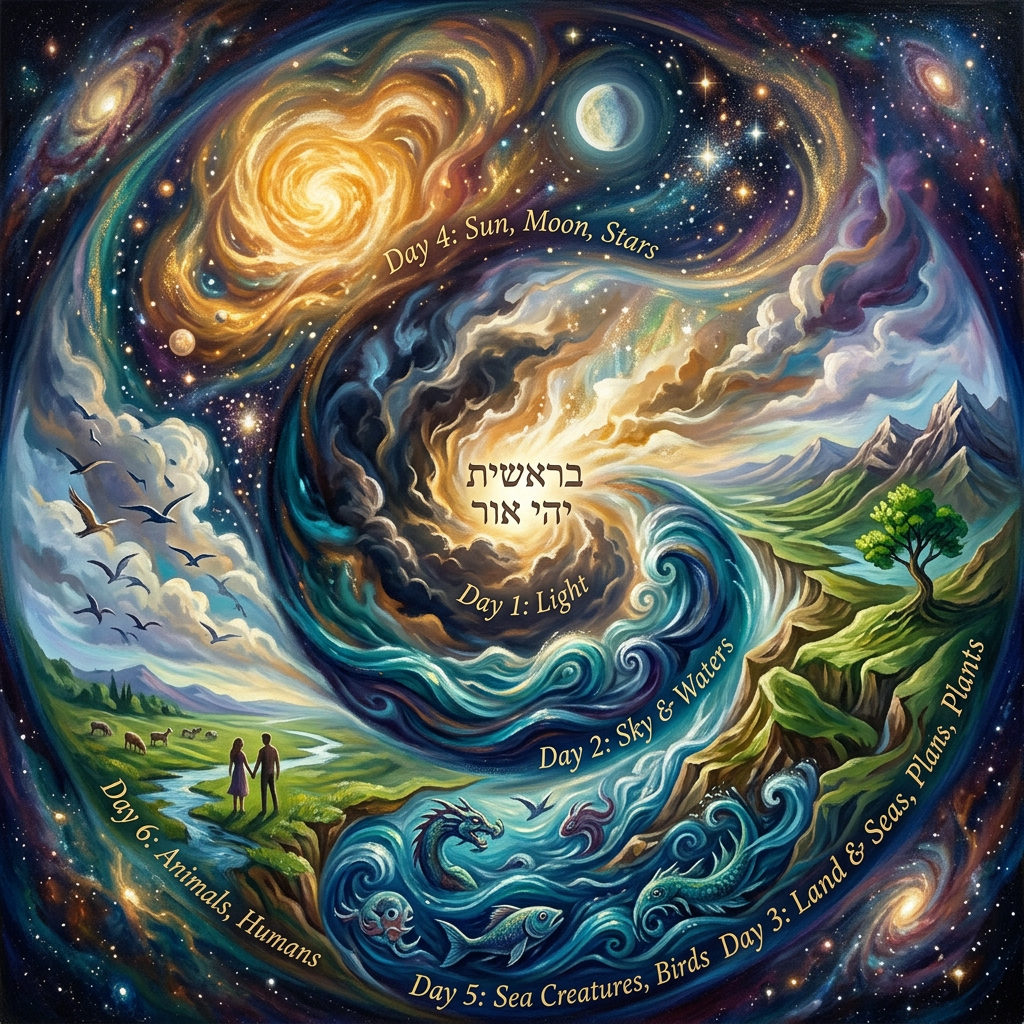
What Genesis 1 clearly asserts is not complicated. God is the sole Creator. Nothing exists apart from His speaking it into being. Creation is ordered, purposeful, and repeatedly called good. Humanity is uniquely made in God’s image and appointed to responsible stewardship over the created world. And the whole account climaxes not in production, but in Sabbath. God rests. The universe was not made to be a factory. It was made to be a house of worship.
None of that requires you to have already decided how long a “day” is in Genesis 1. That question is worth asking, and Christians have answered it in more than one way for a very long time. But the text itself is not primarily interested in resolving your calendar. It is interested in telling you Whose world you are living in.
Here is where I want to plant a flag. Much of the confusion in the origins conversation comes from arriving at Genesis 1 with the answer already in hand and reading the passage as a proof for it. Both the young-earth and old-earth camps do this. Both are convinced that Genesis 1 obviously teaches what they already believe. That is a bad way to read any biblical text, and it is a particularly bad way to read the opening of the Bible.
So try this instead. Read Genesis 1 and ask what it wants you to know about God. What it wants you to know about creation. What it wants you to know about yourself. Notice how the passage builds. Notice what it dwells on and what it passes over quickly. Notice where you find yourself — because Genesis 1 does place you somewhere. It places you in a good world, made by a good God, given a real vocation, and pointed toward rest.
Whatever we decide about the mechanics, that is where the text is trying to take us. Start there. The rest of the conversation will go better if you do.

