WEEK 2 – The Coming Light Prelude Study for Book of John

Key Truth

The light of Christ does not arrive after the night ends—it enters while it is still dark. God’s promise is not that suffering will disappear before He comes, but that His presence is stronger than any darkness you’re walking through.

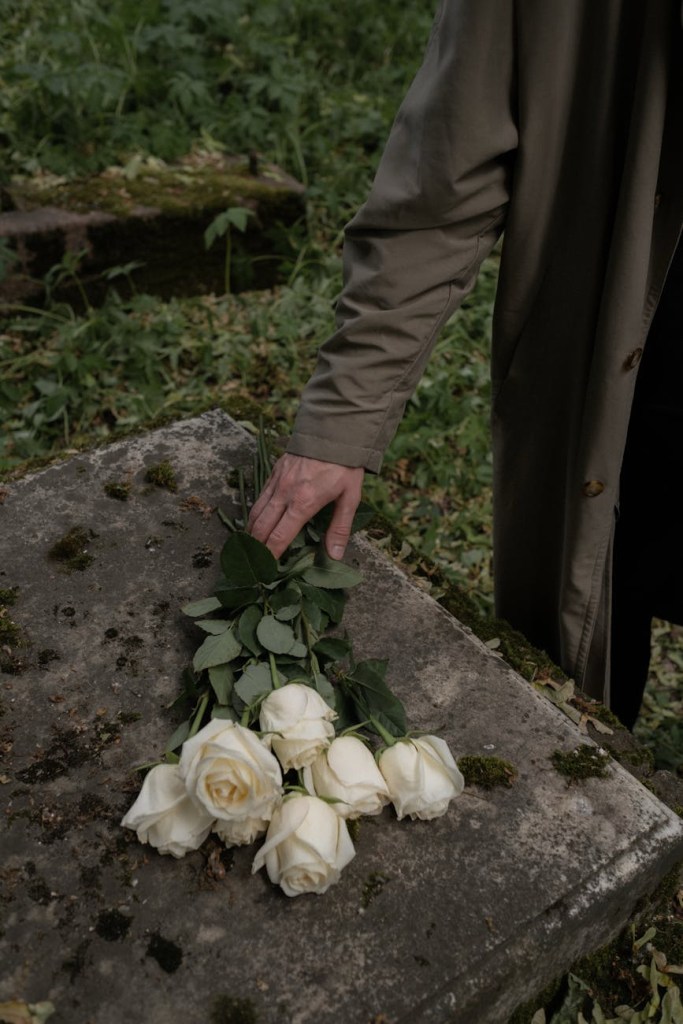
Photo by Simon Berger on Pexels.com

Scripture Focus

Isaiah 9:1-7

“The people walking in darkness have seen a great light; on those living in the land of deep darkness a light has dawned.”

For centuries, Israel walked in shadows. They were exiled, oppressed, silenced—waiting for God to return. They didn’t know when or how. But the prophets kept whispering: Light is coming. Not someday when everything is fixed. Not after you’ve earned it. The light comes into the darkness, meeting you exactly where you are.

Isaiah 40:1-11

“Comfort, comfort my people, says your God… The voice of one calling: ‘In the wilderness prepare the way for the LORD; make straight in the desert a highway for our God.'”
God doesn’t wait for the path to be perfect before He comes. He comes into the wilderness—the place of broken things, lost things, wandering things. And His coming transforms the terrain itself. The desert becomes a highway. The crooked places are made straight. You don’t have to clean yourself up first.

Malachi 3:1

“I will send my messenger, who will prepare the way before me. Then suddenly the Lord you are seeking will come to his temple.”

After 400 years of silence, God promises to speak again. The people had given up hope. They thought God had abandoned them. But He was preparing His coming all along. In your silence, in your waiting, in your despair—God is preparing His coming too.

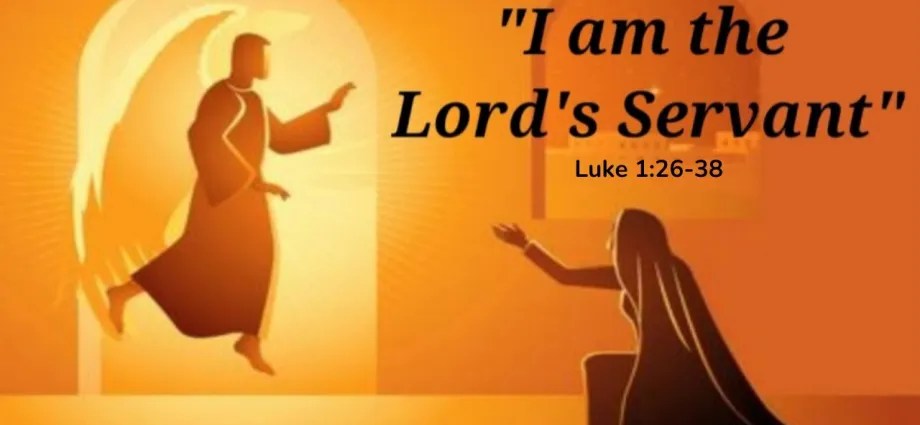
Luke 1:26-38

Mary’s encounter with Gabriel. An ordinary girl in an ordinary place receives an extraordinary promise. “The Lord is with you,” the angel says. Not because Mary deserves it. Not because she’s perfect or ready. But because God chooses her. And she chooses to trust.
Luke 2:25-32

Simeon has waited his whole life for God’s promise. “Lord, now let your servant depart in peace, for my eyes have seen your salvation.” He recognized Jesus immediately—not because he was looking for a king, but because he knew what hope looked like after a lifetime of waiting.

John 8:12

“I am the light of the world. Whoever follows me will never walk in darkness, but will have the light of life.”
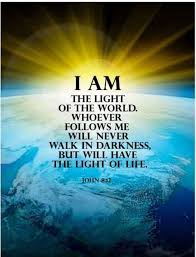
Jesus doesn’t say the darkness goes away when you follow Him. He says you won’t walk in it alone. The light walks with you, through you, ahead of you.

What This Means for You

  • Your darkness is not disqualifying. God’s light doesn’t wait for you to get better, sober, stronger, or more worthy. It comes for you in the mess, in the relapse, in the confusion. That’s when it matters most.
  • Waiting doesn’t mean abandonment. Israel waited 400 years. You may have waited years for healing. That silence wasn’t absence—it was God preparing His coming. Your waiting is not wasted.
  • Hope is not naive. Israel knew their pain. They lived it every day. But they also knew God’s promises. Healing doesn’t deny the darkness; it walks through it with company. Your hope can hold both the pain and the promise.
  • You are seen and called by name. Like Mary. Like Simeon. Like the people Isaiah spoke to. You are not invisible to God. He knows your wilderness and your waiting. He comes for you personally.
  • The light exposes to heal, not to shame. When Christ’s light comes into darkness, it reveals what was hidden—not to condemn you, but to heal you. In recovery, you learn to name your pain, your choices, your truth. That exposure is the beginning of freedom, not judgment.
  • You can trust the light. After years of living in darkness—whether addiction, abuse, silence, or shame—trusting light feels dangerous. But Jesus says: follow me. You won’t walk alone. The light is stronger than any relapse, any failure, any day you think you can’t make it.

Discussion Questions

  • What kinds of darkness have you walked through? What did that darkness feel like?
  • Israel waited 400 years for God to speak. When have you waited for hope? What sustained you?
  • When light breaks through after long darkness, what does that feel like? Does it ever feel scary?
  • In your recovery or healing, where have you experienced God “entering the darkness” rather than waiting for things to be perfect first?
  • What does it mean that the light comes while you’re still walking in darkness, not after the darkness ends?
  • How does it change things to know that Christ’s light exposes wounds to heal them, not to shame you?
  • Who in your life has been “light” to you when you were in a dark place?

This Week’s Practice

  • Read Isaiah 9:1 each morning. Let it be your mirror. You are the people walking in darkness. The light has come for you.
  • Journal one word each day: “One way I see light breaking through today…” Notice small things—a moment of peace, a connection with someone, a choice you made toward healing, grace you received.
  • Sit in one dark room this week. Literally. Sit in darkness for 5-10 minutes. Notice how even a small light—a candle, a phone screen—changes everything. Let that be your prayer: Jesus, be that light for me.
  • Memorize: “The people walking in darkness have seen a great light; on those living in the land of deep darkness a light has dawned.” (Isaiah 9:2)
  • Call or text one person this week who has been light to you in your darkness. Thank them. Tell them what their presence meant.

Daily Reflections

DAY 1 – DARKNESS AND LONGING

Read Isaiah 9:1-7

Imagine Israel waiting. Centuries of waiting. Foreign rulers, broken temples, silence from heaven. But in that darkness, they held onto a promise: the light is coming.

Where in your life do you feel like you’re waiting? In your recovery? In your relationships? In your faith?

Ask God: “Help me wait without losing hope. Show me signs that You’re coming, even now.”

DAY 2 – GOD IN THE WILDERNESS

Read Isaiah 40:1-11

God doesn’t meet us at the finish line. He meets us in the wilderness—where we’re lost, broken, confused.

What does your wilderness look like right now? Where do you feel most lost?

Sit with this: God is preparing a highway through your desert. Not to skip the hard parts, but to make a way through them. You’re not alone in there.

DAY 3 – AFTER THE SILENCE

Read Malachi 3:1

Four hundred years. That’s how long Israel waited after God stopped speaking. Four hundred years of silence. And then: “I will send my messenger.”

Have you experienced silence from God? A time when you didn’t hear His voice, didn’t feel His presence?

Healing often begins in silence. Sometimes God is quiet not because He’s absent, but because He’s coming. Write: “One way I’ve experienced God’s silence was…”

DAY 4 – CALLED BY NAME

Read Luke 1:26-38

Mary was nobody important. Just a young girl in a small town. But when the angel came, he didn’t say, “You’ve earned this.” He said, “The Lord is with you.”

God doesn’t call the qualified. He qualifies the called. He comes to ordinary people in ordinary places and says: You. I choose you.

Ask yourself: What would change if I truly believed God chose me—not because I’m perfect, but because I’m His?

DAY 5 – RECOGNIZING THE LIGHT

Read Luke 2:25-32

Simeon waited his whole life. He was old. He had waited so long he might have stopped looking. But when Jesus came, he knew. Something in him recognized what he’d been waiting for.

In your recovery, have you had moments where you suddenly recognized healing? Where hope showed up when you least expected it?

Write: “I recognized God’s light when…”

DAY 6 – WALKING IN LIGHT

Read John 8:12

“Whoever follows me will never walk in darkness, but will have the light of life.”

Not: the darkness goes away. Not: you’ll never struggle again.

But: you will not walk alone. The light walks with you.

In what area of your recovery do you most need to remember: I’m not walking this alone?

DAY 7 – REST IN THE PROMISE

Read all passages from this week, slowly.

This week, you’ve sat with Israel’s waiting, with God’s silence, with His sudden breaking-through. You’ve remembered that light doesn’t wait for perfection. It comes into the mess.

Today, simply rest. Let yourself feel seen by God. Let yourself trust that the light you’ve seen—in yourself, in your recovery, in God’s grace—is real and strong.

Write: “The light I’m holding onto this week is…”

A Word for You

You are not too dark for God’s light. You are not too far gone, too broken, too much of a mess. The light of Christ enters darkness—it doesn’t wait for the darkness to leave first. In your recovery, in your healing, you are learning to walk in that light. Some days it feels bright. Some days it’s just a flicker. But it’s there. And it’s stronger than you know.

Next Week: The Gift of Presence (Luke 2, Matthew 2; Incarnation and Emmanuel)

Stewarding your faith in hard times

The story of Job begins with blessing and ends with brokenness. In Job chapters 1 and 2, Scripture introduces a man described as blameless and upright, one who feared God and turned away from evil. He had seven sons, three daughters, and abundant wealth. Job’s life seemed stable, ordered, and blessed. Then, in a single day, everything collapsed.

The book opens with a heavenly scene where Satan challenges God, questioning whether Job’s devotion is genuine or just a result of prosperity. God allows Job to be tested, permitting the loss of everything he owns. One messenger after another brings devastating news: raiders steal the oxen and donkeys, fire consumes the sheep, enemies seize the camels, and a violent wind destroys the house where his children are feasting. In moments, Job loses his wealth, his workers, and his children.

Job’s reaction is remarkable. He grieves, tears his robe, and falls to the ground in worship, saying, “The Lord gave and the Lord has taken away; blessed be the name of the Lord.” When tested further with physical suffering, covered from head to toe with painful sores, Job still refuses to curse God. His wife, overcome by despair, urges him to give up, but Job replies, “Shall we accept good from God, and not trouble?”

The chapters close with Job sitting in ashes while his friends arrive to comfort him. They are so shocked by his condition that they remain silent for seven days.

These opening scenes set the tone for the rest of the book. Job’s world has ended, yet his faith remains. The story shows that faith is not proven in the moments when everything is going right but in the moments when everything falls apart. Job teaches that pain does not always mean punishment, and silence does not mean God has left.

When life feels unfair or when tragedy strikes suddenly, Job’s story reminds us that faith can survive the storm. Even when the world ends for us personally, God’s sovereignty and mercy endure.

The Pain We Carry

– Lament with Jeremiah & the Psalmist

There’s a weight we don’t often talk about in church life—the grief that lingers in the soul when things don’t work out the way we prayed they would. Jeremiah knew that weight. He wrote, “Oh, that my head were a spring of water and my eyes a fountain of tears! I would weep day and night for the slain of my people” (Jeremiah 9:1). The psalmist prayed something similar: “Help us, O God of our salvation, for the glory of your name; deliver us, and forgive our sins, for your name’s sake” (Psalm 79:9).

Both voices remind us that lament is not just personal sadness—it’s a holy act of naming the pain before God.

Lament in Scripture, Lament in Life

When I read Jeremiah’s words, I hear echoes of seasons in my own journey. There have been moments where I’ve had to sit across from friends, colleagues, or family members, knowing that words couldn’t fix the brokenness we were facing. Times when projects I poured years into were stalled by forces beyond my control. Times when communities I love were fractured, and I felt powerless to heal the divides.

I’ve often carried those burdens quietly, as an engineer, a leader, a brother, a son. Like many men, I was taught to just keep going, solve the next problem, make the next call. But Scripture teaches that silence isn’t the only response—lament is.

What Lament Looks Like

Lament is not despair. It’s not quitting. It’s a turning of the heart toward God when life feels too heavy to carry. It’s saying out loud what we’d rather keep inside:

This hurts. I don’t understand. God, why does it seem like you’re far away?

Lament opens a door to hope because it refuses to let pain have the last word.

Carrying Pain in a World of Injustice

The prophet Amos points out that part of our pain comes from living in a world where injustice is real. He names those who trample the needy and cheat the poor. I’ve seen versions of that play out in Southeast Texas—families weighed down by the unfair cost of living, workers underpaid while corporations thrive, small towns overlooked when resources are allocated.

My own work in rural broadband has been shaped by that reality. It grieves me that whole communities are still left behind in an age where connection determines opportunity. That’s not just a technical problem—it’s a justice issue. And lament, at its heart, is agreeing with God that this isn’t how things should be.

Learning to Pray the Pain

Paul urges us in 1 Timothy to pray “for all people—for kings and all who are in high positions.” That’s not easy when leaders disappoint us, but it’s part of carrying pain rightly. Prayer puts lament into motion, turning grief into intercession.

I’ve had to learn this the hard way. In seasons where leadership at church or in business felt uncertain, I wanted to either fix everything or walk away. Instead, God has gently reminded me to pray—not just for outcomes, but for people. Prayer doesn’t erase pain, but it transforms how we carry it.

Choosing the Treasure That Lasts

Jesus’ parable of the dishonest manager ends with this line: “You cannot serve God and wealth.” For me, that lands like a compass point. All the work, all the projects, all the energy—none of it can become the ultimate treasure. Pain has a way of reminding us what really matters.

When I’ve lost deals, faced setbacks, or been misunderstood, the Spirit has pressed me back to what lasts: relationships, faith, hope, and love. Those are eternal treasures.

Walking Forward with Honest Hearts

So what do we do with the pain we carry? We learn to lament. We give voice to Jeremiah’s tears and the psalmist’s cries. We name injustice, we pray for people in power, and we re-orient our hearts to the treasure of God’s kingdom.

If you’re carrying something heavy today, don’t bury it. Pray it. Cry it. Write it. Let lament be your way of standing before God honestly. Because in the end, lament is not just about pain—it’s about trust. Trust that God hears. Trust that God heals. Trust that His kingdom will come, even in Southeast Texas, even in my life and yours.

The Prayer Compass – Orienting True North

True North – Christ Himself

“Lord Jesus, keep me aligned to You—not outcomes, not fears, not even my own dreams.”

North – Renewing Faith and Hope

Renew my trust in You each day. Restore hope where it has grown dim and strengthen my heart to endure.

(Romans 15:13)

East – Vision

Open doors for growth in my daily work, calling, and ministry. Guide my steps so they honor You.

(Proverbs 16:3)

South – Healing

Restore broken places in my life, my family, and my relationships. Bring renewal where there is weakness.

(Jeremiah 30:17)

West – Community

Anchor me in the people, neighbors, and culture around me. Let my life be a light that points others to You.

(Matthew 5:14,16)

Living the New Life by Compass in a Fractured WorldSermon – September 14, 2025

Sermon – September 14, 2025

Title: Living the New Life by Compass in a Fractured World
Texts: Ephesians 4:22–24; 2 Corinthians 5:17–20; John 15:5; Colossians 3:17

Opening Prayer

Lord Jesus,
Thank You for offering us a new name amid this week’s heartaches—Kirk’s loss, Evergreen’s terror, Memphis’ violence, and Vidor’s wounds. As we gather, be our compass in this fractured world. Strip away our old selves—our fears, our furies—and clothe us with the new. Align us with Your Vine so that we may bear fruit in places that feel barren. Amen.

Introduction – A Fractured World Needs a Compass

My heart is heavy. This week has fractured us again:

  • Charlie Kirk assassinated in Utah.
  • Evergreen High School torn by gunfire.
  • Memphis, Minneapolis, and Fort Wayne wracked by shootings.
  • And closer to home, Vidor shaken by a woman shot in her apartment, a police chase, and a car hijacking with a family inside.

These are more than headlines. They are mirrors. They expose the anger, fear, and indifference inside us. And they leave us in a liminal space — in between grief and hope.

In those spaces, we need more than maps of opinion, ideology, or rage. We need a compass. Not a device in our pocket — but Christ Himself, our true North.

1. The Quiet Question: Where Am I Going?

Ephesians 4:22–24 calls us to shed the old self and put on the new.

The old self is what fuels violence — vengeance in Utah, despair in Colorado, cycles of revenge in Memphis, desperation in Vidor. But the old self lives in me too. I’ve worn names like “failure” and “not enough,” especially after Joshua’s death.

A compass question cuts through the noise: Who am I becoming?

Youth Call-out (12–18): You hear names and labels every day — “popular,” “awkward,” “try-hard.” But your real compass isn’t popularity or reputation. It’s who Christ is shaping you to become.

2. A New Name, A New Compass

Revelation 2:17 promises: “To the one who overcomes I will give… a white stone with a new name written on it.”

God doesn’t just hand us directions — He renames us. Abram became Abraham. Jacob became Israel. Simon became Peter. I once thought “unworthy” was my name. But Christ renamed me.

A compass doesn’t just point you somewhere. It tells you who you are becoming.

Reflection: What old names still cling to you? How does Christ rename you?

3. The Call to Shed the Old Self

Paul says the old self must go. But that’s not one big decision — it’s a daily compass check.

Ask yourself:

  • Who am I becoming?
  • What pain am I avoiding that God wants to redeem?
  • What can I serve without applause?

This week I felt anger over Kirk’s death, fear for classrooms turned battlegrounds, judgment toward Vidor’s suspects. But renewal starts by taking those thoughts captive, by surrendering them daily.

Romans 5:3–5 reminds us: suffering produces endurance, endurance produces character, and character produces hope. That’s compass work.

4. Ambassadors with Authority

2 Corinthians 5:20 says: “We are Christ’s ambassadors, as though God were making His appeal through us.”

Ambassadors don’t speak their own agenda. They represent their King. After Kirk’s assassination, we don’t answer with vengeance but reconciliation. After Evergreen, we don’t harden, we heal. In Memphis and Vidor, we stand with victims, break cycles of despair, and show mercy.

Authority without compass becomes arrogance. Authority with compass becomes mission.

Youth Call-out (12–18): Think about being the “rep” for your school at a competition. You don’t just speak for yourself — you represent everyone. That’s what being Christ’s ambassador means. People see Jesus in how you live.

5. Abiding: The Anchor in the In-Between

John 15:5 says: “I am the vine; you are the branches… apart from Me you can do nothing.”

Authority without abiding turns to arrogance. Abiding aligns our compass to true North. It’s what turns wounds into wisdom, chaos into fruit. For me, abiding has meant praying over Joshua’s memory, letting grief refine me instead of define me.

Practice: Take five minutes daily. Breathe in God’s grace, exhale fear or vengeance, and listen. Abiding is the only way to stay aligned.

Youth Call-out (12–18): You can’t run your phone on one charge all week. Same with your soul. Stay plugged into Jesus daily — prayer, Scripture, worship — and you’ll bear fruit that lasts.

Application – Living the Compass Life

So, what does this mean for us tomorrow?

  1. Shed the Old Self – Identify one “old name” (anger, fear, indifference) and surrender it.
  2. Live as an Ambassador – Ask: Am I reflecting Christ in my community? Take one step this week: pray, serve, reconcile.
  3. Abide Daily – Pause five minutes a day. Let Christ be your compass.

Living by clocks and calendars keeps us busy. Living by compass keeps us aligned.

Conclusion

This fractured world leaves us asking: Where am I going? Who am I becoming?

The Gospel answers:

  • You are renamed.
  • You are renewed.
  • You are sent as an ambassador.
  • You are rooted by abiding.

“If anyone is in Christ, he is a new creation. The old has passed away; behold, the new has come.” (2 Corinthians 5:17)

In the liminal space of 2025, let Christ be your compass.

Closing Prayer

Lord Jesus,
Thank You for renaming us, renewing us, and sending us. Help us to shed the old, live as Your ambassadors, and stay rooted in the Vine. In this fractured world, keep us walking by Your compass, not our culture’s maps. May we bear fruit that heals and hope that lasts.
Amen.

A Life Cut Short: Reflections on Charlie Kirk 

Charlie Kirk was just 31 years old. A speaker about faith in God, a passionate advocate for what he believed, and—beyond all titles—a human being. Like every one of us, he was a unique creation, fashioned in the image of God. That truth alone makes his death tragic.

I am deeply saddened that someone felt motivated to murder him instead of speaking to him, listening, or even debating with him. Words may cut, but they can also build bridges. To bypass dialogue and take a life is to step into the place of God—as judge and executioner for the universe. That is a role none of us are worthy to assume.

This act is more than political. It is a wound in the fabric of our humanity. Violence against any person—friend, foe, or stranger—reveals how far we fall when we stop seeing each other as God’s handiwork. Every life is sacred, and when one is taken unjustly, we are all diminished.

As Christians, we are called to something higher. We are reminded:

“Beloved, never avenge yourselves, but leave it to the wrath of God, for it is written, ‘Vengeance is mine, I will repay, says the Lord.’” (Romans 12:19)

Judgment belongs to God. Our call is to love, to bear witness to truth with grace, and to pray for those we disagree with—even when it feels impossible.

So let us grieve. Let us pray for Charlie’s family, friends, and the countless young people who looked to him for guidance. Let us also pray for our nation, that words might replace weapons, and conversations might replace condemnation.

And let us remember: in God’s eyes, no person is disposable. Each of us carries eternal worth. May that truth shape how we speak, how we act, and how we disagree.

Thoughts on Creation and New times

Many years ago the brilliant scientist, Sir Isaac Newton, made a working model of the solar system. At the center of his model was a large golden ball representing the sun. Revolving around it were the planets, represented by smaller spheres attached to the ends of rods of varying lengths.

One day a friend who did not accept the biblical account of creation stopped by to visit Newton. When he came into Newton’s study and saw the working model of the solar system, he exclaimed, “What an exquisite thing! Who made it?”

“No one.” replied Newton.

“No one?” the man responded with a look of unbelief and skepticism.

“That’s right,” continued Newton, “these various sized spheres and rods and gears just happened to come together and form this intricate working model.”

Newton’s friend got the message: if this little table model bore silent testimony to its creator, how much more do the heavens declare the glory of God their Creator!

Sinful man seeks to reject the fact that the Lord our God is the Creator of the world and all things in it. Romans 1:18 tells us, “the wrath of God is revealed from heaven against all the ungodliness and unrighteousness of men, who suppress the truth in unrighteousness.”

The first sentence of the first chapter of the first book of the Bible sets before us the truth about God as the Creator of the world and all that it contains in contradistinction to the false views held by sinful man.

The Heavens Declare the Glory of God
1For the choirmaster. A Psalm of David. The heavens declare the glory of God; the skies proclaim the work of His hands.

Praise to the Creator
5The LORD loves righteousness and justice; the earth is full of His loving devotion. 6By the word of the LORD the heavens were made, and all the stars by the breath of His mouth.7He piles up the waters of the sea; He puts the depths into storehouses.

CREATION
The First Message Of The Bible (Genesis 1:1-2)
This Bible study course considers the text of Genesis 1:1-2 where God reveals Himself to be the majestic Creator and describes the initial condition of the earth at the time of its creation.

God’s Work Of Creation (Genesis 1:3-25)
This Bible study course discusses the creation events that occurred during the six days of the creation week.

The Pinnacle Of God’s Creation (Genesis 1:26-2:3)
This Bible study course focuses on man as the pinnacle of God’s creation, as well as the ultimate destiny God has determined for the creation.

What Is Man? (Genesis 2:4-25)
This Bible study course discusses man’s relationship to God his Creator and the purpose for which he has been created.

Questions to reflect on

Bible study questions, from Elisabeth

  1. Why is knowing what you believe on the controversy issues important? Or are they?
  2. What is theology? Is it important in making any decisions of what you believe? John
  3. Father, son, holy Ghost. What’s the different beliefs, some explain a egg example. Leisa
  4. Is father, son, holy spirit 3 different people? Leisa
  5. What is a theological bible study?  John
  6. What exactly do you need to know/ belief so you can find a church that you agree with their beliefs/ teaching?  Leisa and John
  7. Does missionary groups follow a doctine/ denomination?  Yes – usually the church that is supporting them.  Varies widely.
  8. Question for study- how do we know we are learning wisdom?  If you are studying the Bible, praying, and Worshiping God – you are being trained by God and enabled by the Holy Spirit.

Our God is a Trinity. This means there are three persons in one God and not three Gods.The persons are known as the Father, the Son, and the Holy Spirit, and they have all always existed as three distinct persons. The person of the Father is not the same person as the Son. The person of the Son is not the same person as the Holy Spirit. The person of the Holy Spirit is not the same person as the Father. If you take away any one, there is no God. God has always been a trinity from all eternity: “From everlasting to everlasting, You are God,” (Psalm 90:2).

What is a theological bible study? 
Theology – The study of the nature of God and religious truth; rational inquiry into religious questions.
What is theology? Is it important in making any decisions of what you believe?

  • What you believe about God defines many things,  especially about your self.
    • Origin meaning morality destiny
    • Apologist Ravi Zacharias offers what he calls the 3-4-5 method of analyzing worldviews.  I would like to share it with you because it will provide you a method with which to judge worldview options.
    • First, there are three tests that a worldview must pass.  It must be:
      • 1. logically consistent – Its teachings cannot be self-contradictory.
      • 2. empirically adequate – Its teachings must match what we see in reality.
      • 3. existentially relevant – Its teachings must speak directly to how we actually live our lives.
    •  Second, each worldview must address the following fourultimate questions:
      • 1. origin – Where do the universe and human beings come from?
      • 2. meaning – What is the meaning or purpose of life?
      • 3. morality – How do we know what is right and what is wrong?
      • 4. destiny – What happens to us after we die?
    •  Third, there are five academic disciplines that must be employed to study a worldview:
      • 1. theology – the study of God
      • 2. metaphysics – the study of what is ultimately real
      • 3. epistemology – the study of how we can know things
      • 4. ethics – the study of moral right and wrong
      • 5. anthropology – the study of what and who humans are
    • Why do I believe that the worldview of biblical Christianity is the best choice? 
      • Its teachings are logically consistent, they accurately describe reality as it is, and they speak directly to the human condition.
      • In addition, Christianity provides compelling and powerful answers to the questions of origin, meaning, morality, and destiny.
    • Finally, the theology, metaphysics, epistemology, ethics, and anthropology of the Christian worldview are expansively rich and deeply profound – unsurpassed by any other worldview. 
    • If you are a Christian and you haven’t analyzed Christianity using the 3-4-5 method, you are truly missing out.  Read, and read some more.  Dig into your faith, as it provides comprehensive answers to life’s most important questions.
    • If you are not a Christian, I plead with you to open your heart and mind, and study the Christian worldview.  Apply the 3-4-5 method described above, but never forget that Christian doctrine always revolves around a person, Jesus Christ.  He is the embodiment of our faith, and it is to him that we look.
    • https://johnbuna.blog/2020/07/21/origin-meaning-morality-and-destiny/

Why is knowing what you believe on the controversy issues important? Or are they?

  • Depends on the issue
    • If the issue is about Jesus then we need to defend if important
    • If the issue is about salvation then we need to know how to explain and defend.

What exactly do you need to know/ belief so you can find a church that you agree with their beliefs/ teaching?

  • Do they teach the bible,  How do they View Jesus?  the Trinity?  What is their statement of faith or Doctrine?  Do they offer Bible Study and prayer group sessions?  To answer these questions you have to answer them first for yourself.

Origin Meaning Morality and Destiny

Origin meaning morality destiny

Apologist Ravi Zacharias offers what he calls the 3-4-5 method of analyzing worldviews.  I would like to share it with you because it will provide you a method with which to judge worldview options.
First, there are three tests that a worldview must pass.  It must be:
1. logically consistent – Its teachings cannot be self-contradictory.
2. empirically adequate – Its teachings must match what we see in reality.
3. existentially relevant – Its teachings must speak directly to how we actually live our lives.
 Second, each worldview must address the following fourultimate questions:
1. origin – Where do the universe and human beings come from?
2. meaning – What is the meaning or purpose of life?
3. morality – How do we know what is right and what is wrong?
4. destiny – What happens to us after we die?
 Third, there are five academic disciplines that must be employed to study a worldview:
1. theology – the study of God
2. metaphysics – the study of what is ultimately real
3. epistemology – the study of how we can know things
4. ethics – the study of moral right and wrong
5. anthropology – the study of what and who humans are
Why do I believe that the worldview of biblical Christianity is the best choice?  Its teachings are logically consistent, they accurately describe reality as it is, and they speak directly to the human condition.
In addition, Christianity provides compelling and powerful answers to the questions of origin, meaning, morality, and destiny.
Finally, the theology, metaphysics, epistemology, ethics, and anthropology of the Christian worldview are expansively rich and deeply profound – unsurpassed by any other worldview. 
If you are a Christian and you haven’t analyzed Christianity using the 3-4-5 method, you are truly missing out.  Read, and read some more.  Dig into your faith, as it provides comprehensive answers to life’s most important questions.
If you are not a Christian, I plead with you to open your heart and mind, and study the Christian worldview.  Apply the 3-4-5 method described above, but never forget that Christian doctrine always revolves around a person, Jesus Christ.  He is the embodiment of our faith, and it is to him that we look.

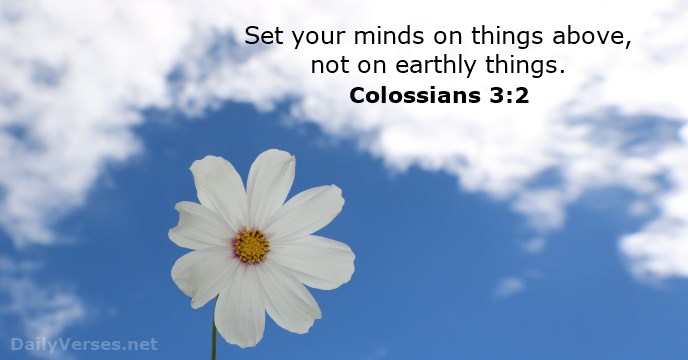
Set your heart on things above Col 3:2

So simple and yet I do not do this very often. Today join me in seeking to do this each day, start each day setting my heart and mind on things above (do not skip starting with prayer, Bible reading, making my posts in social media focus on things above)I can do this and you can to by focusing your mind, where you steer the mind, thoughts and actions follow…just like driving a car.

The topic is a thread throughout the Bible on how to do this and it’s importance.

Colossians 3:1 If ye then be risen with Christ, seek those things which are above, where Christ sitteth on the right hand of God.

1 Chronicles 22:19 Now set your heart and your soul to seek the LORD your God; arise therefore, and build ye the sanctuary of the LORD God, to bring the ark of the covenant of the LORD, and the holy vessels of God, into the house that is to be built to the name of the LORD.

1 Chronicles 29:3 Moreover, because I have set my affection to the house of my God, I have of mine own proper good, of gold and silver, which I have given to the house of my God, over and above all that I have prepared for the holy house,

Colossians 3:5 Mortify therefore your members which are upon the earth; fornication, uncleanness, inordinate affection, evil concupiscence, and covetousness, which is idolatry:

Psalm 49:11-17Their inward thought is, that their houses shall continue for ever, and their dwelling places to all generations; they call their lands after their own names…

Matthew 6:19 Lay not up for yourselves treasures upon earth, where moth and rust doth corrupt, and where thieves break through and steal: