1. Misconception: God Loves Us Only When We Obey Him
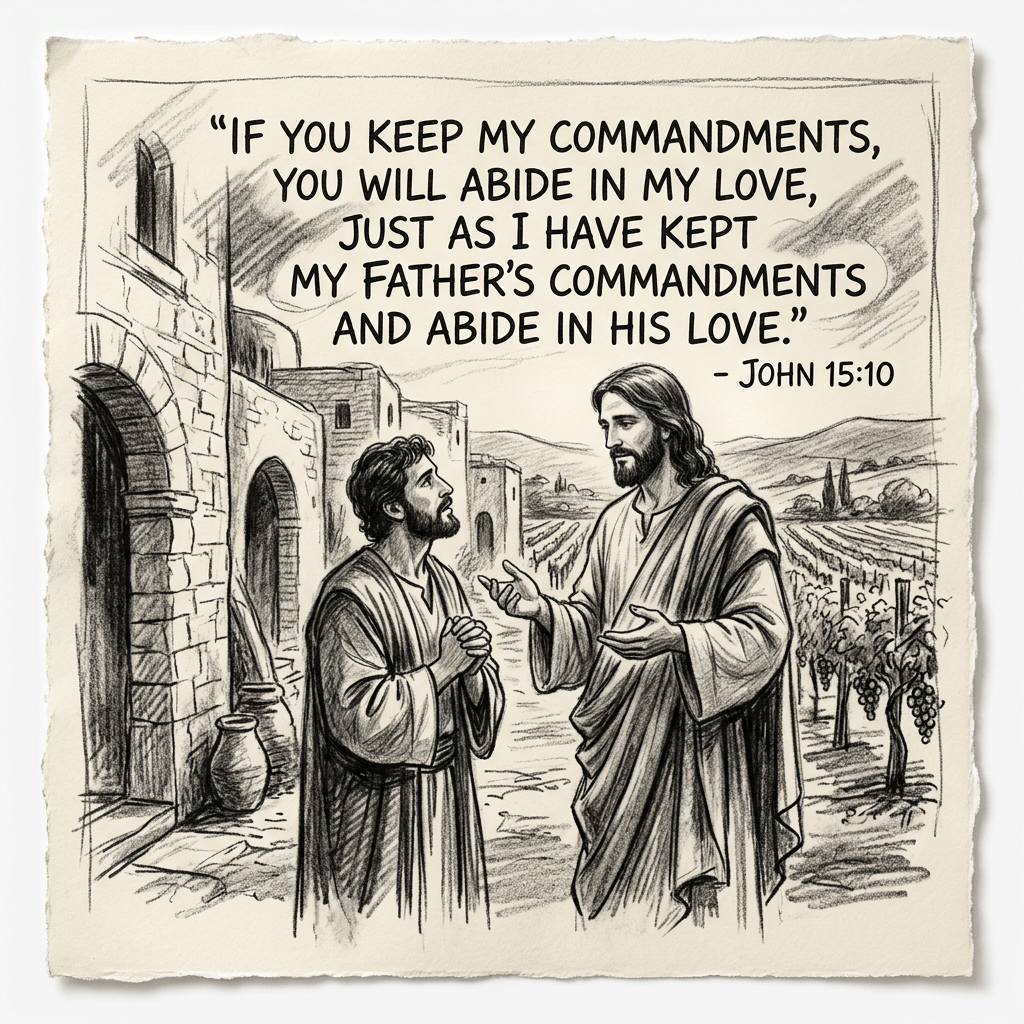
Jesus says:
“If you keep My commandments, you will remain in My love.”
John 15:10
This does not mean that obedience purchases Christ’s love. Jesus first says:
“Just as the Father has loved Me, I also have loved you; remain in My love.”
John 15:9
Christ’s love comes before the disciples’ obedience. They are not obeying in order to persuade Jesus to love them. They obey because He has loved them and brought them into fellowship with Himself.
Obedience is the way believers continue living in the enjoyment, experience, and transforming power of Christ’s love. Persistent disobedience damages fellowship with God, hardens the heart, and contradicts genuine discipleship, but it does not mean that God’s love must be earned through flawless behavior.
Legalism says, “I obey so God will accept me.”
The gospel says, “God has received me by grace through faith in Christ, so I now desire to obey Him.”
Grace does not make obedience unnecessary. Grace makes faithful obedience possible.
Teaching Point
Christian obedience is not payment for divine love. It is the grateful response of those who have already been loved by Christ.
Supporting Texts
- John 14:15
- John 15:9–10
- Romans 5:8
- Ephesians 2:8–10
- 1 John 4:19
2. Misconception: Every Painful Experience Is God Pruning Us
Jesus says that the Father prunes fruitful branches so they may bear more fruit. However, not every painful event should automatically be identified as divine pruning.
Suffering may arise from:
- Life in a fallen world
- Human sin
- Poor decisions
- The actions of other people
- Persecution
- Spiritual opposition
- God’s discipline
- God’s providential preparation
- Causes that remain hidden from us
Scripture does not give believers permission to declare with certainty why every tragedy, illness, loss, or hardship has occurred.
Job’s friends assumed that his suffering proved personal wrongdoing. Their confident explanations were wrong, and God rebuked them.
Pruning specifically refers to the Father’s purposeful work of removing what hinders spiritual fruitfulness. God may use suffering in that work, but suffering itself does not prove that a person is being corrected or that God is displeased with them.
Teaching Point
Do not interpret another person’s pain as evidence of God’s judgment. The proper response to suffering is humility, compassion, prayer, self-examination, and continued trust in Christ.
Supporting Texts
- John 15:2
- Job 42:7
- Luke 13:1–5
- John 9:1–3
- Romans 5:3–5
- James 1:2–4
3. Misconception: Spiritual Fruit Means Visible Success, Large Numbers, or Public Ministry
Jesus promises that those who remain in Him will bear fruit. That fruit must not be reduced to attendance figures, financial growth, public recognition, emotional excitement, or impressive ministry results.
Spiritual fruit includes:
- Christlike character
- Love
- Obedience
- Holiness
- Repentance
- Good works
- Faithful witness
- Generosity
- Endurance
- Praise
- Service
- Perseverance under pressure
Galatians 5:22–23 is directly relevant because the fruit of the Spirit describes the character formed in people who live by the Spirit of Christ.
A church may appear successful while lacking love, holiness, truth, or humility. A believer may live a quiet and largely unnoticed life while bearing deep and lasting spiritual fruit.
Fruitfulness is measured by faithfulness to Christ, not merely by public visibility.
Teaching Point
The clearest evidence of abiding is not religious activity alone, but the growing character, obedience, love, and faithfulness of Jesus in a person’s life.
Supporting Texts
- John 15:4–8
- Galatians 5:22–23
- Philippians 1:11
- Colossians 1:10
- Hebrews 13:15
- James 3:17–18
4. Misconception: Abiding Means Doing Nothing and Waiting for God to Act
Jesus teaches complete dependence upon Him:
“Apart from Me you can do nothing.”
John 15:5
This does not mean discipleship is passive. The branch cannot create life, but it must remain connected to the vine.
Abiding includes active practices of faith:
- Trusting Christ
- Receiving His Word
- Obeying His commands
- Praying
- Repenting
- Loving other believers
- Participating in Christian fellowship
- Resisting temptation
- Serving others
- Persevering through hardship
Grace is opposed to earning, but grace is not opposed to effort. Christians do not work in order to create spiritual life. They respond faithfully because God is already at work within them.
Paul expresses this balance:
“Work out your own salvation with fear and trembling; for it is God who is at work in you, both to desire and to work for His good pleasure.”
Philippians 2:12–13
Teaching Point
Abiding is active dependence. We do not produce life apart from Christ, but we must respond to His grace through faith, obedience, and perseverance.
Supporting Texts
- John 15:4–5
- Philippians 2:12–13
- Colossians 1:29
- 1 Timothy 4:7–8
- 2 Peter 1:5–8
5. Misconception: Every Inner Voice or Strong Feeling Is the Holy Spirit
The Holy Spirit guides, convicts, teaches, empowers, and gives gifts. However, not every internal impression comes from the Spirit.
Human beings can mistake the following for divine guidance:
- Personal desire
- Fear
- Anger
- Anxiety
- Imagination
- Pride
- Habit
- Cultural assumptions
- Emotional excitement
- A desire to control another person
Jesus calls the Holy Spirit “the Spirit of truth.” His ministry is centered upon Christ and never contradicts Scripture.
Any claimed leading should be tested by asking:
- Does it agree with Scripture?
- Does it exalt Jesus?
- Does it promote holiness?
- Does it produce love and truth?
- Does it reflect the character of God?
- Can it withstand wise Christian counsel?
- Does it manipulate, flatter, frighten, or control others?
- Does it produce the fruit of the Spirit?
The Holy Spirit is a divine Person, not merely a feeling, intuition, emotional impulse, or internal voice.
Teaching Point
The Spirit leads believers, but impressions must be tested. Scripture remains the final authority for doctrine, conduct, and claimed spiritual guidance.
Supporting Texts
- John 15:26
- John 16:13–14
- 1 Corinthians 14:29
- 1 Thessalonians 5:19–22
- 1 John 4:1
- Galatians 5:22–23
6. Misconception: Every Criticism or Rejection Is Persecution
Jesus warns that the world will hate His disciples because it hated Him first. Christians should expect opposition when they faithfully represent Christ.
However, not all rejection is persecution.
People may resist a Christian because of:
- Pride
- Harsh speech
- Hypocrisy
- Dishonesty
- Political hostility
- Careless behavior
- Self-righteousness
- Unnecessary argument
- Failure to listen
- Lack of compassion
Peter warns believers not to suffer as evildoers or troublesome meddlers and then claim honor for suffering as Christians.
True persecution is opposition that arises because a person faithfully belongs to Christ, speaks His truth, and lives according to His commands.
Christians should not seek hostility or treat offensiveness as evidence of faithfulness. The gospel itself may offend, but the manner of the messenger should display humility, gentleness, courage, and love.
Teaching Point
Before calling opposition persecution, believers should ask whether they are suffering for Christ’s righteousness or merely experiencing the consequences of their own conduct.
Supporting Texts
- John 15:18–25
- Matthew 5:10–12
- 1 Peter 2:19–20
- 1 Peter 3:15–17
- 1 Peter 4:14–16
7. Misconception: God Has Abandoned Us When He Seems Silent
Believers sometimes experience seasons when prayer feels unanswered and God seems distant. Scripture openly acknowledges this experience.
David prayed:
“How long, Lord? Will You forget me forever?”
Psalm 13:1
The feeling of divine silence is real, but it does not prove divine abandonment.
God’s people may pass through seasons in which:
- No clear answer comes
- Emotions feel numb
- Prayer feels difficult
- Guidance is uncertain
- Circumstances remain unchanged
- God’s presence is not strongly felt
During such seasons, believers should not invent messages from God or assume He has rejected them. They should continue in what God has already made clear through Scripture.
Faithfulness during silence includes:
- Honest prayer
- Continued obedience
- Christian fellowship
- Remembering God’s past faithfulness
- Refusing known sin
- Seeking wise counsel
- Waiting with hope
- Trusting God’s revealed character
God’s silence is not permission to abandon what He has spoken in His Word.
Teaching Point
When God seems silent, remain in Christ. Faith is often demonstrated by continuing to trust God’s revealed truth when no immediate explanation or emotional reassurance is given.
Supporting Texts
- Psalm 13
- Psalm 22
- Psalm 42
- Job 23:8–12
- Lamentations 3:21–26
- Hebrews 13:5
8. Misconception: God Hates His Children Whenever They Disobey
The statement “Jacob I have loved, but Esau I have hated” must be read in its biblical context.
In Malachi, Jacob and Esau represent Israel and Edom. The passage concerns covenant history, divine election, and judgment. Paul later quotes it in Romans 9 while discussing God’s freedom in carrying out His redemptive purpose.
The language should not be used to claim that God emotionally despises His children whenever they fail.
God is holy and opposes sin. He may discipline His children severely, but Scripture says His discipline flows from love:
“For whom the Lord loves He disciplines.”
Hebrews 12:6
Divine discipline is not the same as rejection. God corrects His children to restore them, form holiness in them, and bring them back into faithful obedience.
This does not make sin insignificant. Persistent rebellion is dangerous, and believers must repent. But the proper biblical response is not to portray God as unstable, hateful, or eager to cast away everyone who struggles.
Teaching Point
God’s holiness means He confronts sin. God’s fatherly love means He disciplines His children for restoration rather than treating every failure as grounds for personal hatred.
Supporting Texts
- Malachi 1:2–4
- Romans 9:10–13
- Hebrews 12:5–11
- Revelation 3:19
- 1 John 1:9
9. Misconception: “You Did Not Choose Me, but I Chose You” Settles Every Debate About Election
Jesus says:
“You did not choose Me but I chose you, and appointed you that you would go and bear fruit.”
John 15:16
The immediate audience is the apostles. Jesus chose them for a particular role in His redemptive mission. They were appointed to bear lasting fruit through their witness, preaching, teaching, and service.
The verse certainly teaches divine initiative. The disciples did not appoint themselves. Christ called, equipped, and commissioned them.
However, this verse alone should not be made to carry every later theological debate concerning predestination, free will, election, perseverance, or individual salvation.
The immediate emphasis is not an abstract system. It is Christ’s sovereign choice of His disciples for fruitful mission.
A Wesleyan-Arminian reading affirms that salvation begins with God’s initiating grace. No one comes to Christ apart from God’s gracious action. At the same time, Scripture repeatedly calls people to repent, believe, obey, remain, and persevere.
Teaching Point
John 15:16 emphasizes Christ’s initiative and purpose in calling disciples to mission. It should be interpreted within its apostolic context and the whole witness of Scripture.
Supporting Texts
- John 15:16
- John 6:44
- Acts 17:30
- Ephesians 2:8–10
- 1 Timothy 2:3–6
- 2 Peter 3:9
10. Misconception: “Ask Whatever You Wish” Means God Promises to Grant Every Request
Jesus says:
“If you remain in Me, and My words remain in you, ask whatever you wish, and it will be done for you.”
John 15:7
This promise is sometimes treated as a blank check. It is not a guarantee of wealth, healing, success, comfort, or the fulfillment of every personal desire.
The promise includes two essential conditions:
- The believer remains in Christ.
- Christ’s words remain in the believer.
Abiding changes what a person desires. Christ’s Word reshapes prayer so that the believer increasingly asks according to God’s character, purposes, and will.
Scripture also teaches that prayer may be hindered by:
- Selfish motives
- Unrepentant sin
- Failure to forgive
- Disregard for God’s will
- Lack of compassion
- Broken relationships
- Unbelief expressed as refusal to trust God
Faith-filled prayer may boldly ask for healing, provision, deliverance, wisdom, and intervention. Yet faithful prayer also submits to God:
“Not My will, but Yours be done.”
Luke 22:42
Teaching Point
Abiding prayer is not a method for controlling God. It is communion with Christ that increasingly aligns the believer’s desires with the Father’s will.
Supporting Texts
- John 15:7
- Matthew 6:9–10
- James 4:2–3
- 1 John 5:14–15
- Luke 22:42
- 2 Corinthians 12:7–10
11. Misconception: The Warning About Fruitless Branches Is Not Serious
Jesus says:
“If anyone does not remain in Me, he is thrown away like a branch and dries up.”
John 15:6
This warning should not be dismissed as hypothetical or irrelevant. Jesus intends His disciples to understand that continued life and fruitfulness are found only in Him.
Christians differ over whether the fruitless branches represent false believers who were never genuinely converted or genuine believers who later turned away. Both views attempt to take the warning seriously.
Within a Wesleyan-Arminian understanding, the passage warns real disciples against ceasing to remain in Christ. Salvation is entirely by grace, but grace does not eliminate the necessity of continuing faith.
The warning should not produce constant panic in sincere believers who struggle, repent, and continue seeking Christ. A weak branch that remains connected to the vine is not the same as a branch that rejects the vine.
The danger is not spiritual weakness alone. The danger is persistent unbelief, hardened rebellion, and refusal to remain in Christ.
Teaching Point
Assurance is found in Christ, not in presumption. Believers should neither live in terror nor treat perseverance as unnecessary.
Supporting Texts
- John 15:1–6
- Hebrews 3:12–14
- Colossians 1:21–23
- Romans 11:20–22
- 1 Corinthians 10:12
- Jude 20–21
12. Misconception: Loving Others Means Approving Everything They Do
Jesus commands:
“Love one another, just as I have loved you.”
John 15:12
Christ’s love is sacrificial, patient, merciful, and compassionate. It is also truthful and holy.
Biblical love does not require believers to:
- Approve sin
- Ignore harmful behavior
- Avoid correction
- Remain in abusive situations
- Abandon appropriate boundaries
- Conceal serious wrongdoing
- Sacrifice truth for temporary peace
Jesus loved people deeply while calling them to repentance. He forgave sinners without redefining sin. He showed compassion without surrendering holiness.
Christian correction must never be cruel, controlling, self-righteous, or humiliating. Its purpose should be restoration, protection, truth, and spiritual good.
Teaching Point
Biblical love seeks another person’s true good under the authority of God’s truth. Love without truth becomes sentimentality; truth without love becomes harshness.
Supporting Texts
- John 15:12–13
- Ephesians 4:15
- Galatians 6:1–2
- 1 Corinthians 13:4–7
- James 5:19–20
- Revelation 3:19
Summary
John 15 must not be interpreted as though:
- God’s love must be earned.
- Every hardship is punishment or pruning.
- Visible success is the same as spiritual fruit.
- Abiding requires no active obedience.
- Every inner impression is the Holy Spirit.
- Every criticism is persecution.
- Divine silence means divine abandonment.
- God hates His children whenever they fail.
- One verse settles every debate about election.
- Prayer gives believers control over God.
- Warnings about perseverance can be ignored.
- Love requires approval of sin.
Jesus calls His disciples to a life of dependent, obedient, persevering fellowship with Him.
The Father lovingly tends the branches.
The Son supplies their life.
The Spirit bears witness to Christ.
The disciples remain, receive the Word, obey, love, pray, bear fruit, and persevere.

