
Post 1 — Why I’m Writing This Series
If you have spent any time in the corners of the internet where Christians talk about creation, you have noticed a pattern. Everyone is very sure. Everyone has a graphic. Everyone has a video. Half of it argues that if you accept an old earth you have abandoned the Bible. The other half argues that if you accept a young earth you have abandoned your mind. Somewhere in between, a lot of ordinary Christians are quietly wondering whether they are allowed to think.
You are.
Christians have been reading Genesis carefully for two thousand years. They have not always agreed on every detail, and they have not always needed to. What they have agreed on is more important, and clearer, than most of what you will find in the loud debates: God made everything. Humanity is uniquely His image. Sin is real, and Adam’s rebellion is at the root of it. Jesus Christ historically entered our fallen world, died, and rose to defeat sin and death. Creation will be restored.
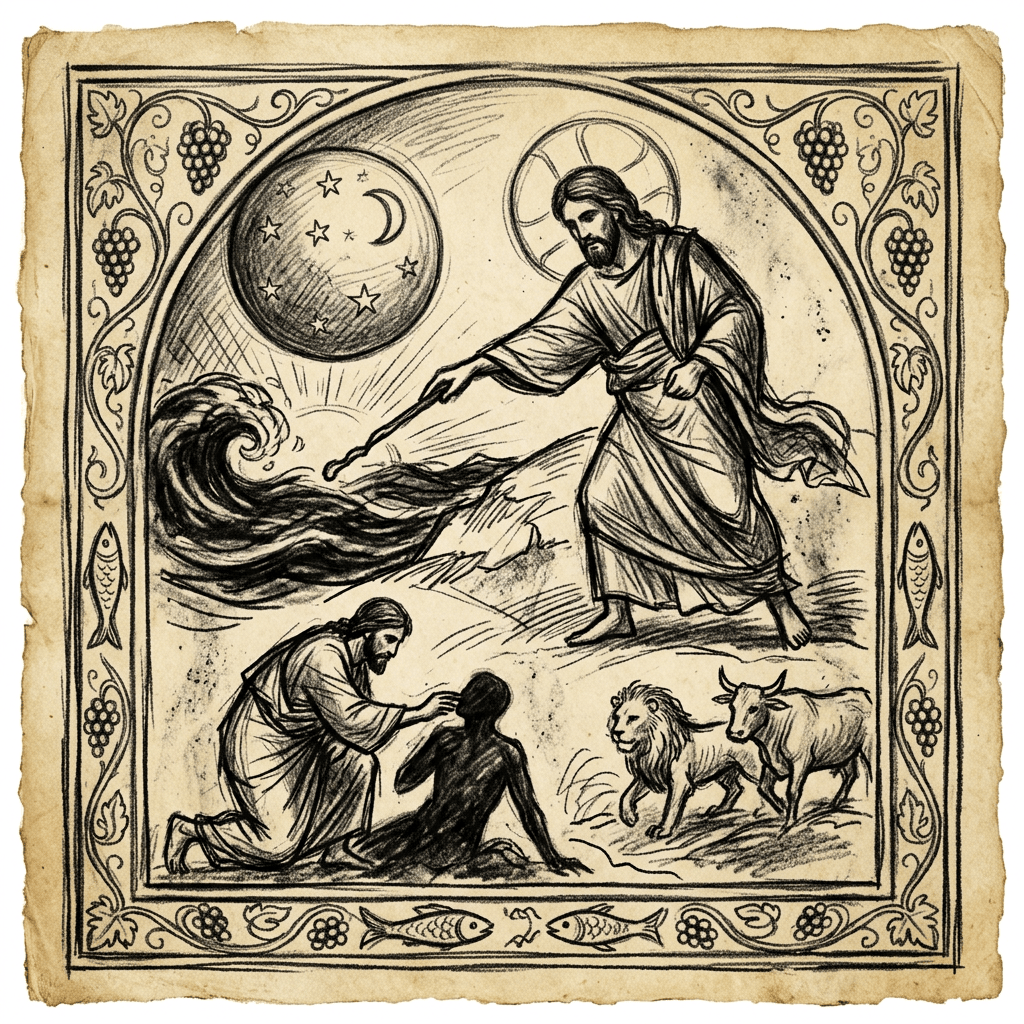
Everything else worth arguing about sits somewhere inside that frame.
Over the next thirteen posts, I want to walk carefully through the questions the origins conversation raises — biblical, scientific, historical, pastoral. Not to convince you of my exact position on the age of the earth, but to help you read Genesis better than the algorithms are teaching you to read it. That includes distinguishing what Scripture plainly says from what we have grown up assuming it says. It includes learning to tell an observation from a model, a model from a worldview, and a worldview from a doctrine. And it includes the discipline — increasingly rare — of holding your convictions with confidence and your neighbors with charity.
The plan looks like this:
- Two posts on what Genesis 1–3 actually says when you slow down and read it
- One post on the four levels every origins argument mixes together
- Six posts on the specific theological questions — very good, death, Adam, the Flood, providence, and Christian history
- Two posts on the science conversation — how understanding changes, and how to compare origins models fairly
- One post on weighing any claim honestly
- One post on how Scripture’s beginning and ending fit together
- One closing post on what to hold with conviction, what to hold with humility, and how to tell the difference
You do not have to read them in order, but you will get more out of them if you do. The whole series is written from the same place: Scripture is the standard, careful thinking is not the enemy of faith, and God is not nervous about our questions.

