
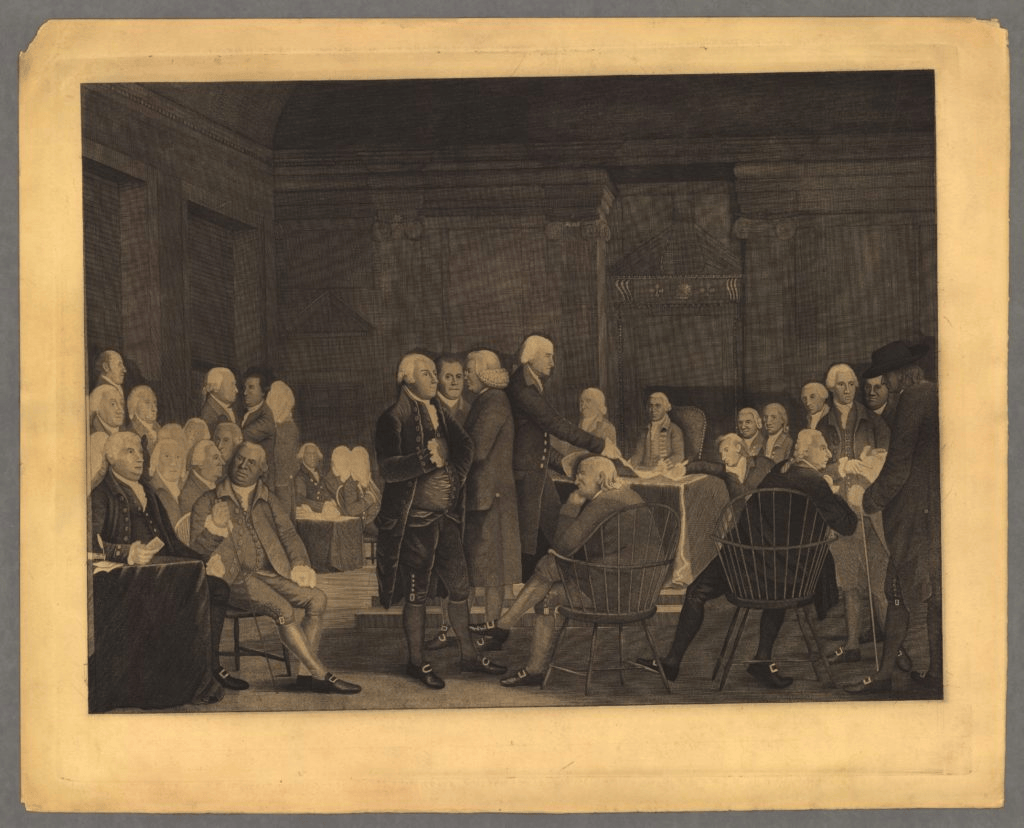
Political Lawfare, the Pursuit of Power, and the Erosion of Justice
After examining American political history, from the Founding Fathers to the present, one troubling reality becomes clear: political factions of every persuasion have, at various times, used government authority, legal proceedings, institutional influence, and public opinion to weaken their opponents.
This is not new. John Adams and the Federalists used the Sedition Act to prosecute political critics. Thomas Jefferson supported partisan media campaigns against his opponents. More recently, we have seen controversies involving the IRS targeting of Tea Party organizations, FBI surveillance abuses, the prosecution of General Michael Flynn, January 6 defendants, and the numerous investigations of Donald Trump. Progressive organizations and Democratic figures have also experienced sustained legal and political pressure.
The pattern deserves examination beyond party labels.
Political lawfare is not necessarily about winning a court case. Sometimes the process itself becomes the punishment. Investigations, subpoenas, legal expenses, reputational attacks, and relentless media coverage can financially and emotionally exhaust individuals until they resign, withdraw, settle, or simply give up.
Nor does this always require a centrally directed conspiracy. People and institutions sharing political objectives, ideological assumptions, professional relationships, and incentives can reinforce one another’s actions without explicit coordination. Over decades, these networks can develop enormous influence.
Political thinkers such as Saul Alinsky and Antonio Gramsci recognized the effectiveness of sustained pressure, personalizing opposition, and building influence through institutions. Their writings help explain some of these mechanisms, although similarities in tactics do not prove that particular officials are following their teachings.
The historical evidence also demands an important distinction: legitimate investigations and political criticism are not inherently lawfare. The abuse occurs when government power is exercised selectively, evidence is manipulated, constitutional protections are disregarded, or legal processes are used primarily to punish political opposition.
Perhaps the most troubling consequence is the erosion of public trust. When citizens believe that justice depends more on political connections than on evidence and law, confidence in our constitutional republic suffers.
Our Founders understood this danger. George Washington warned against the destructive influence of political factions. James Madison recognized that government must be structured to restrain the ambitions and weaknesses of those exercising power.
The lesson is not that Republicans are innocent or Democrats alone are guilty. History does not support that conclusion. Nor does acknowledging abuses across political traditions mean those abuses have been equal in frequency or severity.
The lesson is that political power, regardless of who holds it, must remain subordinate to the Constitution and the rule of law.
We should demand accountability for wrongdoing, protection for the innocent, transparency in government, and equal justice without regard to political affiliation.
As Christians, we should remember the instruction of Micah 6:8: “Do justly, and to love mercy, and to walk humbly with thy God.”
Our loyalty to truth, justice, and constitutional liberty must be greater than our loyalty to any political party.
A republic cannot remain free when its citizens accept abuses of power simply because those abuses are directed against people they oppose.

