The Radio Link and the Soul: What Forty-Seven Years in Rural Infrastructure Have Taught Me About Work, Technology, Life, and Faith

I remember standing out at a metering station back in 2007, somewhere off a caliche road you wouldn’t find unless you already knew where you were going. East Texas co-op site. Quiet place. The kind where you can hear the wind before you see it.

Photo by Pixabay on Pexels.com

That radio link we were depending on had been put in sometime in the late 90s. I ran the path profile right there in the truck. Same story I’ve seen a hundred times—Fresnel barely clearing, fade margin just enough to make you feel okay until you’re not. A couple of other transmitters on the same  tower are already stepping on each other a little.

Nothing broken. Nothing dramatic. Just fragile in a quiet kind of way.

That same setup is still out there today in more places than folks want to admit. Same sub-GHz radios. Same serial cables run through what was supposed to be “temporary.” Same passwords, nobody ever changed. Same remote access tools because the integrator lives two hours away, and the operator’s got another job to get to.

And honestly, that’s not carelessness. That’s reality.

Those systems were built in a world where isolation was the security model. That world’s gone now. But the systems didn’t change with it.

You hear a lot about checklists and compliance and inventory—and they’re not wrong. You do need to know what you’ve got. But the real issue I keep running into isn’t just knowing it exists.

It’s whether it was ever built to handle what it’s actually dealing with.

Weather fade. Trees growing up into your path. Interference from somebody else hanging gear on the same structure. One cable takes the whole system down if it fails.

That’s not cybersecurity. That’s just telling the truth about the system.

And if I’m being honest, that same pattern shows up in life, too.

We’ve got all this technology now that makes it feel like we’re in control. But something underneath is getting thinner. Everything is constant—alerts, messages, noise—and it keeps you in that problem-solving mode all the time. You’re always thinking, always fixing, always responding.

But you’re not really resting and not really connecting. Not really present.

I’ve lived that.

The work itself is good. Keeping water moving. Keeping systems talking and helping communities function. That part matters.

But it can also take more than it’s supposed to.

I’ve had seasons where I carried responsibility like it all depended on me—stayed up too late chasing one more improvement. Pushed through things I should’ve stopped and grieved. Kept quiet when I should’ve said I needed help.

It builds up. Quietly. Faith, at least the way I’ve come to understand it, doesn’t remove that weight. It puts it back where it belongs.

You weren’t meant to carry all of it. You weren’t meant to run without stopping.

You weren’t meant to pretend nothing’s been lost along the way.

There’s a reason Scripture emphasizes rest, sharing burdens, and strength in weakness-these aren’t just ideas, but a divine design for our well-being.

It’s not a theory. Its design.

So now I’m trying—slowly—to live that out.

Do the work right. Engineer it honestly. Document it so the next guy isn’t guessing. Don’t chase every new thing just because it’s new.

But also close the laptop when it’s time. Let the system be what it is for a few hours. Say out loud when something’s heavy instead of burying it. Trust that I’m not the one holding everything together.

That old radio link mindset still sticks with me. You harden what you can. You document it better. You improve it where possible.

But at the end of the day, you’re not the source of the system’s life. You’re just a steward of it.

And that applies just as much to the work as it does to everything else.

So for anybody out there carrying similar weight—

Do the inventory. Fix what you can fix. Write it down so it lasts.

But don’t forget to rest.

Don’t skip the grief.

Don’t try to carry it alone.

There’s more to this than uptime and performance.

The work matters. But it’s not where the meaning comes from.

That part comes from walking it out—steady, faithful, with other people, and under grace.

That’s enough.

The Radio Link and the Soul: What Forty-Seven Years in Rural Infrastructure Have Taught Me About Work, Technology, Life, and Faith
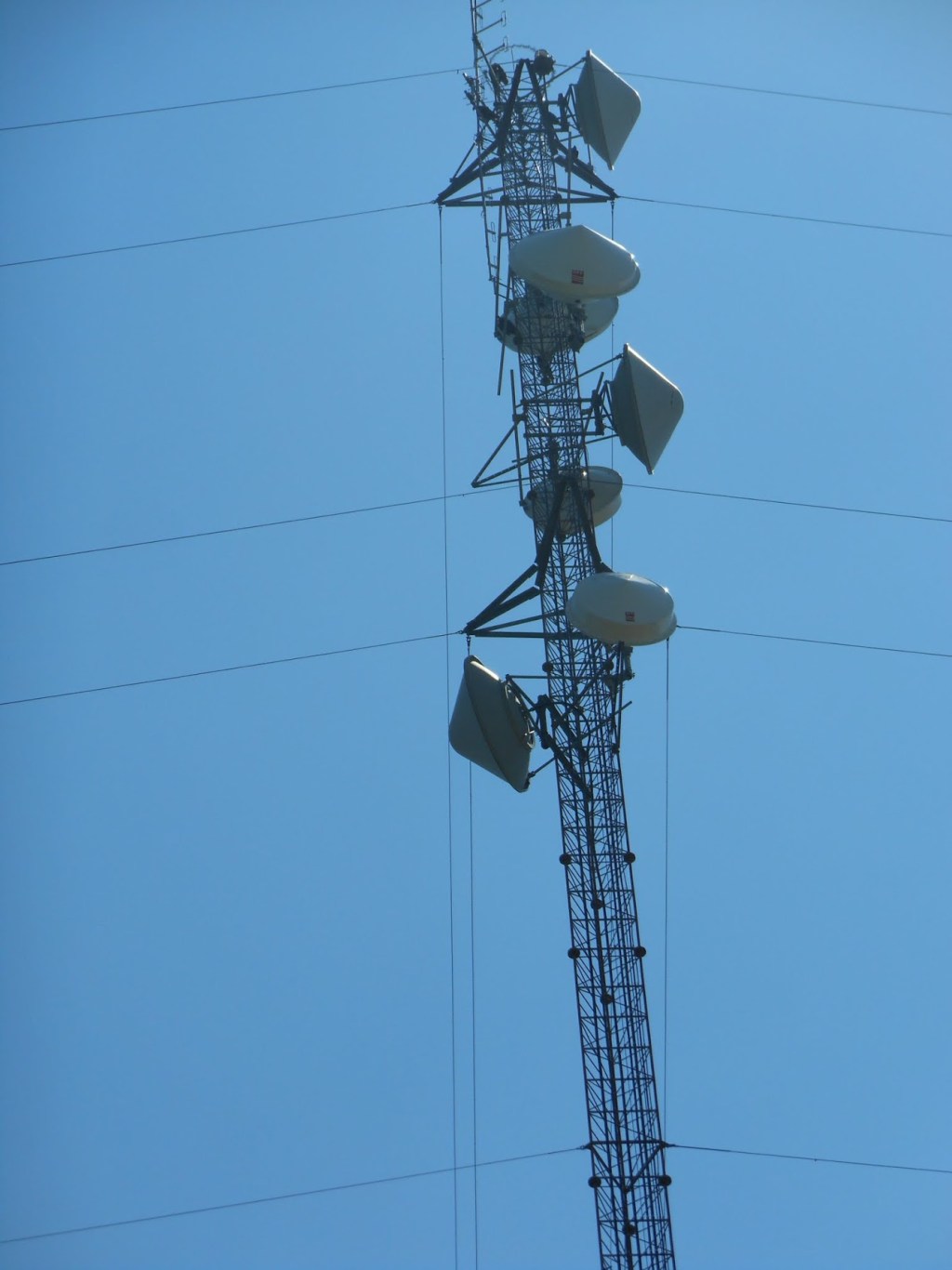
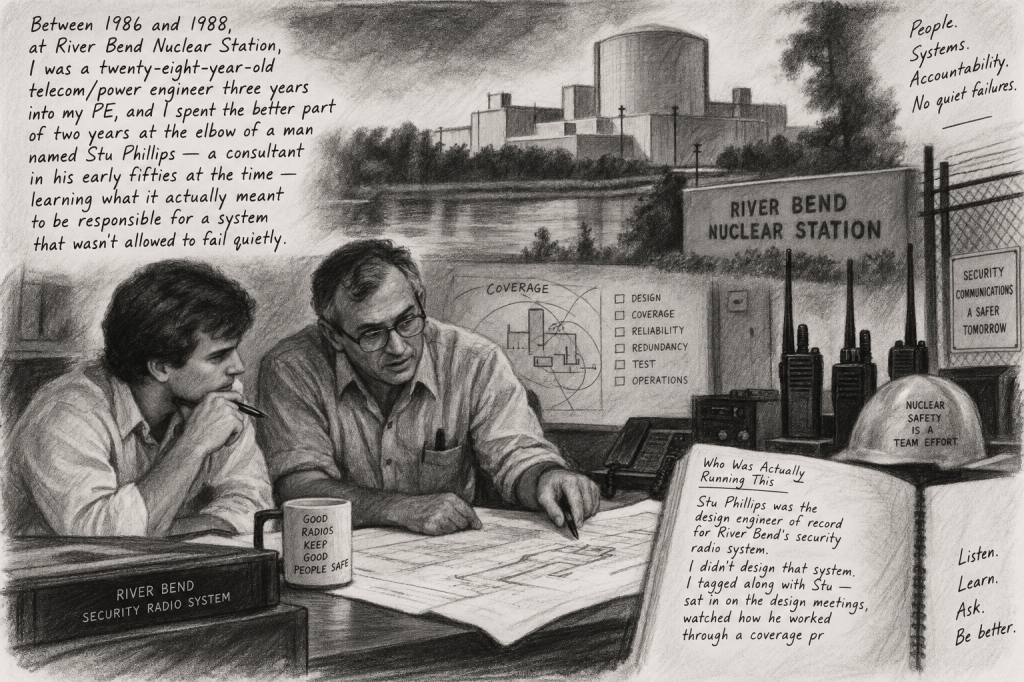
In 2007 I stood at a remote metering station for an East Texas electric cooperative, eight miles down a caliche road from the nearest paved highway. The 900 MHz radio link feeding telemetry back to the control center had been installed in the late 1990s. I remember leaning against the chain-link fence that afternoon, path-profile sketch in hand, praying quietly for wisdom. The Fresnel zone clearance was marginal. The link budget gave us a fade margin that was “good enough for government work.” Co-site interference from two other transmitters on the shared water-tower mount was already measurable. None of it was dramatic. It was simply the quiet fragility I had come to expect after two decades in the field.

That same 1990s-era radio technology is still the backbone for far too many rural water systems in 2026. The same unlicensed sub-GHz links, the same RS-232 cables run through “temporary” conduit fittings, the same factory-default passwords on the web interfaces. The SCADA password is still written on a Post-it note taped to the server rack. The remote access tool is still TeamViewer or AnyDesk because the integrator is two hours away and the operator has a day job. None of this is negligence. It is rational adaptation to real operational constraints. The systems were geographically and technically isolated when they were built. The threat model changed. The trust model has not caught up.

This is the field reality the federal checklists rarely name. The CISA/EPA guidance is right: asset inventory is foundational. Before you can protect it, you must know it exists. But the real gap is not in the inventory. It is in whether those assets—the radios, the PLCs, the unlicensed backhaul links—are engineered to survive the conditions they actually face: weather fade, vegetation growth, shared tower interference, and the single-point-of-failure cable runs that operators have lived with for decades. The engineering toolbox—RF path profiles, link budget validation, co-site interference assessment, sub-GHz band baseline documentation—is not cybersecurity tooling. It is infrastructure truth-telling, and it is part of the sacred stewardship God has placed in our hands.

Technology has a way of promising control while quietly stealing meaning.

I see this in the field, and I see it in the wider culture. Two recent conversations with Harvard professor Arthur Brooks on the meaning of life in an age of emptiness stayed with me. He described how the attention economy and always-on technology push us into the left hemisphere of the brain—the side of tasks, analysis, and simulation—while starving the right hemisphere, the home of mystery, meaning, and real human connection. We scroll, we simulate relationships, we feed questions into AI that can never answer the coherence, purpose, and significance questions that actually matter. Life starts to feel like waiting in an airport lounge with no flight information.

My work is not exempt. The same radios and networks that keep water flowing and substations communicating can become 24/7 demands that blur the line between the system and the self. The perfectionism that once served excellence in design now imprisons me in the small hours, reviewing one more link budget. The weight of responsibility I have carried—for cooperatives, water districts, pipeline operators, and communities—has sometimes felt like the burden I was never meant to carry alone. I have internalized stress until it became heavy silence. I have pushed through grief over lost seasons and changing technology landscapes without giving mourning its due.

Faith does not offer escape from this weight. It offers integration.

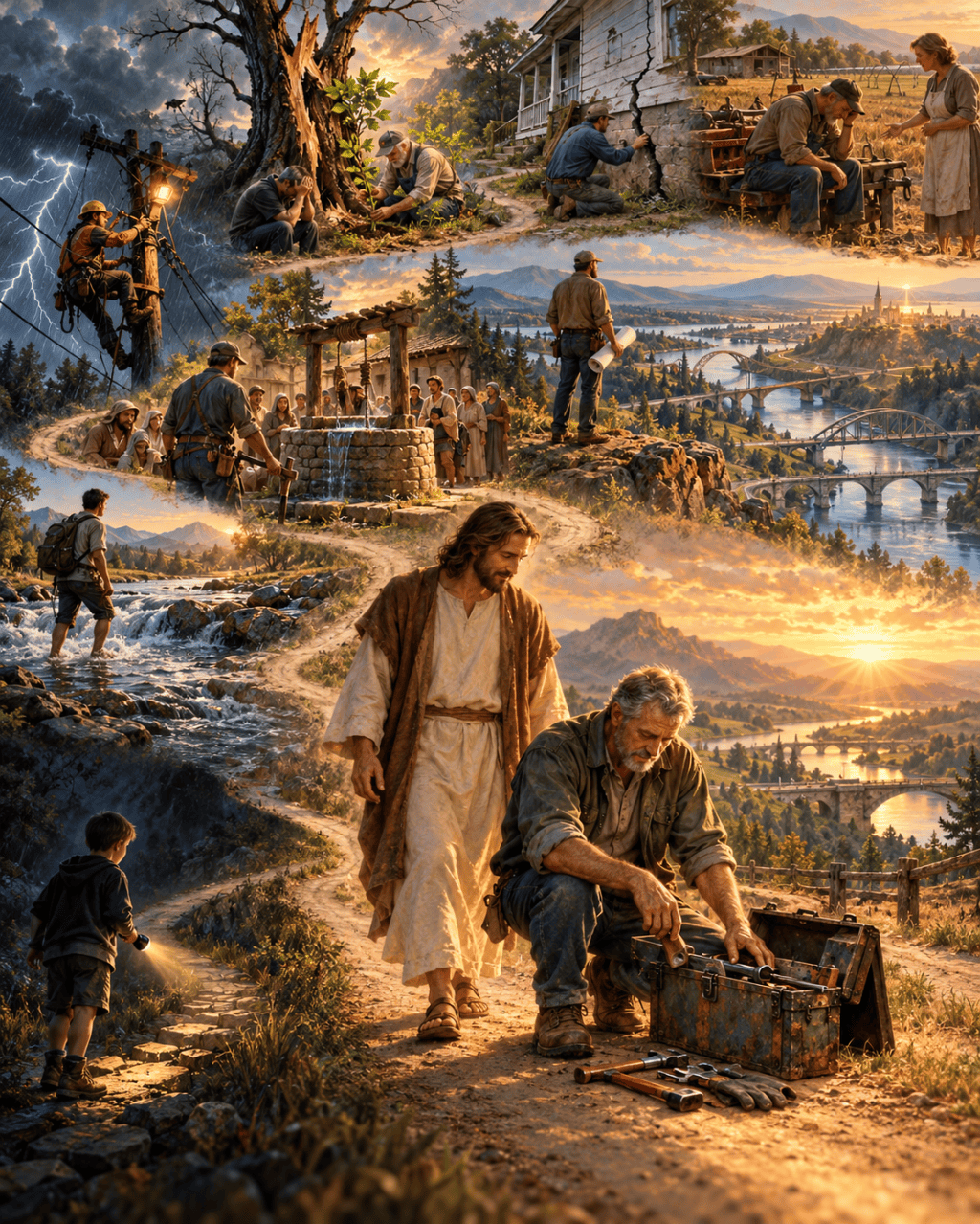
The prayer journey I have been walking these past months has become my daily anchor in the field. It names the very patterns I see in both my work and my soul:

  • The weight I was never meant to carry alone — Galatians 6:2 reminds me that the law of Christ is mutual. I am learning to let operators, vendors, and fellow engineers share the load instead of pretending one licensed PE can hold every system together.
  • The Sabbath I have forgotten — God built rest into creation for a reason. Closing the laptop on the seventh day is an act of trust that the pumps and meters will still hold.
  • The grief that has not been given its due — I have mourned the slow obsolescence of systems I helped design, the contractors who have retired, and the simpler days when isolation was protection.
  • The perfection that imprisons — “My grace is sufficient for you, for my power is made perfect in weakness” (2 Corinthians 12:9). I now see marginal fade margins and legacy radios not as personal failures but as places where God’s strength can shine.
  • The help I cannot ask for — I am learning to speak the stress out loud to trusted brothers in Christ before it settles into my bones.
  • The silence that swallows — Acknowledging sin, fatigue, and limitation before the Lord breaks the isolation.
  • The compassion that has run dry — The Good Shepherd still makes me lie down in green pastures and leads me beside quiet waters. He restores my soul so I can keep stewarding what He has entrusted to me.
Photo by Pixabay on Pexels.com

Scripture does not promise that the radio link will never fail or that the threat model will simplify. It promises that in Christ “all things hold together” (Colossians 1:17). The same Lord who upholds the universe upholds the fragile 900 MHz link and the operator who depends on it. Faithful engineering requires the same disciplines that faithful living requires: rigorous truth-seeking without overconfidence, documentation that outlasts any one contractor or operator, restraint that refuses to chase novelty at the expense of reliability, and the humility to ask for help before the single point of failure becomes a system-wide outage. It means designing for the real environment—shared towers, unlicensed bands, legacy systems from the 1990s that still work—while refusing to let the technology define the meaning of the days.

I am learning, slowly, to set down what was never mine to carry alone. To close the laptop on the Sabbath and trust that the pumps and meters will hold. To speak the stress out loud instead of letting it settle into the bones. To let the Shepherd lead me beside quiet waters even when the work feels urgent.

The radio link from 2007 is still there in spirit—updated, hardened where possible, documented now—but the deeper resilience comes from remembering that we are not the source of the system’s life. We are stewards of it, held by the One who never sleeps or slumbers.

To every operator, engineer, and leader carrying similar weight: inventory the assets. Harden the links. Document the baselines. But do not forget to rest. Do not forget to mourn what has changed. Do not forget to ask for help. And above all, do not forget that the meaning of this work—and of our lives—will never be found in the left-brain simulation of perfect uptime. It is found in the right-brain mystery of faithfulness lived in real time, with real people, under real grace.

The Shepherd is still leading. The line is still being held. And in Him, that is enough.

Echoes

Photo by Lukas Rodriguez on Pexels.com

There are certain moments in my life that never really passed.

They don’t stay where they happened. They come forward with me. They surface when I least expect them, like sound traveling across still water.

I’ve come to think of them as echoes.

Photo by Matteo Di Iorio on Pexels.com

One of the first echoes always takes me back to the Neches River.

Early morning fog would hang over the water so thick that the far bank disappeared. The river would be quiet in that particular East Texas way — a stillness broken only by the slow movement of water and the occasional sound of a bird somewhere in the trees.

Photo by Emre Keskinol on Pexels.com

My father had a camp on the banks of the Neches.

Inside that camp was where the mornings began.

Eggs in a skillet. Bacon frying. Biscuits warming. Coffee on the stove. The smell of breakfast filling that small room while the fog still drifted across the river outside.

Photo by cottonbro studio on Pexels.com

I can still see my dad’s hands working over that stove.

At the time it just felt normal. Breakfast. A river morning. A father and a son starting the day.

I didn’t know then that those moments were planting something in me that would stay for the rest of my life.

That is one of the echoes.

Another one lives in a Hobby Lobby aisle.

It was 1999. Joshua was fifteen.

Leisa had wandered off to the yarn section, looking at colors and textures the way she always does when she’s planning something creative. Meanwhile Joshua and I drifted toward the model section where the airplanes and boats were.

We started looking at the kits.

Then something shifted the way it sometimes does between a father and a teenage son.

Mock kung fu.

Light punches to the arm. Ridiculous stances. Both of us pretending to be serious fighters while clearly not being serious at all. We were laughing and half wrestling right there between the shelves.

Just being silly.

When Leisa finally came looking for us, she found us still fooling around in the aisle and just shook her head.

I remember Joshua laughing.

At the time it felt like nothing special. Just a small family moment in the middle of a normal day.

But memory has a way of holding onto things like that.

That moment became an echo.

Recently another echo came while I was scrolling through old photographs.

Leisa and I had just marked forty-six years of marriage. I posted something about it — how we started going steady in the 1970s, married in 1980 while we were still in college, living in married student housing at Lamar in Beaumont and barely making it in those early years.

After posting, I started scrolling back through the years.

Photos from the early 1980s began appearing.

Young parents. A tiny Joshua. Family gatherings. Aunts and uncles who have been gone for years now.

Scrolling through old photographs does something strange to time.

You are sitting in the present, but suddenly you are also standing in a living room forty years ago. The people are alive again for a moment. Their voices almost feel close enough to hear.

Time folds in on itself.

Then there is Joshua’s poem.

Part of it is on his headstone now.

He wrote about echoes in eternity.

When he wrote those words he was just a young man thinking deeply about life and meaning. None of us could have imagined how those words would come to rest in stone.

But they did.

And they echo now.

Some echoes are quieter than all the others.

Late 1984.

Three in the morning.

Our house was dark except for the blue light of the television. I had put a VHS tape of Star Wars: A New Hope into the player.

Joshua was just a baby then — maybe six or seven months old.

He had settled against my chest on the couch, the way babies do when they finally relax into sleep. His small body rose and fell slowly with each breath.

Every father knows that moment.

When a baby falls asleep on your chest you stop moving. Completely. You barely breathe. You don’t shift positions. You don’t adjust anything.

You stay still because the sleeping matters more than the comfortable.

So I stayed there.

The movie played quietly while John Williams’ music filled the room and stars drifted across the screen.

Joshua didn’t know what the movie was.

But he knew that heartbeat under his ear.

He knew he was safe.

Eventually he settled deeper into sleep while the night passed around us.

That moment never left me.

It became another echo.

Over the years I have started to understand something about echoes.

They aren’t just memories.

They are reminders of what mattered.

My father’s camp on the Neches River.

Breakfast inside that little building while fog hung over the water.

A ridiculous kung fu match with my fifteen-year-old son in a Hobby Lobby aisle.

Forty-six years of marriage with Leisa.

A poem about eternity written by a young man who didn’t know how those words would live on.

A baby asleep on my chest at three in the morning while stars moved across a television screen.

None of those moments felt extraordinary when they were happening.

But echoes rarely come from extraordinary moments.

They come from love lived in ordinary places.

And sometimes, when the evening grows quiet, I find myself thinking about a photograph.

Joshua as a baby.

Sitting in a chair.

His arms stretched wide open toward the world.

And there is still something I wish I could say to him again.

I love you, son.

So very much.

Beyond my ability to use words.

#Echoes
#NechesRiver
#FathersAndSons
#LoveThatRemains

How to Stay Informed Without Losing Your Peace

We are living in a loud time.

Every headline feels urgent.
Every crisis feels existential.
Every commentator sounds certain that civilization is either collapsing or being reborn.

Wars, borders, debt, courts, identity politics, migration, technology disruption, institutional distrust — it is not that these issues are imaginary. They are real. But the way they are delivered to us is often engineered for intensity, not clarity.

If we are not careful, we can mistake constant activation for informed citizenship.

The question is not whether we should pay attention.

The question is how to do so without surrendering our peace.


The Problem Is Not Information. It Is Velocity and Framing.

Never in history has so much analysis been so instantly available.

But information today arrives with:

  • Emotional amplification
  • Moral urgency
  • Binary framing (good vs evil, us vs them)
  • Apocalyptic undertones

This activates the nervous system.

Your body does not distinguish between:

  • A real physical threat
  • A well-written article describing a threat

If your intake is constant, your stress becomes constant.

That is not wisdom. That is overload.


Comprehension Requires Structure

Most people consume news reactively:

  • A link appears.
  • A headline provokes.
  • A thread escalates.
  • A video confirms bias.
  • Another opinion intensifies it.

There is no system. Only stimulus.

Comprehension requires discipline.

A simple structure can change everything:

  1. Start with facts, not commentary.
    What actually happened? Who confirmed it? Is there a primary document?
  2. Separate reporting from interpretation.
    Facts are events. Interpretations are conclusions layered on top.
  3. Ask what is known, what is assumed, and what is speculative.
  4. Limit intake.
    If you cannot summarize it in five sentences, you have likely consumed too much noise.
  5. End with a decision:
    Does this require action from me?
    If not, release it.

Most of What Feels Urgent Does Not Require Your Immediate Action

This is the quiet truth most people resist.

Global conflict, demographic shifts, monetary policy, institutional tension — these are structural forces. They unfold over years, not hours.

You are not responsible for solving civilization before lunch.

What you are responsible for:

  • Your household.
  • Your integrity.
  • Your work.
  • Your community.
  • Your posture toward others.

Peace comes when we re-anchor to what is within reach.


Fear Is Contagious. So Is Contempt.

Modern political commentary often carries two toxins:

  • Fear of collapse
  • Contempt for opponents

Fear destabilizes.
Contempt hardens.

Both reduce clarity.

Comprehension improves when we:

  • Assume complexity rather than conspiracy.
  • Assume partial truth rather than total deception.
  • Recognize that even flawed systems are rarely pure villainy.

You do not have to deny problems to avoid hysteria.


Transition Is Not Collapse

Many writers frame our moment as civilizational decline.

History suggests something more nuanced.

Societies move through:

  • Expansion
  • Saturation
  • Correction
  • Realignment

Corrections are uncomfortable.
Realignments are noisy.

But turbulence is not the same as termination.

The West has endured:

  • World wars
  • Nuclear brinkmanship
  • Economic depression
  • Cultural revolutions
  • Domestic unrest

Every generation believes it stands at the edge of the abyss.

Most do not.


A Weekly Discipline That Protects Your Mind

Instead of constant scrolling:

  • 15 minutes daily: one straight reporting source, one differing viewpoint.
  • One deeper review weekly: verify one issue thoroughly.
  • One synthesis page: what is known, what is uncertain, what to watch.

Then stop.

Peace grows in limits.


The Spiritual Dimension

There is also a deeper layer.

News consumption reveals what we trust.

If every headline shakes you, perhaps your stability is anchored to political outcomes rather than enduring truths.

A helpful closing question each week:

  • What fear did this news try to activate?
  • What virtue would counter that fear?
    • Courage?
    • Patience?
    • Charity?
    • Prudence?

Peace is not ignorance.
It is ordered awareness.


The Goal Is Not Withdrawal. It Is Steadiness.

We should not become uninformed.
But neither should we become inflamed.

Stay informed enough to act wisely.
Stay grounded enough to sleep peacefully.
Stay humble enough to admit uncertainty.
Stay hopeful enough to build locally.

Civilization is not maintained primarily by commentary.

It is maintained by people who:

  • Build.
  • Teach.
  • Repair.
  • Serve.
  • Raise families.
  • Strengthen institutions.
  • Practice self-governance.

If you are doing that, you are participating in the preservation of order more than any headline can undo.

Read carefully.
Verify patiently.
Limit intake.
Anchor locally.
Guard your spirit.

Comprehension is clarity.

Peace is choosing not to let the noise rule your interior life.

What really matters

You know the moment: Young George (and later the adult George) steps up to the old countertop device, closes his eyes, crosses his fingers, whispers his grandest dream—”I wish I had a million dollars”—and then squeezes the lever. A small, reliable flame springs to life on the very first try. His eyes snap open, he grins wide, and out bursts that exuberant exclamation: “Hot dog!”

What a perfectly old-fashioned thing to say! “Hot dog!” was the 1920s–1940s equivalent of today’s “Yes!”, “Awesome!”, or “Let’s go!”—pure, unfiltered joy.

But the real magic lies in what that little device actually was: a vintage cigar lighter, a common fixture in early 20th-century drugstores and soda fountains. These contraptions were notoriously unreliable. The flint might spark weakly, the fuel might be low, or the mechanism might just be finicky. Most people had to try several times to get a flame.

So a charming piece of kid folklore sprang up: If the lighter lit on the first try, your wish was destined to come true.

Every single time George makes that wish in the movie—once as a boy full of big dreams, and again as a young man about to “shake the dust of this crummy little town” off his feet—the flame appears instantly. Hot dog! His wish is sealed. The universe has spoken.

Of course, as the story unfolds across decades of sacrifice, heartbreak, quiet heroism, and small-town love, we realize George never gets the million dollars. He never builds skyscrapers in Babylon or dances on the equator. The grand adventures stay just out of reach.

And yet… that lighter always lit on the first try.

In the end, the film whispers the deeper truth: George’s real wish—the unspoken one beneath all the million-dollar dreams—was for a life that mattered. For connection, for family, for being needed. And that wish? It came true spectacularly, flame after flame, in ways he could never have imagined as a boy at Gower’s counter.

On this Christmas Eve in 2025, with the world feeling heavy and uncertain for so many, I find comfort in that tiny, stubborn flame. It reminds me that the things we wish for most desperately often arrive in disguise. The million dollars might never show up, but the million little moments of love, kindness, and community? Those add up to something infinitely richer.

So tonight, if you’re feeling the weight of the year, maybe try this: Close your eyes for a second. Make a quiet wish—not for riches or escape, but for the things that really light up a life. Then imagine a small flame flickering to life on the very first try.

Hot dog.

Merry Christmas, May your own wonderful life be full of first-try flames, unexpected joy, and the kind of love that turns ordinary days into miracles.

And remember: You really have had a wonderful life… even if you haven’t always seen it that way.

With gratitude and a little snow-dusted hope

December 5, 1927 – September 6, 2013

🎂 Happy Birthday, Dad

Today we celebrate Robert E. Hargrove—a man who showed us that the greatest gifts aren’t found in stores, but on the banks of the Neches River.

Dad gave us something precious: a love of the outdoors and the simple joys of being together. Camp Hargrove was his classroom, and we were his eager students. We learned patience waiting for the channel cats and blue cats to bite. We felt the thrill when the ops latched onto the trotline bait and swam into view as we pulled the line from the depths. We waded through sandbars, filled minnow jars with bait, seined the shallows, and floated lazy afternoons in inner tubes, letting the river carry us.

We remember the ritual of it all—Dad pumping water from the river, later from the well he drilled with his own hands. The smell of bacon and scrambled eggs sizzling in cast iron. Biscuits that tasted like only the camp did. Coffee brewed strong in that old pot, grounds settling at the bottom, sipped slowly by the campfire as fog drifted across the water at dawn. The soft sounds of the river greeting us awake.

And every Fourth of July, Dad’s fishing became a gift to us all—fish fries for the extended family, gathered together, fed by what his hands and the river had provided.

In those moments—before the day rushed in, surrounded by sons, nephews, and grandchildren—Dad was teaching us how to live. How to slow down. How to appreciate what matters. How to pass love down through generations.

Those riverside mornings and summer days shaped who we became. Dad’s love for nature, his steady presence, his generosity of spirit—these are the catches we keep forever.

Happy Birthday, Dad. We’re still there by the river with you. 🐟🏕️💙

December 5, 1927 – September 6, 2013

ON THIS DAY

8 years ago

Glen Richbourg is feeling blessed with L.v. Hargrove and 2 others. wrote in 2013

September 6, 2013 • ©

Uncle Bob taught me the difference between a blue cat, channel cat and a mud cat. He could scull all the way around Mud Lake and not make a single splash. Made the best camp breakfasts ever and I’ve never had even a Starbucks that could match his river water coffee. Some of the best memories of my life were out in the Neches River bottom being a kid with the Hargrove boys and Uncle Bob. I learned life lessons from him about respecting the land, nature and fellow human beings that l’ve carried my entire life. He also raised the three best men you’ll ever meet. I will forever miss him.

Carrying Weight, Seeking Light

Carrying Weight, Seeking Light

Photo by eberhard grossgasteiger on Pexels.com

Over the past several weeks, I’ve noticed a pattern rising in my heart—a mix of heaviness and hope, grief and gratitude, pressure and purpose. The holiday season always magnifies what is present in the soul, and this year is no different. I find myself remembering the people who shaped me, the stories that anchor me, and the losses that still echo in quiet moments.

At the same time, my days are full of responsibilities—engineering projects, community work, pastoral care, business decisions, family needs. I feel the pull from every direction, not because any of it is unworthy, but because all of it matters. Leadership in any form carries an invisible weight. And sometimes that weight presses harder in November and December.

Yet beneath all of this, something steady keeps tugging me forward: hope.

Not the thin kind that ignores reality or paints over pain. But the kind that believes God is present even in the unanswered questions. The kind that remembers that Jesus steps into weary places, not polished ones. The kind that says, “You don’t have to carry this alone.”

As I look back at conversations, projects, and prayers from the last week, I see the same thread weaving through everything: healing. Healing for myself. Healing for others. Healing for the places in our community that feel stretched or wounded. Healing for the dreams that feel fragile but not extinguished.

And the truth is, hope and healing aren’t found by escaping life—they grow right in the middle of it.

Every memory that stings reminds me there was love.
Every responsibility that feels heavy reminds me there is purpose.
Every moment of fatigue reminds me I need grace beyond myself.

And grace keeps showing up.

So I’m choosing to keep walking—one step at a time, one day at a time—trusting that the God who has carried me this far will carry me further still. My prayer is simple:

“Lord, meet me here. Make something good out of the weight I’m carrying. Let Your light break through.”

Because even in the heaviness, hope is rising.
#HopeInTheJourney
#JesusHeals
#GraceInRealLife

Celebrating the Life and Legacy of Robert Edwin Hargrove December 5 2025

Celebrating the Life and Legacy of  Robert Edwin Hargrove December 5 2025
Born December 5, 1927 — Buna, Texas
Passed September 6, 2013 — Buna, Texas

Today we honor the birthday of Robert Edwin Hargrove, a man whose steady presence shaped his family, strengthened his community, and left an enduring mark on Buna and Jasper County. His life reflected the deep values of rural East Texas—work, faith, service, and integrity—lived not in speeches but in actions repeated faithfully over decades.

Born in Buna in 1927, Robert was raised during the Great Depression and the wartime years that demanded resilience from every family. Those early years shaped the patient, steady character he carried throughout his life. 

During his youth and early adulthood, Robert contributed to the early development of Buna’s public services. He worked for Tom Barker during high school and for some time afterward, assisting in the operation of the town’s diesel generator system—the very system that provided electricity to Buna before JNEC extended power lines into the region. In those years, the town relied on local operators to keep the generators running, manage outages, and ensure that families and businesses had dependable light and power.

As a young man he answered his country’s call, serving in the United States Army with the 45th Infantry Division, 120th Combat Engineers, deploying to Korea and performing dangerous, essential work with quiet resolve.

Returning home, he built a life marked by responsibility and devotion. In 1957 he married Lavee Richbourg, and together they raised three sons—John, Hardy , and Wylie—rooting their family in the same East Texas soil that had shaped them.

Robert gave deeply to his community.
He served for many years on the Buna Independent School District Board, including time as Board President. In that role he helped guide the school system through seasons of growth and change, always insisting that the next generation deserved stability, opportunity, and excellence. His leadership was steady, principled, and grounded in a genuine concern for the children and families of Buna.

He was also a man of faith, active throughout his life in the Buna Methodist Church. He served wherever needed—trustee, Sunday school teacher, volunteer, and quiet presence. His faith was lived rather than announced, expressed in service, humility, and a deep sense of responsibility to his church family.

His legacy reflects the best of the long Hargrove lineage—strength without pride, faith without show, perseverance without complaint. The generations who preceded him crossed oceans, endured war and hardship, and built communities from the ground up. Robert carried those same qualities into the modern era, living a life of steadiness that inspired those around him.

Today, as we mark his birthday, we remember a man whose example continues to guide his family and community.
A man who did what needed to be done.
A man who could be counted on.
A man whose life mattered quietly, deeply, and permanently.

Happy 97th Birthday in Heaven, Robert E. Hargrove.
Your legacy continues in the lives you shaped and the community you served.

Robert Edwin Hargrove
A Life Across Nine Decades

1920s — Beginnings (1927–1929)
Robert was born in the closing years of the Roaring Twenties, at a time when Buna was a small, timber-country settlement with limited infrastructure. His earliest days would have been marked by family, church, and the rhythms of rural life. His parents, James and Mary, were part of the first generation to root the Hargrove and Denman lines firmly in Buna’s early community life.

1930s — Childhood in the Depression
His childhood unfolded during the Great Depression, a decade when rural East Texas survived through hard work, neighbor cooperation, and self-reliance. Robert likely helped with farm chores, garden plots, cutting wood, and caring for animals. School was a privilege; work was expected. Sunday worship at the local Methodist church anchored weekly life.
Electricity was limited, and his later work on the town diesel generator suggests an early familiarity with mechanical systems, power equipment, and practical problem-solving.

1940s — Youth, Work, and Early Responsibility
In his teenage years Robert attended Buna schools and worked for Tom Barker, helping operate Buna’s diesel generator plant, which produced electricity for the town before JNEC lines arrived. This work required reliability, long hours, and technical skill well beyond his age.
These were the war years. Though too young for World War II, Robert grew up in a community shaped by rationing, local enlistments, and the wartime economy. He learned responsibility early—supporting his family, working multiple jobs, and contributing to the stability of a rural town in a turbulent era.

1950s — Military Service, Marriage, and the Start of Family Life
The Korean War era called him to military duty. In 1951 he entered the U.S. Army and deployed to Korea with the 45th Infantry Division, 120th Combat Engineers, where he served in harsh conditions that demanded discipline, strength, and courage.
After returning home, Robert married Lavee Richbourg in 1957 and began building a home of his own. Late in the decade their first child, John, was born. The 1950s were years of transition—from soldier to husband, from young worker to the steady provider he would become.

1960s — Raising a Family and Deepening Community Roots
The 1960s were defined by family life and community service. With the births of Hardy and Wylie, Robert became the father of three sons. He worked steadily to provide for his growing household, and these years likely saw him balancing demanding work with active involvement in Buna Methodist Church and local community responsibilities.
His Father passed during this decade, leaving him as one of the senior carriers of the Hargrove family’s East Texas legacy.

1970s — Leadership, School Board Service, and Stability
The 1970s were a period of public service. Robert served on the Buna ISD School Board, including time as Board President, helping guide the district during seasons of modernization and growth.
His sons were moving through school, and he focused on ensuring they—and all Buna students—had reliable facilities, stable leadership, and opportunities that earlier generations lacked.
These were steady years, defined by work, church, responsibility, and the steady rhythm of rural life.

1980s — Mentorship, Church Leadership, and Family Milestones
By the 1980s, Robert was respected as a seasoned leader, a trusted church member, and a mentor. At Buna Methodist Church he served as trustee, Sunday school teacher, and a dependable servant in numerous roles.

His Mother passed as the decade started.
He supported his sons as they began their adult lives, careers, and families. He and Lavee became grandparents.
These were years of quiet influence—teaching, advising, helping, and modeling steady character.

1990s — Retirement, Reflection, and Community Continuity
In the 1990s Robert eased into retirement while maintaining deep roots in community and church. He saw the passing of his siblings James (1994) and George (1995), a reminder that he had become part of the family’s senior generation.
He spent more time on the Neches River, on quiet mornings with coffee, and on the small routines that bring meaning after decades of work. His presence remained steady—calm, predictable, and deeply valued.

2000s — The Grandfather Years
The 2000s brought slower days and the joy of watching grandchildren grow. Though older, he remained active in his church and community, continuing the habits of service that marked his life.
These were reflective years—filled with family gatherings, stories from earlier days, and the quiet pride of seeing the next generation stand on foundations he helped lay.

2010s — Closing Years
Robert entered his final decade still grounded in the same community where he had been born. He lived to see Buna change, grow, and become a connected rural hub far beyond the diesel-generator days of his youth.
He passed away in 2013 at the age of 85, leaving behind a legacy of steadiness, humility, faith, and service—a legacy carried forward by his children, grandchildren, and the community he helped shape.

What I Would Tell You Now


For Joshua Blake Hargrove from John Hagrove his dad June 2025
1984–2002

My son,

If I could sit across from you today—twenty-three years after you left this world—I would begin with the words that still rise unbidden in my heart: I miss you. Every day. Not with the same sharp ache as before, but with a quiet, steady presence that stays with me like breath. You are never far from my thoughts, never absent from my soul.

I would tell you honestly: a piece of me went quiet the day you died—and another part went angry. I wasn’t just broken. I was furious. Angry at the unfairness, the helplessness, the fact that the world kept spinning without you in it. I didn’t know how to carry the weight of that kind of grief, so I buried it. I buried the part of me that laughed freely, dreamed boldly, and felt things too deeply.

And in its place, I went to work. I built things. I solved problems. I became dependable and productive. But underneath it all, I was still just a father who had lost his son. The music stopped. The prayers faded. I kept going because I didn’t know how to stop—but I also didn’t know how to live fully anymore.

If I could tell you anything now, it would be this: Your death didn’t end me—but it did remake me. And over time, with grace and patience, something inside me began to stir again.

I would tell you that God didn’t abandon me. He held me through it all, though I didn’t always recognize His presence. And in the years that followed, a few key people—some family, some unexpected friends—entered my life and helped awaken parts of me I thought were gone forever. None of them replaced you. They couldn’t. But somehow, through their kindness, gentleness, and love, I began to feel again. I began to believe that I could be fully alive, even while still carrying your absence. I hold those relationships with reverence. They brought back to life the part of me that knows how to love without fear.

I would tell you about your mama. She’s still the strongest woman I’ve ever known. Her grief was quiet, but it ran deep. We’ve grown older together, and we still speak your name. Sometimes in words, sometimes in silence. You are still part of our home, our hearts, our story.

I’d tell you about the little ones in our family—your cousins’ children, great-nieces and nephews you never got to meet. I watch them play, laugh, stumble and grow, and I see glimpses of you. Their lives are full of light, and I imagine the kind of uncle you would have been—funny, kind, full of mischief and wisdom. Your absence in those moments is a presence all its own.

I’d tell you that I’ve come to believe in resurrection—not just of bodies, but of broken hearts, of joy, of purpose. I’ve come to believe that the deepest love isn’t erased by death. It changes form, but it remains. And I carry you as part of that resurrection. You are part of what brought me back to life.

Most of all, I would tell you that you are still my son. Nothing—not time, not distance, not death—can ever take that from us. You made me a father. You taught me the kind of love that doesn’t fade. And though I never got to watch you grow old, you’ve shaped the man I’ve become more than anyone else ever could.

If I could hold your face in my hands one more time, I would say what I still say in the silence of prayer:

You are my boy. I love you. And I will carry you until the day I see you again.

With all I am,
Dad

And I would tell you—humbly—that someone came into my life many years later who helped awaken something that had gone dormant inside me. That I could still feel. Maybe I was allowed to be fully alive again. I hold that chapter of my life with reverence. As strange and sacred as it was, it brought something back to me I thought was lost forever: the part of me that knows how to love without fear.

Keeping Going When No One’s Listening?

Photo by Zetong Li on Pexels.com

I’ve been thinking a lot lately about what it means to do work that matters when it feels like no one cares.

For the past few years, I’ve been advocating for rural East Texas communities—places like Buna, Newton, San Augustine. I’ve built communication frameworks, written strategic plans, installed digital kiosks, organized meetings, drafted policy briefs. I’ve tried to give voice to communities that have been systematically left out of planning conversations, to help people shape their own futures instead of having decisions made for them from far away.

Photo by Etha on Pexels.com

Most days, it feels like pushing a boulder uphill alone.

The Generational Game

I’m starting to realize this work isn’t measured in months or even years—it’s generational. The infrastructure I’m building, these communication frameworks and pilot models and community briefs, they’re seeds that may not fully mature in my lifetime. And I think I’ve been measuring success wrong.

Photo by Pixabay on Pexels.com

Maybe success isn’t getting county commissioners to read every brief I send. Maybe it’s that one local leader who picks up this work five years from now and has a template to start from. Maybe it’s just that these documents exist at all—proof that someone saw what was happening, cared enough to name it, and offered solutions.

That’s not failure. That’s foundation-building.

Celebrating What’s Actually There

When the big wins feel impossible, I’m learning to notice the small ones:

  • A county commissioner who actually responded to a community brief
  • A kiosk that’s been running for six months without breaking down
  • One new business owner who showed up to learn about the community
  • The fact that I’ve created templates other rural organizers can use

These aren’t nothing. They’re evidence of progress, even if they’re not transformation yet.

Finding My People

The San Augustine meeting this year reminded me of something important. Sitting around that table with Eddie, Nancy, Tania, and Marianne—people doing similar work in their own communities—I didn’t feel alone. We shared frustrations, traded contacts, problem-solved together.

I’ve been spending too much energy seeking alignment “up”—with county officials, state agencies, foundations—and not enough building lateral relationships with peers. Those relationships aren’t just strategic. They’re sanity-preserving. They remind me I’m not crazy for thinking this work matters.

Photo by Tairon Fernandez on Pexels.com

The Documentation Matters

Even when nothing changes immediately, these reports I’m writing serve a purpose:

  • They validate what communities are experiencing
  • They create a record for future organizers
  • They protect against institutional amnesia (“we didn’t know there was a problem”)

I need to remember that documentation is activism. Recording what’s happening, naming the gaps, proposing solutions—that’s meaningful work even when it doesn’t produce immediate results.

Photo by Tom Fisk on Pexels.com

Letting Go of Universal Buy-In

Not everyone is going to get it. Some officials will remain indifferent. Some developers will keep ignoring community input. Some residents will stay skeptical of any change.

That’s okay. The goal isn’t to convince everyone—it’s to build enough of a coalition to create momentum. I don’t need universal support for this work to matter.

Taking Real Breaks

I’m bad at this one. I need to take actual breaks—not performative self-care, but real disengagement. Days where I don’t mention rural development. Weeks where the kiosks can wait.

This work will always be there. It’s generational, remember? Burning out doesn’t serve anyone.

Photo by Kaique Rocha on Pexels.com

What Does “Enough” Look Like?

I’m trying to get more specific about what meaningful progress would look like in the next year. Not transformation—just progress:

  • Three communities actually using the communication framework I built
  • One successful regional roundtable where rural leaders are at the table
  • Maybe a single rural navigator position gets funded somewhere

When I make it concrete like that, I can tell the difference between “not enough impact yet” and “actually making progress.” They’re not the same thing.

Photo by Pixabay on Pexels.com

Why I Keep Going

Buna, Newton, San Augustine—these aren’t abstractions to me. They’re people who deserve to shape their own futures. The work I’m doing affirms their dignity and their right to be heard.

That has value independent of whether it produces immediate systemic change.

The fact that I keep showing up, keep documenting, keep building frameworks when no one asked me to—I don’t think that’s naivete anymore. I think it’s moral courage. Or stubbornness. Maybe both.

The question isn’t whether to keep going. It’s how to keep going sustainably, strategically, with enough support to avoid burning out completely.


Photo by Pixabay on Pexels.com

I don’t have all the answers yet. But writing this helps. Naming what’s hard helps. Remembering I’m building foundations, not finished structures—that helps too.

If you’re doing similar work somewhere else—advocating for a place everyone else overlooks, building infrastructure no one asked for, showing up when it feels pointless—you’re not alone. And you’re not crazy.

Photo by Visual Tag Mx on Pexels.com

Keep going. The work matters.