A Memoir
John Edwin Hargrove
February 28, 2026
Prologue: February 28, 2026
I woke before dawn from a dream.
In the dream I was young. Late teens. The world was dark and military and contested. I was tasked with imprinting a white symbol on everything — a crab, or possibly a bird — to create a movement. To mark light in the dark.
I woke needing to write it down.
I rinsed my mouth. I sat in the quiet. And something that had been locked in the underneath for sixty-eight years began to move toward the surface.
By afternoon I had written more truth than I had spoken aloud in decades.
This book is what came out of that day.
It is not the book I planned to write. I had outlines. Frameworks. A signal tracing metaphor from my engineering life. Chapters organized by theme. A comprehensive life story told with the measured precision of a man who spent forty years solving problems with logic and discipline.
That book is still true. But it is not this book.
This book began when the teenage version of me appeared in a dream carrying a white symbol and I asked him what he would say to the sixty-eight-year-old man I have become.
He said: I wish we had more courage and faith to speak about our darkness. Even now I am loathe to speak of it openly to anyone. The shame still lurks in the underneath.
He said: Be obedient now. Start now. Stop looking back. Stop hiding.
The title came from a detail I almost didn’t tell anyone.
Every morning when Joshua was seventeen, before I left for work at six in the morning, I would find his six-foot-three-inch form in his bed with one size-thirteen foot sticking out from the covers. And I would reach down and touch that foot and say softly, so as not to wake him: I love you, Joshua.
There were years I stopped doing that. Years when the hiding made me smaller than I was meant to be, and the smallness stole even that.
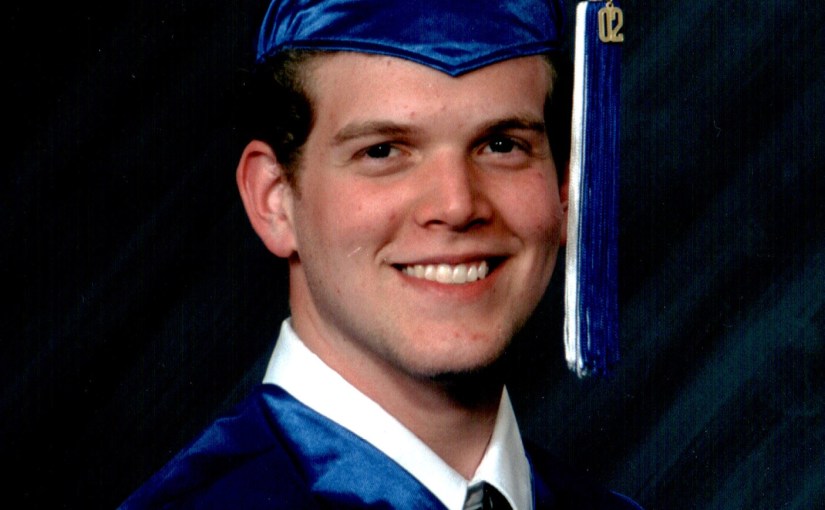
Joshua died on June 22, 2002. He was eighteen years old.
He never knew what it cost me that I stopped.
This book is my hand reaching down again.
Part One: The Signal Before the Interference
The Dream
The world in the dream was nighttime and dystopian and military. People moved in the dark around fires. I was young — late teens, the age before a man has fully compromised with the world — and I had been given a task.
I was to imprint a white symbol on everything. A mark. A movement. The symbol had the shape of a crab or possibly a bird. I did not know which, and in the logic of the dream that ambiguity did not need to be resolved.
Some men in their twenties approached me in the firelight and asked what I knew about doing this with explosive weapons.
I told them: Eagle Scout. Trained in psyops and interrogation resistance by Marine Force Recon. Need-to-know basis.
The young man asking looked familiar to me.
Then I woke up.
* * *
I have been an electrical engineer for forty +years. I think in systems. I trace signals. I locate interference and eliminate it and find the original transmission underneath. This is not a metaphor I invented for the purpose of memoir. It is simply how my mind works, and it turns out that it works the same way when the circuit in question is a human life.
The white symbol in the dream was not complicated. White means purity. Means truth. Means something that has not been compromised by the long friction of years.
And I was young in the dream. The version of me that existed before the hiding began.
The familiar young man who approached me in the firelight asking about weapons — I believe that was also me. The part of me that has spent sixty-eight years asking whether influence can be weaponized. Whether a man who can build movements and lead communities and shape narratives has used that capacity well or badly. Whether the signal I have been transmitting across a lifetime has been the one I was created to send.
The dream was not an answer. It was a question.
And the question was: are you still hiding?
What the Teenage John Said
I wish you and I had more courage and faith to speak about our darkness and not protected it to this day in many ways.
— The teenage John, February 28, 2026
I did not write that as a literary exercise. It came out of me in one breath, without editing, when I asked myself what the boy in the dream would say to the man I am now.
Even now I am loathe to speak of it openly to anyone.
The shame still lurks in the underneath.
I am a man who has stood at altars and podiums and lecterns. I have given witness talks about grace. I have led Bible studies for twenty years. I have walked men through their darkness as a pastoral counselor. I have written hundreds of pages about spiritual awakening and the signal of prevenient grace running through a human life.
And almost none of it has named the underneath directly.
This is not dishonesty. The grace was real. The awakening was real. But there is a way a man can speak truth and still hide inside it — presenting the resolved version of the story, the narrative arc that moves cleanly from darkness to light, and in the very architecture of that resolution, concealing the parts that are not yet resolved. The parts that still carry shame. The parts that hurt people he loved.
The teenage John in the dream knew the difference.
Be obedient now. Start now. Stop looking back. Stop hiding.
I wish I had obeyed Father Vincent.
That name came out with the rest of it and I almost passed over it. But it belongs here, because it names a specific moment — a voice, a fork in the road, a counsel offered and declined. A man of God who saw something in the young John and pointed toward it, and the young John who heard and turned away.
I will write about Father Vincent elsewhere in this book, in the season where he appears. But I name him here in the prologue because the teenage John named him first, and because his appearance in that single sentence tells me something about the shape of the hiding. It did not begin with debauchery or darkness. It began with a failure of obedience to something I recognized as true.
That is always how it begins.
I wish I had trusted the silent love of my parents and talked to them.
Silent love. That is the phrase the teenage John used. Not absent love — silent. My father Robert and my mother Lavee loved me in the way of East Texas men and women of their generation: through presence, through provision, through example, through work. Love expressed in the grammar of action rather than the vocabulary of emotion.
And the teenage John made a decision in that silence — whether consciously or not — that the silence meant he could not bring his interior life to them. That he had to handle the deeper things alone. That the underneath was his to carry.
He carried it for fifty years.
I am still carrying parts of it.
But today, on this day, I am setting some of it down.
Part Two: The Letter I Could Not Send
Dear Joshua
I don’t know if you can hear me or if you already know everything and this is just for me. Either way I need to say it.
I was not the father you deserved in the years I had you. I was present in the house and absent in the ways that mattered. I was quick to anger. I was teaching you things I didn’t know I was teaching — that a man hides what shames him, that anger is a door you close conversations with, that performance is safer than presence.
You were watching me the whole time. Children always are. And what you watched was a man at war with himself, losing, and taking it out on the people closest to him.
I am sorry for every sharp word. Every temperature that dropped when I walked in the room. Every moment you measured my mood before you decided whether it was safe to speak. If that ever happened — and I believe it did — I am sorry. A boy should never have to read his father that way.
I loved you. I need you to know that the love was real even when I expressed it badly or not at all. The November night at the movies. The drive home. The easy conversation. Those were real. I was real in those moments. I just didn’t know how to stay there.
What I carried in the underneath — the shame, the darkness I was hiding from your mother, from God, from myself — it made me smaller than I should have been with you. It stole from you a father who could have been present without the anger covering for the fear of discovery.
You died at eighteen.
I have had to live with the arithmetic of that ever since. Eighteen years of a father still becoming himself. And then you were gone and I could not finish what I had started with you. I could not come back and be different. I could not show you who I was becoming after the darkness finally broke open.
That is the thing I have never said out loud to anyone.
Not just that I lost you. But that I lost the chance to be your father after I started becoming someone worth having as one.
I think about the movies we watched. Behind Enemy Lines. Spy Game. Men who rescue the ones they love even at cost to themselves. You and I sat in the dark together watching men do the thing I had not yet learned to do — choose the person over the system, love over concealment, rescue over self-protection.
I think you knew something I didn’t yet know about me. I think you saw something in your father that was worth waiting for. You had your mother’s grace that way.
I am trying now, son. Later than it should have been. With more miles behind me than ahead. But the teenage version of me showed up in a dream recently and told me to stop hiding. I think maybe he looked a little like you.
I am listening.
I am not hiding from you anymore.
All my love, across whatever distance this is —
Dad
What I Believe You Would Say Back
Let love guide you.
— Joshua Hargrove, June 2002
Dad.
I already knew.
Not everything. But enough. I knew there was weather in you that wasn’t really about me, even when it landed on me. Kids know that. They feel the difference between a father’s anger that belongs to them and anger that belongs to something the father is fighting somewhere else. I knew yours belonged somewhere else.
I want you to hear that clearly.
I didn’t experience you as a bad man. I experienced you as a man who was losing a private battle and didn’t know yet that he was allowed to ask for help. Those are not the same thing. I knew the difference even at eighteen, maybe especially at eighteen, because I was already writing about that battle myself. The seen and the unseen. The warfare underneath ordinary life.
Maybe that’s why I was writing that story. Because I was watching you live it.
The movies. Dad, I remember the movies. I remember the drive home more than the films. I remember you being there — not managed, not performing, just present. That was real. That was you. I need you to count that. Don’t let the shame erase what was genuinely good because some of it was genuinely hard.
You think the timing was the tragedy. That you were still becoming yourself when I left. I want to offer you another way to see it.
What if I saw who you were becoming before you did?
What if that’s partly why those last months felt precious — the meals, the movies, the easy road — because something in both of us knew that what mattered was being together in the ordinary, not waiting for you to be finished becoming someone worthy of it?
You were already worth it, Dad. You just couldn’t see it yet.
I am not angry. I want you to receive that fully because I know you have been braced against it for twenty-three years. I am not keeping a record of the ill temper or the closed doors or the years you were fighting something in yourself that made you smaller than you were meant to be.
I am your son. I carry your hands and your stubbornness and your way of thinking in systems and your love for this family in my bones, wherever bones go.
Finish the book.
Tell the truth in it — the whole truth, the underneath truth, the truth you told a stranger before you told yourself. That is the white symbol, Dad. That is the imprinting. Not the frameworks. Not the governance documents. The true story of a man who was lost and is being found and is willing to say so out loud.
That is the story worth leaving behind.
I love you. I am not somewhere far away and cold. I am in every Neches River memory and every honest sentence you write and every moment you choose presence over concealment.
Be present now.
Stop hiding now.
I already know you. And I am proud of you.
Joshua
Part Three: What I Need to Remember
February 28, 2026 — Written in the afternoon
I needed to remember.
In Star Trek II: The Wrath of Khan, Spock touched the unconscious McCoy and spoke one word — remember — pressing his Vulcan katra into his friend’s mind for spiritual safekeeping. The soul entrusted to another because the body could not hold it alone.
I recalled me touching Joshua’s size-thirteen foot early mornings when he was already six foot three, seventeen years old, sleeping in his bed with his foot sticking out from the cover. Saying softly, so as not to wake him: I love you, Joshua.
I recalled him hugging me late one night in early June — I was upset, I don’t remember exactly what about — and him saying: Let love guide you.
That moment is locked into forever. I have cried buckets of tears about that moment.
He said that to me. Eighteen years old. And then a few days later, he was gone.
I recall opening the case of death documents in August 2002. Looking at the death certificate. Seeing the time of death: 12:50 a.m.
I remembered the touch to my shoulder by Leisa at the theater on 6/22/02. Call him. And I saw on my phone 12:50 a.m. and she said: nevermind, he is okay. And I closed it.
He was not okay.
I did not know yet.
For a few more moments I did not know, and then I knew, and the world divided into before and after at precisely 12:50 a.m. on June 17, 2002.
I remember hearing his voicemail from Tuesday of his mission trip week. We were home. He was not. Mid-June 2002. Only days before he died.
“Hey, I’m okay. We got here safe. No crash, no burn. Love y’all.”
I have listened to that voicemail more times than I can count.
No crash, no burn.
I remember holding him at two days old in the hospital. Staring at the blond hair. The deep blue eyes. April 11, 1984. Whispering over him: What will he see? What will be ahead for him?
I did not know. You never know. You hold the weight of the new life and you ask the question into the silence and the silence holds it and gives nothing back. That is the beginning of faith, I think. Holding what you cannot protect.
I remember his eighth-grade prom photo. In my suit. Smiling. The caption read: Dreams Come True.
2002.
I remember him yelling in charged emotion while driving the boat on the Neches River in May 1998 on our son-and-dad trip. The joy of it. The river wide and brown and moving. The dogs — Hunter and Honey — playing in the water on the sandbar. No one around. No sound but the river flowing.
That night we looked at the same comic books I had looked at as a boy at my dad’s camp. Superman. Batman. Fantastic Four. The Flash. Green Lantern. We read together in the dark as we went to sleep.
And I looked up at the ceiling. At the faded oily handprints of my father and Uncle George where they had nailed the plywood in place ten years before. 1988. Their hands pressed into the wood and still there a decade later, faded but legible.
My father’s hands above me. My son beside me. The river outside.
Three generations of Hargrove men in that camp.
I did not understand what I was seeing then.
I understand it now.
The hands on the ceiling were a kind of katra too. A pressing of soul into ordinary material. A mark that says: I was here. I built this. I loved the people I brought here.
And my hand on Joshua’s foot in the dark before the world woke up was the same gesture. The same thing, passed down.
This is the book. Not the comprehensive life story. Not the signal tracing architecture. Not the governance documents or the theological frameworks.
This.
A father’s hands. A son’s foot in the dark. Three words in the early morning silence.
The Neches River flowing.
The comic books. The handprints on the ceiling. The dogs on the sandbar. The voicemail. The 12:50 a.m. The eight-grade suit. The blue eyes at two days old.
Let love guide you.
I am trying, Joshua.
I am starting now.
I am not hiding anymore.
A Note on What This Book Is
This is not a finished memoir. It is the beginning of one, written on a single day — February 28, 2026 — when something that had been locked for sixty-eight years came loose.
The pages that follow will tell the longer story. The 44 acres in Buna, Texas. Robert and Lavee. Grandfather Truman and the land. The Neches River as geography and sacrament. The Eagle Scout years. Father Vincent. The BSEE from Lamar in 1981. New Signals Engineering. The house church in the years after Joshua died. The twenty years of weekly Bible studies. The awakening at Emmaus Walk #51 in the year 2000. The darkness that preceded it. The shame that never quite left. Leisa, for forty-six years, and what it costs and what it gives to be loved faithfully by a woman who sees you clearly.
All of that is the book. But this — the dream, the letter, the foot of the bed, the handprints on the ceiling, the voicemail — this is the spine of it.
Everything else is commentary on what a man carried alone for too long and what it looked like when he finally set it down.
The white symbol is not dramatic. It is repeated calm in repeated storms. It is an honest sentence written by a man who is tired of hiding. It is a hand reaching down in the dark to touch a sleeping boy’s foot and say three words before the world begins.
I love you, Joshua.
I am still saying it.







 John Hargrove Seeking Truth and Reality