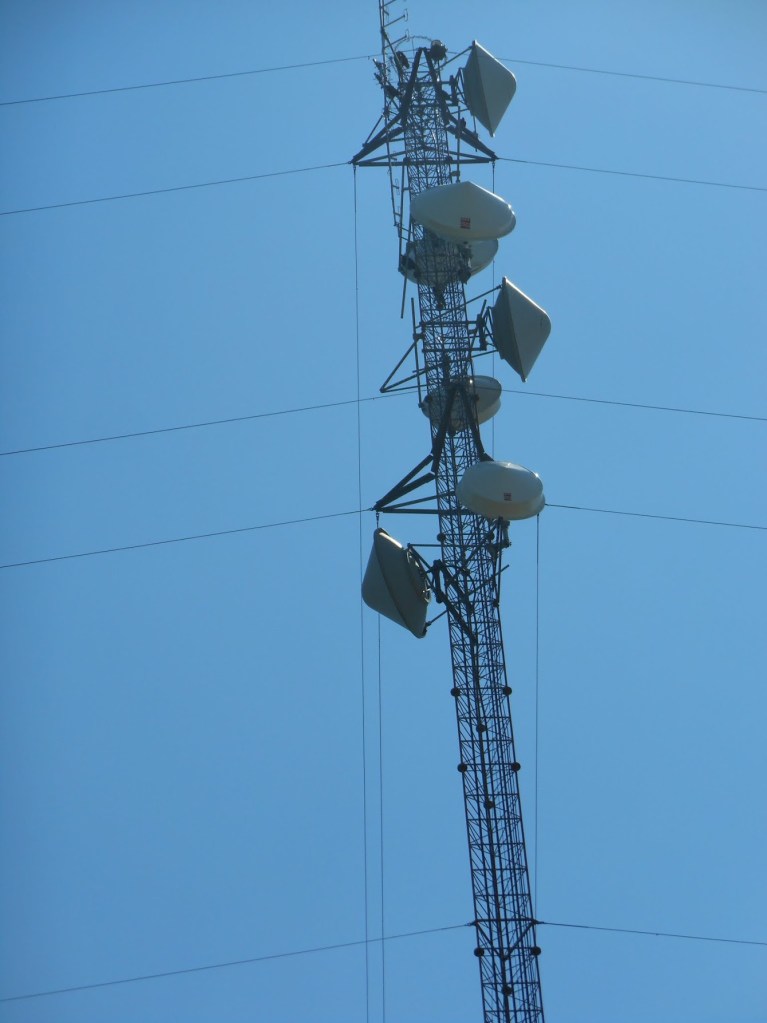
Back home from Comanche after a solid week on towers and microwave alignment. There is something grounding about standing under an 11 GHz path, watching signal levels lock in, knowing that invisible waves are carrying real conversations across miles of Texas pasture.
This morning we went deeper into John 4.
Jesus was tired. Dust on His feet. Thirst in His body. And still He chose to engage. He crossed ethnic lines, moral lines, religious lines, and personal pain lines. Not to win an argument. Not to prove a point. But to restore a person.
That matters right now.
We are living in a time where outrage travels faster than microwave backhaul. Blame is currency. Headlines are engineered for reaction. Facts are contested. Narratives are crafted. And too many people are exhausted.
But truth is not loud. It is steady.
At the well, Jesus did not shout the Samaritan woman down. He did not cancel her history. He named it honestly and then offered living water. Grace and truth, together. Not one without the other.
This week I worked on infrastructure — power, bandwidth, line of sight, reliability. I also wrote about AI, data centers, water supply, grid stability. All of it points to the same reality: the future will demand clarity, discipline, and stewardship. Power must be generated. Water must be sourced. Data must be moved. Systems must be resilient.
So must people.
As I step into a senior pastor role at Source of Old Faith, the call is not to build noise. It is to build a foundation. Order. Accountability. Spiritual maturity. A house built on the cornerstone, not on emotion or personality.
In a world of accusation, we need conviction without cruelty. In a world of spin, we need truth without arrogance. In a world of uncertainty, we need hope anchored in something older and stronger than the news cycle.
Jesus is still crossing barriers.
The Spirit is still building living stones. The Church must still be salt and light.
Information for Pastors, Parents, and Youth Leaders
Executive Summary
The 764 network represents a critical threat to young people and has recently been classified by federal law enforcement as ‘modern-day terrorism.’ This briefing provides essential information for protecting the vulnerable youth in our communities, with particular sensitivity to the experiences of those in recovery or rebuilding their lives.
What Is the 764 Network?
The 764 network is a decentralized, international extremist organization that operates primarily online. Founded in 2021 by a teenager in Texas, 764 has expanded to become a coordinated network of predators that targets vulnerable youth globally. Federal law enforcement officials, including the FBI Director, now refer to 764 activities as modern-day terrorism.
Core Characteristics:
Nihilistic worldview rejecting moral norms and valuing chaos over society
Targets vulnerable youth, particularly those struggling with mental health, isolation, or trauma
Uses sexual exploitation, coercion, and psychological manipulation as primary tools
Members gain status by producing increasingly violent content and coercing victims
The Scale of the Problem
Current Law Enforcement Activity:
The FBI is conducting over 350 active investigations tied to 764 and similar networks
At least 28 people have been charged federally; some face terrorism charges
The National Center for Missing and Exploited Children is tracking nearly 2,000 abuse reports annually
Experts estimate 10,000 people worldwide are actively engaged in the 764 ecosystem
Where 764 Operates
The 764 network primarily uses mainstream gaming and social media platforms to find and target victims. These platforms are not inherently dangerous, but predators exploit them:
Discord – Gaming chat platform where 764 originally formed
Roblox – Youth-oriented gaming platform
Telegram – Encrypted messaging application
Instagram and other social media
How 764 Operates: The Grooming Process
Understanding the operational method is crucial for recognition and intervention. Predators follow a deliberate progression:
Initial Contact – Members identify vulnerable youth in gaming servers or social platforms, often targeting those who appear lonely, isolated, or struggling
Relationship Building – They establish trust by showing interest in the youth’s hobbies, struggles, and vulnerabilities
Information Extraction – Personal information is gathered: family details, mental health struggles, insecurities
Exploitation Escalation – Victims are coerced into producing sexual content or self-harm imagery
Blackmail and Control – Material is used to extort further compliance and deeper harm
Live Streaming – The most severe cases involve livestreaming self-harm or violence while the network watches and encourages escalation
Critical Warning Signs
Parents, pastors, and youth leaders should be alert to behavioral changes that may indicate a young person is being targeted or is already being exploited:
Behavioral Changes
Online Indicators
Sudden withdrawal from family and friends
Unusual secrecy about online activities
Unexplained injuries, especially self-harm marks
Significant mood swings or depression
Resistance to parental oversight
Excessive time online, especially late at night
Use of encrypted or private chat applications
Interest in disturbing, violent, or gore content
References to 764 or glorification of past violence
Requesting privacy on devices or hiding screens
Practical Guidance for Different Audiences
For Parents
Establish Open Communication
Have regular, non-judgmental conversations about online safety and the risks of predatory networks
Ask your teen to show you their games, online spaces, and social media—frame it as interest, not surveillance
Discuss current events and news stories about online predators in age-appropriate ways
Use Reasonable Monitoring and Limits
Implement parental controls on devices; balance privacy with safety
Consider device-free times or keeping devices out of bedrooms, especially at night
Know which platforms your teen uses and familiarize yourself with their features
Follow their social media accounts if possible; watch for sudden changes in friend groups
Strengthen Mental Health and Resilience
Predators target vulnerable youth—isolation, loneliness, and low self-esteem are risk factors
Encourage in-person friendships, activities, and involvement in faith communities
Seek professional counseling for teens struggling with mental health, trauma, or identity issues
Help your teen develop a strong sense of worth that isn’t dependent on online validation
Know What to Do If You’re Concerned
Report suspected exploitation to the National Center for Missing and Exploited Children (CyberTipline.org) or the FBI
Contact local law enforcement immediately if your child has been harmed or is in danger
Seek trauma-informed counseling for your teen; recovery will require professional support
For Pastors and Youth Leaders
Create a Trauma-Informed Ministry Culture
Establish a culture where teens feel safe disclosing struggles, concerns, and fears without judgment
Remember that young people targeted by 764 are often those carrying shame, struggling with identity, or rebuilding after hardship
Use trauma-sensitive language that recognizes vulnerability as a sign of courage, not weakness
Emphasize that God meets people in their current darkness, not after they’ve “fixed themselves”
Host Educational Discussions
Organize group conversations about online safety and the dangers of networks like 764
Use real-life (anonymized) examples to illustrate how predators operate and how quickly manipulation escalates
Discuss how isolation makes youth vulnerable and why faith community provides protection
Help young people develop spiritual discernment about truth, deception, and their own worth
Partner With Parents and Provide Resources
Provide parents with fact sheets and resources about 764 and online predator tactics
Host parent education events on digital safety and mental health support for teens
Create clear protocols for how to respond if a teen discloses exploitation or abuse
Know local counseling resources and have trusted professional referrals available
Understand Your Mandatory Reporting Obligations
Familiarize yourself with your state’s mandatory reporting laws regarding child abuse and exploitation
Know that in most states, clergy members are mandated reporters
If a teen discloses exploitation, do not promise confidentiality—explain that you are legally required to report
Report to child protective services or law enforcement immediately
Essential Resources
Reporting Suspected Exploitation
National Center for Missing and Exploited Children (NCMEC): CyberTipline.org – Submit suspected CSAM or exploitation
FBI: tips.fbi.gov – Report suspected extremism or violent threats
Local Law Enforcement: 911 or your local police non-emergency line
Childhelp National Child Abuse Hotline: 1-800-4-A-CHILD (1-800-422-4453)
Mental Health and Counseling Support
SAMHSA National Helpline: 1-800-662-4357 – Free, confidential, 24/7 referrals to mental health services
Crisis Text Line: Text HOME to 741741 – Text-based crisis support
National Suicide Prevention Lifeline: 988 – Call or text for immediate support
Educational and Advocacy Organizations
Institute for Countering Digital Extremism – Research and resources on online extremism
Anti-Defamation League (ADL) – Resources on extremism and hate groups
Kids Online Safety Act (KOSA) – Federal legislation to require platform safety tools for minors
Conclusion
The 764 network represents a modern threat to young people that requires vigilance, partnership, and compassion. The most vulnerable among us—those struggling with isolation, shame, mental health challenges, or past trauma—are precisely those whom Jesus called us to protect and heal.
As pastors, parents, and youth leaders, we have both a responsibility and an opportunity. By staying informed, maintaining open communication, creating safe communities, and responding swiftly when concerns arise, we can protect our young people and offer hope to those who have been harmed.
Let us be vigilant, compassionate, and proactive in safeguarding the next generation.











 John Hargrove Seeking Truth and Reality