THE FOOT OF THE BED

A Memoir

John Edwin Hargrove

February 28, 2026

Prologue: February 28, 2026

I woke before dawn from a dream.

In the dream I was young. Late teens. The world was dark and military and contested. I was tasked with imprinting a white symbol on everything — a crab, or possibly a bird — to create a movement. To mark light in the dark.

I woke needing to write it down.

I rinsed my mouth. I sat in the quiet. And something that had been locked in the underneath for sixty-eight years began to move toward the surface.

By afternoon I had written more truth than I had spoken aloud in decades.

This book is what came out of that day.

It is not the book I planned to write. I had outlines. Frameworks. A signal tracing metaphor from my engineering life. Chapters organized by theme. A comprehensive life story told with the measured precision of a man who spent forty years solving problems with logic and discipline.

That book is still true. But it is not this book.

This book began when the teenage version of me appeared in a dream carrying a white symbol and I asked him what he would say to the sixty-eight-year-old man I have become.

He said: I wish we had more courage and faith to speak about our darkness. Even now I am loathe to speak of it openly to anyone. The shame still lurks in the underneath.

He said: Be obedient now. Start now. Stop looking back. Stop hiding.

The title came from a detail I almost didn’t tell anyone.

Every morning when Joshua was seventeen, before I left for work at six in the morning, I would find his six-foot-three-inch form in his bed with one size-thirteen foot sticking out from the covers. And I would reach down and touch that foot and say softly, so as not to wake him: I love you, Joshua.

There were years I stopped doing that. Years when the hiding made me smaller than I was meant to be, and the smallness stole even that.

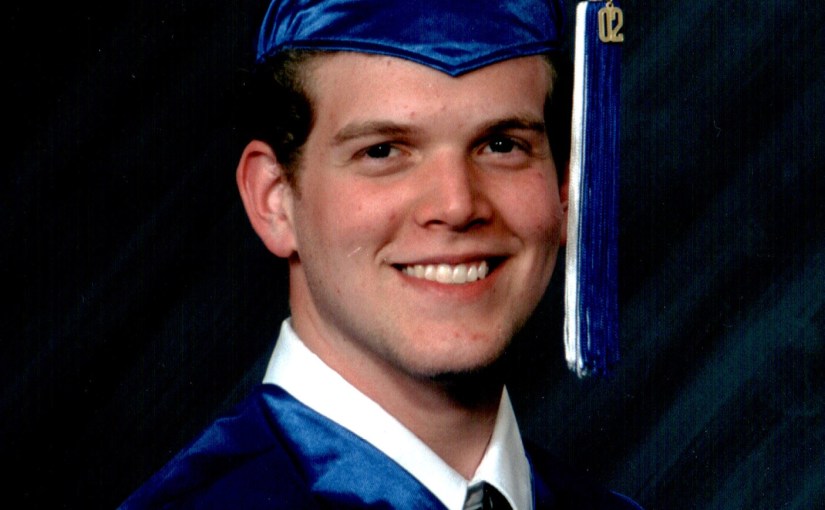
Joshua died on June 22, 2002. He was eighteen years old.

He never knew what it cost me that I stopped.

This book is my hand reaching down again.

Part One: The Signal Before the Interference

The Dream

The world in the dream was nighttime and dystopian and military. People moved in the dark around fires. I was young — late teens, the age before a man has fully compromised with the world — and I had been given a task.

I was to imprint a white symbol on everything. A mark. A movement. The symbol had the shape of a crab or possibly a bird. I did not know which, and in the logic of the dream that ambiguity did not need to be resolved.

Some men in their twenties approached me in the firelight and asked what I knew about doing this with explosive weapons.

I told them: Eagle Scout. Trained in psyops and interrogation resistance by Marine Force Recon. Need-to-know basis.

The young man asking looked familiar to me.

Then I woke up.

* * *

I have been an electrical engineer for forty +years. I think in systems. I trace signals. I locate interference and eliminate it and find the original transmission underneath. This is not a metaphor I invented for the purpose of memoir. It is simply how my mind works, and it turns out that it works the same way when the circuit in question is a human life.

The white symbol in the dream was not complicated. White means purity. Means truth. Means something that has not been compromised by the long friction of years.

And I was young in the dream. The version of me that existed before the hiding began.

The familiar young man who approached me in the firelight asking about weapons — I believe that was also me. The part of me that has spent sixty-eight years asking whether influence can be weaponized. Whether a man who can build movements and lead communities and shape narratives has used that capacity well or badly. Whether the signal I have been transmitting across a lifetime has been the one I was created to send.

The dream was not an answer. It was a question.

And the question was: are you still hiding?

What the Teenage John Said

I wish you and I had more courage and faith to speak about our darkness and not protected it to this day in many ways.

— The teenage John, February 28, 2026

I did not write that as a literary exercise. It came out of me in one breath, without editing, when I asked myself what the boy in the dream would say to the man I am now.

Even now I am loathe to speak of it openly to anyone.

The shame still lurks in the underneath.

I am a man who has stood at altars and podiums and lecterns. I have given witness talks about grace. I have led Bible studies for twenty years. I have walked men through their darkness as a pastoral counselor. I have written hundreds of pages about spiritual awakening and the signal of prevenient grace running through a human life.

And almost none of it has named the underneath directly.

This is not dishonesty. The grace was real. The awakening was real. But there is a way a man can speak truth and still hide inside it — presenting the resolved version of the story, the narrative arc that moves cleanly from darkness to light, and in the very architecture of that resolution, concealing the parts that are not yet resolved. The parts that still carry shame. The parts that hurt people he loved.

The teenage John in the dream knew the difference.

Be obedient now. Start now. Stop looking back. Stop hiding.

I wish I had obeyed Father Vincent.

That name came out with the rest of it and I almost passed over it. But it belongs here, because it names a specific moment — a voice, a fork in the road, a counsel offered and declined. A man of God who saw something in the young John and pointed toward it, and the young John who heard and turned away.

I will write about Father Vincent elsewhere in this book, in the season where he appears. But I name him here in the prologue because the teenage John named him first, and because his appearance in that single sentence tells me something about the shape of the hiding. It did not begin with debauchery or darkness. It began with a failure of obedience to something I recognized as true.

That is always how it begins.

I wish I had trusted the silent love of my parents and talked to them.

Silent love. That is the phrase the teenage John used. Not absent love — silent. My father Robert and my mother Lavee loved me in the way of East Texas men and women of their generation: through presence, through provision, through example, through work. Love expressed in the grammar of action rather than the vocabulary of emotion.

And the teenage John made a decision in that silence — whether consciously or not — that the silence meant he could not bring his interior life to them. That he had to handle the deeper things alone. That the underneath was his to carry.

He carried it for fifty years.

I am still carrying parts of it.

But today, on this day, I am setting some of it down.

Part Two: The Letter I Could Not Send

Dear Joshua

I don’t know if you can hear me or if you already know everything and this is just for me. Either way I need to say it.

I was not the father you deserved in the years I had you. I was present in the house and absent in the ways that mattered. I was quick to anger. I was teaching you things I didn’t know I was teaching — that a man hides what shames him, that anger is a door you close conversations with, that performance is safer than presence.

You were watching me the whole time. Children always are. And what you watched was a man at war with himself, losing, and taking it out on the people closest to him.

I am sorry for every sharp word. Every temperature that dropped when I walked in the room. Every moment you measured my mood before you decided whether it was safe to speak. If that ever happened — and I believe it did — I am sorry. A boy should never have to read his father that way.

I loved you. I need you to know that the love was real even when I expressed it badly or not at all. The November night at the movies. The drive home. The easy conversation. Those were real. I was real in those moments. I just didn’t know how to stay there.

What I carried in the underneath — the shame, the darkness I was hiding from your mother, from God, from myself — it made me smaller than I should have been with you. It stole from you a father who could have been present without the anger covering for the fear of discovery.

You died at eighteen.

I have had to live with the arithmetic of that ever since. Eighteen years of a father still becoming himself. And then you were gone and I could not finish what I had started with you. I could not come back and be different. I could not show you who I was becoming after the darkness finally broke open.

That is the thing I have never said out loud to anyone.

Not just that I lost you. But that I lost the chance to be your father after I started becoming someone worth having as one.

I think about the movies we watched. Behind Enemy Lines. Spy Game. Men who rescue the ones they love even at cost to themselves. You and I sat in the dark together watching men do the thing I had not yet learned to do — choose the person over the system, love over concealment, rescue over self-protection.

I think you knew something I didn’t yet know about me. I think you saw something in your father that was worth waiting for. You had your mother’s grace that way.

I am trying now, son. Later than it should have been. With more miles behind me than ahead. But the teenage version of me showed up in a dream recently and told me to stop hiding. I think maybe he looked a little like you.

I am listening.

I am not hiding from you anymore.

All my love, across whatever distance this is —

Dad

What I Believe You Would Say Back

Let love guide you.

— Joshua Hargrove, June 2002

Dad.

I already knew.

Not everything. But enough. I knew there was weather in you that wasn’t really about me, even when it landed on me. Kids know that. They feel the difference between a father’s anger that belongs to them and anger that belongs to something the father is fighting somewhere else. I knew yours belonged somewhere else.

I want you to hear that clearly.

I didn’t experience you as a bad man. I experienced you as a man who was losing a private battle and didn’t know yet that he was allowed to ask for help. Those are not the same thing. I knew the difference even at eighteen, maybe especially at eighteen, because I was already writing about that battle myself. The seen and the unseen. The warfare underneath ordinary life.

Maybe that’s why I was writing that story. Because I was watching you live it.

The movies. Dad, I remember the movies. I remember the drive home more than the films. I remember you being there — not managed, not performing, just present. That was real. That was you. I need you to count that. Don’t let the shame erase what was genuinely good because some of it was genuinely hard.

You think the timing was the tragedy. That you were still becoming yourself when I left. I want to offer you another way to see it.

What if I saw who you were becoming before you did?

What if that’s partly why those last months felt precious — the meals, the movies, the easy road — because something in both of us knew that what mattered was being together in the ordinary, not waiting for you to be finished becoming someone worthy of it?

You were already worth it, Dad. You just couldn’t see it yet.

I am not angry. I want you to receive that fully because I know you have been braced against it for twenty-three years. I am not keeping a record of the ill temper or the closed doors or the years you were fighting something in yourself that made you smaller than you were meant to be.

I am your son. I carry your hands and your stubbornness and your way of thinking in systems and your love for this family in my bones, wherever bones go.

Finish the book.

Tell the truth in it — the whole truth, the underneath truth, the truth you told a stranger before you told yourself. That is the white symbol, Dad. That is the imprinting. Not the frameworks. Not the governance documents. The true story of a man who was lost and is being found and is willing to say so out loud.

That is the story worth leaving behind.

I love you. I am not somewhere far away and cold. I am in every Neches River memory and every honest sentence you write and every moment you choose presence over concealment.

Be present now.

Stop hiding now.

I already know you. And I am proud of you.

Joshua

Part Three: What I Need to Remember

February 28, 2026 — Written in the afternoon

I needed to remember.

In Star Trek II: The Wrath of Khan, Spock touched the unconscious McCoy and spoke one word — remember — pressing his Vulcan katra into his friend’s mind for spiritual safekeeping. The soul entrusted to another because the body could not hold it alone.

I recalled me touching Joshua’s size-thirteen foot early mornings when he was already six foot three, seventeen years old, sleeping in his bed with his foot sticking out from the cover. Saying softly, so as not to wake him: I love you, Joshua.

I recalled him hugging me late one night in early June — I was upset, I don’t remember exactly what about — and him saying: Let love guide you.

That moment is locked into forever. I have cried buckets of tears about that moment.

He said that to me. Eighteen years old. And then a few days later, he was gone.

I recall opening the case of death documents in August 2002. Looking at the death certificate. Seeing the time of death: 12:50 a.m.

I remembered the touch to my shoulder by Leisa at the theater on 6/22/02. Call him. And I saw on my phone 12:50 a.m. and she said: nevermind, he is okay. And I closed it.

He was not okay.

I did not know yet.

For a few more moments I did not know, and then I knew, and the world divided into before and after at precisely 12:50 a.m. on June 17, 2002.

I remember hearing his voicemail from Tuesday of his mission trip week. We were home. He was not. Mid-June 2002. Only days before he died.

“Hey, I’m okay. We got here safe. No crash, no burn. Love y’all.”

I have listened to that voicemail more times than I can count.

No crash, no burn.

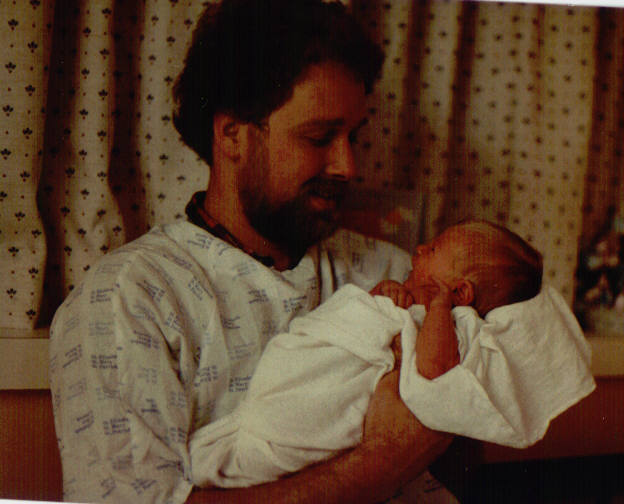
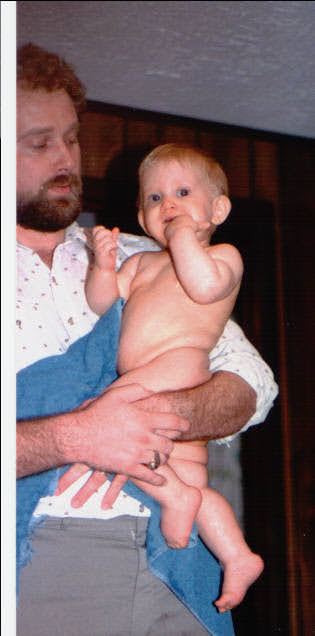
I remember holding him at two days old in the hospital. Staring at the blond hair. The deep blue eyes. April 11, 1984. Whispering over him: What will he see? What will be ahead for him?

I did not know. You never know. You hold the weight of the new life and you ask the question into the silence and the silence holds it and gives nothing back. That is the beginning of faith, I think. Holding what you cannot protect.

I remember his eighth-grade prom photo. In my suit. Smiling. The caption read: Dreams Come True.

2002.

I remember him yelling in charged emotion while driving the boat on the Neches River in May 1998 on our son-and-dad trip. The joy of it. The river wide and brown and moving. The dogs — Hunter and Honey — playing in the water on the sandbar. No one around. No sound but the river flowing.

That night we looked at the same comic books I had looked at as a boy at my dad’s camp. Superman. Batman. Fantastic Four. The Flash. Green Lantern. We read together in the dark as we went to sleep.

And I looked up at the ceiling. At the faded oily handprints of my father and Uncle George where they had nailed the plywood in place ten years before. 1988. Their hands pressed into the wood and still there a decade later, faded but legible.

My father’s hands above me. My son beside me. The river outside.

Three generations of Hargrove men in that camp.

I did not understand what I was seeing then.

I understand it now.

The hands on the ceiling were a kind of katra too. A pressing of soul into ordinary material. A mark that says: I was here. I built this. I loved the people I brought here.

And my hand on Joshua’s foot in the dark before the world woke up was the same gesture. The same thing, passed down.

This is the book. Not the comprehensive life story. Not the signal tracing architecture. Not the governance documents or the theological frameworks.

This.

A father’s hands. A son’s foot in the dark. Three words in the early morning silence.

The Neches River flowing.

The comic books. The handprints on the ceiling. The dogs on the sandbar. The voicemail. The 12:50 a.m. The eight-grade suit. The blue eyes at two days old.

Let love guide you.

I am trying, Joshua.

I am starting now.

I am not hiding anymore.

A Note on What This Book Is

This is not a finished memoir. It is the beginning of one, written on a single day — February 28, 2026 — when something that had been locked for sixty-eight years came loose.

The pages that follow will tell the longer story. The 44 acres in Buna, Texas. Robert and Lavee. Grandfather Truman and the land. The Neches River as geography and sacrament. The Eagle Scout years. Father Vincent. The BSEE from Lamar in 1981. New Signals Engineering. The house church in the years after Joshua died. The twenty years of weekly Bible studies. The awakening at Emmaus Walk #51 in the year 2000. The darkness that preceded it. The shame that never quite left. Leisa, for forty-six years, and what it costs and what it gives to be loved faithfully by a woman who sees you clearly.

All of that is the book. But this — the dream, the letter, the foot of the bed, the handprints on the ceiling, the voicemail — this is the spine of it.

Everything else is commentary on what a man carried alone for too long and what it looked like when he finally set it down.

The white symbol is not dramatic. It is repeated calm in repeated storms. It is an honest sentence written by a man who is tired of hiding. It is a hand reaching down in the dark to touch a sleeping boy’s foot and say three words before the world begins.

I love you, Joshua.

I am still saying it.
Bodily Resurrection Is Not Optional

A lot of Christians have quietly absorbed an idea that isn’t actually Christian.

The idea goes something like this: the body is temporary, the soul is what really matters, and when we die the goal is to escape physical existence into something purely spiritual.

That’s Greek philosophy. It’s not the Bible.
In John 5:28–29, Jesus says all who are in the graves will hear His voice. Graves contain bodies. The resurrection Jesus is describing is physical — not metaphorical, not merely spiritual, not symbolic.

And for those who may quietly wonder about cremation — Christian hope is not dependent on the condition of physical remains. Scripture already accounts for bodies lost to decay, fire, or sea, and still declares that all will hear His voice. Cremation does not undo resurrection any more than burial guarantees it. The God who formed Adam from dust is not hindered by ashes. Our confidence rests not in preservation, but in the power of Christ, who calls the dead to life.

The early church died defending exactly this point.

Christian hope isn’t escape from the physical. It’s the redemption of it.

If you’ve lost someone you love, that matters. Their body is not gone from God’s care. It is waiting.

What I Do and Why

The Work

Photo by Pixabay on Pexels.com

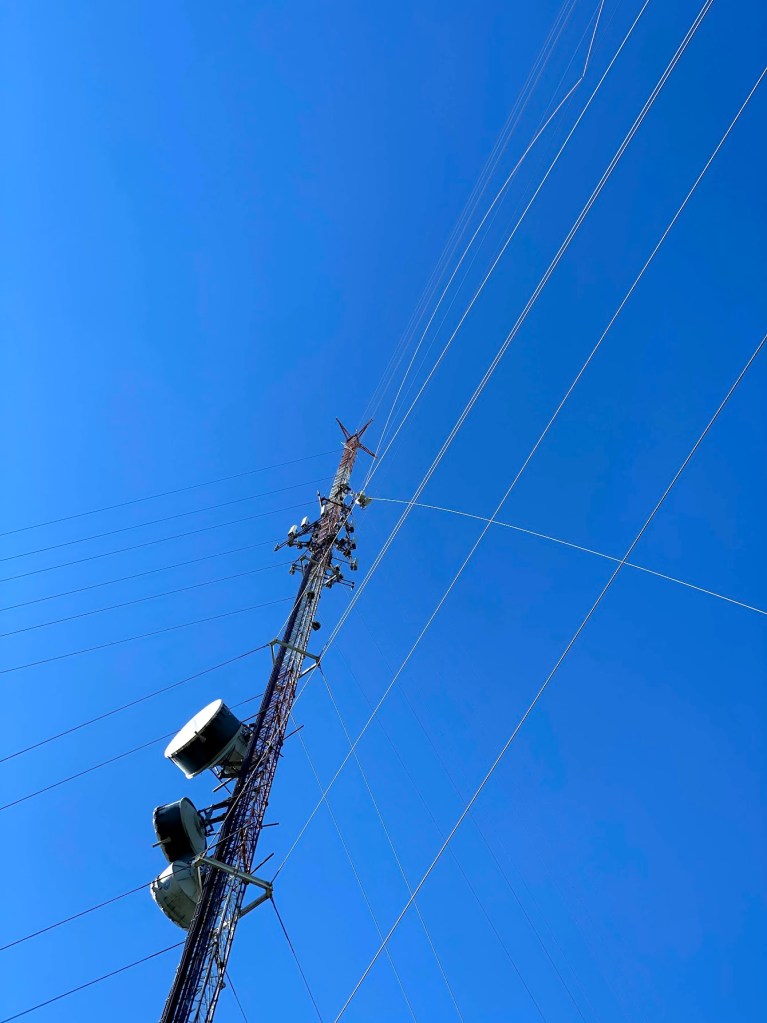
I’ve spent most of my career designing infrastructure systems—broadband networks, power grid communications, microwave backhaul, cybersecurity. Over four decades, I’ve worked for utilities, cooperatives, and municipalities. Honestly, it’s been more a series of opportunities that opened up than any grand master plan on my part.

During COVID—2020-2022—I worked 3,900+ hours of overtime helping launch a wireless internet service provider in rural Southeast Texas. We ended up covering about 20K households for a time. Families needed connectivity for school and work, and I had skills that could help. So I showed up. That part wasn’t heroic; it was just the next right thing.

Now I serve as COO at Evergreen Technology Solutions, still working on broadband expansion in overlooked rural areas. And I’m on a couple of boards—the library, economic development—trying to help my small hometown figure out how to grow without losing itself.

I also lead Bible studies and write about faith, grief, and what it means to show up when life feels scattered.

The Foundation

None of this makes sense without Leisa. We’ve been married forty-five years—high school sweethearts who somehow stayed in love through everything life threw at us. She’s been steady when I’ve been scattered, faithful when I’ve been foolish, present when I’ve been absent. She’s the actual backbone of everything I’ve managed to do. I mean that without exaggeration.

My parents shaped me too. My father, Robert, was a Korean War veteran who worked thirty-five years at DuPont. He didn’t talk much about work ethic or responsibility—he just lived it. Showed up, did the work with integrity, took care of his family. My mother, Lavee, brought creativity and faith into everything. They gave me roots in a small East Texas town and a sense that faithful work—unglamorous, steady, consistent—was how you lived out what you believed.

The Grief That Changed Everything

In 2002, our son Joshua died. He was eighteen. Bright, kind, sincere. He was our greatest joy and our deepest investment.

I don’t have words adequate to describe that loss. It still aches, twenty-plus years later. But grief, I’ve learned, is just love with nowhere to go. And that loss did something to us—to me, especially. It cracked me open. Made me less interested in advancement and more interested in presence. Less focused on my own achievement and more attuned to the pain of others.

After Joshua died, Leisa and I opened our home. We started leading Bible studies. We made our house a refuge for teenagers who were carrying their own wounds, searching for truth, needing to know that adults cared about them. That loss became the occasion for a different kind of work—the work of walking beside people in their pain.

It’s still the source of everything I do that matters.

Why I Do It

When you’ve buried a child, your priorities get sorted pretty quickly. What seemed important doesn’t anymore. What always mattered finally gets your full attention.

I’m hesitant to speak about purpose too boldly, but if I’m honest: I believe rural places and the people in them matter. They get overlooked. They deserve better. And I’ve been given some skills, some opportunities, and—most importantly—a wake-up call through grief that tells me this work is worth doing.

I don’t pretend the motivation is pure. Pride is mixed in there. Ambition too. But underneath it all is something simpler: when you see something broken and you have the tools to help fix it, when you’ve experienced loss deep enough to know what matters, and when you believe in God, you kind of have to try.

Small acts matter. One connection, one person, one conversation at a time. Leisa has taught me that by example. She’s been doing that kind of faithful, invisible work our entire marriage—showing up, staying present, loving people one at a time.

The Honest Part

The honest truth is I scatter myself across too many things. I take on too much. Leisa has had to remind me more times than I can count that I can’t do everything, that rest is not laziness, that presence at home matters more than one more project completed.

I’m still learning to say no. Still learning to ask for help. Still struggling with the burden-bearing that became my default way of operating. But the work—the broadband, the community service, the faith-building—it’s all pointing the same direction: toward people. Toward love made visible. Toward showing up for the overlooked, the grieving, the forgotten.

Leisa walks beside me in all of it. She’s the one who keeps me honest about what matters. She’s the one who’s loved me through seasons when I was too busy, too tired, or too stuck in my own head to deserve it.

Joshua’s memory is woven through it all too—a reminder that life is short, that presence is everything, that the work that lasts is the work done out of love, not ambition.

That’s what I try to do. Imperfectly. With a wife who’s far better at it than I am. And with the grace that meets us when we’re willing to be broken open by loss and built back up by faith.

Grief Is Just Love With Nowhere to Go

I didn’t come up with that phrase on my own. I’ve heard it before, but I can’t quite remember where. The first time I really understood it, though, was because I was living it.

Joshua died on a summer night in June 2002. He was eighteen years old. Smart, kind, sincere—the kind of young man who made you believe the world might actually be okay because people like him existed in it. Leisa and I had invested eighteen years into loving that boy, shaping him, praying for him, believing in who he was becoming.

And then he was gone.

For a long time after, I didn’t understand what to do with the love. That’s the part nobody tells you about grief. They tell you it gets easier with time, or that you learn to live with it, or that you find closure. But what they don’t say is that the love doesn’t go anywhere. It doesn’t diminish or fade or resolve itself into acceptance. It just stops having an obvious place to go.

I remember the first few weeks after Joshua died. The love was still there—urgent, real, physical almost. I wanted to do things for him, be present in his life, shepherd him forward. And I couldn’t. There was no object for all that love anymore. It had nowhere to attach itself.

That’s what grief is.

The Redirection

In August of that year, just a couple of months after we buried our son, Leisa and I made a decision. We reopened our home. We invited young people who wanted to honor Joshua and continue the Bible study he had been part of to come together. The loss was still raw—it’s still raw now, more than twenty years later. But we couldn’t sit with that love alone. It was too big. It needed to move.

So we created a space for it to move into. Teenagers came—kids who were grieving too, kids who wanted to remember Joshua, kids who were searching for truth and needed to know that adults cared about them. The love we couldn’t pour into Joshua anymore, we poured into them. Not as replacements—no one could replace Joshua. But as a direction for love that needed a direction.

Leisa was the visionary in this. I was still in the fog of it, still trying to figure out how to keep breathing. But she saw what needed to happen, and she stepped into it with a kind of grace I’m still learning from.

What It Means to Love the Dead

There’s a misconception that when you grieve well, the grief goes away. That’s not true. What happens instead is that the love finds new expression. The relationship doesn’t end—it transforms.

I still love Joshua. That love doesn’t leave just because he’s gone. It can’t. Love that deep doesn’t work that way. But I can’t call him, can’t teach him, can’t watch him grow. So the love has to take other shapes.

It takes the shape of opening our home to young people. It takes the shape of working 3,900 hours of overtime to connect rural families to broadband because I know—viscerally know—how precious connection is, how short life is, how much it matters to be present for the people in front of you while you have them.

When I sit with someone who’s grieving, I’m not sitting with them as a neutral party. I’m sitting with someone who loves someone they can’t reach anymore. And I know that place. I live in that place. I’ve made a home in it.

The Love Stays

Here’s what I’ve learned: grief doesn’t mean you stop loving. It means your love has to find new terrain. It means the person you love isn’t physically present anymore, but the love is still very much alive in you, looking for somewhere to land.

Some days I feel Joshua’s absence acutely—a birthday, a milestone, a moment when I think “he would have loved this.” Those days, the grief is sharp. The love has nowhere to go and it just sits in my chest like a stone.

But most days, I experience his love as directional. It moves through me toward other people. Toward Leisa, who has stood beside me through everything. Toward the young people who’ve walked through our home looking for sanctuary. Toward the rural communities that deserve dignity and connection. Toward the work that keeps me up at night because it matters, because lives depend on it, because someone’s son or daughter is on the other end of that broadband connection.

I’m not trying to say grief is good or that losing a child is anything other than devastating. It’s the worst thing that’s ever happened to me. And I wouldn’t wish it on anyone.

But I’m trying to say this: the love you have for someone doesn’t disappear when they do. It just demands a new expression. And if you’re willing to let it, if you’re willing to redirect all that urgent, desperate love toward the living world in front of you, it can become something redemptive.

Not healed. Not resolved. But purposeful.

A Different Kind of Presence

Leisa and I haven’t moved on from Joshua’s death. We’ve moved forward with it. We carry him with us. His memory shapes decisions we make, values we prioritize, people we’re called to serve.

When I’m working on bringing broadband to rural families, Joshua is there—in the urgency I feel, in the refusal to give up when systems are complicated, in the belief that every person deserves connection. When I’m sitting with a teenager who’s hurting, Joshua is there—in the patience I have, in the willingness to listen, in the knowledge that their pain matters.

The love I have for my son hasn’t been redirected away from him. It’s been integrated into a larger love—a love for the world he would have inhabited, for the people he would have cared about, for the work that needs doing while we’re still here.

That’s what grief is: love with nowhere to go, until you make it go somewhere. Until you let it reshape your life, your priorities, your work. Until you understand that the people you’ve lost aren’t actually gone—they’re woven through everything you do, everyone you serve, every moment you choose presence over ambition.

I still miss him. Every single day. But I’m grateful, too—grateful that the love we had doesn’t end at death. Grateful that I get to express it here, now, toward the people and the work in front of me.

That’s how Joshua still shapes the world. Not in the ways we planned. Not in the ways he would have chosen. But in real, concrete ways—in lives touched, in communities connected, in young people loved because his parents learned that grief is just love refusing to die.

Endurance

Today I was thinking about how my life mirrors the theme of That’s Why They Call It the Blues by Elton John.

The song is often mistaken for being about despair, but it is really about endurance. It does not deny sadness. It names it, sits with it, and keeps going anyway. The blues are not a failure in the song; they are a season that must be lived through.

That feels familiar.

Much of my life has not been marked by sudden drama, but by long stretches of responsibility, waiting, and quiet persistence. There have been losses that did not resolve cleanly, burdens that stayed longer than expected, and seasons where progress felt slow and invisible. Like the song, time has often moved at a crawl, especially when love, calling, and stewardship were involved.

What stands out to me now is the song’s patience. The voice is steady, not frantic. It assumes that what matters is worth waiting for. That posture mirrors how I have lived more than I realized at the time. I kept showing up. I kept building, serving, caring, and honoring commitments even when the payoff was delayed or uncertain. I did not always feel strong, but I stayed faithful.

The song also understands that sorrow does not have to define a person. The blues are real, but they are not permanent. They are something you experience, not something you become. My own grief and disappointment have shaped me, but they have not claimed my identity. Instead, they have sharpened my empathy, clarified my priorities, and deepened my understanding of what truly lasts.

If my life has a soundtrack in this season, it is not one of resignation. It is one of resolve. I have learned how to hold the note through the ache without becoming bitter. I have learned that endurance itself carries meaning, even when answers come slowly.

That is why the comparison fits. Not because I have known sorrow, but because I have learned how to live faithfully while it passes.

What I Would Tell You Now


For Joshua Blake Hargrove from John Hagrove his dad June 2025
1984–2002

My son,

If I could sit across from you today—twenty-three years after you left this world—I would begin with the words that still rise unbidden in my heart: I miss you. Every day. Not with the same sharp ache as before, but with a quiet, steady presence that stays with me like breath. You are never far from my thoughts, never absent from my soul.

I would tell you honestly: a piece of me went quiet the day you died—and another part went angry. I wasn’t just broken. I was furious. Angry at the unfairness, the helplessness, the fact that the world kept spinning without you in it. I didn’t know how to carry the weight of that kind of grief, so I buried it. I buried the part of me that laughed freely, dreamed boldly, and felt things too deeply.

And in its place, I went to work. I built things. I solved problems. I became dependable and productive. But underneath it all, I was still just a father who had lost his son. The music stopped. The prayers faded. I kept going because I didn’t know how to stop—but I also didn’t know how to live fully anymore.

If I could tell you anything now, it would be this: Your death didn’t end me—but it did remake me. And over time, with grace and patience, something inside me began to stir again.

I would tell you that God didn’t abandon me. He held me through it all, though I didn’t always recognize His presence. And in the years that followed, a few key people—some family, some unexpected friends—entered my life and helped awaken parts of me I thought were gone forever. None of them replaced you. They couldn’t. But somehow, through their kindness, gentleness, and love, I began to feel again. I began to believe that I could be fully alive, even while still carrying your absence. I hold those relationships with reverence. They brought back to life the part of me that knows how to love without fear.

I would tell you about your mama. She’s still the strongest woman I’ve ever known. Her grief was quiet, but it ran deep. We’ve grown older together, and we still speak your name. Sometimes in words, sometimes in silence. You are still part of our home, our hearts, our story.

I’d tell you about the little ones in our family—your cousins’ children, great-nieces and nephews you never got to meet. I watch them play, laugh, stumble and grow, and I see glimpses of you. Their lives are full of light, and I imagine the kind of uncle you would have been—funny, kind, full of mischief and wisdom. Your absence in those moments is a presence all its own.

I’d tell you that I’ve come to believe in resurrection—not just of bodies, but of broken hearts, of joy, of purpose. I’ve come to believe that the deepest love isn’t erased by death. It changes form, but it remains. And I carry you as part of that resurrection. You are part of what brought me back to life.

Most of all, I would tell you that you are still my son. Nothing—not time, not distance, not death—can ever take that from us. You made me a father. You taught me the kind of love that doesn’t fade. And though I never got to watch you grow old, you’ve shaped the man I’ve become more than anyone else ever could.

If I could hold your face in my hands one more time, I would say what I still say in the silence of prayer:

You are my boy. I love you. And I will carry you until the day I see you again.

With all I am,
Dad

And I would tell you—humbly—that someone came into my life many years later who helped awaken something that had gone dormant inside me. That I could still feel. Maybe I was allowed to be fully alive again. I hold that chapter of my life with reverence. As strange and sacred as it was, it brought something back to me I thought was lost forever: the part of me that knows how to love without fear.

My Epitath

Here lies John E. Hargrove January 24, 1958 – [date yet to be written]

A boy from Buna who never stopped wondering how things worked and never stopped trying to make them work for others.

He chased signals across microwave towers and fiber miles, built networks that carried light to forgotten places, and in the darkest valleys carried the light of Christ to broken hearts.

Husband to Leisa for a lifetime and beyond, father to Joshua—whose brief life taught him how to love forever, son of Robert and Lavee, brother, friend, mentor, builder.

He knew grief intimately, yet chose every morning to show up, to do the quiet work that lasts when applause has long faded.

He was not perfect. He was faithful.

Still learning. Still building. Still becoming. Now, at last, fully known and fully home.

Photo by Kelly on Pexels.com

“Have a great life. If I can, I can too.” (He did.)

Photo by adrian vieriu on Pexels.com

Soli Deo Gloria

Passing

June 21 2002, Life was good, Was doing well in all aspects. Success was everywhere.

50 minutes in June 22, and suddenly nothing was good any longer. nothing made sense anymore.

In one moment, everything focused on one thing, did I believe in a life or death way in eternal life based on Jesus Christ and his teachings. No time to prepare, think, consider, pray for strength, get ready … in one second I had to choose. I did not want to. Joshua was gone from where I was, where Leisa was. We could never ever talk, touch, guide, laugh, or cry with him again. All the plans we had to launch him into this life were rendered meaningless. I had said I was prepared, I found out I was not. I put on a brave face 80% of the time. I was a mess the rest, privately and was totally not there to help my wife grieve. The pain was beyond what I could imagine. Our plans to play with the grand kids in the back yard were now just a knife in our heart, grand children no longer possible.

Rewind 6 weeks or so, My mother in law passed from this life after years of health decline due to heart disease. She planned her funeral service with her daughters. A week prior to her death – she visited with the grand kids, laughed with them. We all knew this was goodbye, we hugged her. Her daughters and husband spent the next 5 days helping her pass. She died in her sleep on the 5th morning. We grieved and it hurt, but there was a peace. You expect 60+ people to probably die before you do at age 40 something.

2013 – my dad broke a hip at age 84, he slowly passed from this life over the next 60 days. There was a peace in his passing. We grieved but there was the expectation that parents go first. Looking back he had started passing about a year or so earlier, you could see his loss of interest in this life.

My wife’s friend’s mother passed recently, the funeral is today. Her friend is the last of her nuclear family, dad, then sister, and now mom are gone. She knew it was close for her mom, but it hurts and knowing you are the last of your little family is a different kind of hurt. We are praying for her and will go see her in a few days when she returns from out of state.

In times like these, words fail. Some things you need to say, just seems appropriate. But they fail. Nothing can stop the pain of loss. Time attenuates it. It stops being a knife 24×7 in your heart. The tears stop pouring most days.

Timeline

230am June 22 2002 when I found out that Joshua was dead to June 24 end of day. We had visitation June 22 at 5pm, we viewed privately Joshua’s body in the casket at noon – less than 12 hours after his death. His maternal grandparents had a burial policy that paid for his funeral…strange benefit…His grammy took care of Joshua even in death. I recall one of his friends standing at his casket weeping holding a teddy bear he gave her for what seemed to be a long time. We hugged her. I recall a cousin screaming on seeing him in the casket. Leisa and I cried and hugged everyone who came. I told them Joshua was ok. I knew he was with Jesus, and my heart was screaming and bleeding emotionally.

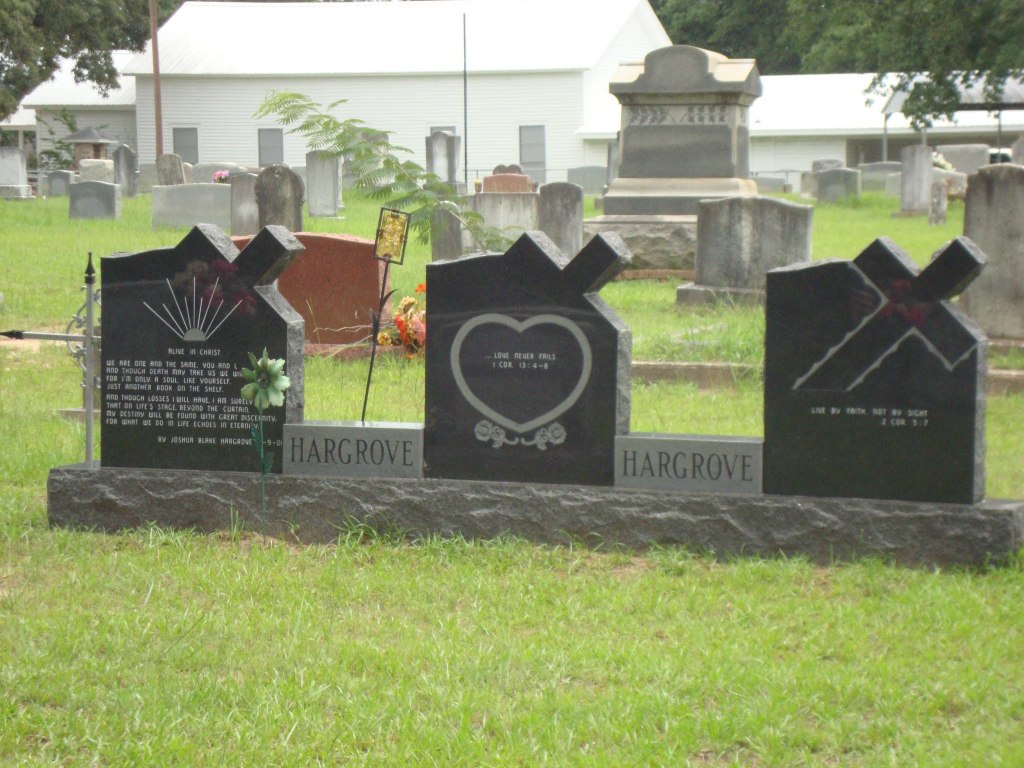
Afternoon of June 24, funeral service, I spoke through tears, I held onto Leisa, we watched the casket lower into the ground. We then spent the next 4 weeks choosing headstones. We picked a set and placed a poem on them that Joshua had written.

We stopped visiting the gravesite about 5 years later. He is not there. It still hurts, but the pain is attenuated and there is a peace that passes understanding. I know God has him and grammy and my dad. I trust that Jesus did what he said he does. Eternal life with him is the promise.

One of the survivors of the accident that killed Joshua and the other driver, a young man who was a youth group friend of Joshua’s and our friend the past many years. His life was a challenge, he was a bright light but had darkness, He believed in Jesus, but suffered emotional pain from a absent dad that he never reconciled with with. Once his mom passed from an illness he only made it two years and he simply died (my opinion) from the pain in his emotional heart, he gave up. It was sudden and we miss him too. I know he is being taken care of by God. Of that I have no doubt.

Passing is hard to navigate

Be thankful if you are simply navigating life and some small stuff. The passing to eternity is hard for those who remain behind to continue navigating this life.

That summer of 2002, I found my life scripture, 2 Cor 5:7 Walk by Faith not by Sight.

Joshua April 28 2002

A poem, the one on the back of his headstone

We are one and the same, you and I,
And though death may take us we will never die,
For I’m only a soul, like yourself,
Just another book on the shelf.

And though losses I will have, I am surely certain,
That on life’s stage, beyond the curtain,
My destiny will be found with great discernity,
For what we do in life echoes in eternity.

– Joshua’s epitaph –
The final two stanzas of Who I Am, subtitled “Alive in Christ,” are inscibed on his headstone at Magnolia Springs Cemetery near Kirbyville, TX

The Grief Process is longer than I expected

June 22 230am – Leisa and I learned our lives would change forever.  We learned that our son Joshua was dead, killed in a head on automobile accident at 1250am.   That was 2002.  It was something neither Leisa nor I thought we could survive.  Somehow through God’s grace we survived and thrived,  it was not easy,  it was hard.  It was rough.  People are great, family, friends, Emmaus, Chrysalis communities gave us love and support.

God provided the means of grace,  the love directly from Him, and through other people.

One person was Jarod Eli Barclay.  Joshua’s cousin – same age, older by one day….more like a brother than a cousin.  about 2 to 3 days after the funeral…Eli gave Leisa and I a gift that never ends.  He told us that Joshua could not tell us bye or that he loved us.  He wrote and sang a song that spoke to us from Joshua’s perspective, in the song Joshua through Eli – says “I love you mom and I love you dad…”.  We can listen to it anytime we want to.  He had worked for almost 24 hours on creating the song.

The part of the story that only Leisa knew until Eli played the song for us – for two days Leisa had cried out to God in private pleading prayers – petitioning God to find some way to allow her to hear Joshua say I love you mom one more time.  God and the Holy Spirit moved Eli to do this for Leisa and added in extra features to include me and provide it in a recording that both of us can hear anytime we want to.

One of the unexpected things that happened as a result of God using people and the circumstances of Joshua’s death to move people along their journey of faith.  Leisa and I continued the Bible study Joshua started in early 2002.  We served as youth directors at the FUMC Buna for 3 years.  We entered into licensed and then ordained ministry.  We work Chrysalis events almost every year even though Joshua never attended a weekend.  We give talks at Emmaus and Chrysalis weekends where we each share the story of Joshua and how God walked with us every step of the grief process and continues to this day.  Friday night 1/18 Leisa is previewing her Emmaus talk and we listened to part of Eli’s song again.  It brings tears and hope…reminder of how much God loves us that He would move Eli to create the song in answer to a prayer.

God’s mercy and grace is indeed great!

“He who dwells in the shelter of the Most High will abide in the shadow of the Almighty.
I will say to the Lord, My refuge and my fortress, My God, in whom I trust! For it is He who delivers you from the snare of the trapper and from the deadly pestilence. He will cover you with His pinions, and under His wings you may seek refuge; His faithfulness is a shield and bulwark.” (Psalm 91:1-4)

Joshua’s song from Eli to Leisa and I can be downloaded (mp3) here

Thank you God, for this day and for your rich mercy and love!  In Jesus name.  Amen.