One Faithful Step: Filling the Jars with Water

One Faithful Step: Filling the Jars with Water

An application from John 2:1–25

Photo by Pixabay on Pexels.com

There is a quiet detail in the opening chapters of the Gospel of John that has stayed with me.

At the wedding in Cana, nothing dramatic is asked of the servants. Jesus does not tell them to pray harder, believe louder, or understand more deeply. He gives a simple instruction:

“Fill the jars with water.”

That is it.

The miracle does not begin with wine. It begins with obedience that looks ordinary.

Naming What Has Run Out

Mary does something equally simple before that moment. She names the shortage:

“They have no more wine.”

She does not fix it.

She does not explain it.

She does not manage the outcome.

She places the lack before Jesus and steps back.

That pattern matters.

My Concrete Step

Here is the one step I am choosing to take in response to this passage:

I will name what has run out in me and place it before Jesus without trying to solve it.

Practically, this looks like this:

I sit alone, quietly, with no agenda.

I write one sentence:

“Lord, I have no more ______.”

I do not explain the blank.

I do not justify it.

I do not turn it into a prayer list or a plan.

Then I stop.

I pray one short sentence:

“I place this in Your hands. I will do whatever You tell me next.”

And I leave it there.

No fixing.

No rushing.

No forcing clarity.

Why This Matters

This step resists my instinct to manage outcomes, optimize solutions, or turn faith into a project. It places me where the servants stood—faithful, available, and unremarkable.

The servants did not make wine.

They carried water.

The transformation was Jesus’ work, not theirs.

What I Am Watching For

I am not watching for a dramatic answer.

I am watching for a quiet instruction.

Something small.

Something ordinary.

Something that feels almost too simple to matter.

That will likely be my “fill the jars with water” moment.

A Closing Reflection

I am not responsible for producing abundance.

I am responsible for obedience.

When I do what I am told—without knowing the outcome—I make room for God to reveal His glory in ways I could not manufacture.

For now, filling the jars is enough.

God is Near

As Jesus’ birth drew near, Bethlehem was crowded and restless. Because of the Roman census, families were arriving from every direction to register, including Joseph and Mary, traveling late in pregnancy. Homes were full, guest rooms taken, animals sheltered close to families for warmth. Shepherds were likely in the fields outside town, watching flocks through the cold night hours. Ordinary life was busy and strained, yet God was quietly bringing His promise to completion. On this day, the Messiah was not yet seen—but He was very near.

Photo by Jessica Lewis ud83eudd8b thepaintedsquare on Pexels.com

Advent #JesusIsComing #Bethlehem #PromisedMessiah #GodAtWork #Emmanuel

THE SHEPHERDS’ CANDLE: JOY

Zephaniah 3:14–20 • Isaiah 12:2–6 • Philippians 4:4–7 • Luke 3:7–18

Introduction

Today we light the third candle of Advent—the Shepherds’ Candle—the candle of Joy.

Its color is different for a reason. Joy is not merely another virtue in the Advent lineup; it is the evidence that the world is already being changed by God’s promise.

Joy appears before circumstances improve. Joy arrives while the night is still dark. It is the shepherd’s fire on a hillside, burning long before the sunrise.

The Revised Common Lectionary gives us a vivid tapestry this morning—texts that speak to people living under pressure, uncertainty, and discouragement. In each passage, joy does not arise from ease but from the assurance of God’s nearness.

I. “Sing Aloud… Rejoice with All Your Heart”

Zephaniah 3:14–20

Zephaniah speaks to a people who have been shaken, scattered, and exhausted by judgment and loss. Their world has been unstable. Their future has been uncertain.

Yet the prophet commands what their emotions do not feel ready to offer: Sing. Rejoice. Lift up your heart.

This is not denial; it is revelation.

Zephaniah tells them why they can rejoice:

“The Lord, your God, is in your midst… He will rejoice over you with gladness… He will renew you in His love.”

The joy of God’s people begins with the joy of God Himself.

Before the shepherds rejoiced, Heaven rejoiced over them. Before Bethlehem sang, God was already singing.

There are moments in all our lives when joy feels beyond reach—when responsibilities tower, when exhaustion settles in, when losses pull on the heart. Yet Scripture invites us to trust that God’s joy reaches us long before we can reach it ourselves.

II. “Surely God Is My Salvation”

Isaiah 12:2–6

Isaiah’s song is the testimony of someone who has come through deep waters and discovered that God did not abandon them.

“God is my strength and my song… With joy you will draw water from the wells of salvation.”

Joy is not a shallow emotion.

Joy is the water you draw when everything else has run dry.

Joy is the evidence that God has not merely saved you from something but saved you for something—to live, to hope, to become a witness of His faithfulness.

The shepherds understood this. Their lives were ordinary, hidden, uncelebrated. Yet when the angels declared “good news of great joy,” their hearts recognized it instantly. This was the water their souls had longed for.

III. “Rejoice in the Lord Always”

Philippians 4:4–7

Paul writes these words from a place of confinement. There is no comfort in his setting. Yet he instructs the church to live with a joy that cannot be cancelled by circumstance.

“Rejoice in the Lord always… The Lord is near.”

Joy is not a reaction. Joy is a posture.

Joy anchors us when anxiety rises. Joy guards the heart when pressures mount. Joy flows from the confidence that Christ is not far away—He is near, attentive, present.

And Paul says this nearness produces something profound:

“The peace of God, which surpasses all understanding, will guard your hearts and your minds in Christ Jesus.”

The shepherds would soon stand in that peace, beholding a newborn King in a manger. What Paul proclaims in a prison is exactly what the angels announced in the fields: God has come near.

IV. John the Baptist and the Joy of Expectation

Luke 3:7–18

Luke’s Gospel offers a surprising text for a Sunday dedicated to joy. John the Baptist’s message is blunt, confrontational, and demanding. He calls people to repentance, integrity, and transformation.

And yet the passage ends with this assertion:

“So, with many other exhortations, he proclaimed the good news to the people.”

Good news and repentance are not competing ideas.

True joy is impossible without transformation. Joy is what emerges when God clears the debris, breaks the chains, and calls us into honest, renewed living.

John’s message prepared the people to receive the Christ-child with hearts ready, uncluttered, and awakened. The angels announced joy; John cleared the way for that joy to take root.

The shepherds illustrate what this looks like: when God interrupts your ordinary life with His glory, you move. You go. You see. You bear witness. And you return “glorifying and praising God” because joy has become personal.

V. The Shepherds’ Candle for Us Today

Advent joy is not naïve. It is not blind to hardship, pressure, or grief. It is not manufactured by effort.

It is the recognition that:

God is in our midst.

God rejoices over us.

God renews us in His love.

God draws near when the world is dark.

God speaks truth that sets us free.

God opens wells of salvation where we thought only dryness existed.

Joy is the shepherd’s discovery—that the long-promised Messiah has come not to the palace but to the quiet fields where ordinary people stand watch at night.

Joy is not found by escaping our responsibilities; it is found when Christ steps into them.

Joy is not the absence of strain; it is the presence of a Savior.

Joy is the announcement that Heaven came looking for us.

VI. Joy in the Midst of Family Life

Let me speak directly to what many of us face this Advent season.

For the parent working long hours: You clock in before dawn at the plant or the refinery. You drive the highways to Beaumont or Port Arthur. You come home tired, and the house still needs tending, the kids still need help with homework, and Christmas is coming whether you’re ready or not.

Joy is not waiting for you at the end of a less demanding season. Joy meets you in the truck on the way home. Joy sits with you at the kitchen table. The Lord is near—even there.

For the mom holding everything together: You’re managing schedules, stretching the budget, keeping peace between siblings, and wondering if you’re doing enough. December multiplies the pressure—school programs, family gatherings, gifts to buy when money is already tight.

Hear what Zephaniah says: God rejoices over you. Before you get it all figured out. Before the laundry is done. Before you feel like you’ve measured up. He is already singing over you.

For the grandparent raising grandchildren: You thought these years would look different. Instead, you’re back in the thick of it—school lunches, discipline, bedtimes—when your body is tired and your heart carries grief over what led to this.

Joy does not ignore your weariness. But joy reminds you: God sees your faithfulness. He has not forgotten you. The same God who sent angels to shepherds working the night shift sends His presence to you.

For the family walking through grief: This Christmas, there’s an empty chair. The holidays remind you of who’s missing—a spouse, a parent, a child. Joy feels like a word for other people.

But Advent joy is not cheerfulness. It is the deep-water confidence that God draws near to the brokenhearted. Isaiah’s wells of salvation are for those who have walked through the valley. You are not forgotten. You are held.

For the young family just getting started: Maybe you’re newly married, or you’ve got little ones underfoot, and you’re trying to build something on one income or two jobs. You look around at what others have and wonder when your turn comes.

The shepherds had nothing but their flocks and their fields. And God came to them first. Joy is not reserved for those who have arrived. Joy is given to those who are willing to receive.

For the one battling anxiety or depression: Some of us carry burdens that don’t show on the outside. The holidays can make it worse—expectations, gatherings, the gap between how things look and how things feel.

Paul wrote “Rejoice in the Lord always” from a prison cell. He was not pretending everything was fine. He was anchoring himself in a truth deeper than his circumstances. You can bring your real struggle to a real Savior. He does not require you to clean up first.

VII. A Word for This Community

We live in a place where people know how to work hard and look after their own. We’ve weathered storms—the kind that come off the Gulf and the kind that come through family crisis. We’ve rebuilt after floods. We’ve buried people we loved too soon. We’ve held together when times got lean.

And Advent says to us: Even here, Joy approaches.

Not because everything is resolved. Not because life has become easy. But because the Lord is near.

When the shepherds ran to Bethlehem that night, they were not running toward relief. They were running toward revelation—a God who chooses the humble places, who draws close to the weary, who brings joy to those who least expect it.

That same God stands near you today.

And because He is near, joy is possible.

VIII. A Call to Respond

What does it look like to receive this joy?

First, believe it is for you. Not for people with easier lives. Not for people more spiritual than you feel. For you—in your tiredness, your doubts, your ordinary days.

Second, make room for it. This week, take even five minutes away from the noise. Sit with the Lord. Let Him remind you that He is near. You cannot hurry joy, but you can clear space for it.

Third, share it. The shepherds did not keep what they found to themselves. They told everyone. Joy multiplies when it moves through families, through neighbors, through a church that refuses to let anyone walk alone.

This Advent, let the Shepherds’ Candle burn in your home—not as decoration, but as declaration: The Lord is near. And because He is near, we have joy.

Closing Prayer

Lord, we thank You for the joy that does not depend on circumstance but on Your presence.

Renew us in Your love.

Clear our hearts by Your truth.

Let the wells of salvation open again within us.

Meet the tired parent on the drive home.

Comfort the grieving at the empty chair.

Strengthen the grandparent giving more than they thought they had left.

Anchor the anxious heart in Your peace.

And may we, like the shepherds, become witnesses of the joy that has entered the world—

Jesus Christ, our Savior and our King.

Amen.

My Epitath

Here lies John E. Hargrove January 24, 1958 – [date yet to be written]

A boy from Buna who never stopped wondering how things worked and never stopped trying to make them work for others.

He chased signals across microwave towers and fiber miles, built networks that carried light to forgotten places, and in the darkest valleys carried the light of Christ to broken hearts.

Husband to Leisa for a lifetime and beyond, father to Joshua—whose brief life taught him how to love forever, son of Robert and Lavee, brother, friend, mentor, builder.

He knew grief intimately, yet chose every morning to show up, to do the quiet work that lasts when applause has long faded.

He was not perfect. He was faithful.

Still learning. Still building. Still becoming. Now, at last, fully known and fully home.

Photo by Kelly on Pexels.com

“Have a great life. If I can, I can too.” (He did.)

Photo by adrian vieriu on Pexels.com

Soli Deo Gloria

Reminder of the Light

Some days I’m reminded to go back to the starting point. “In the beginning was the Word…” That truth centers me. It reminds me that everything we’re doing—family, work, community—rests on something solid and steady.

The scriptures in the RCL today lean into that same hope.

Daniel talks about God standing with His people even in hard seasons. Psalm 16 says our security isn’t in what we build, but in the One who holds us. Hebrews encourages us to keep lifting each other up. And in Mark, Jesus tells us not to get lost in the noise or fear when the world feels shaky.

Then He brings it all home: “I came that they may have life, and have it more abundantly.”

That’s the thread that runs through it all. A reminder that real life—steady, grounded, meaningful—comes from the One who speaks light into dark places and hope into tired hearts.

So if you’re carrying a lot today, take a breath. The One who was there in the beginning is still speaking life now. We can walk forward with that.

#SteadyLight

#AbundantLife

#HopeForToday

WEEK 2 – The Coming Light Prelude Study for Book of John

Key Truth

The light of Christ does not arrive after the night ends—it enters while it is still dark. God’s promise is not that suffering will disappear before He comes, but that His presence is stronger than any darkness you’re walking through.

Photo by Simon Berger on Pexels.com

Scripture Focus

Isaiah 9:1-7

“The people walking in darkness have seen a great light; on those living in the land of deep darkness a light has dawned.”

For centuries, Israel walked in shadows. They were exiled, oppressed, silenced—waiting for God to return. They didn’t know when or how. But the prophets kept whispering: Light is coming. Not someday when everything is fixed. Not after you’ve earned it. The light comes into the darkness, meeting you exactly where you are.

Isaiah 40:1-11

“Comfort, comfort my people, says your God… The voice of one calling: ‘In the wilderness prepare the way for the LORD; make straight in the desert a highway for our God.'”

God doesn’t wait for the path to be perfect before He comes. He comes into the wilderness—the place of broken things, lost things, wandering things. And His coming transforms the terrain itself. The desert becomes a highway. The crooked places are made straight. You don’t have to clean yourself up first.

Malachi 3:1

“I will send my messenger, who will prepare the way before me. Then suddenly the Lord you are seeking will come to his temple.”

After 400 years of silence, God promises to speak again. The people had given up hope. They thought God had abandoned them. But He was preparing His coming all along. In your silence, in your waiting, in your despair—God is preparing His coming too.

Luke 1:26-38

Mary’s encounter with Gabriel. An ordinary girl in an ordinary place receives an extraordinary promise. “The Lord is with you,” the angel says. Not because Mary deserves it. Not because she’s perfect or ready. But because God chooses her. And she chooses to trust.

Luke 2:25-32

Simeon has waited his whole life for God’s promise. “Lord, now let your servant depart in peace, for my eyes have seen your salvation.” He recognized Jesus immediately—not because he was looking for a king, but because he knew what hope looked like after a lifetime of waiting.

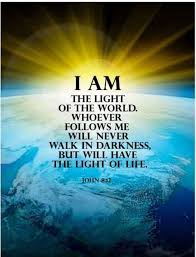
John 8:12

“I am the light of the world. Whoever follows me will never walk in darkness, but will have the light of life.”

Jesus doesn’t say the darkness goes away when you follow Him. He says you won’t walk in it alone. The light walks with you, through you, ahead of you.

What This Means for You

  • Your darkness is not disqualifying. God’s light doesn’t wait for you to get better, sober, stronger, or more worthy. It comes for you in the mess, in the relapse, in the confusion. That’s when it matters most.
  • Waiting doesn’t mean abandonment. Israel waited 400 years. You may have waited years for healing. That silence wasn’t absence—it was God preparing His coming. Your waiting is not wasted.
  • Hope is not naive. Israel knew their pain. They lived it every day. But they also knew God’s promises. Healing doesn’t deny the darkness; it walks through it with company. Your hope can hold both the pain and the promise.
  • You are seen and called by name. Like Mary. Like Simeon. Like the people Isaiah spoke to. You are not invisible to God. He knows your wilderness and your waiting. He comes for you personally.
  • The light exposes to heal, not to shame. When Christ’s light comes into darkness, it reveals what was hidden—not to condemn you, but to heal you. In recovery, you learn to name your pain, your choices, your truth. That exposure is the beginning of freedom, not judgment.
  • You can trust the light. After years of living in darkness—whether addiction, abuse, silence, or shame—trusting light feels dangerous. But Jesus says: follow me. You won’t walk alone. The light is stronger than any relapse, any failure, any day you think you can’t make it.

Discussion Questions

  • What kinds of darkness have you walked through? What did that darkness feel like?
  • Israel waited 400 years for God to speak. When have you waited for hope? What sustained you?
  • When light breaks through after long darkness, what does that feel like? Does it ever feel scary?
  • In your recovery or healing, where have you experienced God “entering the darkness” rather than waiting for things to be perfect first?
  • What does it mean that the light comes while you’re still walking in darkness, not after the darkness ends?
  • How does it change things to know that Christ’s light exposes wounds to heal them, not to shame you?
  • Who in your life has been “light” to you when you were in a dark place?

This Week’s Practice

  • Read Isaiah 9:1 each morning. Let it be your mirror. You are the people walking in darkness. The light has come for you.
  • Journal one word each day: “One way I see light breaking through today…” Notice small things—a moment of peace, a connection with someone, a choice you made toward healing, grace you received.
  • Sit in one dark room this week. Literally. Sit in darkness for 5-10 minutes. Notice how even a small light—a candle, a phone screen—changes everything. Let that be your prayer: Jesus, be that light for me.
  • Memorize: “The people walking in darkness have seen a great light; on those living in the land of deep darkness a light has dawned.” (Isaiah 9:2)
  • Call or text one person this week who has been light to you in your darkness. Thank them. Tell them what their presence meant.

Daily Reflections

DAY 1 – DARKNESS AND LONGING

Read Isaiah 9:1-7

Imagine Israel waiting. Centuries of waiting. Foreign rulers, broken temples, silence from heaven. But in that darkness, they held onto a promise: the light is coming.

Where in your life do you feel like you’re waiting? In your recovery? In your relationships? In your faith?

Ask God: “Help me wait without losing hope. Show me signs that You’re coming, even now.”

DAY 2 – GOD IN THE WILDERNESS

Read Isaiah 40:1-11

God doesn’t meet us at the finish line. He meets us in the wilderness—where we’re lost, broken, confused.

What does your wilderness look like right now? Where do you feel most lost?

Sit with this: God is preparing a highway through your desert. Not to skip the hard parts, but to make a way through them. You’re not alone in there.

DAY 3 – AFTER THE SILENCE

Read Malachi 3:1

Four hundred years. That’s how long Israel waited after God stopped speaking. Four hundred years of silence. And then: “I will send my messenger.”

Have you experienced silence from God? A time when you didn’t hear His voice, didn’t feel His presence?

Healing often begins in silence. Sometimes God is quiet not because He’s absent, but because He’s coming. Write: “One way I’ve experienced God’s silence was…”

DAY 4 – CALLED BY NAME

Read Luke 1:26-38

Mary was nobody important. Just a young girl in a small town. But when the angel came, he didn’t say, “You’ve earned this.” He said, “The Lord is with you.”

God doesn’t call the qualified. He qualifies the called. He comes to ordinary people in ordinary places and says: You. I choose you.

Ask yourself: What would change if I truly believed God chose me—not because I’m perfect, but because I’m His?

DAY 5 – RECOGNIZING THE LIGHT

Read Luke 2:25-32

Simeon waited his whole life. He was old. He had waited so long he might have stopped looking. But when Jesus came, he knew. Something in him recognized what he’d been waiting for.

In your recovery, have you had moments where you suddenly recognized healing? Where hope showed up when you least expected it?

Write: “I recognized God’s light when…”

DAY 6 – WALKING IN LIGHT

Read John 8:12

“Whoever follows me will never walk in darkness, but will have the light of life.”

Not: the darkness goes away. Not: you’ll never struggle again.

But: you will not walk alone. The light walks with you.

In what area of your recovery do you most need to remember: I’m not walking this alone?

DAY 7 – REST IN THE PROMISE

Read all passages from this week, slowly.

This week, you’ve sat with Israel’s waiting, with God’s silence, with His sudden breaking-through. You’ve remembered that light doesn’t wait for perfection. It comes into the mess.

Today, simply rest. Let yourself feel seen by God. Let yourself trust that the light you’ve seen—in yourself, in your recovery, in God’s grace—is real and strong.

Write: “The light I’m holding onto this week is…”

A Word for You

You are not too dark for God’s light. You are not too far gone, too broken, too much of a mess. The light of Christ enters darkness—it doesn’t wait for the darkness to leave first. In your recovery, in your healing, you are learning to walk in that light. Some days it feels bright. Some days it’s just a flicker. But it’s there. And it’s stronger than you know.

Next Week: The Gift of Presence (Luke 2, Matthew 2; Incarnation and Emmanuel)

Let My Love Open the Door

Let My Love Open the Door

(inspired by Pete Townshend’s song and the words of Jesus in Matthew 22:37–40)

When Pete Townshend sang, “Let my love open the door to your heart,” he probably wasn’t trying to preach a sermon—but he touched on something deeply spiritual. Love is the master key. Jesus said it even more plainly:

“‘Love the Lord your God with all your heart and with all your soul and with all your mind.’

This is the first and greatest commandment.

And the second is like it: ‘Love your neighbor as yourself.’

All the Law and the Prophets hang on these two commandments.”

—Matthew 22:37–40

Everything—every rule, every teaching, every act of faith—hinges on love. When Jesus boiled down the whole of Scripture into two laws, He was saying that religion isn’t about gates and guards; it’s about open doors.

When we love God fully, our hearts unlock to His presence. When we love others sincerely, their hearts begin to open too. The power that heals, restores, and reconciles begins to flow freely—because love always finds a way through.

So maybe today the invitation is simple:

Let His love open the door.

Let it unlock your fears, your grudges, your guarded places.

Let it swing wide the door of compassion for your neighbor, the one who’s hard to love, the one who doesn’t love you back.

The song says, “When people keep repeating that you’ll never fall in love… let my love open the door.”

Jesus says the same, only deeper. His love isn’t just romantic—it’s redemptive. It doesn’t just make life better; it makes life new.

#LoveGod #LovePeople #LetHisLoveOpenTheDoor #FaithInAction #HopeLivesHere #JesusChangesEverything

The Pain We Carry

– Lament with Jeremiah & the Psalmist

There’s a weight we don’t often talk about in church life—the grief that lingers in the soul when things don’t work out the way we prayed they would. Jeremiah knew that weight. He wrote, “Oh, that my head were a spring of water and my eyes a fountain of tears! I would weep day and night for the slain of my people” (Jeremiah 9:1). The psalmist prayed something similar: “Help us, O God of our salvation, for the glory of your name; deliver us, and forgive our sins, for your name’s sake” (Psalm 79:9).

Both voices remind us that lament is not just personal sadness—it’s a holy act of naming the pain before God.

Lament in Scripture, Lament in Life

When I read Jeremiah’s words, I hear echoes of seasons in my own journey. There have been moments where I’ve had to sit across from friends, colleagues, or family members, knowing that words couldn’t fix the brokenness we were facing. Times when projects I poured years into were stalled by forces beyond my control. Times when communities I love were fractured, and I felt powerless to heal the divides.

I’ve often carried those burdens quietly, as an engineer, a leader, a brother, a son. Like many men, I was taught to just keep going, solve the next problem, make the next call. But Scripture teaches that silence isn’t the only response—lament is.

What Lament Looks Like

Lament is not despair. It’s not quitting. It’s a turning of the heart toward God when life feels too heavy to carry. It’s saying out loud what we’d rather keep inside:

This hurts. I don’t understand. God, why does it seem like you’re far away?

Lament opens a door to hope because it refuses to let pain have the last word.

Carrying Pain in a World of Injustice

The prophet Amos points out that part of our pain comes from living in a world where injustice is real. He names those who trample the needy and cheat the poor. I’ve seen versions of that play out in Southeast Texas—families weighed down by the unfair cost of living, workers underpaid while corporations thrive, small towns overlooked when resources are allocated.

My own work in rural broadband has been shaped by that reality. It grieves me that whole communities are still left behind in an age where connection determines opportunity. That’s not just a technical problem—it’s a justice issue. And lament, at its heart, is agreeing with God that this isn’t how things should be.

Learning to Pray the Pain

Paul urges us in 1 Timothy to pray “for all people—for kings and all who are in high positions.” That’s not easy when leaders disappoint us, but it’s part of carrying pain rightly. Prayer puts lament into motion, turning grief into intercession.

I’ve had to learn this the hard way. In seasons where leadership at church or in business felt uncertain, I wanted to either fix everything or walk away. Instead, God has gently reminded me to pray—not just for outcomes, but for people. Prayer doesn’t erase pain, but it transforms how we carry it.

Choosing the Treasure That Lasts

Jesus’ parable of the dishonest manager ends with this line: “You cannot serve God and wealth.” For me, that lands like a compass point. All the work, all the projects, all the energy—none of it can become the ultimate treasure. Pain has a way of reminding us what really matters.

When I’ve lost deals, faced setbacks, or been misunderstood, the Spirit has pressed me back to what lasts: relationships, faith, hope, and love. Those are eternal treasures.

Walking Forward with Honest Hearts

So what do we do with the pain we carry? We learn to lament. We give voice to Jeremiah’s tears and the psalmist’s cries. We name injustice, we pray for people in power, and we re-orient our hearts to the treasure of God’s kingdom.

If you’re carrying something heavy today, don’t bury it. Pray it. Cry it. Write it. Let lament be your way of standing before God honestly. Because in the end, lament is not just about pain—it’s about trust. Trust that God hears. Trust that God heals. Trust that His kingdom will come, even in Southeast Texas, even in my life and yours.

The Prayer Compass – Orienting True North

True North – Christ Himself

“Lord Jesus, keep me aligned to You—not outcomes, not fears, not even my own dreams.”

North – Renewing Faith and Hope

Renew my trust in You each day. Restore hope where it has grown dim and strengthen my heart to endure.

(Romans 15:13)

East – Vision

Open doors for growth in my daily work, calling, and ministry. Guide my steps so they honor You.

(Proverbs 16:3)

South – Healing

Restore broken places in my life, my family, and my relationships. Bring renewal where there is weakness.

(Jeremiah 30:17)

West – Community

Anchor me in the people, neighbors, and culture around me. Let my life be a light that points others to You.

(Matthew 5:14,16)

How to study the Bible

How to study the Bible

Teaching & Talk – ChristianRadio…listen to sermons , or the Bible being read

Online podcasts, YouTube bible audio

Get a Bible , choose a translation you like

Use an app

e-Sword: Free Bible Study for the PC or smart phone…

Meaning, origin and history of the name Philip – Behind the Name

Online bible sites

Bible Hub: Search, Read, Study the Bible in Many Languages

BibleGateway.com: A searchable online Bible in over 150 versions and 50 languages.

Find a friend who can study with you

How to Study The Bible | The Navigators. Inductive is one method

Shown below

1) Background

First, do a basic background study on the book: Who is the author? Why was it written? Learn the historical background, dates, key people and so on. Some Bibles have summaries at the beginning of each book that will provide some of this information. A Bible dictionary or online commentaries can also be helpful.

2) Personal Paraphrase

Starting with the first chapter, write out each verse or section of verses in your own words. This will help you understand each verse in wording that makes more sense to you.

Here is an example using 1 Timothy 1:1

Original Verse:

“Paul, an apostle of Christ Jesus by the command of God our Savior and of Christ Jesus our hope . . . ” (1 Timothy 1:1 NIV).

Personal Paraphrase:

Paul, a proclaimer of Jesus Christ, obeying the instructions of God who is the One who saves us, and of Jesus Christ who is our hope…

3) Questions and Answers

Write down some questions you have about the passage, or unfamiliar or confusing terms that you come across.

Example:

Q. What does the word “apostle” mean? What does it mean to be one?

A. The Greek word apostolos comes from the verb apostello, which means “to send forth.” So to be an apostle means to be someone who is sent forth—in this case by Christ to spread His message.

4) Cross References

Make a note of any similar or related passages that come to mind while you’re reading, paraphrasing, and asking questions about the passage. Consult a concordance, other study guides, or footnotes to collect related passages you may not have thought of.

Example:

Apostle: 2 Corinthians 1:1

God my Savior: Luke 1:47; Titus 1:3

Christ our hope: Colossians 1:27

5) Insights

If an observation occurs to you that relates to any part of the passage or its background, be sure to write it down.

Example:

Paul was commanded by God to be an apostle. It wasn’t something he decided to do on his own.

After completing your own analysis, consult a Bible commentary for additional insight. Seeking out other believers’ insights about the passage can provide a broader, more solid understanding of the passage than you might be able to come to on your own. Remember, don’t go to commentaries first; start by making your own observations.

6) Personal Application

Here is a possible application of 1 Timothy 1:1:

Just like Paul, I need to recognize that I am tasked with being Christ’s ambassador, authorized and sent out with a divine message. I can only be effective in my mission if I am aware of my status as a divinely appointed witness.

7) Title and Summarize

After completing this verse-by-verse analysis of the chapter, assign it a title and identify a key verse or verses. This will help solidify the message of the chapter in your mind. Write a summary paragraph outlining the thesis of the chapter. Repeat the process for subsequent chapters. When the book is completed, give it a collective title.

Sadly, mediocrity is a hallmark of our age. Consider breaking that pattern and setting some high goals for your spiritual growth.

For example, you might say that within the next 10 years you will have studied a certain number of the books of the Bible in this manner—spending perhaps three hours a week to study (which is not to be a substitute for your “quiet time”—that is separate).

Motivational writer and speaker Zig Ziglar said, “Aim at nothing and you are sure to hit it.” Let’s aim high in our goal to know God and be transformed by His Word. There is nothing greater.

“What is more, I consider everything a loss because of the surpassing worth of knowing Christ Jesus my Lord” (Philippians 3:8 NIV).