The Long Road Between Pain and Peace

Life moves like that song from Bosch—slow, deliberate, a little haunted, and honest enough not to pretend things are fine when they aren’t.

Photo by Elu012bna Aru0101ja on Pexels.com

You wake up carrying yesterday with you. Some memories refuse to loosen their grip. Loss. Regret. Questions that never quite resolve. You learn early that life does not hand out clean endings, only long roads and unfinished conversations. Still, you get up. Not because it’s easy, but because something inside you says you must.

You do your work quietly. You try to do it right. You learn that integrity costs more than compromise, but you pay it anyway. You discover that justice, truth, and love are rarely loud. Most of the time, they show up as persistence—showing up again when walking away would be simpler.

There are nights when the weight presses down hard. You replay moments you wish you could change. You hear echoes of people you loved and lost. You wonder whether holding on is strength or stubbornness. And yet, letting go feels like erasing part of who you are.

So you keep walking. Not because you have all the answers, but because you believe life has meaning even when it’s cracked. Somewhere along the way, you realize you are not carrying everything alone. There is a quiet presence beside you—steady, patient, faithful—bearing the heavier part of the load. The kind of presence that doesn’t rush you, doesn’t condemn you, and doesn’t leave when things get dark.

You learn that redemption is not sudden. It’s slow. It’s daily. It’s choosing truth over comfort, mercy over bitterness, and hope over despair. It’s discovering that love can meet you in broken places and still call you forward.

In the end, life is not about forgetting what shaped you. It’s about letting it refine you. You don’t let go of what matters. You carry it—transformed—into something truer.

And you keep going.

#LifeStory
#StillStanding
#RedemptionRoad
#FaithInTheQuiet
#HopeThatEndures

Note on the spiritual undertones in “Can’t Let Go”

Beneath its noir tone, the song carries quiet traces of spirituality. The repeated tension between holding on and releasing mirrors a deeply human struggle found throughout Scripture—the desire to control the past versus the invitation to trust something greater than ourselves. “Can’t let go” is not just emotional attachment; it sounds like the soul wrestling with surrender.

There is an unspoken confession in the lyrics: acknowledgment of brokenness without denial, longing without easy resolution. That honesty echoes the psalms of lament, where faith is not polished but real. The song never preaches, yet it gestures toward the idea that healing does not come from erasing pain, but from being carried through it.

What makes the spirituality subtle—but powerful—is that the answer is not self-mastery. The weight feels too heavy to bear alone. That quiet recognition opens the door to grace. In Christian language, it resembles the moment before surrender, when the heart realizes it cannot save itself and must be held.

In that sense, Can’t Let Go becomes a prayer without religious language—a reminder that even in shadowed places, the struggle itself can be sacred, and that letting go is often less about loss and more about learning who is truly strong enough to hold us.

#SpiritualUndertones
#CantLetGo
#QuietFaith
#GraceInTheStruggle
#HopeInTheDark

Carrying Weight, Seeking Light

Carrying Weight, Seeking Light

Photo by eberhard grossgasteiger on Pexels.com

Over the past several weeks, I’ve noticed a pattern rising in my heart—a mix of heaviness and hope, grief and gratitude, pressure and purpose. The holiday season always magnifies what is present in the soul, and this year is no different. I find myself remembering the people who shaped me, the stories that anchor me, and the losses that still echo in quiet moments.

At the same time, my days are full of responsibilities—engineering projects, community work, pastoral care, business decisions, family needs. I feel the pull from every direction, not because any of it is unworthy, but because all of it matters. Leadership in any form carries an invisible weight. And sometimes that weight presses harder in November and December.

Yet beneath all of this, something steady keeps tugging me forward: hope.

Not the thin kind that ignores reality or paints over pain. But the kind that believes God is present even in the unanswered questions. The kind that remembers that Jesus steps into weary places, not polished ones. The kind that says, “You don’t have to carry this alone.”

As I look back at conversations, projects, and prayers from the last week, I see the same thread weaving through everything: healing. Healing for myself. Healing for others. Healing for the places in our community that feel stretched or wounded. Healing for the dreams that feel fragile but not extinguished.

And the truth is, hope and healing aren’t found by escaping life—they grow right in the middle of it.

Every memory that stings reminds me there was love.
Every responsibility that feels heavy reminds me there is purpose.
Every moment of fatigue reminds me I need grace beyond myself.

And grace keeps showing up.

So I’m choosing to keep walking—one step at a time, one day at a time—trusting that the God who has carried me this far will carry me further still. My prayer is simple:

“Lord, meet me here. Make something good out of the weight I’m carrying. Let Your light break through.”

Because even in the heaviness, hope is rising.
#HopeInTheJourney
#JesusHeals
#GraceInRealLife

What I Would Tell You Now


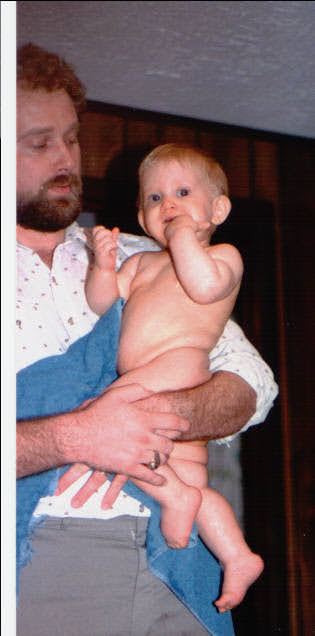
For Joshua Blake Hargrove from John Hagrove his dad June 2025
1984–2002

My son,

If I could sit across from you today—twenty-three years after you left this world—I would begin with the words that still rise unbidden in my heart: I miss you. Every day. Not with the same sharp ache as before, but with a quiet, steady presence that stays with me like breath. You are never far from my thoughts, never absent from my soul.

I would tell you honestly: a piece of me went quiet the day you died—and another part went angry. I wasn’t just broken. I was furious. Angry at the unfairness, the helplessness, the fact that the world kept spinning without you in it. I didn’t know how to carry the weight of that kind of grief, so I buried it. I buried the part of me that laughed freely, dreamed boldly, and felt things too deeply.

And in its place, I went to work. I built things. I solved problems. I became dependable and productive. But underneath it all, I was still just a father who had lost his son. The music stopped. The prayers faded. I kept going because I didn’t know how to stop—but I also didn’t know how to live fully anymore.

If I could tell you anything now, it would be this: Your death didn’t end me—but it did remake me. And over time, with grace and patience, something inside me began to stir again.

I would tell you that God didn’t abandon me. He held me through it all, though I didn’t always recognize His presence. And in the years that followed, a few key people—some family, some unexpected friends—entered my life and helped awaken parts of me I thought were gone forever. None of them replaced you. They couldn’t. But somehow, through their kindness, gentleness, and love, I began to feel again. I began to believe that I could be fully alive, even while still carrying your absence. I hold those relationships with reverence. They brought back to life the part of me that knows how to love without fear.

I would tell you about your mama. She’s still the strongest woman I’ve ever known. Her grief was quiet, but it ran deep. We’ve grown older together, and we still speak your name. Sometimes in words, sometimes in silence. You are still part of our home, our hearts, our story.

I’d tell you about the little ones in our family—your cousins’ children, great-nieces and nephews you never got to meet. I watch them play, laugh, stumble and grow, and I see glimpses of you. Their lives are full of light, and I imagine the kind of uncle you would have been—funny, kind, full of mischief and wisdom. Your absence in those moments is a presence all its own.

I’d tell you that I’ve come to believe in resurrection—not just of bodies, but of broken hearts, of joy, of purpose. I’ve come to believe that the deepest love isn’t erased by death. It changes form, but it remains. And I carry you as part of that resurrection. You are part of what brought me back to life.

Most of all, I would tell you that you are still my son. Nothing—not time, not distance, not death—can ever take that from us. You made me a father. You taught me the kind of love that doesn’t fade. And though I never got to watch you grow old, you’ve shaped the man I’ve become more than anyone else ever could.

If I could hold your face in my hands one more time, I would say what I still say in the silence of prayer:

You are my boy. I love you. And I will carry you until the day I see you again.

With all I am,
Dad

And I would tell you—humbly—that someone came into my life many years later who helped awaken something that had gone dormant inside me. That I could still feel. Maybe I was allowed to be fully alive again. I hold that chapter of my life with reverence. As strange and sacred as it was, it brought something back to me I thought was lost forever: the part of me that knows how to love without fear.