Bob’s story has been marked by endurance few ever choose and many never see. Years of pain, delayed care, uncertainty, and now a sober medical reality. Scripture never pretends that such paths are easy or quickly resolved. Instead, it speaks honestly to people who must live forward without the promise of full restoration.
There is a quiet truth that matters today: being preserved is not the same as being abandoned. Even when healing does not look like reversal, life still has purpose, dignity, and meaning. Strength is not measured by improvement alone, but by faithfulness through limitation.
There is One in the Christian story who knows what it is to suffer bodily, to be misunderstood, to endure pain without quick relief. He does not stand at a distance offering explanations; He walks alongside, bearing weight with us. When words fail and the future feels smaller, presence still remains—and presence is enough for today.
Bob is not defined by injury, diagnosis, or what may never return. He is known, seen, and held—right here, right now. And even in guarded outcomes, grace can still guard the soul.
Prayer for Bob
Lord of mercy and steady strength, We lift Bob into Your care today. You see the years of pain, the delays, the losses, and the courage it has taken simply to endure. Grant him peace that does not depend on outcomes, courage for the road ahead, and wisdom for every doctor and decision.
As surgery is considered, guard his body, preserve what can be preserved, and bring clarity through each specialist who examines him. Protect his voice, his dignity, and his sense of being fully human and fully valued.
When pain is constant and answers are limited, be near in ways that are unmistakable. Let Bob know he is not forgotten, not overlooked, and not walking alone. Carry what he can no longer carry himself, and surround him with people who reflect Your steady love.
Give rest to his body, calm to his mind, and quiet hope to his heart—one day at a time. In Jesus Name, Amen.
Few of Jesus’ parables unsettle modern readers like the story of the Shrewd Manager (Luke 16:1–9). The central character is dishonest, self-interested, and motivated by fear. Worse, the resources he manipulates are not his own. And yet, Jesus says the master commended him.
This discomfort is intentional. Jesus is not softening morality; He is sharpening perception.
The parable does not commend dishonesty, fraud, or fear-driven ethics. The manager is clearly corrupt. His impending dismissal confirms it. Jesus never calls his actions righteous, nor does He suggest his behavior should be imitated.
If the parable ended there, it would undermine Jesus’ own moral teaching. But it does not.
What Is Actually Commended
The praise falls on one narrow point: clarity under accountability.
When the manager realizes judgment is inevitable, illusion disappears. He stops pretending the assets are his. He accepts that his authority is ending. And he acts decisively with the time he has left.
The master commends him not for what he did, but for finally understanding reality.
Jesus makes the comparison explicit: “The people of this world are more shrewd in dealing with their own kind than are the people of the light.”
The rebuke is aimed at the disciples, not the manager.
Stewardship, Not Ownership
At the heart of the parable is a biblical truth that is easy to confess and hard to live: nothing we possess truly belongs to us.
Time, money, influence, skill, position—these are entrusted, not owned. The manager’s error was not recognizing this sooner. His late wisdom was realizing that relationships outlast assets and mercy survives audits.
Jesus is exposing how often faithful people live as functional owners while professing to be stewards.
Fear as an Awakener, Not a Virtue
The manager acts out of fear, and fear is never presented as the highest moral motive. Scripture consistently teaches that love is greater than fear. Yet fear can still serve a purpose: it can awaken urgency.
Fear strips away denial. Fear confronts us with limits. Fear reminds us that time runs out.
The moral irony of the parable is this: a dishonest man takes judgment seriously, while God’s people often postpone obedience as if accountability were theoretical.
The Ethical Core of the Teaching
Jesus reframes moral wisdom away from mere rule-keeping toward eternal awareness.
The teaching is not “use dishonest methods,” but rather:
Use temporary resources with eternal seriousness
Convert wealth into generosity, reconciliation, and mercy
Invest in people, not possessions
Jesus immediately clarifies the point: when earthly wealth fails—and it always does—what remains are the relationships shaped by how it was used.
Why This Parable Offends Us
The story unsettles because it refuses to offer a sanitized hero. It acknowledges mixed motives and flawed character. It separates prudence from virtue and asks an uncomfortable question:
Why do people who claim eternal hope often live with less urgency than those facing temporary loss?
The Moral Conclusion
The Shrewd Manager is not a model of righteousness. He is a mirror.
The parable teaches that:
Stewardship demands foresight
Delay is itself a moral failure
Awakening late is still wiser than sleeping through responsibility
Jesus is not lowering ethical standards. He is raising the stakes.
The warning is simple and sharp: Do not be less serious about eternity than a dishonest man is about his future.
That is the morality of the parable—and why it still confronts us today.
Powerlifting can be spiritual—not because iron is sacred, but because of what disciplined strength training forms inside a person when it is rightly ordered.
theologically grounded explanation.
1. Powerlifting Trains Submission to Reality
Powerlifting is brutally honest.
The bar does not care about intention, emotion, or reputation. It either moves or it does not.
Spiritually, this mirrors a core biblical truth: reality precedes self-perception.
Pride is exposed quickly under the bar.
Excuses do not change gravity.
Progress requires humility, patience, and obedience to form.
Self-exaltation
This aligns with the spiritual discipline of submitting oneself to truth rather than demanding truth submit to oneself.
“God opposes the proud but gives grace to the humble.” (James 4:6)
2. It Teaches Strength Under Authority, Not Chaos
True powerlifting is not reckless exertion. It is strength under constraint:
Proper stance
Proper grip
Proper breathing
Respect for limits and recovery
Biblically, strength is never celebrated apart from order.
Samson fell because his strength lost its obedience.
David was strong because his strength was governed by restraint.
Jesus displayed ultimate power through self-control.
Powerlifting disciplines the body to operate within structure, reinforcing a spiritual truth:
Power without discipline destroys; power under authority builds.
I’ve spent most of my career designing infrastructure systems—broadband networks, power grid communications, microwave backhaul, cybersecurity. Over four decades, I’ve worked for utilities, cooperatives, and municipalities. Honestly, it’s been more a series of opportunities that opened up than any grand master plan on my part.
During COVID—2020-2022—I worked 3,900+ hours of overtime helping launch a wireless internet service provider in rural Southeast Texas. We ended up covering about 20K households for a time. Families needed connectivity for school and work, and I had skills that could help. So I showed up. That part wasn’t heroic; it was just the next right thing.
Now I serve as COO at Evergreen Technology Solutions, still working on broadband expansion in overlooked rural areas. And I’m on a couple of boards—the library, economic development—trying to help my small hometown figure out how to grow without losing itself.
I also lead Bible studies and write about faith, grief, and what it means to show up when life feels scattered.
The Foundation
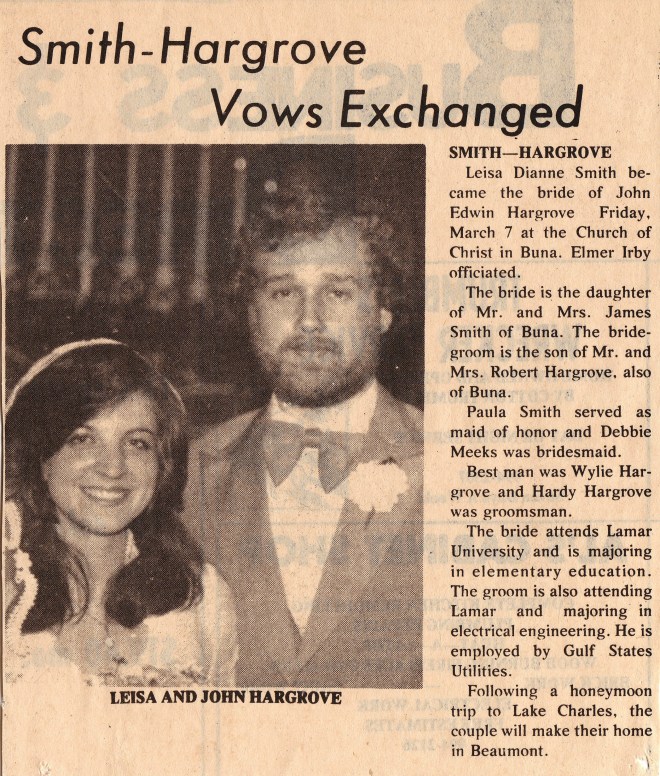
None of this makes sense without Leisa. We’ve been married forty-five years—high school sweethearts who somehow stayed in love through everything life threw at us. She’s been steady when I’ve been scattered, faithful when I’ve been foolish, present when I’ve been absent. She’s the actual backbone of everything I’ve managed to do. I mean that without exaggeration.
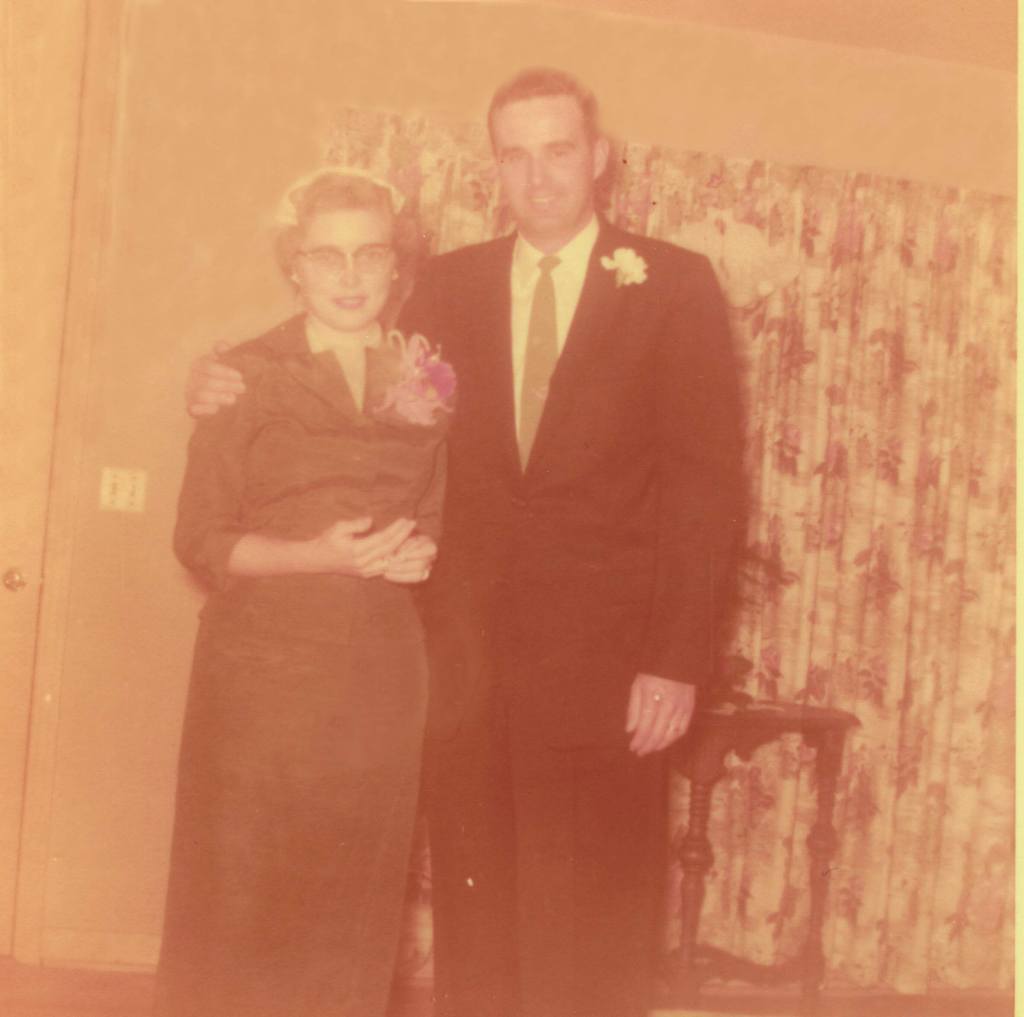
My parents shaped me too. My father, Robert, was a Korean War veteran who worked thirty-five years at DuPont. He didn’t talk much about work ethic or responsibility—he just lived it. Showed up, did the work with integrity, took care of his family. My mother, Lavee, brought creativity and faith into everything. They gave me roots in a small East Texas town and a sense that faithful work—unglamorous, steady, consistent—was how you lived out what you believed.
The Grief That Changed Everything
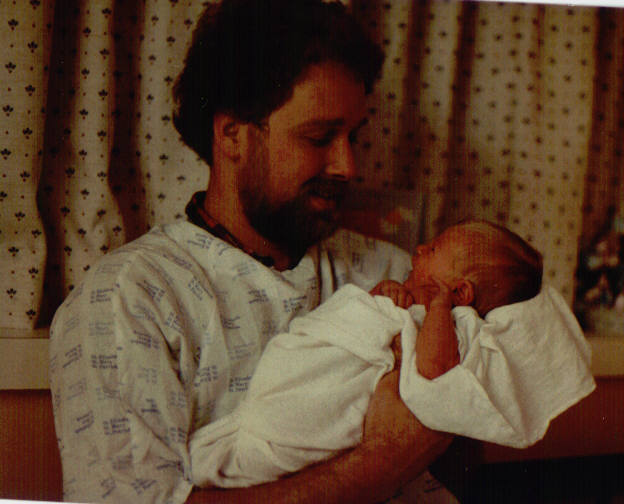
In 2002, our son Joshua died. He was eighteen. Bright, kind, sincere. He was our greatest joy and our deepest investment.
I don’t have words adequate to describe that loss. It still aches, twenty-plus years later. But grief, I’ve learned, is just love with nowhere to go. And that loss did something to us—to me, especially. It cracked me open. Made me less interested in advancement and more interested in presence. Less focused on my own achievement and more attuned to the pain of others.
After Joshua died, Leisa and I opened our home. We started leading Bible studies. We made our house a refuge for teenagers who were carrying their own wounds, searching for truth, needing to know that adults cared about them. That loss became the occasion for a different kind of work—the work of walking beside people in their pain.
It’s still the source of everything I do that matters.
Why I Do It
When you’ve buried a child, your priorities get sorted pretty quickly. What seemed important doesn’t anymore. What always mattered finally gets your full attention.
I’m hesitant to speak about purpose too boldly, but if I’m honest: I believe rural places and the people in them matter. They get overlooked. They deserve better. And I’ve been given some skills, some opportunities, and—most importantly—a wake-up call through grief that tells me this work is worth doing.
I don’t pretend the motivation is pure. Pride is mixed in there. Ambition too. But underneath it all is something simpler: when you see something broken and you have the tools to help fix it, when you’ve experienced loss deep enough to know what matters, and when you believe in God, you kind of have to try.
Small acts matter. One connection, one person, one conversation at a time. Leisa has taught me that by example. She’s been doing that kind of faithful, invisible work our entire marriage—showing up, staying present, loving people one at a time.
The Honest Part
The honest truth is I scatter myself across too many things. I take on too much. Leisa has had to remind me more times than I can count that I can’t do everything, that rest is not laziness, that presence at home matters more than one more project completed.
I’m still learning to say no. Still learning to ask for help. Still struggling with the burden-bearing that became my default way of operating. But the work—the broadband, the community service, the faith-building—it’s all pointing the same direction: toward people. Toward love made visible. Toward showing up for the overlooked, the grieving, the forgotten.
Leisa walks beside me in all of it. She’s the one who keeps me honest about what matters. She’s the one who’s loved me through seasons when I was too busy, too tired, or too stuck in my own head to deserve it.
Joshua’s memory is woven through it all too—a reminder that life is short, that presence is everything, that the work that lasts is the work done out of love, not ambition.
That’s what I try to do. Imperfectly. With a wife who’s far better at it than I am. And with the grace that meets us when we’re willing to be broken open by loss and built back up by faith.
Grief Is Just Love With Nowhere to Go
I didn’t come up with that phrase on my own. I’ve heard it before, but I can’t quite remember where. The first time I really understood it, though, was because I was living it.
Joshua died on a summer night in June 2002. He was eighteen years old. Smart, kind, sincere—the kind of young man who made you believe the world might actually be okay because people like him existed in it. Leisa and I had invested eighteen years into loving that boy, shaping him, praying for him, believing in who he was becoming.
And then he was gone.
For a long time after, I didn’t understand what to do with the love. That’s the part nobody tells you about grief. They tell you it gets easier with time, or that you learn to live with it, or that you find closure. But what they don’t say is that the love doesn’t go anywhere. It doesn’t diminish or fade or resolve itself into acceptance. It just stops having an obvious place to go.
I remember the first few weeks after Joshua died. The love was still there—urgent, real, physical almost. I wanted to do things for him, be present in his life, shepherd him forward. And I couldn’t. There was no object for all that love anymore. It had nowhere to attach itself.
That’s what grief is.
The Redirection
In August of that year, just a couple of months after we buried our son, Leisa and I made a decision. We reopened our home. We invited young people who wanted to honor Joshua and continue the Bible study he had been part of to come together. The loss was still raw—it’s still raw now, more than twenty years later. But we couldn’t sit with that love alone. It was too big. It needed to move.
So we created a space for it to move into. Teenagers came—kids who were grieving too, kids who wanted to remember Joshua, kids who were searching for truth and needed to know that adults cared about them. The love we couldn’t pour into Joshua anymore, we poured into them. Not as replacements—no one could replace Joshua. But as a direction for love that needed a direction.
Leisa was the visionary in this. I was still in the fog of it, still trying to figure out how to keep breathing. But she saw what needed to happen, and she stepped into it with a kind of grace I’m still learning from.
What It Means to Love the Dead
There’s a misconception that when you grieve well, the grief goes away. That’s not true. What happens instead is that the love finds new expression. The relationship doesn’t end—it transforms.
I still love Joshua. That love doesn’t leave just because he’s gone. It can’t. Love that deep doesn’t work that way. But I can’t call him, can’t teach him, can’t watch him grow. So the love has to take other shapes.
It takes the shape of opening our home to young people. It takes the shape of working 3,900 hours of overtime to connect rural families to broadband because I know—viscerally know—how precious connection is, how short life is, how much it matters to be present for the people in front of you while you have them.
When I sit with someone who’s grieving, I’m not sitting with them as a neutral party. I’m sitting with someone who loves someone they can’t reach anymore. And I know that place. I live in that place. I’ve made a home in it.
The Love Stays
Here’s what I’ve learned: grief doesn’t mean you stop loving. It means your love has to find new terrain. It means the person you love isn’t physically present anymore, but the love is still very much alive in you, looking for somewhere to land.
Some days I feel Joshua’s absence acutely—a birthday, a milestone, a moment when I think “he would have loved this.” Those days, the grief is sharp. The love has nowhere to go and it just sits in my chest like a stone.
But most days, I experience his love as directional. It moves through me toward other people. Toward Leisa, who has stood beside me through everything. Toward the young people who’ve walked through our home looking for sanctuary. Toward the rural communities that deserve dignity and connection. Toward the work that keeps me up at night because it matters, because lives depend on it, because someone’s son or daughter is on the other end of that broadband connection.
I’m not trying to say grief is good or that losing a child is anything other than devastating. It’s the worst thing that’s ever happened to me. And I wouldn’t wish it on anyone.
But I’m trying to say this: the love you have for someone doesn’t disappear when they do. It just demands a new expression. And if you’re willing to let it, if you’re willing to redirect all that urgent, desperate love toward the living world in front of you, it can become something redemptive.
Not healed. Not resolved. But purposeful.
A Different Kind of Presence
Leisa and I haven’t moved on from Joshua’s death. We’ve moved forward with it. We carry him with us. His memory shapes decisions we make, values we prioritize, people we’re called to serve.
When I’m working on bringing broadband to rural families, Joshua is there—in the urgency I feel, in the refusal to give up when systems are complicated, in the belief that every person deserves connection. When I’m sitting with a teenager who’s hurting, Joshua is there—in the patience I have, in the willingness to listen, in the knowledge that their pain matters.
The love I have for my son hasn’t been redirected away from him. It’s been integrated into a larger love—a love for the world he would have inhabited, for the people he would have cared about, for the work that needs doing while we’re still here.
That’s what grief is: love with nowhere to go, until you make it go somewhere. Until you let it reshape your life, your priorities, your work. Until you understand that the people you’ve lost aren’t actually gone—they’re woven through everything you do, everyone you serve, every moment you choose presence over ambition.
I still miss him. Every single day. But I’m grateful, too—grateful that the love we had doesn’t end at death. Grateful that I get to express it here, now, toward the people and the work in front of me.
That’s how Joshua still shapes the world. Not in the ways we planned. Not in the ways he would have chosen. But in real, concrete ways—in lives touched, in communities connected, in young people loved because his parents learned that grief is just love refusing to die.
In the third chapter of the Gospel of John, we meet Nicodemus—a man of stature, learning, and influence. He is identified as a Pharisee, a ruler of the Jews, and a teacher of Israel. In every measurable way, Nicodemus is successful. His life has been carefully constructed around knowledge, discipline, and religious credibility. He has earned his place. He has mastered the system.
Yet he comes to Jesus at night.
That detail matters. Nicodemus does not come as a public figure seeking debate, nor as a confident leader issuing instruction. He comes quietly, privately, perhaps cautiously. Whatever confidence he carried in daylight seems to fade in the presence of Jesus. Something in him knows that his credentials are no longer sufficient.
Jesus does not flatter him. He does not affirm his status. He does not invite him to refine his theology or intensify his efforts. Instead, Jesus speaks words that would have cut straight through everything Nicodemus had built his life upon:
“You must be born again.”
Not improved. Not corrected. Not advanced to the next level.
Born again.
This is not a call to self-help or religious achievement. It is a declaration that the entire foundation is inadequate. Jesus looks past Nicodemus’s titles and accomplishments and sees a man who, despite all his success, still lacks life. Not information. Not morality. Life.
For Nicodemus, this would have been deeply unsettling. His identity was forged through study, obedience, and reputation. To be told that none of that could produce what was required would have felt like the ground shifting beneath his feet. Jesus is not asking him to add something to his life. He is telling him that he must become someone entirely new.
This is the scandal and the mercy of John 3. God’s kingdom is not entered through merit, pedigree, or position. It is entered through rebirth—through a work of God that cannot be controlled, earned, or managed. “The wind blows where it wishes,” Jesus says. Life with God begins not with human effort, but with divine initiative.
Nicodemus’s story confronts us with an uncomfortable question: What happens when the things we rely on to define ourselves—our success, our knowledge, our service, even our religion—are no longer enough?
Jesus does not shame Nicodemus. He invites him. But the invitation is costly. It requires surrender. It requires letting go of the illusion that we can build our way into God’s life. It requires trusting that God can remake us from the inside out.
John does not tell us everything Nicodemus felt that night. But later in the Gospel, we see him again—first speaking cautiously in Jesus’s defense, and finally standing openly at the cross, helping to bury the crucified Christ. The man who came in the dark eventually steps into the light. New birth, it seems, is a process as much as a moment.
John 3 reminds us that faith is not about becoming better versions of ourselves. It is about becoming new. It is about allowing ourselves to be fully seen by Jesus—and trusting Him enough to let go of what we thought made us secure.
That invitation still stands.
Not “try harder.” Not “prove yourself.” But: be born again.
John establishes this immediately: “To all who received Him, who believed in His name, He gave the right to become children of God” (John 1:12). In John’s theology, belief is not passive. It is an act of trust that precedes clarity.
Reflection Where is God asking you to believe before you fully understand?
Response Name the area where faith must lead before sight follows.
Stanza Two Theme: Perseverance Through Resistance
The song acknowledges obstacles. The journey is long. Opposition exists. Yet the commitment remains firm.
John 16:33 records Jesus saying, “In this world you will have trouble. But take heart; I have overcome the world.” John never promises ease. He promises victory rooted in Christ, not circumstance.
Reflection What resistance has tempted you to stop trusting?
Response Anchor perseverance not in strength, but in Christ’s completed work.
Stanza Three Theme: Identity Anchored in Purpose
The song affirms identity: knowing who you are sustains endurance.
John’s Gospel repeatedly shows Jesus grounding identity in relationship. “I know My own and My own know Me” (John 10:14). Faith of the heart is relational confidence, not self-assertion.
Reflection Are you defining yourself by struggle or by belonging?
Response Rest in the truth that you are known and held.
Stanza Four Theme: Hope That Looks Forward
This movement looks ahead with confidence. The future is not feared; it is faced with expectation.
John 14:1–3 speaks directly to this posture. “Do not let your hearts be troubled… I go to prepare a place for you.” John’s theology frames the future as secured by Jesus’ presence.
Reflection Does your hope rest on outcomes, or on Christ Himself?
Response Entrust tomorrow to the One already there.
Stanza Five Theme: Endurance Rooted in Love
The closing theme resolves into steady commitment. Faith remains because love remains.
John 15:9 calls believers to abide in Christ’s love. This is the sustaining power of faith: not willpower, but remaining connected to the source of life.
Reflection What practices help you remain rather than strive?
Response Choose abiding over anxiety this week.
Closing
“Faith of the heart” reflects the core message of the Gospel of John: belief that endures, hope that holds, love that remains.
John writes so that belief would lead to life (John 20:31). Faith is not loud confidence. It is quiet persistence rooted in Jesus—who is the Way, the Truth, and the Life.
The journey may be long. The road may be costly. But faith of the heart is sustained by the One who walks it with us.
The opening theme declares resolve. Faith is chosen before outcomes are visible. The heart commits even when the path ahead is uncertain.
John establishes this immediately: “To all who received Him, who believed in His name, He gave the right to become children of God” (John 1:12). In John’s theology, belief is not passive. It is an act of trust that precedes clarity.
Reflection Where is God asking you to believe before you fully understand?
Response Name the area where faith must lead before sight follows.
Stanza Two Theme: Perseverance Through Resistance
The song acknowledges obstacles. The journey is long. Opposition exists. Yet the commitment remains firm.
John 16:33 records Jesus saying, “In this world you will have trouble. But take heart; I have overcome the world.” John never promises ease. He promises victory rooted in Christ, not circumstance.
Reflection What resistance has tempted you to stop trusting?
Response Anchor perseverance not in strength, but in Christ’s completed work.
Stanza Three Theme: Identity Anchored in Purpose
The song affirms identity: knowing who you are sustains endurance.
John’s Gospel repeatedly shows Jesus grounding identity in relationship. “I know My own and My own know Me” (John 10:14). Faith of the heart is relational confidence, not self-assertion.
Reflection Are you defining yourself by struggle or by belonging?
Response Rest in the truth that you are known and held.
Stanza Four Theme: Hope That Looks Forward
This movement looks ahead with confidence. The future is not feared; it is faced with expectation.
John 14:1–3 speaks directly to this posture. “Do not let your hearts be troubled… I go to prepare a place for you.” John’s theology frames the future as secured by Jesus’ presence.
Reflection Does your hope rest on outcomes, or on Christ Himself?
Response Entrust tomorrow to the One already there.
Stanza Five Theme: Endurance Rooted in Love
The closing theme resolves into steady commitment. Faith remains because love remains.
John 15:9 calls believers to abide in Christ’s love. This is the sustaining power of faith: not willpower, but remaining connected to the source of life.
Reflection What practices help you remain rather than strive?
Response Choose abiding over anxiety this week.
Closing
“Faith of the heart” reflects the core message of the Gospel of John: belief that endures, hope that holds, love that remains.
John writes so that belief would lead to life (John 20:31). Faith is not loud confidence. It is quiet persistence rooted in Jesus—who is the Way, the Truth, and the Life.
The journey may be long. The road may be costly. But faith of the heart is sustained by the One who walks it with us.
As the year closes, I am not counting accomplishments or failures. I am paying attention to what remained. What endured when plans changed, when strength ran thin, when answers did not arrive on time.
This year asked more than I expected. It required steadiness when clarity was limited and faithfulness when results were slow. I learned again that life rarely moves by clean chapters. Most days are written in pencil, not ink, and grace shows up quietly rather than dramatically.
On this New Year’s Eve, I am reminded that Jesus did not promise ease, but presence. He did not offer certainty, but direction. He did not remove the valley, but He walked into it with us. That has been enough. It is still enough.
As midnight approaches, I release what I cannot carry forward. Regret. Fear. The need to control outcomes. I step into the coming year with trust instead of urgency, obedience instead of noise, and hope rooted deeper than circumstances.
Tomorrow will not be a reset. It will be a continuation. Another day to show up, to serve, to love well, and to walk faithfully with the One who holds time itself.
I enter the new year not demanding answers, but willing to listen.
There is a quiet detail in the opening chapters of the Gospel of John that has stayed with me.
At the wedding in Cana, nothing dramatic is asked of the servants. Jesus does not tell them to pray harder, believe louder, or understand more deeply. He gives a simple instruction:
“Fill the jars with water.”
That is it.
The miracle does not begin with wine. It begins with obedience that looks ordinary.
Naming What Has Run Out
Mary does something equally simple before that moment. She names the shortage:
“They have no more wine.”
She does not fix it.
She does not explain it.
She does not manage the outcome.
She places the lack before Jesus and steps back.
That pattern matters.
My Concrete Step
Here is the one step I am choosing to take in response to this passage:
I will name what has run out in me and place it before Jesus without trying to solve it.
Practically, this looks like this:
I sit alone, quietly, with no agenda.
I write one sentence:
“Lord, I have no more ______.”
I do not explain the blank.
I do not justify it.
I do not turn it into a prayer list or a plan.
Then I stop.
I pray one short sentence:
“I place this in Your hands. I will do whatever You tell me next.”
And I leave it there.
No fixing.
No rushing.
No forcing clarity.
Why This Matters
This step resists my instinct to manage outcomes, optimize solutions, or turn faith into a project. It places me where the servants stood—faithful, available, and unremarkable.
The servants did not make wine.
They carried water.
The transformation was Jesus’ work, not theirs.
What I Am Watching For
I am not watching for a dramatic answer.
I am watching for a quiet instruction.
Something small.
Something ordinary.
Something that feels almost too simple to matter.
That will likely be my “fill the jars with water” moment.
A Closing Reflection
I am not responsible for producing abundance.
I am responsible for obedience.
When I do what I am told—without knowing the outcome—I make room for God to reveal His glory in ways I could not manufacture.
As Jesus’ birth drew near, Bethlehem was crowded and restless. Because of the Roman census, families were arriving from every direction to register, including Joseph and Mary, traveling late in pregnancy. Homes were full, guest rooms taken, animals sheltered close to families for warmth. Shepherds were likely in the fields outside town, watching flocks through the cold night hours. Ordinary life was busy and strained, yet God was quietly bringing His promise to completion. On this day, the Messiah was not yet seen—but He was very near.
Photo by Jessica Lewis ud83eudd8b thepaintedsquare on Pexels.com
There is a particular kind of weight that comes with leadership in a small rural community. It is not loud or dramatic. It does not announce itself. It settles in quietly and stays. You carry it when you unlock buildings early in the morning, when you answer questions no one else has time to answer, when you make decisions knowing there is no backup team waiting behind you. This year has been full of that kind of weight.
In rural East Texas, leadership is less about titles and more about presence. People know where you live. They know your family. They see whether you show up consistently or disappear when things get hard. Stewardship here is personal. You are not managing abstractions; you are caring for places and people with names, histories, and long memories. That responsibility can be humbling, and it can be heavy, especially when the year brings grief alongside progress.
As an engineer, I spend much of my time working with systems, infrastructure, and technology. Fiber routes, wireless links, power systems, networks that must stay up even when conditions are less than ideal. This year reinforced something I already knew but needed to relearn: technology is never the purpose. It is a tool. It exists to serve people, not to replace presence, wisdom, or care. Infrastructure matters deeply, but only because of what it enables—connection, opportunity, safety, and dignity. When the work becomes only about equipment or metrics, something essential is lost.
There were many days this year when exhaustion and calling pulled in opposite directions. Fatigue does not always come from doing too much; sometimes it comes from caring deeply over a long period of time. There were moments when it would have been easier to step back, to delay decisions, to wait for someone else to take responsibility. But calling is persistent. It does not shout. It simply asks, again and again, whether you will show up today.
Patience has been one of the quiet lessons of this year. Progress in rural places is slow by nature, and that slowness can feel frustrating in a world accustomed to rapid change. Trust grows the same way. It is built through small, repeated acts of reliability. Showing up on time. Following through. Listening more than speaking. These habits rarely make headlines, but they form the foundation of healthy communities.
Faith has been less about answers and more about posture. There were seasons of waiting when clarity did not come quickly. In those moments, faith looked like staying present, doing the next right thing, and trusting that light does not always arrive all at once. Often it comes like morning—gradually, almost unnoticed at first, until suddenly you realize you can see farther than you could before.
Grief has been part of the landscape this year as well. Loss changes how time feels. It reshapes priorities. It has a way of stripping away what is unnecessary and leaving what truly matters. In that sense, grief has also clarified calling. It has reminded me that people are not projects, and that leadership is ultimately an act of care.
As 2026 approaches, there is plenty that could invite fear: uncertainty, resource constraints, the complexity of rural challenges. But fear is not a useful guide. Hope, grounded in faith, is steadier. It does not deny difficulty; it simply refuses to let difficulty have the final word. Looking forward, the goal is not perfection or speed, but faithfulness—continuing to build, serve, and lead with integrity, even when the work remains unfinished.
So the choice at the end of this year is a simple one. To keep walking forward. To trust that God is at work in the quiet, steady moments more than in the loud ones. To believe that showing up, again and again, is itself an act of faith. And to rest in the confidence that light, even when it comes slowly, is still light.
























 John Hargrove Seeking Truth and Reality