There is a quiet tension running through much of the New Testament: believers are promised both trouble and protection. We are told to endure patiently, to remain watchful, and to expect trials—yet also to trust that God knows how to keep His people. Holding those truths together is essential for mature faith.
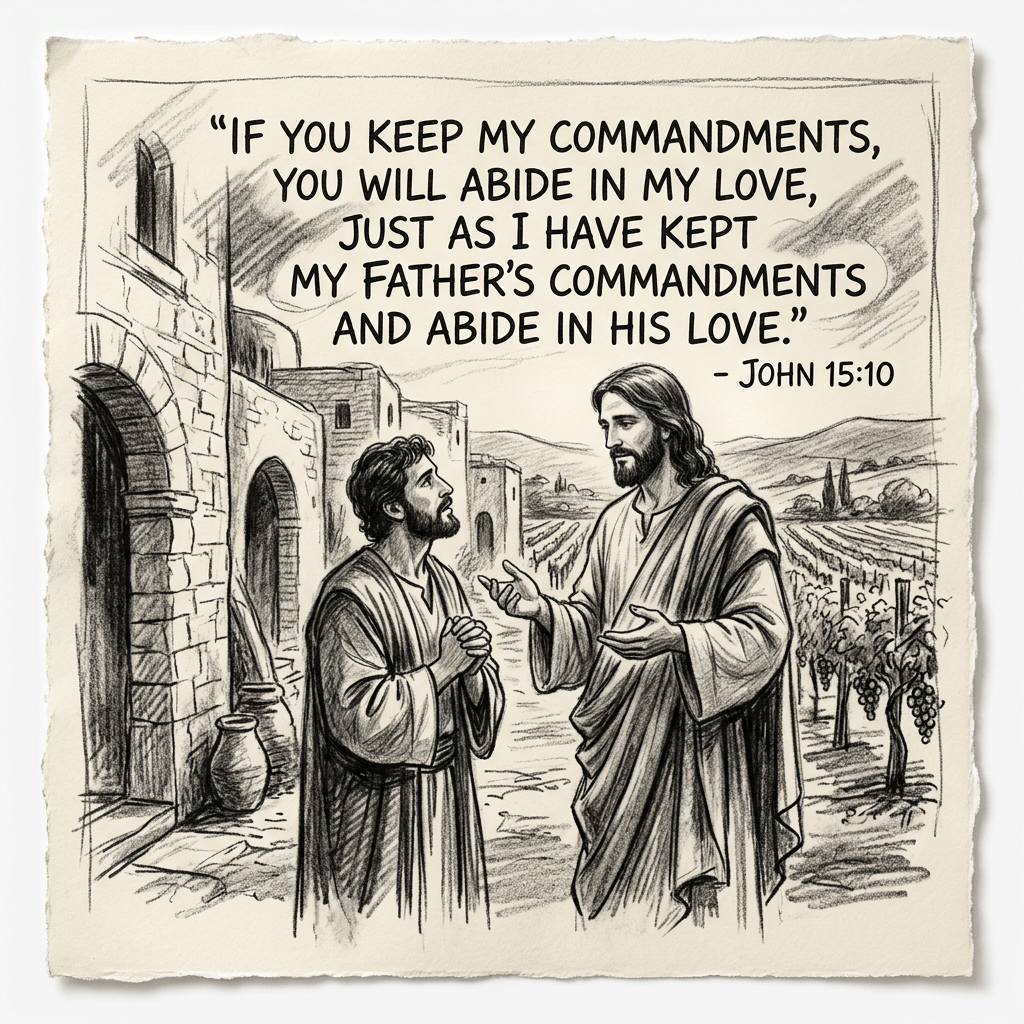
In Revelation 3:10, Jesus speaks to a faithful church: “Because you have kept My command to endure with patience, I will also keep you from the hour of trial that is going to come on the whole world.” The promise is not disconnected from obedience. The church is commended for patient endurance first. Only then does Christ speak of being kept. Scripture never presents divine protection as a substitute for faithfulness. It presents protection as God’s response to a people who remain steady, obedient, and anchored in Him.
The New Testament consistently assumes believers will experience hardship. Paul tells the Thessalonians plainly, “You know that we are destined for these trials.” Trials are not evidence of abandonment. They are part of the Christian calling. The promise, then, is not the absence of difficulty but stability within it—being preserved so that hardship does not shake faith loose from its foundation.
Peter adds clarity: “The Lord knows how to rescue the godly from trials and to keep the unrighteous under punishment until the day of judgment.” God’s rescue of the faithful and His restraint of the unrighteous occur simultaneously. Rescue does not always mean removal. Often it means preservation—being held, guarded, and sustained while history continues unfolding. The emphasis is not on the method, but on God’s competence. He knows how.
Jesus reinforces the proper posture when He says, “Therefore keep watch, because you do not know the day or the hour.” Scripture consistently turns our attention away from calculating outcomes and toward cultivating readiness. Watchfulness is not anxiety. It is faithful attentiveness—living in obedience regardless of circumstances. Readiness is measured by faithfulness, not by escape.
Taken together, these passages teach that trials are expected for believers, that testing and judgment are not the same, that God preserves His people even when circumstances are severe, that endurance and obedience matter, and that watchfulness is the correct response to uncertainty.
Christian hope is not built on the absence of hardship but on the presence of God within it. The promise is not that nothing difficult will happen, but that nothing will happen outside His keeping. We endure patiently. We remain watchful. We trust the Lord who knows how to rescue the godly. We rest in the confidence that being kept does not mean being spared from history, but being faithfully carried through it.
There is a quiet detail in the opening chapters of the Gospel of John that has stayed with me.
At the wedding in Cana, nothing dramatic is asked of the servants. Jesus does not tell them to pray harder, believe louder, or understand more deeply. He gives a simple instruction:
“Fill the jars with water.”
That is it.
The miracle does not begin with wine. It begins with obedience that looks ordinary.
Naming What Has Run Out
Mary does something equally simple before that moment. She names the shortage:
“They have no more wine.”
She does not fix it.
She does not explain it.
She does not manage the outcome.
She places the lack before Jesus and steps back.
That pattern matters.
My Concrete Step
Here is the one step I am choosing to take in response to this passage:
I will name what has run out in me and place it before Jesus without trying to solve it.
Practically, this looks like this:
I sit alone, quietly, with no agenda.
I write one sentence:
“Lord, I have no more ______.”
I do not explain the blank.
I do not justify it.
I do not turn it into a prayer list or a plan.
Then I stop.
I pray one short sentence:
“I place this in Your hands. I will do whatever You tell me next.”
And I leave it there.
No fixing.
No rushing.
No forcing clarity.
Why This Matters
This step resists my instinct to manage outcomes, optimize solutions, or turn faith into a project. It places me where the servants stood—faithful, available, and unremarkable.
The servants did not make wine.
They carried water.
The transformation was Jesus’ work, not theirs.
What I Am Watching For
I am not watching for a dramatic answer.
I am watching for a quiet instruction.
Something small.
Something ordinary.
Something that feels almost too simple to matter.
That will likely be my “fill the jars with water” moment.
A Closing Reflection
I am not responsible for producing abundance.
I am responsible for obedience.
When I do what I am told—without knowing the outcome—I make room for God to reveal His glory in ways I could not manufacture.
There is a particular kind of weight that comes with leadership in a small rural community. It is not loud or dramatic. It does not announce itself. It settles in quietly and stays. You carry it when you unlock buildings early in the morning, when you answer questions no one else has time to answer, when you make decisions knowing there is no backup team waiting behind you. This year has been full of that kind of weight.
In rural East Texas, leadership is less about titles and more about presence. People know where you live. They know your family. They see whether you show up consistently or disappear when things get hard. Stewardship here is personal. You are not managing abstractions; you are caring for places and people with names, histories, and long memories. That responsibility can be humbling, and it can be heavy, especially when the year brings grief alongside progress.
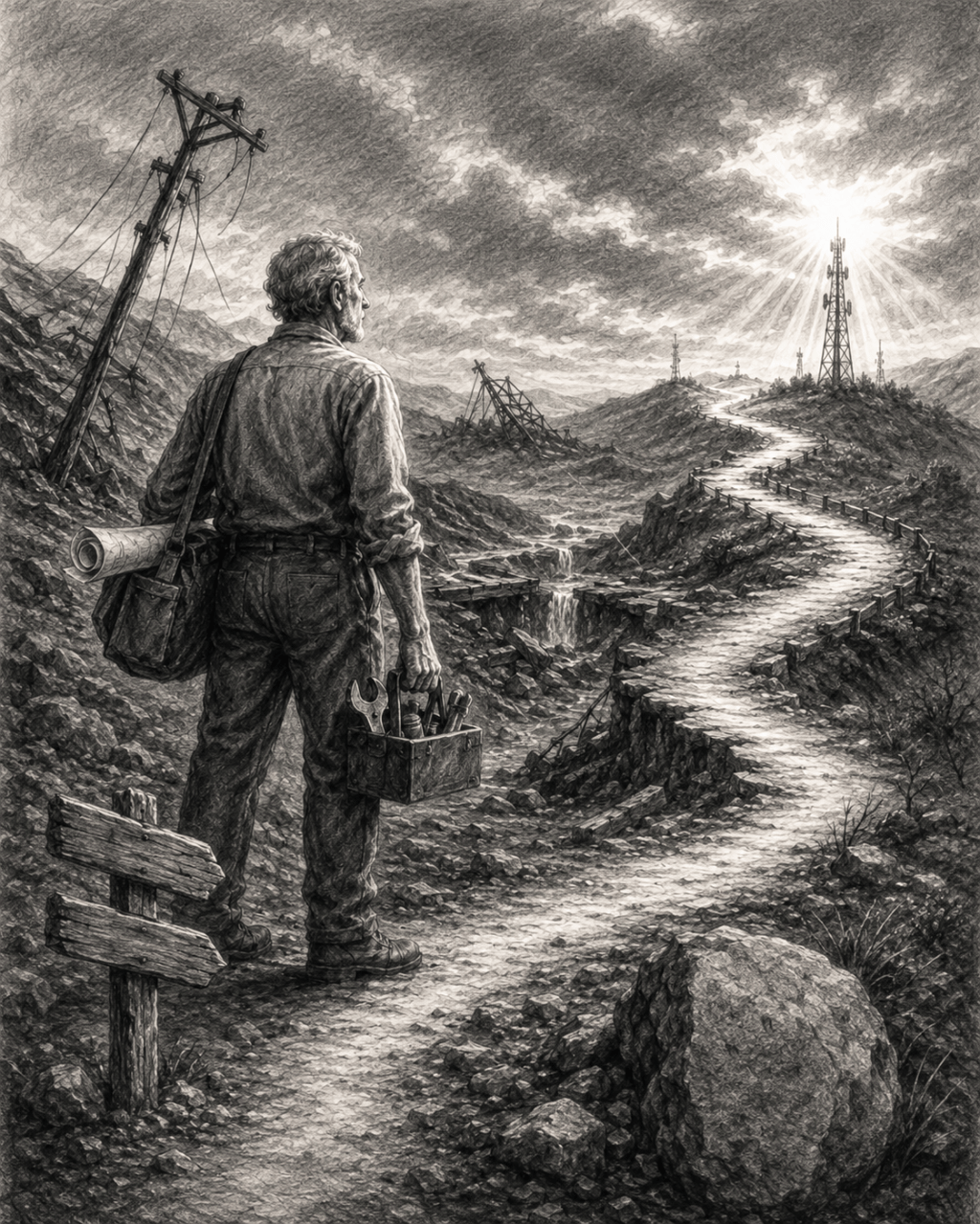
As an engineer, I spend much of my time working with systems, infrastructure, and technology. Fiber routes, wireless links, power systems, networks that must stay up even when conditions are less than ideal. This year reinforced something I already knew but needed to relearn: technology is never the purpose. It is a tool. It exists to serve people, not to replace presence, wisdom, or care. Infrastructure matters deeply, but only because of what it enables—connection, opportunity, safety, and dignity. When the work becomes only about equipment or metrics, something essential is lost.
There were many days this year when exhaustion and calling pulled in opposite directions. Fatigue does not always come from doing too much; sometimes it comes from caring deeply over a long period of time. There were moments when it would have been easier to step back, to delay decisions, to wait for someone else to take responsibility. But calling is persistent. It does not shout. It simply asks, again and again, whether you will show up today.
Patience has been one of the quiet lessons of this year. Progress in rural places is slow by nature, and that slowness can feel frustrating in a world accustomed to rapid change. Trust grows the same way. It is built through small, repeated acts of reliability. Showing up on time. Following through. Listening more than speaking. These habits rarely make headlines, but they form the foundation of healthy communities.
Faith has been less about answers and more about posture. There were seasons of waiting when clarity did not come quickly. In those moments, faith looked like staying present, doing the next right thing, and trusting that light does not always arrive all at once. Often it comes like morning—gradually, almost unnoticed at first, until suddenly you realize you can see farther than you could before.
Grief has been part of the landscape this year as well. Loss changes how time feels. It reshapes priorities. It has a way of stripping away what is unnecessary and leaving what truly matters. In that sense, grief has also clarified calling. It has reminded me that people are not projects, and that leadership is ultimately an act of care.
As 2026 approaches, there is plenty that could invite fear: uncertainty, resource constraints, the complexity of rural challenges. But fear is not a useful guide. Hope, grounded in faith, is steadier. It does not deny difficulty; it simply refuses to let difficulty have the final word. Looking forward, the goal is not perfection or speed, but faithfulness—continuing to build, serve, and lead with integrity, even when the work remains unfinished.
So the choice at the end of this year is a simple one. To keep walking forward. To trust that God is at work in the quiet, steady moments more than in the loud ones. To believe that showing up, again and again, is itself an act of faith. And to rest in the confidence that light, even when it comes slowly, is still light.
Today we light the third candle of Advent—the Shepherds’ Candle—the candle of Joy.
Its color is different for a reason. Joy is not merely another virtue in the Advent lineup; it is the evidence that the world is already being changed by God’s promise.
Joy appears before circumstances improve. Joy arrives while the night is still dark. It is the shepherd’s fire on a hillside, burning long before the sunrise.
The Revised Common Lectionary gives us a vivid tapestry this morning—texts that speak to people living under pressure, uncertainty, and discouragement. In each passage, joy does not arise from ease but from the assurance of God’s nearness.
I. “Sing Aloud… Rejoice with All Your Heart”
Zephaniah 3:14–20
Zephaniah speaks to a people who have been shaken, scattered, and exhausted by judgment and loss. Their world has been unstable. Their future has been uncertain.
Yet the prophet commands what their emotions do not feel ready to offer: Sing. Rejoice. Lift up your heart.
This is not denial; it is revelation.
Zephaniah tells them why they can rejoice:
“The Lord, your God, is in your midst… He will rejoice over you with gladness… He will renew you in His love.”
The joy of God’s people begins with the joy of God Himself.
Before the shepherds rejoiced, Heaven rejoiced over them. Before Bethlehem sang, God was already singing.
There are moments in all our lives when joy feels beyond reach—when responsibilities tower, when exhaustion settles in, when losses pull on the heart. Yet Scripture invites us to trust that God’s joy reaches us long before we can reach it ourselves.
II. “Surely God Is My Salvation”
Isaiah 12:2–6
Isaiah’s song is the testimony of someone who has come through deep waters and discovered that God did not abandon them.
“God is my strength and my song… With joy you will draw water from the wells of salvation.”
Joy is not a shallow emotion.
Joy is the water you draw when everything else has run dry.
Joy is the evidence that God has not merely saved you from something but saved you for something—to live, to hope, to become a witness of His faithfulness.
The shepherds understood this. Their lives were ordinary, hidden, uncelebrated. Yet when the angels declared “good news of great joy,” their hearts recognized it instantly. This was the water their souls had longed for.
III. “Rejoice in the Lord Always”
Philippians 4:4–7
Paul writes these words from a place of confinement. There is no comfort in his setting. Yet he instructs the church to live with a joy that cannot be cancelled by circumstance.
“Rejoice in the Lord always… The Lord is near.”
Joy is not a reaction. Joy is a posture.
Joy anchors us when anxiety rises. Joy guards the heart when pressures mount. Joy flows from the confidence that Christ is not far away—He is near, attentive, present.
And Paul says this nearness produces something profound:
“The peace of God, which surpasses all understanding, will guard your hearts and your minds in Christ Jesus.”
The shepherds would soon stand in that peace, beholding a newborn King in a manger. What Paul proclaims in a prison is exactly what the angels announced in the fields: God has come near.
IV. John the Baptist and the Joy of Expectation
Luke 3:7–18
Luke’s Gospel offers a surprising text for a Sunday dedicated to joy. John the Baptist’s message is blunt, confrontational, and demanding. He calls people to repentance, integrity, and transformation.
And yet the passage ends with this assertion:
“So, with many other exhortations, he proclaimed the good news to the people.”
Good news and repentance are not competing ideas.
True joy is impossible without transformation. Joy is what emerges when God clears the debris, breaks the chains, and calls us into honest, renewed living.
John’s message prepared the people to receive the Christ-child with hearts ready, uncluttered, and awakened. The angels announced joy; John cleared the way for that joy to take root.
The shepherds illustrate what this looks like: when God interrupts your ordinary life with His glory, you move. You go. You see. You bear witness. And you return “glorifying and praising God” because joy has become personal.
V. The Shepherds’ Candle for Us Today
Advent joy is not naïve. It is not blind to hardship, pressure, or grief. It is not manufactured by effort.
It is the recognition that:
God is in our midst.
God rejoices over us.
God renews us in His love.
God draws near when the world is dark.
God speaks truth that sets us free.
God opens wells of salvation where we thought only dryness existed.
Joy is the shepherd’s discovery—that the long-promised Messiah has come not to the palace but to the quiet fields where ordinary people stand watch at night.
Joy is not found by escaping our responsibilities; it is found when Christ steps into them.
Joy is not the absence of strain; it is the presence of a Savior.
Joy is the announcement that Heaven came looking for us.
VI. Joy in the Midst of Family Life
Let me speak directly to what many of us face this Advent season.
For the parent working long hours: You clock in before dawn at the plant or the refinery. You drive the highways to Beaumont or Port Arthur. You come home tired, and the house still needs tending, the kids still need help with homework, and Christmas is coming whether you’re ready or not.
Joy is not waiting for you at the end of a less demanding season. Joy meets you in the truck on the way home. Joy sits with you at the kitchen table. The Lord is near—even there.
For the mom holding everything together: You’re managing schedules, stretching the budget, keeping peace between siblings, and wondering if you’re doing enough. December multiplies the pressure—school programs, family gatherings, gifts to buy when money is already tight.
Hear what Zephaniah says: God rejoices over you. Before you get it all figured out. Before the laundry is done. Before you feel like you’ve measured up. He is already singing over you.
For the grandparent raising grandchildren: You thought these years would look different. Instead, you’re back in the thick of it—school lunches, discipline, bedtimes—when your body is tired and your heart carries grief over what led to this.
Joy does not ignore your weariness. But joy reminds you: God sees your faithfulness. He has not forgotten you. The same God who sent angels to shepherds working the night shift sends His presence to you.
For the family walking through grief: This Christmas, there’s an empty chair. The holidays remind you of who’s missing—a spouse, a parent, a child. Joy feels like a word for other people.
But Advent joy is not cheerfulness. It is the deep-water confidence that God draws near to the brokenhearted. Isaiah’s wells of salvation are for those who have walked through the valley. You are not forgotten. You are held.
For the young family just getting started: Maybe you’re newly married, or you’ve got little ones underfoot, and you’re trying to build something on one income or two jobs. You look around at what others have and wonder when your turn comes.
The shepherds had nothing but their flocks and their fields. And God came to them first. Joy is not reserved for those who have arrived. Joy is given to those who are willing to receive.
For the one battling anxiety or depression: Some of us carry burdens that don’t show on the outside. The holidays can make it worse—expectations, gatherings, the gap between how things look and how things feel.
Paul wrote “Rejoice in the Lord always” from a prison cell. He was not pretending everything was fine. He was anchoring himself in a truth deeper than his circumstances. You can bring your real struggle to a real Savior. He does not require you to clean up first.
VII. A Word for This Community
We live in a place where people know how to work hard and look after their own. We’ve weathered storms—the kind that come off the Gulf and the kind that come through family crisis. We’ve rebuilt after floods. We’ve buried people we loved too soon. We’ve held together when times got lean.
And Advent says to us: Even here, Joy approaches.
Not because everything is resolved. Not because life has become easy. But because the Lord is near.
When the shepherds ran to Bethlehem that night, they were not running toward relief. They were running toward revelation—a God who chooses the humble places, who draws close to the weary, who brings joy to those who least expect it.
That same God stands near you today.
And because He is near, joy is possible.
VIII. A Call to Respond
What does it look like to receive this joy?
First, believe it is for you. Not for people with easier lives. Not for people more spiritual than you feel. For you—in your tiredness, your doubts, your ordinary days.
Second, make room for it. This week, take even five minutes away from the noise. Sit with the Lord. Let Him remind you that He is near. You cannot hurry joy, but you can clear space for it.
Third, share it. The shepherds did not keep what they found to themselves. They told everyone. Joy multiplies when it moves through families, through neighbors, through a church that refuses to let anyone walk alone.
This Advent, let the Shepherds’ Candle burn in your home—not as decoration, but as declaration: The Lord is near. And because He is near, we have joy.
Closing Prayer
Lord, we thank You for the joy that does not depend on circumstance but on Your presence.
Renew us in Your love.
Clear our hearts by Your truth.
Let the wells of salvation open again within us.
Meet the tired parent on the drive home.
Comfort the grieving at the empty chair.
Strengthen the grandparent giving more than they thought they had left.
Anchor the anxious heart in Your peace.
And may we, like the shepherds, become witnesses of the joy that has entered the world—
For Joshua Blake Hargrove from John Hagrove his dad June 2025 1984–2002
My son,
If I could sit across from you today—twenty-three years after you left this world—I would begin with the words that still rise unbidden in my heart: I miss you. Every day. Not with the same sharp ache as before, but with a quiet, steady presence that stays with me like breath. You are never far from my thoughts, never absent from my soul.
I would tell you honestly: a piece of me went quiet the day you died—and another part went angry. I wasn’t just broken. I was furious. Angry at the unfairness, the helplessness, the fact that the world kept spinning without you in it. I didn’t know how to carry the weight of that kind of grief, so I buried it. I buried the part of me that laughed freely, dreamed boldly, and felt things too deeply.
And in its place, I went to work. I built things. I solved problems. I became dependable and productive. But underneath it all, I was still just a father who had lost his son. The music stopped. The prayers faded. I kept going because I didn’t know how to stop—but I also didn’t know how to live fully anymore.
If I could tell you anything now, it would be this: Your death didn’t end me—but it did remake me. And over time, with grace and patience, something inside me began to stir again.
I would tell you that God didn’t abandon me. He held me through it all, though I didn’t always recognize His presence. And in the years that followed, a few key people—some family, some unexpected friends—entered my life and helped awaken parts of me I thought were gone forever. None of them replaced you. They couldn’t. But somehow, through their kindness, gentleness, and love, I began to feel again. I began to believe that I could be fully alive, even while still carrying your absence. I hold those relationships with reverence. They brought back to life the part of me that knows how to love without fear.
I would tell you about your mama. She’s still the strongest woman I’ve ever known. Her grief was quiet, but it ran deep. We’ve grown older together, and we still speak your name. Sometimes in words, sometimes in silence. You are still part of our home, our hearts, our story.
I’d tell you about the little ones in our family—your cousins’ children, great-nieces and nephews you never got to meet. I watch them play, laugh, stumble and grow, and I see glimpses of you. Their lives are full of light, and I imagine the kind of uncle you would have been—funny, kind, full of mischief and wisdom. Your absence in those moments is a presence all its own.
I’d tell you that I’ve come to believe in resurrection—not just of bodies, but of broken hearts, of joy, of purpose. I’ve come to believe that the deepest love isn’t erased by death. It changes form, but it remains. And I carry you as part of that resurrection. You are part of what brought me back to life.
Most of all, I would tell you that you are still my son. Nothing—not time, not distance, not death—can ever take that from us. You made me a father. You taught me the kind of love that doesn’t fade. And though I never got to watch you grow old, you’ve shaped the man I’ve become more than anyone else ever could.
If I could hold your face in my hands one more time, I would say what I still say in the silence of prayer:
You are my boy. I love you. And I will carry you until the day I see you again.
With all I am, Dad
And I would tell you—humbly—that someone came into my life many years later who helped awaken something that had gone dormant inside me. That I could still feel. Maybe I was allowed to be fully alive again. I hold that chapter of my life with reverence. As strange and sacred as it was, it brought something back to me I thought was lost forever: the part of me that knows how to love without fear.
With Reflections from Various Theologies, Early Church Fathers, and Zola Levitt Studies
Names & Meaning Adam means “earth” or “ground,” referencing his formation from the dust. Eve means “life” or “living,” reflecting her role as “the mother of all who live” (Genesis 3:20).
Scriptural Origin Genesis 1–5 tells the story of Adam and Eve: the first humans, created in God’s image (Genesis 1:27), given the sacred task of stewardship over creation (Genesis 2:15), and placed in the Garden of Eden to live in communion with God and one another.
God formed Adam from dust and breathed into him the breath of life (Genesis 2:7). Eve was created from Adam’s side (Genesis 2:22), indicating not inferiority, but equality and partnership. Their union represented the first human covenant and family.
The Fall and the First Gospel Tempted by the serpent, Eve ate from the tree of the knowledge of good and evil and gave the fruit to Adam, who ate knowingly (Genesis 3:6). Their eyes were opened, shame entered the world, and they hid from God. Yet, even in judgment, God sought them out (Genesis 3:9) and promised redemption through the “seed of the woman” (Genesis 3:15)—the first gospel.
Christian Perspectives John Wesley, in Sermon 44: Original Sin, wrote that Adam’s disobedience “infected the very root of our nature,” but that God’s grace “goes before” to awaken us. He insisted on shared guilt and shared grace. Adam was passive; Eve was deceived. Both sinned and both were recipients of prevenient grace.
For Wesley, the story of Adam and Eve is not about assigning blame, but about recognizing the universal condition of sin and the universal availability of redemption. Their expulsion from Eden was not the end—it marked the beginning of God’s saving work.
Early Church Fathers
Irenaeus of Lyons (2nd century)
Irenaeus taught that Adam’s sin introduced corruption into humanity, not merely by imitation but by a real distortion of human nature. He emphasized that humanity fell “in Adam” because Adam was the head of the human race. Simultaneously, Irenaeus introduced the earliest full articulation of prevenient grace through the theme of “recapitulation”: God moves first to heal what Adam broke, and Christ retraces Adam’s steps to restore human freedom. Eve is portrayed as genuinely deceived; Adam knowingly chose disobedience.
Tertullian (late 2nd–early 3rd century)
Tertullian argued that Adam transmitted guilt and corruption biologically (“seminal identity”). He stressed the seriousness of the Fall and saw all humans as implicated in Adam’s act. He also affirmed that divine grace initiates repentance—though not systematically developed.
Origen (3rd century)
Origen taught that humanity inherited a condition of moral weakness because of Adam, even if he avoided later Western language of “imputed guilt.” He explicitly states that God’s grace must “precede and assist” the soul’s turning to God. Eve’s deception and Adam’s disobedience are both treated as components of the Fall, but Adam carries the headship responsibility.
Athanasius (4th century)
In On the Incarnation, Athanasius depicts Adam’s sin as plunging humanity into corruption and death. He presents grace as wholly prior—God must act first to restore the human will, because the human will has lost its capacity to return to God unaided.
Augustine of Hippo (late 4th–early 5th century)
Augustine is the most decisive early voice on inherited guilt and divine initiative:
Adam’s sin caused a real corruption of human nature inherited by all.
Humans are morally unable to initiate faith or love of God.
Grace must come first—gratia praeveniens—to awaken the will. Augustine also distinguished between Eve’s deception and Adam’s knowing rebellion (1 Tim. 2:14), but he held both fully responsible.
John Cassian (5th century)
Cassian moderated Augustine slightly: humanity is wounded by Adam, unable to save itself, but still retains some capacity to cooperate when grace first stirs the soul. He preserved the idea that grace initiates, but emphasized synergy.
Medieval Christian Writers
Anselm of Canterbury (11th century)
In Cur Deus Homo, Anselm presents original sin as the loss of original righteousness and the inheritance of guilt. Anselm is firmly Augustinian: the will cannot return to God without God beginning the work.
Thomas Aquinas (13th century)
Aquinas taught that Adam’s sin deprived humanity of supernatural grace and disordered human nature. Original sin is both guilt and the “privation of original justice.” He emphasizes that actual grace precedes every movement of the will—a clear affirmation of prevenient grace. He distinguishes the modes of Adam and Eve’s sin: Eve fell by deception; Adam by consent; both equally contributed to humanity’s corruption.
Bonaventure (13th century)
Bonaventure strongly emphasized that grace is always prior to human action and that no one can reach God unless God first inclines the heart.
Reformation-Era Voices (16th century)
Martin Luther
Luther held that original sin corrupts the entire human nature and that no part of the will remained untainted. He described fallen humanity as spiritually “dead.” Grace—specifically the work of the Holy Spirit—must awaken faith; it always precedes. He kept the distinction of Eve’s deception and Adam’s headship responsibility.
John Calvin
Calvin articulated that Adam’s disobedience “contaminated” human nature. Original sin is both guilt and corruption. The will is so bound that it cannot even desire God unless God first acts—praeveniens gratia is implicit in his doctrine of regeneration. Both Adam and Eve sinned, but Adam’s role as covenant head made his act determinative.
Seventeenth and Eighteenth-Century Writers (Wesley’s Context)
Jacobus Arminius (1560–1609)
Arminius, whom Wesley later followed, taught that original sin leaves humanity totally unable to turn to God without grace. But he insisted on a universal, enabling grace restorative to free will—“prevenient grace”—given through the Spirit on the basis of Christ’s atonement. Adam and Eve jointly sinned; Adam, as representative head, transmitted the fallen condition.
The Arminian Remonstrants (17th century)
They reinforced:
corrupted human nature inherited from Adam;
salvation’s first movement from God;
universal enabling grace restoring the ability to believe.
Richard Baxter (1615–1691)
Baxter accepted inherited corruption and affirmed that God must first stir the will. He drew heavily from Augustine but maintained human response as genuinely free, once grace awakens it.
Jeremy Taylor (1613–1667)
Taylor taught that humanity inherits the consequences of Adam’s sin (mortality and corruption), and that divine grace precedes repentance. He leaned toward the Eastern emphasis: human nature is wounded, not annihilated.
Jonathan Edwards (1703–1758)
A contemporary of Wesley with a sharply different view. Edwards asserted:
Adam’s sin causes a “moral inability” for humans to choose good.
Depravity is total and affects affections, not just intellect.
Only sovereign, effectual grace can awaken the soul. He did not affirm universal prevenient grace; he affirmed monergistic regeneration.
John Fletcher (1729–1785)
Wesley’s closest theological ally. Fletcher defended prevenient grace as universally extended to all humanity and described it as the restorative presence of the Spirit enabling repentance, faith, and obedience. He affirmed inherited corruption but rejected imputed guilt in the strict Calvinist sense.
Across the Centuries
Wesley’s position in Sermon 44 stands in a long Christian tradition with several consistent themes:
Humanity inherits a real corruption from Adam. From Irenaeus to Aquinas to Arminius, this is nearly universal.
Adam and Eve share responsibility, though in different modes. The distinction (Eve deceived, Adam knowingly choosing) is common, but shared sin and shared consequences remain.
Grace always initiates. Augustine, Aquinas, Cassian, Luther, Calvin, Arminius, and Wesley all affirm that God must move first—though they differ on whether this grace is universal (Arminius, Wesley) or selective (Calvin, Edwards).
Wesley fits into the synergistic, grace-first tradition rooted in the East, moderated Augustine, and developed through Arminian theology. His emphasis on universal prevenient grace is deeply indebted to both the early fathers (Irenaeus, Cassian) and Reformation-era Arminians.
Terms
Life After Eden Outside the garden, Adam and Eve lived long lives. They worked the land, bore children, and experienced grief, especially after Cain murdered Abel. Yet in the birth of Seth (Genesis 4:25), hope continued. Through Seth’s line came Noah, Abraham, and eventually Christ (Luke 3:38).
The apocryphal Life of Adam and Eve imagines their post-Eden life as one of repentance, fasting, and longing for restoration—resonant with early Christian and Wesleyan themes of grace-empowered transformation.
Zola Levitt Connections In A Christian Love Story, Zola Levitt draws on Jewish wedding imagery to show how God’s covenant with humanity began in Eden and will culminate in the marriage supper of the Lamb. Adam and Eve’s creation and separation mirror the model of bride and groom—God forming a people for Himself.
In The Seven Feasts of Israel, the Eden narrative foreshadows the structure of God’s redemptive calendar. The Passover feast points to the need for blood to cover sin—a concept introduced when God clothed Adam and Eve with garments of skin (Genesis 3:21).
Theological Legacy Adam and Eve are not merely figures of failure. They are the beginning of both the problem and the promise. Their lives teach us:
That sin breaks relationships—with God, others, and creation.
That shame does not stop God from pursuing us.
That redemption is planned, promised, and possible from the very beginning.
Application for Today Here and beyond, their story reminds us that every broken moment is also an invitation to return to God. The church becomes a new garden—where grace grows, forgiveness is cultivated, and the promise of full restoration blooms.
Glossary of Terms – Adam and Eve Study
Biblical and Theological Terms
Image of God (Imago Dei) The unique identity given to humans reflects God’s nature—reason, moral agency, relational capacity (Genesis 1:27).
Protoevangelium Latin term meaning “first gospel,” referring to Genesis 3:15—the promise that the seed of the woman would crush the serpent.
Terms from Church History and Wesleyan Thought
Second Adam A title for Christ, used in 1 Corinthians 15:45, to describe His role in reversing the sin of the first Adam.
Greek:eschatos Adam (ἔσχατος Ἀδάμ) – “last Adam”
Typology A theological method where Old Testament persons or events (types) foreshadow New Testament fulfillment (antitypes). Eve–Mary and Adam–Christ are classic examples.
Sanctification The process by which a believer is made holy. In Wesleyan thought, this includes entire sanctification, a heart perfected in love.
Exile The condition of being separated from one’s rightful place. Adam and Eve’s removal from Eden foreshadows Israel’s exile and humanity’s spiritual separation from God.
Here lies John E. Hargrove January 24, 1958 – [date yet to be written]
A boy from Buna who never stopped wondering how things worked and never stopped trying to make them work for others.
He chased signals across microwave towers and fiber miles, built networks that carried light to forgotten places, and in the darkest valleys carried the light of Christ to broken hearts.
Husband to Leisa for a lifetime and beyond, father to Joshua—whose brief life taught him how to love forever, son of Robert and Lavee, brother, friend, mentor, builder.
He knew grief intimately, yet chose every morning to show up, to do the quiet work that lasts when applause has long faded.
He was not perfect. He was faithful.
Still learning. Still building. Still becoming. Now, at last, fully known and fully home.
Some days I’m reminded to go back to the starting point. “In the beginning was the Word…” That truth centers me. It reminds me that everything we’re doing—family, work, community—rests on something solid and steady.
The scriptures in the RCL today lean into that same hope.
Daniel talks about God standing with His people even in hard seasons. Psalm 16 says our security isn’t in what we build, but in the One who holds us. Hebrews encourages us to keep lifting each other up. And in Mark, Jesus tells us not to get lost in the noise or fear when the world feels shaky.
Then He brings it all home: “I came that they may have life, and have it more abundantly.”
That’s the thread that runs through it all. A reminder that real life—steady, grounded, meaningful—comes from the One who speaks light into dark places and hope into tired hearts.
So if you’re carrying a lot today, take a breath. The One who was there in the beginning is still speaking life now. We can walk forward with that.
The light of Christ does not arrive after the night ends—it enters while it is still dark. God’s promise is not that suffering will disappear before He comes, but that His presence is stronger than any darkness you’re walking through.
“The people walking in darkness have seen a great light; on those living in the land of deep darkness a light has dawned.”
For centuries, Israel walked in shadows. They were exiled, oppressed, silenced—waiting for God to return. They didn’t know when or how. But the prophets kept whispering: Light is coming. Not someday when everything is fixed. Not after you’ve earned it. The light comes into the darkness, meeting you exactly where you are.
Isaiah 40:1-11
“Comfort, comfort my people, says your God… The voice of one calling: ‘In the wilderness prepare the way for the LORD; make straight in the desert a highway for our God.'”
God doesn’t wait for the path to be perfect before He comes. He comes into the wilderness—the place of broken things, lost things, wandering things. And His coming transforms the terrain itself. The desert becomes a highway. The crooked places are made straight. You don’t have to clean yourself up first.
Malachi 3:1
“I will send my messenger, who will prepare the way before me. Then suddenly the Lord you are seeking will come to his temple.”
After 400 years of silence, God promises to speak again. The people had given up hope. They thought God had abandoned them. But He was preparing His coming all along. In your silence, in your waiting, in your despair—God is preparing His coming too.
Luke 1:26-38
Mary’s encounter with Gabriel. An ordinary girl in an ordinary place receives an extraordinary promise. “The Lord is with you,” the angel says. Not because Mary deserves it. Not because she’s perfect or ready. But because God chooses her. And she chooses to trust.
Luke 2:25-32
Simeon has waited his whole life for God’s promise. “Lord, now let your servant depart in peace, for my eyes have seen your salvation.” He recognized Jesus immediately—not because he was looking for a king, but because he knew what hope looked like after a lifetime of waiting.
John 8:12
“I am the light of the world. Whoever follows me will never walk in darkness, but will have the light of life.”
Jesus doesn’t say the darkness goes away when you follow Him. He says you won’t walk in it alone. The light walks with you, through you, ahead of you.
What This Means for You
Your darkness is not disqualifying. God’s light doesn’t wait for you to get better, sober, stronger, or more worthy. It comes for you in the mess, in the relapse, in the confusion. That’s when it matters most.
Waiting doesn’t mean abandonment. Israel waited 400 years. You may have waited years for healing. That silence wasn’t absence—it was God preparing His coming. Your waiting is not wasted.
Hope is not naive. Israel knew their pain. They lived it every day. But they also knew God’s promises. Healing doesn’t deny the darkness; it walks through it with company. Your hope can hold both the pain and the promise.
You are seen and called by name. Like Mary. Like Simeon. Like the people Isaiah spoke to. You are not invisible to God. He knows your wilderness and your waiting. He comes for you personally.
The light exposes to heal, not to shame. When Christ’s light comes into darkness, it reveals what was hidden—not to condemn you, but to heal you. In recovery, you learn to name your pain, your choices, your truth. That exposure is the beginning of freedom, not judgment.
You can trust the light. After years of living in darkness—whether addiction, abuse, silence, or shame—trusting light feels dangerous. But Jesus says: follow me. You won’t walk alone. The light is stronger than any relapse, any failure, any day you think you can’t make it.
Discussion Questions
What kinds of darkness have you walked through? What did that darkness feel like?
Israel waited 400 years for God to speak. When have you waited for hope? What sustained you?
When light breaks through after long darkness, what does that feel like? Does it ever feel scary?
In your recovery or healing, where have you experienced God “entering the darkness” rather than waiting for things to be perfect first?
What does it mean that the light comes while you’re still walking in darkness, not after the darkness ends?
How does it change things to know that Christ’s light exposes wounds to heal them, not to shame you?
Who in your life has been “light” to you when you were in a dark place?
This Week’s Practice
Read Isaiah 9:1 each morning. Let it be your mirror. You are the people walking in darkness. The light has come for you.
Journal one word each day: “One way I see light breaking through today…” Notice small things—a moment of peace, a connection with someone, a choice you made toward healing, grace you received.
Sit in one dark room this week. Literally. Sit in darkness for 5-10 minutes. Notice how even a small light—a candle, a phone screen—changes everything. Let that be your prayer: Jesus, be that light for me.
Memorize: “The people walking in darkness have seen a great light; on those living in the land of deep darkness a light has dawned.” (Isaiah 9:2)
Call or text one person this week who has been light to you in your darkness. Thank them. Tell them what their presence meant.
Daily Reflections
DAY 1 – DARKNESS AND LONGING
Read Isaiah 9:1-7
Imagine Israel waiting. Centuries of waiting. Foreign rulers, broken temples, silence from heaven. But in that darkness, they held onto a promise: the light is coming.
Where in your life do you feel like you’re waiting? In your recovery? In your relationships? In your faith?
Ask God: “Help me wait without losing hope. Show me signs that You’re coming, even now.”
DAY 2 – GOD IN THE WILDERNESS
Read Isaiah 40:1-11
God doesn’t meet us at the finish line. He meets us in the wilderness—where we’re lost, broken, confused.
What does your wilderness look like right now? Where do you feel most lost?
Sit with this: God is preparing a highway through your desert. Not to skip the hard parts, but to make a way through them. You’re not alone in there.
DAY 3 – AFTER THE SILENCE
Read Malachi 3:1
Four hundred years. That’s how long Israel waited after God stopped speaking. Four hundred years of silence. And then: “I will send my messenger.”
Have you experienced silence from God? A time when you didn’t hear His voice, didn’t feel His presence?
Healing often begins in silence. Sometimes God is quiet not because He’s absent, but because He’s coming. Write: “One way I’ve experienced God’s silence was…”
DAY 4 – CALLED BY NAME
Read Luke 1:26-38
Mary was nobody important. Just a young girl in a small town. But when the angel came, he didn’t say, “You’ve earned this.” He said, “The Lord is with you.”
God doesn’t call the qualified. He qualifies the called. He comes to ordinary people in ordinary places and says: You. I choose you.
Ask yourself: What would change if I truly believed God chose me—not because I’m perfect, but because I’m His?
DAY 5 – RECOGNIZING THE LIGHT
Read Luke 2:25-32
Simeon waited his whole life. He was old. He had waited so long he might have stopped looking. But when Jesus came, he knew. Something in him recognized what he’d been waiting for.
In your recovery, have you had moments where you suddenly recognized healing? Where hope showed up when you least expected it?
Write: “I recognized God’s light when…”
DAY 6 – WALKING IN LIGHT
Read John 8:12
“Whoever follows me will never walk in darkness, but will have the light of life.”
Not: the darkness goes away. Not: you’ll never struggle again.
But: you will not walk alone. The light walks with you.
In what area of your recovery do you most need to remember: I’m not walking this alone?
DAY 7 – REST IN THE PROMISE
Read all passages from this week, slowly.
This week, you’ve sat with Israel’s waiting, with God’s silence, with His sudden breaking-through. You’ve remembered that light doesn’t wait for perfection. It comes into the mess.
Today, simply rest. Let yourself feel seen by God. Let yourself trust that the light you’ve seen—in yourself, in your recovery, in God’s grace—is real and strong.
Write: “The light I’m holding onto this week is…”
A Word for You
You are not too dark for God’s light. You are not too far gone, too broken, too much of a mess. The light of Christ enters darkness—it doesn’t wait for the darkness to leave first. In your recovery, in your healing, you are learning to walk in that light. Some days it feels bright. Some days it’s just a flicker. But it’s there. And it’s stronger than you know.
Next Week: The Gift of Presence (Luke 2, Matthew 2; Incarnation and Emmanuel)
Isaiah 6:1 — “In the year that King Uzziah died, I saw also the Lord.”
There are moments in our spiritual lives when God allows the “heroes” — the people or things we’ve leaned on — to fall away. It may be a mentor, a parent, a pastor, a dream, or even a sense of security that once held our world together. When that pillar collapses, we are faced with a question: will we crumble with it, or will we look up and see the Lord?
Isaiah’s vision came in a year of loss. King Uzziah had been a symbol of stability and strength for Judah, yet when he died, the prophet’s eyes were opened to a greater throne — one that never shakes, one that reigns forever. The passing of what we depended on often becomes the doorway to a deeper revelation of who God is.
Our walk with God is often marked by this rhythm: the passing of the hero, the unveiling of the Holy. God removes our props so we can finally stand before Him alone. When He strips away what substitutes for His presence, He isn’t being cruel — He’s being kind. He’s preparing us to see Him clearly.
Our ability to see God depends on the condition of our character. Until we are purified — until our self-reliance, pride, and prejudice are burned away — our eyes remain dim. New birth opens spiritual sight; suffering sharpens it. The external events that break us and the internal work that cleanses us are both part of God’s surgery to reveal Himself.
So the question echoes: when loss comes, what do I see?
Do I see emptiness and despair, or do I see the Lord high and lifted up?
Faith matures when God becomes our first, our second, and our third — when every other voice fades and only His remains. “In all the world there is none but Thee, my God, there is none but Thee.”
Keep paying the price of vision. Stay faithful when the familiar falls. Let God see that you are willing to live up to what He has shown you — even when it costs. For in every “year that Uzziah dies,” there waits a throne still occupied, and a King still holy.
Reflection Prayer
Lord, when You remove what I’ve relied on, help me not to faint but to look up. Purify my heart until I can see You clearly. Teach me to find You not after the loss is healed, but in the very moment of it. May my cry be not “I gave up,” but “I saw the Lord.” Amen