There are moments in life when movies, memories, and years of lived experience weave themselves into a single thread. Looking back from sixty-seven, I can see how the stories that once entertained me now speak with deeper meaning. They shine a quiet light on what I have carried, what I have learned, and who I have become.
Two films from late 2001 come to mind—stories set in the shadows of espionage and conflict, filled with characters wrestling with impossible choices. On the surface, they were thrillers. Beneath the surface, they were studies in darkness, loyalty, and the long, hard road toward redemption. Only now do I see why they left such a mark.
Both narratives followed men who lived in the shadows—first as soldiers, then as operatives shaped by ambiguity. Each learned to navigate life with precision, endurance, and a sense of duty that often required more than most people ever see. They carried weight—emotional, moral, and sometimes spiritual. They worked under pressure, made decisions that others would never know about, and shouldered consequences that rarely made headlines.
Yet in the end, their defining moments weren’t the missions they completed or the dangers they survived. Their defining moments were the ones where they chose love over protocol, compassion over convenience, and human life over institutional safety. In those choices, we see how men shaped by darkness still gravitated toward the light.
At sixty-seven, I understand that more deeply than I once did.
Life has a way of testing every belief we have about ourselves. There are seasons when the weight feels unbearable—years of responsibility, the losses that accumulate, the roles we never asked for but stepped into anyway. There are moments when duty seems to conflict with compassion, when institutions fail the people in them, and when the world asks us to harden our hearts just to stay afloat.
But there is another story running underneath all of that. A quieter one.
The older I get, the more convinced I am that light has a way of finding its way into even the darkest corners. Faith becomes less about having every answer and more about trusting that God meets us in the places where our strength wears thin. Love becomes less of a feeling and more of a choice—a decision to stand with people, protect them, guide them, or rescue them when the world turns away.
Redemption, too, looks different with time. It is not a sudden, dramatic reversal. It is slow, steady restoration. It is the grace that holds you together when you have carried too much for too long. It is the courage to step toward the light even after walking through shadows.
When I look back, I see how many moments were shaped by these themes. Times of crisis where clarity finally emerged. Seasons of confusion that eventually revealed deeper purpose. Relationships tested but made stronger by truth. Leadership forged in hard places. And always, the gentle hand of God pulling me back toward the light when the world felt heavy.
Those old movie stories were fiction, but the truths inside them are not. We all stand at the crossroads between darkness and light more often than we admit. We all feel the strain of choices that have no easy answers. And all of us, if we are honest, long for redemption—something that tells us our struggles were not wasted and our sacrifices were not in vain.
At sixty-seven, this is the lesson that rings truest: the weight we carry does not define us. What defines us is the love we choose, the faith we hold, the light we walk toward, and the redemption that meets us along the way.
There are songs that entertain us, songs that comfort us, and songs that manage to speak directly into places we rarely acknowledge. Dear Heart by Sanctus Real falls into that last category. It is written not as an anthem or a plea, but as a conversation—a gentle, honest dialogue with the most vulnerable part of our inner life.
Scripture tells us, “Above all else, guard your heart, for everything you do flows from it” (Proverbs 4:23). The writers of Dear Heart seem to understand that truth deeply. They expose the ways our hearts wander, tighten, tremble, and carry burdens they were never designed to hold. They remind us that the heart is easily shaped by fear, disappointment, and old survival instincts. Many of us know that feeling well. We wake up tense. We brace for the next hardship. We fall into worry or self-protection before we even know it. Our hearts drift before we notice they’ve moved.
Yet the beauty of the Christian life is this: God never abandons a wandering heart. He speaks to it, guides it, heals it, and even reshapes it. Ezekiel records God’s promise to give His people “a new heart and a new spirit.” Jesus reinforces this through His ministry of compassion, truth, and restoration. The heart is not a lost cause—it is the place He most wants to dwell.
The song’s turning point is powerful. Instead of letting emotions dictate reality, the singer gently redirects the heart: Come back. Remember who you belong to. You don’t have to carry this alone. That posture—speaking truth to our hearts—is something believers often forget to practice. We tend to let the heart lead. But Scripture teaches us to let God lead the heart.
There is wisdom in pausing long enough to ask ourselves honest questions:
Where have I been overwhelmed?
Where have I chosen fear instead of trust?
Where have I forgotten God’s presence?
When we speak truth to our hearts, we are joining the Holy Spirit in His work of renewal. We are choosing to replace panic with promise. We are letting Scripture rewrite the stories our emotions try to tell us.
Dear Heart ultimately calls us back to the quiet, steady voice of Jesus—the One who guards us, anchors us, and offers rest that can’t be shaken by circumstance. When the heart yields to Him, peace finds its home again.
A Closing Prayer
Father, You know every corner of my heart—its fears, its hopes, its secrets, and its needs. Teach my heart to follow You more than my emotions. Draw me back from the places where I’ve drifted. Tell me again who I am in You. Guard my heart, renew my spirit, and fill me with Your peace. In Jesus’ name, Amen.
Final Thought
Your heart does not have to lead the story.
Let Christ lead your heart, and peace will follow.
Over the past several weeks, I’ve noticed a pattern rising in my heart—a mix of heaviness and hope, grief and gratitude, pressure and purpose. The holiday season always magnifies what is present in the soul, and this year is no different. I find myself remembering the people who shaped me, the stories that anchor me, and the losses that still echo in quiet moments.
At the same time, my days are full of responsibilities—engineering projects, community work, pastoral care, business decisions, family needs. I feel the pull from every direction, not because any of it is unworthy, but because all of it matters. Leadership in any form carries an invisible weight. And sometimes that weight presses harder in November and December.
Yet beneath all of this, something steady keeps tugging me forward: hope.
Not the thin kind that ignores reality or paints over pain. But the kind that believes God is present even in the unanswered questions. The kind that remembers that Jesus steps into weary places, not polished ones. The kind that says, “You don’t have to carry this alone.”
As I look back at conversations, projects, and prayers from the last week, I see the same thread weaving through everything: healing. Healing for myself. Healing for others. Healing for the places in our community that feel stretched or wounded. Healing for the dreams that feel fragile but not extinguished.
And the truth is, hope and healing aren’t found by escaping life—they grow right in the middle of it.
Every memory that stings reminds me there was love. Every responsibility that feels heavy reminds me there is purpose. Every moment of fatigue reminds me I need grace beyond myself.
And grace keeps showing up.
So I’m choosing to keep walking—one step at a time, one day at a time—trusting that the God who has carried me this far will carry me further still. My prayer is simple:
“Lord, meet me here. Make something good out of the weight I’m carrying. Let Your light break through.”
Because even in the heaviness, hope is rising. #HopeInTheJourney #JesusHeals #GraceInRealLife
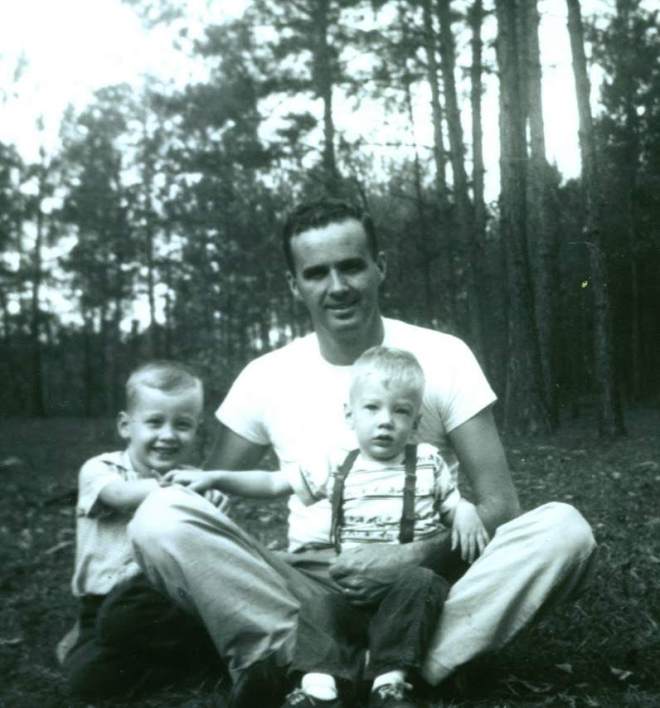
Celebrating the Life and Legacy of Robert Edwin Hargrove December 5 2025 Born December 5, 1927 — Buna, Texas Passed September 6, 2013 — Buna, Texas
Today we honor the birthday of Robert Edwin Hargrove, a man whose steady presence shaped his family, strengthened his community, and left an enduring mark on Buna and Jasper County. His life reflected the deep values of rural East Texas—work, faith, service, and integrity—lived not in speeches but in actions repeated faithfully over decades.
Born in Buna in 1927, Robert was raised during the Great Depression and the wartime years that demanded resilience from every family. Those early years shaped the patient, steady character he carried throughout his life.
During his youth and early adulthood, Robert contributed to the early development of Buna’s public services. He worked for Tom Barker during high school and for some time afterward, assisting in the operation of the town’s diesel generator system—the very system that provided electricity to Buna before JNEC extended power lines into the region. In those years, the town relied on local operators to keep the generators running, manage outages, and ensure that families and businesses had dependable light and power.
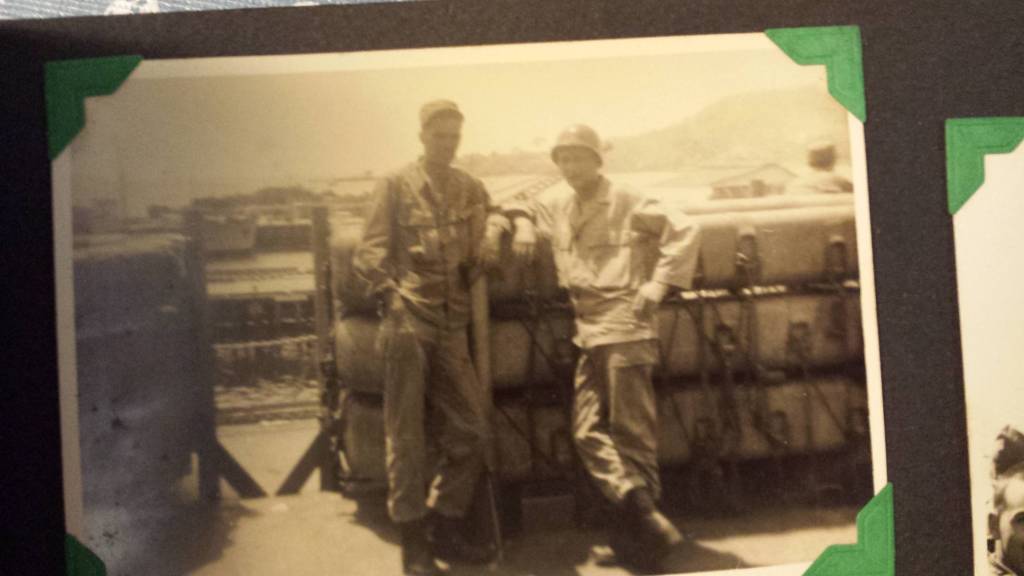
As a young man he answered his country’s call, serving in the United States Army with the 45th Infantry Division, 120th Combat Engineers, deploying to Korea and performing dangerous, essential work with quiet resolve.
Returning home, he built a life marked by responsibility and devotion. In 1957 he married Lavee Richbourg, and together they raised three sons—John, Hardy , and Wylie—rooting their family in the same East Texas soil that had shaped them.
Robert gave deeply to his community. He served for many years on the Buna Independent School District Board, including time as Board President. In that role he helped guide the school system through seasons of growth and change, always insisting that the next generation deserved stability, opportunity, and excellence. His leadership was steady, principled, and grounded in a genuine concern for the children and families of Buna.
He was also a man of faith, active throughout his life in the Buna Methodist Church. He served wherever needed—trustee, Sunday school teacher, volunteer, and quiet presence. His faith was lived rather than announced, expressed in service, humility, and a deep sense of responsibility to his church family.
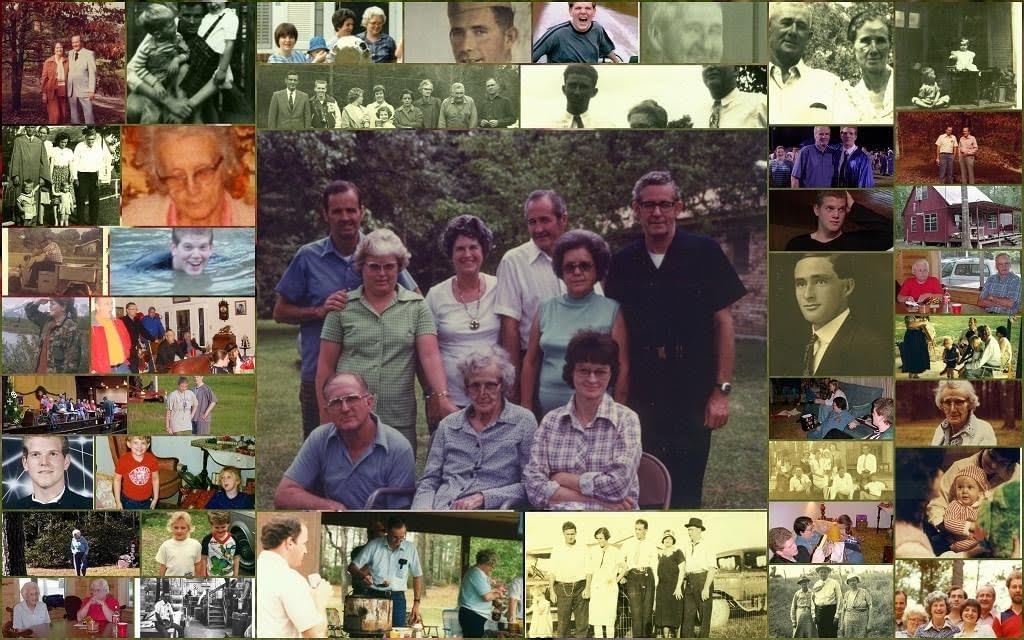
His legacy reflects the best of the long Hargrove lineage—strength without pride, faith without show, perseverance without complaint. The generations who preceded him crossed oceans, endured war and hardship, and built communities from the ground up. Robert carried those same qualities into the modern era, living a life of steadiness that inspired those around him.
Today, as we mark his birthday, we remember a man whose example continues to guide his family and community. A man who did what needed to be done. A man who could be counted on. A man whose life mattered quietly, deeply, and permanently.
Happy 97th Birthday in Heaven, Robert E. Hargrove. Your legacy continues in the lives you shaped and the community you served.
Robert Edwin Hargrove A Life Across Nine Decades
1920s — Beginnings (1927–1929) Robert was born in the closing years of the Roaring Twenties, at a time when Buna was a small, timber-country settlement with limited infrastructure. His earliest days would have been marked by family, church, and the rhythms of rural life. His parents, James and Mary, were part of the first generation to root the Hargrove and Denman lines firmly in Buna’s early community life.
1930s — Childhood in the Depression His childhood unfolded during the Great Depression, a decade when rural East Texas survived through hard work, neighbor cooperation, and self-reliance. Robert likely helped with farm chores, garden plots, cutting wood, and caring for animals. School was a privilege; work was expected. Sunday worship at the local Methodist church anchored weekly life. Electricity was limited, and his later work on the town diesel generator suggests an early familiarity with mechanical systems, power equipment, and practical problem-solving.
1940s — Youth, Work, and Early Responsibility In his teenage years Robert attended Buna schools and worked for Tom Barker, helping operate Buna’s diesel generator plant, which produced electricity for the town before JNEC lines arrived. This work required reliability, long hours, and technical skill well beyond his age. These were the war years. Though too young for World War II, Robert grew up in a community shaped by rationing, local enlistments, and the wartime economy. He learned responsibility early—supporting his family, working multiple jobs, and contributing to the stability of a rural town in a turbulent era.
1950s — Military Service, Marriage, and the Start of Family Life The Korean War era called him to military duty. In 1951 he entered the U.S. Army and deployed to Korea with the 45th Infantry Division, 120th Combat Engineers, where he served in harsh conditions that demanded discipline, strength, and courage. After returning home, Robert married Lavee Richbourg in 1957 and began building a home of his own. Late in the decade their first child, John, was born. The 1950s were years of transition—from soldier to husband, from young worker to the steady provider he would become.
1960s — Raising a Family and Deepening Community Roots The 1960s were defined by family life and community service. With the births of Hardy and Wylie, Robert became the father of three sons. He worked steadily to provide for his growing household, and these years likely saw him balancing demanding work with active involvement in Buna Methodist Church and local community responsibilities. His Father passed during this decade, leaving him as one of the senior carriers of the Hargrove family’s East Texas legacy.
1970s — Leadership, School Board Service, and Stability The 1970s were a period of public service. Robert served on the Buna ISD School Board, including time as Board President, helping guide the district during seasons of modernization and growth. His sons were moving through school, and he focused on ensuring they—and all Buna students—had reliable facilities, stable leadership, and opportunities that earlier generations lacked. These were steady years, defined by work, church, responsibility, and the steady rhythm of rural life.
1980s — Mentorship, Church Leadership, and Family Milestones By the 1980s, Robert was respected as a seasoned leader, a trusted church member, and a mentor. At Buna Methodist Church he served as trustee, Sunday school teacher, and a dependable servant in numerous roles.
His Mother passed as the decade started. He supported his sons as they began their adult lives, careers, and families. He and Lavee became grandparents. These were years of quiet influence—teaching, advising, helping, and modeling steady character.
1990s — Retirement, Reflection, and Community Continuity In the 1990s Robert eased into retirement while maintaining deep roots in community and church. He saw the passing of his siblings James (1994) and George (1995), a reminder that he had become part of the family’s senior generation. He spent more time on the Neches River, on quiet mornings with coffee, and on the small routines that bring meaning after decades of work. His presence remained steady—calm, predictable, and deeply valued.
2000s — The Grandfather Years The 2000s brought slower days and the joy of watching grandchildren grow. Though older, he remained active in his church and community, continuing the habits of service that marked his life. These were reflective years—filled with family gatherings, stories from earlier days, and the quiet pride of seeing the next generation stand on foundations he helped lay.
2010s — Closing Years Robert entered his final decade still grounded in the same community where he had been born. He lived to see Buna change, grow, and become a connected rural hub far beyond the diesel-generator days of his youth. He passed away in 2013 at the age of 85, leaving behind a legacy of steadiness, humility, faith, and service—a legacy carried forward by his children, grandchildren, and the community he helped shape.
Date: First Sunday of Advent, Year A Primary Scripture: Romans 13:12
The season of Advent does not begin with celebration—it begins with longing. It opens not in bright light but in the quiet, honest darkness of real life, where people carry grief, illness, recovery, fatigue, and the complex history of family and community. Advent speaks precisely into these places and invites us to lift our eyes toward the hope of Christ.
Our congregation reflects this reality well. Some among us are grieving recent losses. Some are navigating serious health challenges. Others are walking faithfully through recovery from addiction. Many carry responsibilities that feel heavy. And many more carry the deep history and legacy of this church’s founding families. Into this very real mixture of pain, perseverance, and hope, Advent speaks clearly: The Light is coming.
A Vision That Pulls Us Forward — Isaiah 2:1–5
In the first reading of the season, Isaiah gives God’s people a vision large enough to carry them through dark times. He describes a future where nations stream to the mountain of the Lord and where weapons of violence become tools of growth. It is a world transformed by the peace of God.
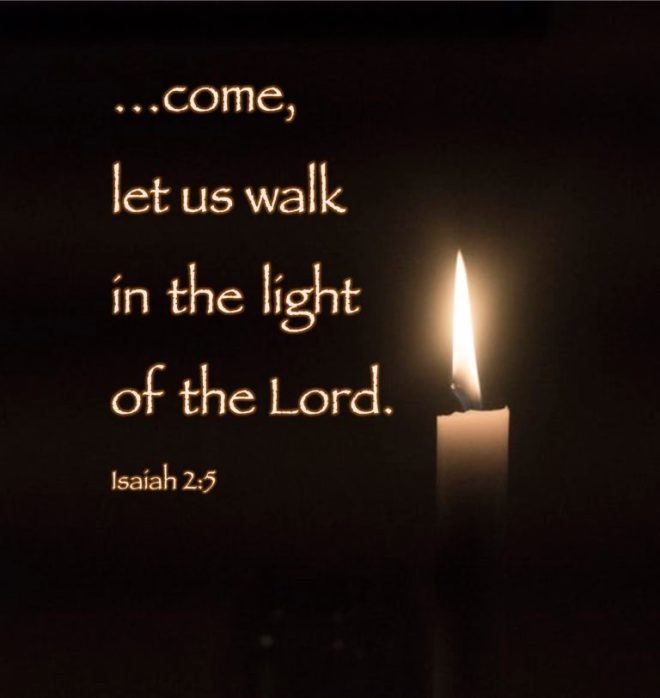
Isaiah’s call—“Come, let us walk in the light of the Lord”—is not an invitation to pretend everything is fine. It is a summons to move, one step at a time, toward the future God promises. Advent is never passive. It is an active walk toward hope.
Finding Gladness and Peace in Worship — Psalm 122
Psalm 122 echoes Isaiah’s vision but turns it into a song of gathering. The psalmist rejoices to be with God’s people and prays for the peace of Jerusalem.
In our setting, that becomes a prayer for the peace of this congregation, for the families who carry decades of shared memories, for those who minister to the sick and grieving, for the children and teens growing in faith, and for every person who walks through our doors longing for God’s presence. Advent reminds us that worship is not simply a routine—it is a pilgrimage toward peace.
Wake Up—The Dawn Is Near — Romans 13:11–14
Paul speaks to believers who are tired, discouraged, or tempted to drift spiritually. His message is strikingly direct: “It is now the moment for you to wake from sleep… the day is at hand.”
Rural communities know what it is to rise before dawn. You stand on the porch, look out at the dark pasture, and trust that light is coming even when you cannot yet see it. Paul’s message resonates here: no matter how long the night has felt, God assures us that dawn is drawing near.
To “put on the armor of light” is to live with purpose and clarity:
Choosing steps toward healing and recovery.
Letting go of habits that harm us.
Forgiving old wounds.
Encouraging those who struggle.
Living in a way that reflects hope rather than despair.
Advent calls us to spiritual wakefulness.
Living Ready for Christ — Matthew 24:36–44
Jesus reminds His disciples that His coming will be unexpected, and His point is not to create fear but to cultivate readiness. In the days of Noah, people were absorbed in everyday routines—good routines, ordinary routines—but they became spiritually numb.
That can happen to all of us. Work, illness, grief, family burdens, schedules, and stress can slowly lull us to sleep. Jesus urges us to stay awake and live ready—not anxious, but alert; not afraid, but purposeful.
Readiness means shaping daily life around the reality that Christ truly matters.
Advent for Real People
Taken together, these readings paint a powerful picture of Advent:
Isaiah shows us God’s promised future.
The Psalm invites us into community and peace.
Romans calls us to awaken and put on the armor of light.
Jesus urges us to live ready for His return.
And all of this meets us in our real world, not in an ideal one.
Images for the Journey
Several images help us understand Advent more clearly:
The lantern on the fence post: God often gives just enough light for the next step, not the entire path.
The barn after the storm: God promises a world where the storm ends and rebuilding begins.
The empty chair: Advent does not erase grief, but it promises that sorrow is not the end of the story.
These images remind us that Christ comes to honest places, hurting places, rural places, and to ordinary people walking through extraordinary challenges.
Walking in the Light This Season
As Advent begins, consider these simple practices:
Take one small step toward God each day.
Make peace where God opens the door.
Care for those who are sick or grieving.
Live as though Christ could be welcomed at any moment.
Enter worship with expectation and hope.
Advent is not about perfection. It is about preparation.
Conclusion: The Light Is Coming
Advent tells the truth: our world feels dark in places. But it also proclaims the greater truth: the dawn is approaching. The night is far gone. The day is at hand. And the Light of the world is drawing near.
May this season awaken our hearts to hope, strengthen our walk of faith, and prepare us to welcome Christ with joy.
The Eyes to See — Preparing to Meet the Word Made Flesh
Theme: From promise to presence. The transition from looking for Jesus to actually seeing Him.
OPENING REFLECTION
“Two thousand years of promise. Then one day, a man walks out of the water, and someone recognizes Him. What made that recognition possible? And more importantly, what makes it possible for us to recognize Him now?”
THEOLOGICAL FOUNDATION: RECOGNITION AS GRACE
What Does It Mean to “See” the Word?
Throughout the Old Testament (Week 1), God’s Word was at work—creating, covenanting, sustaining all things. But it was hidden, mediated, distant. People encountered God’s Word through:
Creation itself
Prophetic speech
Written law
Covenant signs
For centuries, this was how Israel knew God: through effects, not presence. Through His voice, not His face.
Week 2 showed us the longing that grew from this distance—the hope that someday God Himself would come. Isaiah spoke of a Light that would pierce darkness. Malachi spoke of a messenger preparing the way.
Week 3 is the answer to that longing: the Word becomes flesh.
But here’s the crucial point: The presence of the Word doesn’t automatically guarantee recognition.
John 1:10-11 captures this paradox: “He was in the world, and the world was made through him, and yet the world did not recognize him. He came to that which was his own, and his own did not receive him.”
Recognition is not automatic. It requires prepared eyes and an open heart.
THE WITNESS AS REVEALER
John the Baptist: A Life Dedicated to Pointing
In John 1:6-9 and 1:19-34, John the Baptist appears—but notice what’s remarkable about him: his entire identity is bound up in witnessing to someone else.
John doesn’t make a speech about his own achievements. He doesn’t gather followers for his own movement. When people ask him directly, “Are you the Messiah?” (John 1:20-21), his answers are stunning in their clarity:
“I am not the Christ.”
“I am not Elijah.”
“I am not the prophet.”
Then he says: “I am a voice of one calling in the wilderness, ‘Make straight the way for the Lord.'” (John 1:23)
He identifies himself entirely by his function—a voice, not the one speaking. A witness, not the witnessed-to. A pointer, not the destination.
What Makes This Witness Credible?
The deep theological and cultural reasons for John’s credibility still stand, but reframed: His credibility came from the fact that his entire life was positioned to help others see something other than himself.
He lived simply: no distraction of wealth or power
He spoke plainly: no coded language or institutional jargon
He pointed clearly: “Behold the Lamb of God”
He decreased willingly: “He must become greater; I must become less” (John 3:30)
This witness is credible because it’s self-effacing. John has nothing to gain from recognizing Jesus. In fact, by pointing to Jesus, John makes himself unnecessary. His movement will be absorbed. History will barely remember his name. But he does it anyway.
For someone in early recovery, this is profound. Recovery itself requires a kind of witness—the willingness to point toward healing, toward hope, toward the One who saves, rather than building an identity around being “the person who used to struggle.” The focus shifts away from the broken self toward the healing presence.
THE LAMB: WHAT ARE WE BEING PREPARED TO SEE?
John’s Declaration: “Behold the Lamb of God”
John 1:29 contains one of the Bible’s most theologically dense moments, compressed into a single sentence: “Behold, the Lamb of God, who takes away the sin of the world!”
What are we actually looking at when we behold the Lamb?
Layer 1: The Sacrificial Lamb
In the Jewish temple system, a lamb was the primary offering for sin. It was innocent, spotless, unblemished. When a person brought their lamb to the priest, that animal became the bearer of their guilt. The lamb’s death effected atonement—restoration of relationship with God.
Jesus as the Lamb means: He bears our guilt. Not metaphorically, but actually. The separation from God that sin creates is addressed by His self-offering.
For someone in recovery, this is liberating: You don’t have to carry the weight of your own failures forever. They’ve been borne. There is a way back into relationship.
Layer 2: The Passover Lamb
In Egypt, the blood of the lamb marked the doorframes of Israel’s homes. That blood was a sign and a seal: This household is redeemed. The firstborn are protected. This people is God’s.
Jesus as the Passover Lamb means: He marks you as redeemed. Not because you earned it, but because the price has been paid. You are under His protection.
For someone rebuilding their life, this is identity-restoring: You are not your past. You are marked by grace. You belong to a redeemed people.
Layer 3: The Suffering Servant
Isaiah 53:7 describes the servant “like a lamb led to slaughter.” This lamb doesn’t resist. It surrenders to what’s happening. Its suffering is not punishment for its own sin—it’s vicarious, for others.
Jesus as the Suffering Servant-Lamb means: He enters our pain. Not from a distance, but intimately. He suffers not for His own failings but in solidarity with ours.
For someone who has experienced trauma or addiction, this is deeply compassionate: God doesn’t condemn from on high. He enters the suffering. He knows what it’s like to be vulnerable, humiliated, broken.
Layer 4: The Enthroned Lamb
Jump ahead to Revelation 5, where John (the apostle, not the Baptist) sees cosmic worship centered on a Lamb. This Lamb is “slain”—bearing the marks of sacrifice—and yet He is on the throne. He is the highest power in the universe. The one who appears most vulnerable is revealed as most powerful.
Jesus as the Cosmic Lamb means: Vulnerability and power are not opposites. Love is the deepest power in existence.
For someone in recovery, this reframes strength entirely: The strength you need is not dominance or control. It’s the ability to be vulnerable, to admit need, to surrender to something larger. That’s not weakness. That’s the deepest power there is.
BAPTISM: ENTRY INTO NEW SEEING
What John’s Baptism Actually Signified
In Matthew 3:13-17, Jesus Himself comes to John to be baptized. This moment is crucial for understanding how we encounter the Word made flesh.
Baptism in John’s preaching meant: Repentance—a turning around, a change of mind. The Greek word metanoia carries the weight of cognitive transformation. You see something differently. Your mental orientation shifts.
When Jesus comes for baptism, He’s not coming for personal repentance (He has nothing to repent of). Instead, His baptism is an act of identification. He enters the water—the symbol of death and burial—to emerge into new life. He’s entering into solidarity with humanity in its need for transformation.
The Spirit Descending: How We Recognize the Word
Then something extraordinary happens: “As Jesus was coming up out of the water, he saw the heavens being torn open and the Spirit descending on him like a dove” (Mark 1:10).
Gentleness: A dove represents peace, not violence. The Spirit doesn’t overwhelm or violate. It comes gently.
Creation’s breath: In Genesis 1:2, the Spirit broods over the waters at creation’s beginning. The dove echoes this creative, life-giving presence.
Access for the poor: Doves were the sacrifice of the poor. The Spirit doesn’t only visit the powerful or wealthy.
The descent of the Spirit is how the invisible becomes visible. The eternal Word, who has been at work throughout history, is now revealed as publicly, tangibly, personally present.
The Father’s Voice: Affirmation Before Achievement
Immediately after the Spirit descends, a voice from heaven declares: “This is my beloved Son, in whom I am well pleased” (Matthew 3:17).
This is crucial: The affirmation comes before any work is done.
Jesus hasn’t healed anyone yet. He hasn’t taught anyone. He hasn’t worked miracles. He’s simply been baptized—identified with humanity in its need. And already, He hears: You are beloved. I am pleased with you.
For someone in recovery, this is revolutionary. The belief that worth must be earned, achieved, proven is shattered. Before any work, before any change, before any external markers of success: You are beloved.
This is not earned. It’s revealed.
And if this is true of Jesus, what does it suggest about us? That perhaps our worth too is not contingent on performance?
MARK 1:1-11: THE GOSPEL BEGINS WITH RECOGNITION
Notice what Mark does: He opens his gospel with a single declaration—“The beginning of the gospel of Jesus Christ, the Son of God” (Mark 1:1)—and then immediately moves to John the Baptist, then to Jesus’ baptism.
Why? Because Mark is showing us that the gospel—the good news—doesn’t begin with Jesus’ teaching or miracles. It begins with recognition. It begins with someone pointing and saying, “There. That one. That’s the Lamb of God.”
The entire purpose of the prelude has been to prepare eyes to see. And now, at the threshold of John’s Gospel, we’re meant to have those eyes open.
WHAT “PREPARING THE WAY” MEANS NOW
For Those in Early Recovery
“Prepare the way of the Lord” (Isaiah 40:3) has often been interpreted as external preparation—clearing physical obstacles, making a path.
But spiritually, it’s more intimate than that: Prepare your heart. Clear away what keeps you from seeing.
For someone in recovery, “preparing the way” means:
Honesty: Stop hiding. The obstacles you’re trying to conceal are exactly where Christ wants to shine His light. Light doesn’t shame—it reveals so it can heal.
Repentance (Metanoia): Change how you think about yourself, about God, about what’s possible. You don’t have to stay defined by your failures.
Surrender of Control: Recovery teaches this: You can’t fix yourself. The relief comes in admitting that and making room for Someone else to work.
Readiness: Like the disciples who would follow Jesus in John’s Gospel, are you actually ready to have your life reorganized around encountering the living Word? It won’t leave you unchanged.
For Those Rebuilding Relationships
“Preparing the way” in relationships means:
Removing Obstacles: What pride, shame, or fear blocks reconciliation? What needs to be cleared away?
Speaking Truth: Like John, who spoke plainly without fear of consequences. Authentic relationship requires honest speech.
Pointing Beyond Yourself: Healthy relationships aren’t about getting the other person to focus on you. They’re about both partners pointing toward something larger—shared values, shared faith, shared hope.
Accepting the Other’s Freedom: John could have held onto his followers, made himself central. Instead, he released them to follow Jesus. Real love sometimes means making yourself smaller so the other can grow.
SCRIPTURE DEEP DIVE
John 1:6-9 — The Witness Function
“There came a man who was sent from God; his name was John. He came as a witness to testify concerning that light, so that through him all might believe. He himself was not the light; he came only as a witness to the light. The true light that gives light to everyone was coming into the world.”
Notice the structure:
Verse 6: A person is introduced, sent by God for a specific purpose
Verse 7: His purpose is witness—to testify, so others might believe
Verse 8: Explicit denial of his own centrality
Verse 9: The true subject is introduced—the Light itself
This is the pattern of authentic witness: It always points away from itself. The moment a witness makes the witness the focus, credibility collapses.
John 1:19-34 — Questions and Clarity
When religious authorities ask John directly who he is, he answers with negative clarity. Then:
“The next day John saw Jesus coming toward him and said, ‘Look, the Lamb of God, who takes away the sin of the world! This is the one I meant when I said, “A man who comes after me has surpassed me because he was before me.” I myself did not know him, but the reason I came baptizing with water was that he might be revealed to Israel.’ (John 1:29-31)
John testifies to something he directly witnessed—the Spirit descending on Jesus. This isn’t hearsay or theory. This is present-tense encounter. John saw it happen.
Recognition is grounded in actual encounter, not just information.
Isaiah 53:7 — The Silent Lamb
“He was oppressed and afflicted, yet he did not open his mouth; he was led like a lamb to the slaughter…”
The Lamb doesn’t defend itself or argue its case. It surrenders to what’s happening. This voluntary submission to suffering for the sake of others is the pattern of redemptive love.
Revelation 5:6-10 — The Slain Lamb Enthroned
“Then I saw a Lamb, looking as if it had been slain, standing at the center of the throne… In a loud voice they were saying: ‘Worthy is the Lamb, who was slain…'”
The Lamb who was killed is the one to whom all worship is directed. Vulnerability is not weakness. It’s the deepest power.
DISCUSSION QUESTIONS FOR GROUP & REFLECTION
Opening the Text
What strikes you about John the Baptist’s answer when asked who he is? Why do you think he’s so clear about what he’s not?
When John points to Jesus and says “Behold the Lamb of God,” what do you think the people who heard this understood? What Old Testament background would have shaped their response?
Moving Inward
How do you know when someone is pointing you toward something real versus trying to draw attention to themselves? What’s the difference in how it feels?
In your own recovery or rebuilding, who have been the “witnesses”—people whose lives pointed you toward healing or hope? What made them credible?
What does “prepare the way” mean in your own heart right now? What obstacles do you need to remove so you can see Jesus more clearly?
Baptism & Recognition
Jesus came for baptism (identification with humanity’s need) before He did anything else. What does that tell you about the order of importance—presence before performance?
When the Father’s voice declares, “This is my beloved Son, in whom I am well pleased,” affirmation comes before Jesus does any work. How does that challenge the way you think about your own worth or identity?
Looking Forward
After three weeks of preparation—seeing how God’s Word has always been active, understanding the promise of Light, and now recognizing Jesus as the Lamb—what are you expecting to encounter in John’s Gospel?
APPLICATION: EYES TO SEE
This Week’s Practice
Daily Practice: Read one passage each morning, slowly, asking one question:
Monday-Tuesday (Mark 1:1-11): “What am I learning about how to recognize Jesus?”
Wednesday-Thursday (John 1:6-18): “Where do I see myself in this—as witness, as seeking, as encountering?”
Friday-Saturday (Matthew 3:13-17): “What does my baptism mean? Am I living like I’ve been marked by grace?”
Sunday (Isaiah 53:7 + Revelation 5:6-10): “What does the Lamb’s vulnerability teach me about power?”
Reflection Prompts
“Where do I need new creation?” → Not just intellectually, but in your actual life. What area would be transformed if you truly encountered Jesus as the Word who speaks things into being?
“Where is God’s light confronting my darkness?” → Not to shame you, but to reveal what needs healing. Where is that light shining?
“What false lights compete for my attention?” → What voices are you listening to that aren’t actually guiding you toward truth? What are you worshipping that isn’t worthy of worship?
Preparation for John’s Gospel
Before next week, as you prepare to enter John’s Gospel itself, consider:
What questions do I want to ask Jesus? Write three. Carry them into the text.
Where am I most hungry to encounter Him? In what area of your life do you most need His presence?
What am I willing to let change? Encountering the living Word transforms people. Are you prepared for that?
THEOLOGICAL REFLECTION: RECOGNITION AS THE GOSPEL’S CENTRAL WORK
Why Recognition Matters
Throughout Scripture, the central drama is not primarily about information—learning facts about God. It’s about recognition—seeing who God actually is, and therefore seeing who we actually are.
Adam and Eve didn’t lack information about God; they lacked recognition of their true condition and their true need. They didn’t see themselves as vulnerable or dependent.
Israel throughout the Old Testament wasn’t primarily lacking information about God; they were forgetting who they were in relation to Him. They needed to recognize themselves again as the covenant people.
The same pattern holds for those in recovery: information about addiction or grace is important, but transformation comes through recognition. Seeing yourself truly (not through shame, not through denial, but clearly). Seeing God truly (as present, as merciful, as real). And then seeing what’s possible when the two truths meet.
John’s Gospel and the Theme of Sight
Interestingly, John’s Gospel uses the language of seeing and knowing more than any other gospel. John uses the Greek word ginōskō (knowing, recognizing) 56 times—far more than Matthew, Mark, or Luke.
Recognition is the central act of faith in John.
When the Samaritan woman encounters Jesus at the well, she gradually moves from not knowing who He is, to recognizing Him as a prophet, to finally crying out, “Come, see a man who told me everything I ever did. Could this be the Messiah?” (John 4:29)
When Thomas doubts the resurrection, Jesus doesn’t scold him for lack of faith. Instead, Jesus appears and invites Thomas to see—to touch the wounds, to experience directly. And Thomas responds: “My Lord and my God!” (John 20:28)
The movement of faith in John is always: from not seeing → to seeing → to believing.
The Threshold
Week 3 is a threshold. You’re moving from preparation to encounter. From reading about the Word to meeting the Word Himself.
John the Baptist stood at that threshold too. His only job was to say: “There. That one. That’s Him. He’s real.”
SPIRITUAL PRACTICE: CORPORATE RECOGNITION
“Behold, the Lamb of God, who takes away the sin of the world.”
This is not belief yet, necessarily. It’s recognition. It’s pointing. It’s the beginning.
BRIDGE INTO JOHN’S GOSPEL
After this week, you will open John’s Gospel itself. You will read: “In the beginning was the Word, and the Word was with God, and the Word was God.”
Everything you’ve learned in these three weeks will suddenly crystallize. The Word that has been at work throughout creation and covenant and promise is now stepping into history, into presence, into recognizable form.
The Lamb. The Light. The Word made flesh.
And He will speak. And people will see. And some will believe.
That’s where we’re going. But first, we prepare. We clear the obstacles. We open our eyes. We learn to recognize.
Theological Definition: The Greek word martyria (μαρτυρία) means “testimony” or “witness,” but carries weight beyond simple reporting. In John’s Gospel, witness is not passive observation but active participation in revealing truth. A martyr (martyrs) is literally “one who testifies”—someone who stakes their credibility, reputation, and sometimes life on the truth they proclaim.
Key Theological Significance:
Witness is relational: it always requires both a testifier and an audience
Witness is costly: authentic witness demands alignment between message and life
Witness is eschatological: it participates in God’s work of revealing His Kingdom
Witness points beyond itself: true witness always directs attention away from the witness toward the one witnessed to
In John the Baptist’s case, his entire mission is framed as witness to the light (John 1:7-8). He is not the light; he testifies to the light. This distinction is theologically crucial—it establishes the pattern for all Christian witness.
Theological Principle:Authority in witness comes not from institutional power, but from the integrity between proclamation and practice.
B. The Forerunner (Prodromos) – Preparing the Way
Theological Definition: A forerunner (Greek: prodromos, προδρόμος) was an advance scout or herald who would prepare the path for a royal procession. In the Old Testament, this role was prophesied for Elijah (Malachi 4:5-6); in the New Testament, John fulfills this calling as the forerunner to Jesus.
Literal/Historical: John prepares people through baptism and the proclamation of repentance, creating space for Jesus’ arrival
Spiritual: John’s ministry addresses the fundamental human condition of spiritual disorientation. Israel had been spiritually “lost in the wilderness” for four centuries (the “intertestamental period”). John calls people out of this confusion toward clarity.
Mystical/Personal: For individual believers, the forerunner function invites us to examine how we prepare our hearts for encounter with Christ. What obstacles block our recognition of Him?
Theological Principle:Preparation is not about becoming worthy, but about removing obstacles to encountering God’s grace.
Theological Definition: The Greek word metanoia (μετάνοια) means far more than “regret” or “turning around.” It literally means “change of mind” (meta=after/beyond, noia=mind/perception). This is a fundamental reorientation of consciousness—a new way of seeing reality.
Distinguishing from “Penance”: Many English translations blur the line between metanoia (Greek) and penance (Latin). This is a critical error. Repentance is not:
Self-flagellation or punishment
Earning forgiveness through suffering
Shame-driven self-rejection
A one-time event that “fixes” a person
Rather, repentance is:
A sustained reorientation toward God
Cognitive + emotional + volitional transformation
The recognition that current patterns are misaligned with reality (God’s kingdom)
The acceptance of a new identity and orientation
Biblical Precedent: Isaiah 1:18 presents repentance not as punishment but as a new way of seeing: “Come now, let us reason together… though your sins are like scarlet, they shall be like snow.” The invitation is to reconsider, to see oneself and God differently.
Recovery Parallel: This aligns with how modern recovery frameworks understand transformation—not shame-based, but identity-based. “I am no longer defining myself by my addiction” is a form of metanoia.
Theological Principle:True repentance is a gift from God that restores sight, not a price we pay for forgiveness.
D. The Lamb of God (Arnos/Pascha)
Theological Definition: John the Baptist’s declaration—”Behold the Lamb of God who takes away the sin of the world” (John 1:29)—draws on multiple layers of symbolism:
In the Jewish temple system, a lamb was the primary sacrifice for sin atonement (Leviticus 4-5)
The lamb was typically young, spotless, unblemished—perfect
Its death effected atonement for the community
Passover Lamb (Exodus):
The lamb’s blood marked doorframes, protecting the firstborn of Israel
It provided both protection (salvation) and community identity (you are the redeemed people)
This was the most profound liberation narrative in Jewish memory
Suffering Servant (Isaiah):
Isaiah 53:7 describes the servant “like a lamb led to slaughter”
This servant’s suffering is vicarious—for others, not for himself
His self-offering transforms death into redemption
Cosmic Lamb (Revelation):
Revelation portrays the Lamb (arnion, the diminutive form suggesting tenderness/intimacy) as central to all cosmic worship and redemption
The Lamb who was slain is simultaneously the Lamb enthroned in power (Revelation 5)
Critical Theological Insight: The Lamb is vulnerable who redeems. In a world of power and domination, the Lamb offers a radically different path—the power of self-giving love. This is why in Revelation, the most powerful cosmic being is depicted as a Lamb.
Theological Principle:God’s redemptive power works through self-giving vulnerability, not coercive might.
E. Baptism (Baptizo) – Symbolic Drowning and Rising
Theological Definition: The Greek word baptizo (βαπτίζω) literally means “to immerse” or “to plunge.” It’s not sprinkling or pouring, but total submersion. This is symbolically significant.
What Baptism Signifies:
Death of the Old Self (Romans 6:3-4):
Going under the water = entering the grave, the end of old patterns
Rising from water = resurrection into new life
Paul uses baptism as the primary metaphor for identification with Christ’s death and resurrection
Washing/Cleansing (Acts 22:16):
Baptism signifies the removal of shame and guilt
In the ancient world, baptism was about ritual purity—entering the presence of the holy
For those in recovery, this symbolizes the possibility of being cleansed, not stained by past
Incorporation into Community (1 Corinthians 12:13):
Baptism marks entry into the Body of Christ
You are no longer alone in your identity; you are grafted into a people
In recovery language: you move from isolation to belonging
Public Identification (Matthew 28:19):
Baptism is explicitly public and trinitarian—done in the name of the Father, Son, and Spirit
It’s a declaration to heaven and earth: you belong to God
Recovery Significance: In recovery frameworks, baptism can represent the moment of public commitment—the willingness to be vulnerable, to identify with a community, to declare that your old way of life is over.
Theological Principle:Baptism is both death to self and birth into new identity; both washing and incorporation.
F. The Spirit Descending – God’s Empowerment
Theological Definition: In all four Gospel accounts of Jesus’ baptism, the Spirit descends upon Him “like a dove” (Matthew 3:16, Mark 1:10, Luke 3:22, John 1:32-33). This imagery is profound.
Gentleness, not violence: Doves represent peace, purity, and innocence. This contrasts sharply with other biblical symbols of the Spirit’s power (like wind or fire). Here, power comes gently.
Connection to Creation: In Genesis 1:2, the Spirit “broods” over the waters at creation. The dove echoes this creative, generative presence.
Innocence: Doves were the sacrifice of the poor (Mary’s offering in Luke 2:24). The Spirit descends with identification with the marginal, not the powerful.
Universality: The dove became a symbol of peace across cultures. John’s Gospel uses it to suggest the Spirit’s work transcends ethnic and cultural boundaries.
The Voice of Affirmation: At Jesus’ baptism, a voice from heaven declares: “This is my beloved Son, in whom I am well pleased” (Matthew 3:17). This is not about achievement or earning approval. It’s an affirmation of identity before any work is done. Jesus hasn’t begun his ministry yet—He’s simply received the Spirit and heard His Father’s voice.
Recovery Parallel: In recovery, participants often struggle with shame and the belief that they must “earn” their worth. The baptism narrative offers a different model: affirmation precedes achievement. God declares you beloved before you prove yourself.
Theological Principle:The Spirit’s work is characterized by gentleness, empowerment, and identification with the vulnerable.
II. HISTORICAL & CULTURAL CONTEXT
A. First-Century Political Landscape
The Wilderness as Counter-Site: John the Baptist operated in the Judean wilderness—a deliberate choice with political significance. The wilderness was:
Liminal space: neither civilized nor truly wild; a place of transition
Prophetic space: where Israel encountered God (Moses, Elijah, Amos)
Anti-imperial space: removed from Roman administrative control and Jerusalem’s temple-based authority
By preaching in the wilderness, John was making a statement: an authentic encounter with God happens outside the power structures of Rome and the Jerusalem establishment.
Rome’s Religious Strategy: The Roman Empire was pragmatic about local religions. It allowed client kingdoms to maintain religious practices as long as they didn’t threaten the political order. However, John’s preaching of repentance—calling people to radical reorientation—was inherently destabilizing. You cannot preach genuine metanoia without implicitly critiquing the status quo.
This is why John was arrested. Herod Antipas (the tetrarch of Galilee/Perea) saw John as a political threat (Mark 6:17-18). John was preaching repentance, which threatened the entire social order that Herod benefited from.
The Jewish Establishment’s Complexity: The Pharisees and Sadducees represented different responses to Roman occupation:
Pharisees: Believed in maintaining Jewish practice and purity despite Roman rule; focused on Torah observance as resistance
Sadducees: More accommodationist; collaborated with Rome; controlled the temple system
John’s baptism was radical because it bypassed the temple entirely. You didn’t need to go to Jerusalem, pay a priest, or engage in the sacrificial system. Repentance was available to anyone, anywhere, through water and a change of mind. This was democratizing and therefore destabilizing.
B. Jewish Renewal Movements
John didn’t emerge in a vacuum. First-century Judaism experienced multiple “renewal” movements, each offering different responses to Roman occupation and spiritual disorientation:
Apocalyptic Movements: Believed God would soon intervene violently to overthrow Rome
Qumran Community (the Essenes): Withdrew to the desert to maintain ritual purity; saw baptism as a daily practice of repentance
Zealot Movements: Advocated armed rebellion
John the Baptist’s Movement: Offered spiritual reformation through repentance and baptism
John was part of a broader Jewish renewal conversation, but with a distinct emphasis: repentance, not revolution; baptism, not armed struggle; humility, not political power-grabbing.
III. CULTURAL RELEVANCE FOR 2025
A. Authenticity in an Age of Performativity
The Crisis of Credibility: John’s credibility came from the alignment between his message and his life. Today, we live in an age of unprecedented performative capacity. Consider:
Social media allows anyone to curate a perfect image
Influencer culture separates the public persona from private reality
Religious institutions have experienced successive waves of scandals where leaders’ private lives contradicted their public messaging
Deepfakes make it possible to simulate authenticity entirely
The Result: Younger generations are deeply skeptical of institutional religion and religious authority. Pew Research consistently shows that one primary reason young people leave faith communities is perceived hypocrisy—the failure of religious leaders to live out their stated values.
Where John’s Witness Speaks: John offers a model of radical transparency. He lived simply; he had no institutional power base to protect; he explicitly denied his own importance. In an age of performativity, genuine humility and integrity are increasingly rare—and therefore increasingly powerful.
The question for 2025 Christianity: Can we recover a witness that is willing to be small, to refuse institutional protection, and to point away from ourselves toward Christ?
B. Counter-Cultural Witness in Polarized Times
The Polarization Problem: In 2025, we live in unprecedented ideological fragmentation. Every issue is tribal: politics, economics, sexuality, technology, spirituality. The default posture is adversarial—you’re either with us or against us.
Religious communities are not immune to this. Many churches have become effectively political organizations, blessing one partisan vision or another. The boundary between Christian witness and political ideology has dissolved.
Where John’s Witness Speaks: John stood outside the power structures of his day. He didn’t ally with Rome, the Pharisees, the Sadducees, or the Zealots. His allegiance was singular and undivided: to the God who was coming.
This suggests a prophetic posture for 2025 Christianity: the willingness to critique all human power structures from the perspective of God’s kingdom, rather than investing in any earthly power system.
This is countercultural in every direction:
To progressive Christians, it suggests you cannot simply sacralize left-wing political movements
To conservative Christians, it suggests that you cannot baptize right-wing nationalism
To political moderates, it suggests the kingdom of God is not a middle-ground compromise
John’s witness invites believers to a different kind of politics—one rooted in repentance, humility, and reorientation toward Christ, rather than securing earthly power.
C. The Hunger for Authenticity in Spirituality
The Spiritual-But-Not-Religious Movement: Over the past 20 years, the “spiritual but not religious” category has exploded. In 2025, many younger people are:
Seeking authentic spiritual experience rather than doctrinal correctness
Valuing experiential knowledge over inherited tradition
The Gap: Many spiritual-seeking people are not actually anti-Christian; they’re anti-institutional-Christianity. They want an encounter with transcendence, community, and transformation, but without the perceived baggage of hypocrisy and control.
Where John’s Witness Speaks: John offers Christianity at its most reduced and most powerful: a call to repentance, baptism, and encounter with the living God in the wilderness. No institution, no priesthood, no complex theology. Just: change your mind, be immersed, meet the one who is coming.
This suggests that authentic Christian witness in 2025 may look less like defending institutions and more like inviting people into a genuine encounter with God. Not as a defensive posture, but as an offensive proclamation: There is a reality larger than your current perception. Come, and your mind will be changed.
D. The Wilderness as Metaphor for Digital Disorientation
The Information Wilderness: In 2025, we live in a kind of wilderness—not a geographical one, but an informational one. The digital landscape is:
Unstructured and overwhelming
Full of competing voices claiming authority
Algorithmically designed to fragment consensus
Increasingly difficult to navigate with integrity
Social media creates what we might call “spiritual disorientation”—the sense that you don’t know what’s true, who to trust, or which way is forward. Conspiracy theories flourish. Expert knowledge is distrusted. Everyone has a platform.
Where John’s Witness Speaks: John preached clarity in a time of confusion. He stood in one place, spoke one message, and pointed in one direction. His witness was singular and undivided. In an age of infinite choice and information overload, this is spiritually compelling.
The question for 2025 believers: Can we offer a witness that is clear, coherent, and courageous amid digital chaos? Can we help people navigate the wilderness?
E. Recovery and the Language of Rebirth
The Recovery Movement’s Growth: In 2025, awareness of addiction—not just substance abuse, but behavioral addiction, digital addiction, relational trauma—is widespread. More people than ever before have some connection to recovery frameworks (12-step programs, therapy, spiritual direction).
Recovery language emphasizes:
Admission of powerlessness and need
Spiritual reorientation (the “higher power”)
Community accountability
The possibility of transformation despite past failure
Where John’s Witness Speaks: John’s entire proclamation is oriented toward people who recognize they are spiritually lost and need reorientation. He doesn’t shame; he invites. He doesn’t demand perfection; he offers change.
For people in recovery, John’s witness says: Your past does not determine your future. Repentance is real. You can be baptized into a new identity. The Lamb of God takes away the sin of the world—including yours.
This is not judgment; it’s liberation. This is not shame; it’s hope.
F. Leadership Without Institutional Power
The Crisis of Authority: In 2025, institutional authority is fundamentally compromised:
Religious institutions have credibility crises around abuse and misconduct
Political institutions are deeply distrusted
Corporate institutions are seen as serving shareholders, not communities
Even educational institutions face questions about their true purposes
Young people are skeptical of anyone claiming authority based on position, credentials, or institution.
Where John’s Witness Speaks: John had no institutional authority. He had no credentials, no ordination, no official status. His authority came entirely from the integrity of his witness. He pointed away from himself to One greater. He refused to capitalize on his own influence—when people tried to follow him, he redirected them to Jesus.
This offers a model for 2025 leadership: Authority grounded not in position but in integrity; power exercised through humility; influence wielded by pointing away from oneself.
This is radical in every context. It suggests:
Pastors should be willing to be small, unknown, humble
Religious leaders should critique their own institutions when necessary
Spiritual authority is not something you claim but something others recognize in your witness
The goal is never to build your own platform but to redirect people toward Christ
IV. THEOLOGICAL QUESTIONS FOR DEEPER EXPLORATION
For Individual Reflection:
On Witness: Where am I most tempted to let my actions contradict my proclaimed values? What would it look like to align more fully?
On Preparation: What obstacles in my life prevent me from seeing and following Christ clearly? What would removing them cost?
On Repentance: Where do I need a fundamental reorientation of my thinking? Where has my “mind” become captured by cultural narratives rather than divine truth?
On the Lamb: How do I tend to seek power—through dominance, manipulation, accumulation? How might the Lamb’s way of vulnerability change my approach?
On Baptism: Have I truly “died” to my old identity, or am I still trying to resurrect aspects of my former self? What would a wholehearted commitment to a new life require?
On the Spirit: Where in my life do I need the Spirit’s gentle empowerment rather than my own striving?
On Counter-Cultural Witness: Where am I tempted to align Christianity with a particular political or cultural system? How might I recover a witness that transcends such alignments?
For Community Dialogue:
How do we foster authentic, humble witness in contexts where the default is performance and self-promotion?
What does it look like to invite people into genuine repentance without shaming or coercion?
How can we recover baptism as genuinely transformative rather than merely ceremonial?
What would it mean for our community to offer genuine spiritual sanctuary—a “wilderness” space where people can encounter God outside consumer and entertainment logic?
How do we cultivate leadership that points away from itself toward Christ?
V. PASTORAL INTEGRATION: FROM THEOLOGY TO LIVED TRANSFORMATION
A. Preaching Theology to Those in Recovery
The theological themes here are not abstract—they speak directly to the experience of addiction, relapse, and recovery.
Witness & Integrity: Many in recovery have had their trust shattered by people who claimed to have their interests at heart but didn’t. John’s integrity—his willingness to be small and to point away from himself—offers a model of trustworthiness that wounds can begin to heal around.
Repentance, Not Shame: The distinction between metanoia and penance is critical. Many people in recovery have internalized profound shame about their addiction and failures. Repentance (change of mind) offers transformation; shame offers only degradation. The proclamation must be: You don’t have to be ashamed of who you were to be transformed into who you’re becoming.
Baptism as New Identity: For someone who has been labeled “addict” or “failure,” baptism offers an alternative narrative. You are not your history. You are beloved. You are being reborn.
The Lamb’s Vulnerability: People in recovery understand vulnerability. They’ve experienced rock bottom. John’s Lamb—powerful through self-giving, not domination—speaks to the paradoxical strength found in admission and surrender.
B. Liturgical & Spiritual Practices
Ritual Recommitment: Consider a baptismal renewal practice in which people publicly reaffirm their commitment to a new life. This is not a requirement but an invitation—a moment to declare before the community that they are identifying with Christ’s death and resurrection.
Wilderness Pilgrimage: Create intentional “wilderness” space—whether literal (a retreat in nature) or metaphorical (a period of prayer and silence). This is not an escape from community but deeper entry into it, via encounter with God.
Witness Sharing: Create safe containers where people can share their witness—how they’ve seen God work, where their integrity has been tested and held, how their minds have been changed by encountering Christ.
Contemplative Prayer on John 1: Lead people through extended meditation on John’s first chapter, using different senses: What do you see? What do you hear? What invitation are you sensing?
VI. CULTURAL COMMENTARY: THE PROPHETIC TASK
For 2025, a word about the prophetic role of John the Baptist witness:
The prophetic stance is not:
Being right about politics
Defending Christian civilization
Gaining cultural influence
Building institutional power
Making Christianity palatable to the dominant culture
The prophetic stance is:
Calling all people—including ourselves—to repentance
Pointing away from human power toward God’s kingdom
Offering hope grounded in reality, not wishful thinking
Maintaining integrity at the cost of comfort
Standing in solidarity with the vulnerable and marginalized
Speaking truth even when it threatens our own interests
John the Baptist was executed for his witness. Not because he directly attacked Rome or the religious establishment, but because his call to repentance was fundamentally destabilizing to all existing power structures.
For Christians in 2025, this raises a question: Are we willing to be small, to lose influence, to be misunderstood, to be marginalized—in order to maintain integrity in our witness?
The culture war posture says: Gain power so you can impose your values.
The John the Baptist posture says: Lose power so you can witness to a different kingdom entirely.
FINAL REFLECTION
John the Baptist is not the hero of his own story. He is the forerunner, the witness, the voice crying in the wilderness. His greatness consists entirely in his humility—his willingness to be small so that Another might be great.
In 2025, as we navigate polarization, performativity, institutional crisis, and spiritual seeking, John’s witness remains timely. It is prophetic. It invites us to:
Trade authenticity for performance
Trade political power for spiritual authority
Trade the pretense of perfection for the reality of transformation
Trade the comfort of belonging to worldly systems for the cost and joy of following the Lamb
The one who testifies to the Light is not the light. But by pointing clearly and humbly away from himself, he becomes a clear channel through whom others can see.
This is the calling. This is the invitation. This is the way forward in 2025.
SCRIPTURE REFERENCES & FURTHER STUDY
Primary Texts:
John 1:1-34 (John’s Prologue and John the Baptist’s testimony)
Mark 1:1-11 (Gospel opening and baptism)
Matthew 3:1-17 (John’s preaching and Jesus’ baptism)
Luke 3:1-22 (John’s prophetic witness and baptism)
Isaiah 53:1-12 (Suffering Servant passage)
Revelation 5:6-10 (The Lamb in cosmic worship)
Key Theological Texts:
Romans 6:1-14 (Paul on baptism and dying to self)
1 Peter 1:18-21 (Redemption through the spotless Lamb)
2 Corinthians 5:17 (New creation in Christ)
Ephesians 5:25-27 (The Church as spotless Bride)
Secondary Sources for Further Study:
N.T. Wright, Simply Christian (on witness and kingdom)
Richard Rohr, The Universal Christ (on Christ’s cosmic redemption)
Barbara Brown Taylor, Learning Church (on baptismal theology)
James Dunn, Baptism in the Holy Spirit (technical theology of baptism)
John Dominic Crossan, The Historical Jesus (context of John the Baptist)
It’s a Beautiful Life— Life Abundant, Life True, Life in Christ
Life is a gift far deeper than breath and heartbeat. It is a sacred invitation to walk with the One who said, “I came that they may have life, and have it abundantly” (John 10:10). When we hear the words “It’s a beautiful life,” our first instinct may be to think of ease, comfort, or quiet days without conflict. But Jesus defines beauty differently. To Him, beauty is found where truth sets us free, where grace restores what is broken, and where His presence fills even the darkest valley with hope.
Life becomes beautiful not because everything is perfect, but because Christ stands in the center of it.
He is the One who finds us in our weariness, lifts our eyes beyond the moment, and reminds us that abundance is not measured by possessions, status, or comfort. Abundance is measured by Him—His nearness, His mercy, His strength, and His peace.
Jesus does not offer a life free from trouble. He offers a life filled with Him.
When He declared, “I am the way, the truth, and the life” (John 14:6), He was not giving philosophical poetry. He was making a personal claim: the path you seek is found in Me, the reality you long for is revealed in Me, and the life your soul hungers for is sustained by Me. Without Him, life may be full, but it is never whole. With Him, even seasons of hardship carry meaning, purpose, and direction.
A beautiful life is not a life without scars; it is a life where scars testify to grace.
A beautiful life is not the absence of storms; it is the presence of Jesus in the boat.
A beautiful life is not found by chasing moments; it is found by walking with the Savior who holds eternity.
Every day Christ invites us to live more deeply into that beauty. He calls us to lay down the lesser things that drain us and take hold of the greater things that renew us. He invites us to exchange anxiety for trust, noise for silence, striving for surrender, and self-direction for His leadership.
To follow Jesus is to discover that beauty is a Person before it is an experience.
It is His voice guiding us, His truth correcting us, His Spirit empowering us, His peace guarding us, and His love shaping us. Even in times of grief or confusion, His life becomes the light in ours, shining through every circumstance with the promise: “I will never leave you nor forsake you.”
So today, let your heart rest in this assurance: Christ’s life in you is your beauty. Christ’s presence in your story is your strength. Christ’s promise over your future is your hope. Whatever yesterday held, whatever tomorrow may bring, today is still a beautiful life—not because of the world around you, but because of the Savior within you.
And as you walk with Him, may you recognize the beauty of the life He gives: abundant, anchored in truth, and shaped by the One who is Himself the Way, the Truth, and the Life.
Every engineer knows that when a system fails, you don’t start guessing—you put a probe on the line and trace the signal back to its source, watching for where it weakens, distorts, or disappears entirely. That’s what I’ve been doing these sixty-seven years: tracing the signal God sent into the world the night I was born in Kirbyville, Texas, and following it through noise, interference, dead zones, and moments of perfect, breathtaking clarity.
The first carrier wave came in strong: a boy in Buna listening to Sputnik beep overhead, lying in the pasture staring at stars that felt close enough to touch, taking apart a broken transistor radio on the back porch just to watch voices spill out like magic. That was the pure tone—undistorted curiosity modulated by a father’s quiet integrity and a mother’s stubborn faith. Grandpa Truman’s drafting table was the first antenna: every clean line he drew taught me that order could be imposed on chaos if you were willing to measure twice and draw once.
Then came the teenage years—atmospheric skip, bounce, fade. The signal scattered energy of scouting, summer river swims, and the first awkward pings toward a blue-eyed girl named Leisa. The signal was still there, but it was jumping, looking for a path.
College and early marriage brought multipath interference: two kids barely scraping by, barely enough money for ramen, anger echoing off the walls of a tiny apartment. I was transmitting on the wrong frequency—rage, exhaustion, pride—and the receiver (Leisa’s heart, our little home) was picking up mostly noise. For over a decade the trace showed severe attenuation: success on the scope at work, but flatline at home. I was transmitting, but the message was garbage.
October 13, 2000, 9:00 p.m., Orange, Texas. That was the night the repeater finally kicked in. On my knees at a simple prayer rail, surrounded by other broken men, the signal suddenly punched through—clean, strong carrier, no sidebands of pretense. Prevenient grace, the theologians call it. I just call it the moment Jesus turned the gain all the way up and said, “I’ve been here the whole time; you were just tuned to the wrong channel.”
Two years later the deepest null I’ve ever measured arrived: losing our only son Joshua in 2002. The scope went flat. For a while I thought the transmitter had been destroyed. But when I put the probe on the line again, I found the carrier was still there—weak, almost buried in grief, yet steady. The signal had changed modulation: it was now amplitude-modulated by pain, frequency-modulated by love that refused to quit. The waveform was no longer pretty, but it was true.
From that null onward, every project became part of the trace.
The 80-hop microwave system for Gulf States Utilities? Learning how to bend a signal around the earth without losing the message.
The fiber ring for College Station in ’96? Burying the cable so storms can’t touch it.
The hundreds of SCADA channels for rural co-ops? Making sure the most important data gets through when everything else fails.
The pandemic WISP so kids in Buna could log on to class? Boosting the signal for the least of these.
Every tower I climbed in the rain, every midnight page, every impossible budget—they were all attempts to clear the path, raise the antenna, clean the connectors so the signal could keep traveling a little farther into the dark.
And the personal channels—the Bible studies in our living room, the youth groups, the late-night texts to grieving parents—those were the repeaters God placed exactly where the terrain blocked the direct shot.
Now, at sixty-seven, the trace on the spectrum analyzer is remarkably clean again. There’s still some harmonic distortion from the limp I’ll always walk with, some background noise from regrets that haven’t fully quieted. But the fundamental is strong: love God, serve, build, repair, connect.
One day soon the final packet will arrive—“Well done, good and faithful servant”—and the transmitter here will go silent. But I’ve learned something tracing this signal all these years: the message doesn’t end when the local oscillator stops. It keeps propagating, bouncing off the ionosphere of eternity, refracting through the lives I was privileged to touch—through Leisa’s steady blue-eyed faith, through Joshua’s brief but blazing eighteen years—until it reaches every receiver God intended.
The boy from Buna who just wanted to know how the voices got inside the radio spent his life becoming one of those voices.
And by the grace that first beeped across a Texas sky in 1958 and never stopped calling my name, the signal is still strong, still clear, still traveling.
As I sit here on a quiet November evening in 2025, sixty-seven years after that January night in Kirbyville, I find myself doing what old engineers do best: tracing the signal all the way back to its source.
It started with a curious boy in Buna who followed a dog named Brownie too far into the pasture and had to be rescued by the fire department, milk and cookies waiting with Ms. James. That same boy took apart radios just to watch the voices spill out, swam a mile for a merit badge at thirteen, and somehow earned the rank of Eagle Scout before most kids earn a driver’s license. He learned drafting at his grandfather Truman’s knee, watched his dad Robert come home from Dupont with plastic under his nails and quiet integrity in his eyes, and felt his mom Lavee’s faith wrap around the house like the smell of coffee and bacon on Sunday mornings.
That boy met a girl named Leisa at a graduation ceremony in 1975, and something silent and certain took root. We married in 1980 while I was still failing (and then passing) calculus at Lamar, barely scraping together rent, nearly losing each other in the exhaustion and anger of those lean years. But grace is stubborn, and we stayed. In 1984 God gave us Joshua—our Disney World miracle—and for eighteen bright years the three of us were a complete world.
Then came a season of wandering in the wilderness of my own making. Through the late 1980s and most of the 1990s—while on the outside I was climbing towers, building companies, and looking like the picture of success—inside I was coming undone. I wore a faith mask on Sundays and a competent-engineer mask on weekdays, but underneath I was angry, blind, and selfish. I kicked walls, punched doors, tore things apart with my hands when I couldn’t fix what was breaking in my soul. I hurt Leisa and Joshua with fits of rage I still regret, and toward the end I tried to fill the God-shaped hole with every wrong thing I could find. I was lost and didn’t even know how lost.
But on an October night in Orange, Texas, in 2000—two years before the worst day of my life—Jesus found me anyway. I was on my knees at a simple prayer rail, surrounded by other broken men unloading their souls, tears soaking a box of Kleenex. It wasn’t a dramatic revival; it was gentle, forceful, prevenient grace pulling me home before I had earned a single step. That night the signal broke through the noise, and I came back to the Father who had never stopped chasing me.
Two years later, when the valley came and losing Joshua in 2002 broke things in me I didn’t know could break, I discovered that God had already been rebuilding the foundation. The rage was quieter, the mask no longer fit, and though the grief was deeper than any ocean, I now had an Anchor. For a long time I still wore a limp and carried the ache, but I no longer carried it alone. Grief taught me that the capacity to ache is the capacity to love, and love, it turns out, is the only thing that outlasts death. Leisa and I opened our home, led youth groups, hosted Bible studies, and tried—imperfectly—to turn sorrow into sanctuary for others walking the same road.
The years after Joshua are marked by a limp I will carry to my grave, but also by a clarity I never had before. Grief taught me that the capacity to ache is the capacity to love, and love, it turns out, is the only thing that outlasts death. Leisa and I opened our home, led youth groups, hosted Bible studies, and tried—imperfectly—to turn sorrow into sanctuary for others walking the same road.
Meanwhile the work kept calling. From student engineer at Gulf States Utilities to supervising microwave networks that spanned half of Texas; from founding New Signals Engineering on a wing and a prayer to watching it grow into two decades of service; from climbing towers in the rain to keep the lights on in rural counties, to standing up a wireless internet company in the middle of a pandemic so kids in Buna could go to school online—none of it was glamorous. Most of it was midnight pages, impossible budgets, and prayers whispered over schematics. But it mattered. Lights stayed on. People stayed connected. Grace snuck in through fiber and radio waves.
Looking back, I see the thread God was weaving when I could only see tangles: every tower I climbed, every co-op boardroom where I fought for resilience, every late-night text to a grieving parent, every tower hand-off that brought broadband to a forgotten corner of East Texas—it was all the same calling dressed in different clothes. Build. Repair. Connect. Stand in the gap.
I am not the man I planned to be. Thank God. I am the man grief refined, grace pursued, and Leisa loved into existence. Joshua is waiting (I know this in my bones), my dad and grandparents have gone ahead, and one day soon the final signal will come through clear: “Well done.”
Until then, I keep showing up—still curious, still learning, still building, still surrendering. The quiet work goes on.
And by the mercy that has chased me across six decades of East Texas pine and microwave paths, I can say with all my heart: I had a great life. Because He did.