Joy does not always come with energy or clarity. Some days it arrives quietly, alongside responsibility, fatigue, and the steady work of finishing what needs to be done. This season has been full of ordinary faithfulness—showing up, carrying what was assigned, and trusting that God is still present even when progress feels slow. I am learning that joy is not the absence of weight, but the assurance that we are not carrying it alone. That is enough for today.
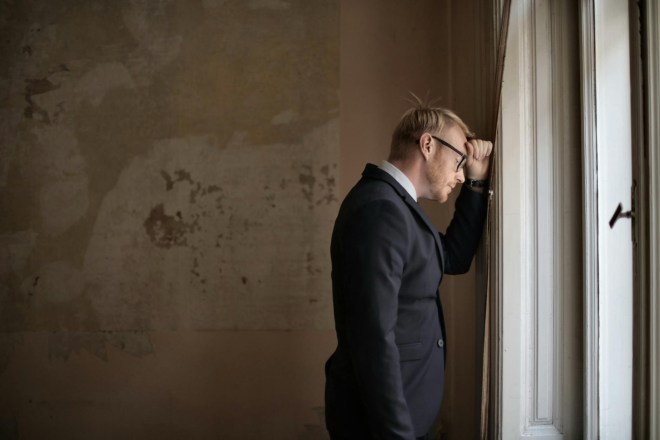
You wake up carrying yesterday with you. Some memories refuse to loosen their grip. Loss. Regret. Questions that never quite resolve. You learn early that life does not hand out clean endings, only long roads and unfinished conversations. Still, you get up. Not because it’s easy, but because something inside you says you must.
You do your work quietly. You try to do it right. You learn that integrity costs more than compromise, but you pay it anyway. You discover that justice, truth, and love are rarely loud. Most of the time, they show up as persistence—showing up again when walking away would be simpler.
There are nights when the weight presses down hard. You replay moments you wish you could change. You hear echoes of people you loved and lost. You wonder whether holding on is strength or stubbornness. And yet, letting go feels like erasing part of who you are.
So you keep walking. Not because you have all the answers, but because you believe life has meaning even when it’s cracked. Somewhere along the way, you realize you are not carrying everything alone. There is a quiet presence beside you—steady, patient, faithful—bearing the heavier part of the load. The kind of presence that doesn’t rush you, doesn’t condemn you, and doesn’t leave when things get dark.
You learn that redemption is not sudden. It’s slow. It’s daily. It’s choosing truth over comfort, mercy over bitterness, and hope over despair. It’s discovering that love can meet you in broken places and still call you forward.
In the end, life is not about forgetting what shaped you. It’s about letting it refine you. You don’t let go of what matters. You carry it—transformed—into something truer.
Note on the spiritual undertones in “Can’t Let Go”
Beneath its noir tone, the song carries quiet traces of spirituality. The repeated tension between holding on and releasing mirrors a deeply human struggle found throughout Scripture—the desire to control the past versus the invitation to trust something greater than ourselves. “Can’t let go” is not just emotional attachment; it sounds like the soul wrestling with surrender.
There is an unspoken confession in the lyrics: acknowledgment of brokenness without denial, longing without easy resolution. That honesty echoes the psalms of lament, where faith is not polished but real. The song never preaches, yet it gestures toward the idea that healing does not come from erasing pain, but from being carried through it.
What makes the spirituality subtle—but powerful—is that the answer is not self-mastery. The weight feels too heavy to bear alone. That quiet recognition opens the door to grace. In Christian language, it resembles the moment before surrender, when the heart realizes it cannot save itself and must be held.
In that sense, Can’t Let Go becomes a prayer without religious language—a reminder that even in shadowed places, the struggle itself can be sacred, and that letting go is often less about loss and more about learning who is truly strong enough to hold us.
Today we celebrate Robert E. Hargrove—a man who showed us that the greatest gifts aren’t found in stores, but on the banks of the Neches River.
Dad gave us something precious: a love of the outdoors and the simple joys of being together. Camp Hargrove was his classroom, and we were his eager students. We learned patience waiting for the channel cats and blue cats to bite. We felt the thrill when the ops latched onto the trotline bait and swam into view as we pulled the line from the depths. We waded through sandbars, filled minnow jars with bait, seined the shallows, and floated lazy afternoons in inner tubes, letting the river carry us.
We remember the ritual of it all—Dad pumping water from the river, later from the well he drilled with his own hands. The smell of bacon and scrambled eggs sizzling in cast iron. Biscuits that tasted like only the camp did. Coffee brewed strong in that old pot, grounds settling at the bottom, sipped slowly by the campfire as fog drifted across the water at dawn. The soft sounds of the river greeting us awake.
And every Fourth of July, Dad’s fishing became a gift to us all—fish fries for the extended family, gathered together, fed by what his hands and the river had provided.
In those moments—before the day rushed in, surrounded by sons, nephews, and grandchildren—Dad was teaching us how to live. How to slow down. How to appreciate what matters. How to pass love down through generations.
Those riverside mornings and summer days shaped who we became. Dad’s love for nature, his steady presence, his generosity of spirit—these are the catches we keep forever.
Happy Birthday, Dad. We’re still there by the river with you. 🐟🏕️💙
December 5, 1927 – September 6, 2013
ON THIS DAY
8 years ago
Glen Richbourg is feeling blessed with L.v. Hargrove and 2 others. wrote in 2013
Uncle Bob taught me the difference between a blue cat, channel cat and a mud cat. He could scull all the way around Mud Lake and not make a single splash. Made the best camp breakfasts ever and I’ve never had even a Starbucks that could match his river water coffee. Some of the best memories of my life were out in the Neches River bottom being a kid with the Hargrove boys and Uncle Bob. I learned life lessons from him about respecting the land, nature and fellow human beings that l’ve carried my entire life. He also raised the three best men you’ll ever meet. I will forever miss him.
Over the past several weeks, I’ve noticed a pattern rising in my heart—a mix of heaviness and hope, grief and gratitude, pressure and purpose. The holiday season always magnifies what is present in the soul, and this year is no different. I find myself remembering the people who shaped me, the stories that anchor me, and the losses that still echo in quiet moments.
At the same time, my days are full of responsibilities—engineering projects, community work, pastoral care, business decisions, family needs. I feel the pull from every direction, not because any of it is unworthy, but because all of it matters. Leadership in any form carries an invisible weight. And sometimes that weight presses harder in November and December.
Yet beneath all of this, something steady keeps tugging me forward: hope.
Not the thin kind that ignores reality or paints over pain. But the kind that believes God is present even in the unanswered questions. The kind that remembers that Jesus steps into weary places, not polished ones. The kind that says, “You don’t have to carry this alone.”
As I look back at conversations, projects, and prayers from the last week, I see the same thread weaving through everything: healing. Healing for myself. Healing for others. Healing for the places in our community that feel stretched or wounded. Healing for the dreams that feel fragile but not extinguished.
And the truth is, hope and healing aren’t found by escaping life—they grow right in the middle of it.
Every memory that stings reminds me there was love. Every responsibility that feels heavy reminds me there is purpose. Every moment of fatigue reminds me I need grace beyond myself.
And grace keeps showing up.
So I’m choosing to keep walking—one step at a time, one day at a time—trusting that the God who has carried me this far will carry me further still. My prayer is simple:
“Lord, meet me here. Make something good out of the weight I’m carrying. Let Your light break through.”
Because even in the heaviness, hope is rising. #HopeInTheJourney #JesusHeals #GraceInRealLife
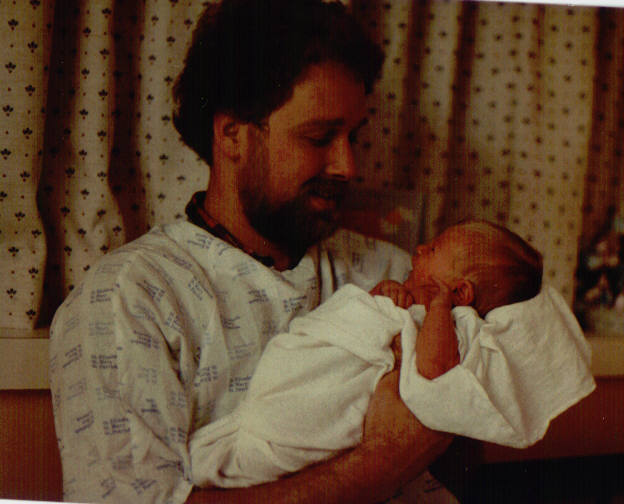
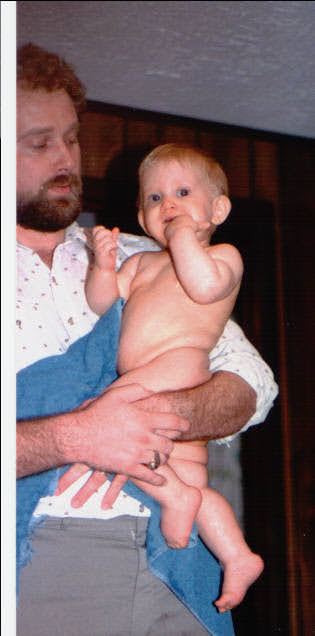
For Joshua Blake Hargrove from John Hagrove his dad June 2025 1984–2002
My son,
If I could sit across from you today—twenty-three years after you left this world—I would begin with the words that still rise unbidden in my heart: I miss you. Every day. Not with the same sharp ache as before, but with a quiet, steady presence that stays with me like breath. You are never far from my thoughts, never absent from my soul.
I would tell you honestly: a piece of me went quiet the day you died—and another part went angry. I wasn’t just broken. I was furious. Angry at the unfairness, the helplessness, the fact that the world kept spinning without you in it. I didn’t know how to carry the weight of that kind of grief, so I buried it. I buried the part of me that laughed freely, dreamed boldly, and felt things too deeply.
And in its place, I went to work. I built things. I solved problems. I became dependable and productive. But underneath it all, I was still just a father who had lost his son. The music stopped. The prayers faded. I kept going because I didn’t know how to stop—but I also didn’t know how to live fully anymore.
If I could tell you anything now, it would be this: Your death didn’t end me—but it did remake me. And over time, with grace and patience, something inside me began to stir again.
I would tell you that God didn’t abandon me. He held me through it all, though I didn’t always recognize His presence. And in the years that followed, a few key people—some family, some unexpected friends—entered my life and helped awaken parts of me I thought were gone forever. None of them replaced you. They couldn’t. But somehow, through their kindness, gentleness, and love, I began to feel again. I began to believe that I could be fully alive, even while still carrying your absence. I hold those relationships with reverence. They brought back to life the part of me that knows how to love without fear.
I would tell you about your mama. She’s still the strongest woman I’ve ever known. Her grief was quiet, but it ran deep. We’ve grown older together, and we still speak your name. Sometimes in words, sometimes in silence. You are still part of our home, our hearts, our story.
I’d tell you about the little ones in our family—your cousins’ children, great-nieces and nephews you never got to meet. I watch them play, laugh, stumble and grow, and I see glimpses of you. Their lives are full of light, and I imagine the kind of uncle you would have been—funny, kind, full of mischief and wisdom. Your absence in those moments is a presence all its own.
I’d tell you that I’ve come to believe in resurrection—not just of bodies, but of broken hearts, of joy, of purpose. I’ve come to believe that the deepest love isn’t erased by death. It changes form, but it remains. And I carry you as part of that resurrection. You are part of what brought me back to life.
Most of all, I would tell you that you are still my son. Nothing—not time, not distance, not death—can ever take that from us. You made me a father. You taught me the kind of love that doesn’t fade. And though I never got to watch you grow old, you’ve shaped the man I’ve become more than anyone else ever could.
If I could hold your face in my hands one more time, I would say what I still say in the silence of prayer:
You are my boy. I love you. And I will carry you until the day I see you again.
With all I am, Dad
And I would tell you—humbly—that someone came into my life many years later who helped awaken something that had gone dormant inside me. That I could still feel. Maybe I was allowed to be fully alive again. I hold that chapter of my life with reverence. As strange and sacred as it was, it brought something back to me I thought was lost forever: the part of me that knows how to love without fear.
Here lies John E. Hargrove January 24, 1958 – [date yet to be written]
A boy from Buna who never stopped wondering how things worked and never stopped trying to make them work for others.
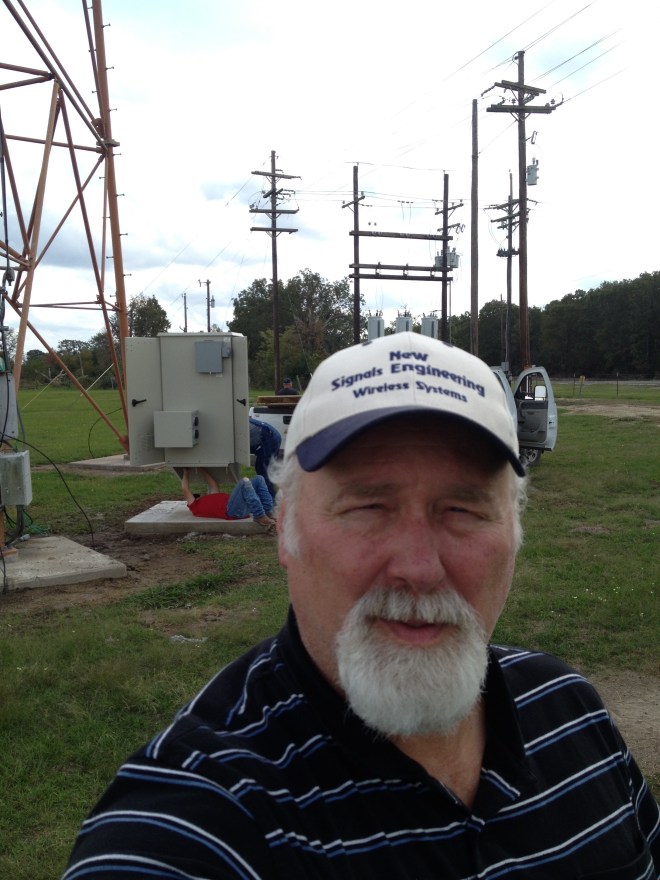
He chased signals across microwave towers and fiber miles, built networks that carried light to forgotten places, and in the darkest valleys carried the light of Christ to broken hearts.
Husband to Leisa for a lifetime and beyond, father to Joshua—whose brief life taught him how to love forever, son of Robert and Lavee, brother, friend, mentor, builder.
He knew grief intimately, yet chose every morning to show up, to do the quiet work that lasts when applause has long faded.
He was not perfect. He was faithful.
Still learning. Still building. Still becoming. Now, at last, fully known and fully home.
Some days I’m reminded to go back to the starting point. “In the beginning was the Word…” That truth centers me. It reminds me that everything we’re doing—family, work, community—rests on something solid and steady.
The scriptures in the RCL today lean into that same hope.
Daniel talks about God standing with His people even in hard seasons. Psalm 16 says our security isn’t in what we build, but in the One who holds us. Hebrews encourages us to keep lifting each other up. And in Mark, Jesus tells us not to get lost in the noise or fear when the world feels shaky.
Then He brings it all home: “I came that they may have life, and have it more abundantly.”
That’s the thread that runs through it all. A reminder that real life—steady, grounded, meaningful—comes from the One who speaks light into dark places and hope into tired hearts.
So if you’re carrying a lot today, take a breath. The One who was there in the beginning is still speaking life now. We can walk forward with that.
I’ve been thinking a lot lately about what it means to do work that matters when it feels like no one cares.
For the past few years, I’ve been advocating for rural East Texas communities—places like Buna, Newton, San Augustine. I’ve built communication frameworks, written strategic plans, installed digital kiosks, organized meetings, drafted policy briefs. I’ve tried to give voice to communities that have been systematically left out of planning conversations, to help people shape their own futures instead of having decisions made for them from far away.
Most days, it feels like pushing a boulder uphill alone.
The Generational Game
I’m starting to realize this work isn’t measured in months or even years—it’s generational. The infrastructure I’m building, these communication frameworks and pilot models and community briefs, they’re seeds that may not fully mature in my lifetime. And I think I’ve been measuring success wrong.
Maybe success isn’t getting county commissioners to read every brief I send. Maybe it’s that one local leader who picks up this work five years from now and has a template to start from. Maybe it’s just that these documents exist at all—proof that someone saw what was happening, cared enough to name it, and offered solutions.
That’s not failure. That’s foundation-building.
Celebrating What’s Actually There
When the big wins feel impossible, I’m learning to notice the small ones:
A county commissioner who actually responded to a community brief
A kiosk that’s been running for six months without breaking down
One new business owner who showed up to learn about the community
The fact that I’ve created templates other rural organizers can use
These aren’t nothing. They’re evidence of progress, even if they’re not transformation yet.
Finding My People
The San Augustine meeting this year reminded me of something important. Sitting around that table with Eddie, Nancy, Tania, and Marianne—people doing similar work in their own communities—I didn’t feel alone. We shared frustrations, traded contacts, problem-solved together.
I’ve been spending too much energy seeking alignment “up”—with county officials, state agencies, foundations—and not enough building lateral relationships with peers. Those relationships aren’t just strategic. They’re sanity-preserving. They remind me I’m not crazy for thinking this work matters.
Even when nothing changes immediately, these reports I’m writing serve a purpose:
They validate what communities are experiencing
They create a record for future organizers
They protect against institutional amnesia (“we didn’t know there was a problem”)
I need to remember that documentation is activism. Recording what’s happening, naming the gaps, proposing solutions—that’s meaningful work even when it doesn’t produce immediate results.
Not everyone is going to get it. Some officials will remain indifferent. Some developers will keep ignoring community input. Some residents will stay skeptical of any change.
That’s okay. The goal isn’t to convince everyone—it’s to build enough of a coalition to create momentum. I don’t need universal support for this work to matter.
Taking Real Breaks
I’m bad at this one. I need to take actual breaks—not performative self-care, but real disengagement. Days where I don’t mention rural development. Weeks where the kiosks can wait.
This work will always be there. It’s generational, remember? Burning out doesn’t serve anyone.
I’m trying to get more specific about what meaningful progress would look like in the next year. Not transformation—just progress:
Three communities actually using the communication framework I built
One successful regional roundtable where rural leaders are at the table
Maybe a single rural navigator position gets funded somewhere
When I make it concrete like that, I can tell the difference between “not enough impact yet” and “actually making progress.” They’re not the same thing.
Buna, Newton, San Augustine—these aren’t abstractions to me. They’re people who deserve to shape their own futures. The work I’m doing affirms their dignity and their right to be heard.
That has value independent of whether it produces immediate systemic change.
The fact that I keep showing up, keep documenting, keep building frameworks when no one asked me to—I don’t think that’s naivete anymore. I think it’s moral courage. Or stubbornness. Maybe both.
The question isn’t whether to keep going. It’s how to keep going sustainably, strategically, with enough support to avoid burning out completely.
I don’t have all the answers yet. But writing this helps. Naming what’s hard helps. Remembering I’m building foundations, not finished structures—that helps too.
If you’re doing similar work somewhere else—advocating for a place everyone else overlooks, building infrastructure no one asked for, showing up when it feels pointless—you’re not alone. And you’re not crazy.
1. Remember that God’s mercy is greater than memory.
Romans 8:1 says, “There is therefore now no condemnation for those who are in Christ Jesus.”
Condemnation is not the same as conviction. Conviction calls you back to grace; condemnation chains you to the past. The devil traffics in old evidence. God calls you into a new verdict.
Wisdom means learning to answer the darkness with truth:
“My failures are real, but they have already been nailed to the cross (Colossians 2:14). I am no longer defined by what I did, but by who Christ is.”
2. Understand that temptation does not erase redemption.
Temptation is not proof of failure; it is proof of humanity. Even Jesus was tempted in every way but without sin (Hebrews 4:15). The presence of temptation doesn’t mean the absence of grace. It means the battle is still being fought—and that God’s Spirit is still active within you.Wisdom says: don’t confuse the struggle with defeat. The very fight is evidence that the Spirit has not abandoned you.
3. Bring the past into the light, not the shadows.
Psalm 32 describes the heaviness of hidden guilt: “When I kept silent, my bones wasted away.” But it also shows freedom in confession: “Then I acknowledged my sin to You… and You forgave the guilt of my sin.”
Wisdom doesn’t deny the past; it hands it over to God’s mercy. When regret surfaces, speak it aloud in prayer, confession, or trusted fellowship. Darkness loses power when it’s named under grace.
4. Anchor your identity in adoption, not performance.
Romans 8:15–16 says you have received “the Spirit of adoption by whom we cry, ‘Abba, Father.’”
The wisdom here is to shift from shame’s language—I am what I’ve done—to sonship’s language—I am who God says I am.
Adopted children stumble but are never disowned. Your Father doesn’t love a future, perfected version of you; He loves you now, growing and learning.
5. Recognize the pattern and replace it with presence.
Temptation often follows predictable paths—stress, loneliness, fatigue, boredom. Wisdom notices these rhythms and meets them with presence: Scripture, prayer, worship, conversation, rest.
When the old pattern begins, stop and invite the Spirit into that exact moment: “Lord, this is where I usually fall. Meet me here.” That prayer alone breaks the isolation where temptation thrives.
6. See sanctification as a process, not a single victory.
Paul himself wrote, “The good that I want to do, I do not do” (Romans 7:19). Holiness grows slowly, like fruit, not instantly like a download.
Wisdom accepts progress over perfection. Each act of resistance, each confession, each small obedience is a testimony of grace at work. God is more patient with your growth than you are.
7. Look forward rather than backward.
Philippians 3:13–14: “Forgetting what lies behind and straining toward what is ahead, I press on toward the goal for the prize of the upward call of God in Christ Jesus.”
Paul knew guilt—he had persecuted the church—but he also knew grace. Forgetting here doesn’t mean erasing memory; it means refusing to let the past direct the future.
Wisdom learns to look through regret, not at it, seeing it as the backdrop for God’s mercy.
8. Let hope be the final word.
Romans 8 ends with a chorus of unbreakable hope:
“For I am convinced that neither death nor life, nor angels nor rulers, nor things present nor things to come… will be able to separate us from the love of God in Christ Jesus our Lord.”
If nothing in heaven or earth can separate you from that love, then neither can your past nor your recurring weakness.
Hope is not denial; it’s defiance. It says to darkness: You may visit, but you do not own this room anymore.
9. Practice the disciplines of renewal.
The path out of regret and recurring sin is steady, practical, and sacred.
Begin each day with Romans 8:1 as a declaration. Read a psalm aloud when temptation whispers. Keep short accounts with God—repent quickly, return quickly. Surround yourself with voices of faith, not shame. End each night thanking God for His patience rather than despairing over imperfection.
Summary of Wisdom
Those who are haunted by regret and temptation are not disqualified—they are exactly the people God delights to heal. The wisdom of Romans 8 is that life in the Spirit means freedom from condemnation, fellowship in struggle, and assurance in love.
You are not what you were. You are not what you fear. You are a beloved child of God, walking—sometimes stumbling—but always held by a grace that will not let you go.
There’s a weight we don’t often talk about in church life—the grief that lingers in the soul when things don’t work out the way we prayed they would. Jeremiah knew that weight. He wrote, “Oh, that my head were a spring of water and my eyes a fountain of tears! I would weep day and night for the slain of my people” (Jeremiah 9:1). The psalmist prayed something similar: “Help us, O God of our salvation, for the glory of your name; deliver us, and forgive our sins, for your name’s sake” (Psalm 79:9).
Both voices remind us that lament is not just personal sadness—it’s a holy act of naming the pain before God.
Lament in Scripture, Lament in Life
When I read Jeremiah’s words, I hear echoes of seasons in my own journey. There have been moments where I’ve had to sit across from friends, colleagues, or family members, knowing that words couldn’t fix the brokenness we were facing. Times when projects I poured years into were stalled by forces beyond my control. Times when communities I love were fractured, and I felt powerless to heal the divides.
I’ve often carried those burdens quietly, as an engineer, a leader, a brother, a son. Like many men, I was taught to just keep going, solve the next problem, make the next call. But Scripture teaches that silence isn’t the only response—lament is.
What Lament Looks Like
Lament is not despair. It’s not quitting. It’s a turning of the heart toward God when life feels too heavy to carry. It’s saying out loud what we’d rather keep inside:
This hurts. I don’t understand. God, why does it seem like you’re far away?
Lament opens a door to hope because it refuses to let pain have the last word.
Carrying Pain in a World of Injustice
The prophet Amos points out that part of our pain comes from living in a world where injustice is real. He names those who trample the needy and cheat the poor. I’ve seen versions of that play out in Southeast Texas—families weighed down by the unfair cost of living, workers underpaid while corporations thrive, small towns overlooked when resources are allocated.
My own work in rural broadband has been shaped by that reality. It grieves me that whole communities are still left behind in an age where connection determines opportunity. That’s not just a technical problem—it’s a justice issue. And lament, at its heart, is agreeing with God that this isn’t how things should be.
Learning to Pray the Pain
Paul urges us in 1 Timothy to pray “for all people—for kings and all who are in high positions.” That’s not easy when leaders disappoint us, but it’s part of carrying pain rightly. Prayer puts lament into motion, turning grief into intercession.
I’ve had to learn this the hard way. In seasons where leadership at church or in business felt uncertain, I wanted to either fix everything or walk away. Instead, God has gently reminded me to pray—not just for outcomes, but for people. Prayer doesn’t erase pain, but it transforms how we carry it.
Choosing the Treasure That Lasts
Jesus’ parable of the dishonest manager ends with this line: “You cannot serve God and wealth.” For me, that lands like a compass point. All the work, all the projects, all the energy—none of it can become the ultimate treasure. Pain has a way of reminding us what really matters.
When I’ve lost deals, faced setbacks, or been misunderstood, the Spirit has pressed me back to what lasts: relationships, faith, hope, and love. Those are eternal treasures.
Walking Forward with Honest Hearts
So what do we do with the pain we carry? We learn to lament. We give voice to Jeremiah’s tears and the psalmist’s cries. We name injustice, we pray for people in power, and we re-orient our hearts to the treasure of God’s kingdom.
If you’re carrying something heavy today, don’t bury it. Pray it. Cry it. Write it. Let lament be your way of standing before God honestly. Because in the end, lament is not just about pain—it’s about trust. Trust that God hears. Trust that God heals. Trust that His kingdom will come, even in Southeast Texas, even in my life and yours.































 John Hargrove Seeking Truth and Reality