The Eyes to See — Preparing to Meet the Word Made Flesh
Theme: From promise to presence. The transition from looking for Jesus to actually seeing Him.
OPENING REFLECTION
“Two thousand years of promise. Then one day, a man walks out of the water, and someone recognizes Him. What made that recognition possible? And more importantly, what makes it possible for us to recognize Him now?”
THEOLOGICAL FOUNDATION: RECOGNITION AS GRACE
What Does It Mean to “See” the Word?
Throughout the Old Testament (Week 1), God’s Word was at work—creating, covenanting, sustaining all things. But it was hidden, mediated, distant. People encountered God’s Word through:
- Creation itself
- Prophetic speech
- Written law
- Covenant signs
For centuries, this was how Israel knew God: through effects, not presence. Through His voice, not His face.
Week 2 showed us the longing that grew from this distance—the hope that someday God Himself would come. Isaiah spoke of a Light that would pierce darkness. Malachi spoke of a messenger preparing the way.
Week 3 is the answer to that longing: the Word becomes flesh.
But here’s the crucial point: The presence of the Word doesn’t automatically guarantee recognition.
John 1:10-11 captures this paradox: “He was in the world, and the world was made through him, and yet the world did not recognize him. He came to that which was his own, and his own did not receive him.”
Recognition is not automatic. It requires prepared eyes and an open heart.
THE WITNESS AS REVEALER
John the Baptist: A Life Dedicated to Pointing
In John 1:6-9 and 1:19-34, John the Baptist appears—but notice what’s remarkable about him: his entire identity is bound up in witnessing to someone else.
John doesn’t make a speech about his own achievements. He doesn’t gather followers for his own movement. When people ask him directly, “Are you the Messiah?” (John 1:20-21), his answers are stunning in their clarity:
- “I am not the Christ.”
- “I am not Elijah.”
- “I am not the prophet.”
Then he says: “I am a voice of one calling in the wilderness, ‘Make straight the way for the Lord.'” (John 1:23)
He identifies himself entirely by his function—a voice, not the one speaking. A witness, not the witnessed-to. A pointer, not the destination.
What Makes This Witness Credible?
The deep theological and cultural reasons for John’s credibility still stand, but reframed: His credibility came from the fact that his entire life was positioned to help others see something other than himself.
- He lived simply: no distraction of wealth or power
- He spoke plainly: no coded language or institutional jargon
- He pointed clearly: “Behold the Lamb of God”
- He decreased willingly: “He must become greater; I must become less” (John 3:30)
This witness is credible because it’s self-effacing. John has nothing to gain from recognizing Jesus. In fact, by pointing to Jesus, John makes himself unnecessary. His movement will be absorbed. History will barely remember his name. But he does it anyway.
For someone in early recovery, this is profound. Recovery itself requires a kind of witness—the willingness to point toward healing, toward hope, toward the One who saves, rather than building an identity around being “the person who used to struggle.” The focus shifts away from the broken self toward the healing presence.
THE LAMB: WHAT ARE WE BEING PREPARED TO SEE?
John’s Declaration: “Behold the Lamb of God”
John 1:29 contains one of the Bible’s most theologically dense moments, compressed into a single sentence: “Behold, the Lamb of God, who takes away the sin of the world!”
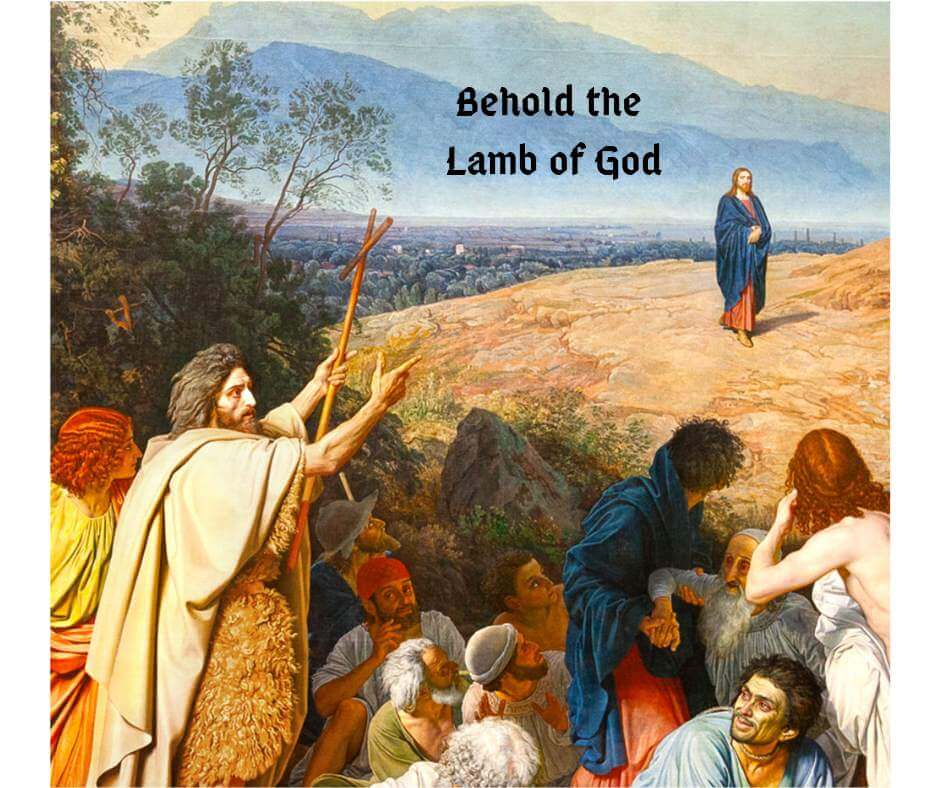
What are we actually looking at when we behold the Lamb?
Layer 1: The Sacrificial Lamb
In the Jewish temple system, a lamb was the primary offering for sin. It was innocent, spotless, unblemished. When a person brought their lamb to the priest, that animal became the bearer of their guilt. The lamb’s death effected atonement—restoration of relationship with God.
Jesus as the Lamb means: He bears our guilt. Not metaphorically, but actually. The separation from God that sin creates is addressed by His self-offering.
For someone in recovery, this is liberating: You don’t have to carry the weight of your own failures forever. They’ve been borne. There is a way back into relationship.
Layer 2: The Passover Lamb
In Egypt, the blood of the lamb marked the doorframes of Israel’s homes. That blood was a sign and a seal: This household is redeemed. The firstborn are protected. This people is God’s.
Jesus as the Passover Lamb means: He marks you as redeemed. Not because you earned it, but because the price has been paid. You are under His protection.
For someone rebuilding their life, this is identity-restoring: You are not your past. You are marked by grace. You belong to a redeemed people.
Layer 3: The Suffering Servant
Isaiah 53:7 describes the servant “like a lamb led to slaughter.” This lamb doesn’t resist. It surrenders to what’s happening. Its suffering is not punishment for its own sin—it’s vicarious, for others.
Jesus as the Suffering Servant-Lamb means: He enters our pain. Not from a distance, but intimately. He suffers not for His own failings but in solidarity with ours.
For someone who has experienced trauma or addiction, this is deeply compassionate: God doesn’t condemn from on high. He enters the suffering. He knows what it’s like to be vulnerable, humiliated, broken.
Layer 4: The Enthroned Lamb
Jump ahead to Revelation 5, where John (the apostle, not the Baptist) sees cosmic worship centered on a Lamb. This Lamb is “slain”—bearing the marks of sacrifice—and yet He is on the throne. He is the highest power in the universe. The one who appears most vulnerable is revealed as most powerful.
Jesus as the Cosmic Lamb means: Vulnerability and power are not opposites. Love is the deepest power in existence.
For someone in recovery, this reframes strength entirely: The strength you need is not dominance or control. It’s the ability to be vulnerable, to admit need, to surrender to something larger. That’s not weakness. That’s the deepest power there is.
BAPTISM: ENTRY INTO NEW SEEING
What John’s Baptism Actually Signified
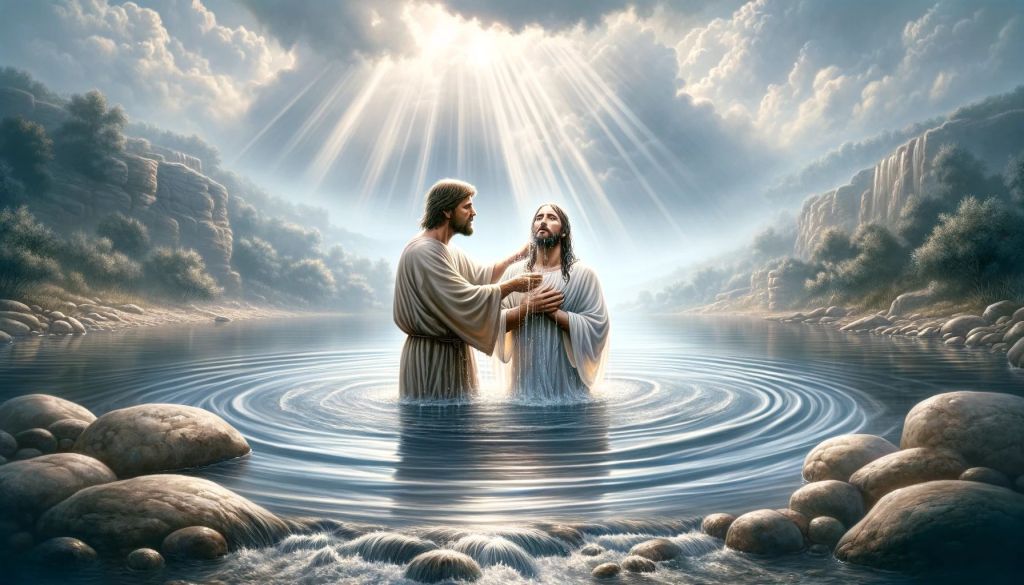
In Matthew 3:13-17, Jesus Himself comes to John to be baptized. This moment is crucial for understanding how we encounter the Word made flesh.
Baptism in John’s preaching meant: Repentance—a turning around, a change of mind. The Greek word metanoia carries the weight of cognitive transformation. You see something differently. Your mental orientation shifts.
When Jesus comes for baptism, He’s not coming for personal repentance (He has nothing to repent of). Instead, His baptism is an act of identification. He enters the water—the symbol of death and burial—to emerge into new life. He’s entering into solidarity with humanity in its need for transformation.
The Spirit Descending: How We Recognize the Word
Then something extraordinary happens: “As Jesus was coming up out of the water, he saw the heavens being torn open and the Spirit descending on him like a dove” (Mark 1:10).
The Spirit descends as a dove. Why a dove?

- Gentleness: A dove represents peace, not violence. The Spirit doesn’t overwhelm or violate. It comes gently.
- Creation’s breath: In Genesis 1:2, the Spirit broods over the waters at creation’s beginning. The dove echoes this creative, life-giving presence.
- Access for the poor: Doves were the sacrifice of the poor. The Spirit doesn’t only visit the powerful or wealthy.
The descent of the Spirit is how the invisible becomes visible. The eternal Word, who has been at work throughout history, is now revealed as publicly, tangibly, personally present.
The Father’s Voice: Affirmation Before Achievement
Immediately after the Spirit descends, a voice from heaven declares: “This is my beloved Son, in whom I am well pleased” (Matthew 3:17).
This is crucial: The affirmation comes before any work is done.
Jesus hasn’t healed anyone yet. He hasn’t taught anyone. He hasn’t worked miracles. He’s simply been baptized—identified with humanity in its need. And already, He hears: You are beloved. I am pleased with you.
For someone in recovery, this is revolutionary. The belief that worth must be earned, achieved, proven is shattered. Before any work, before any change, before any external markers of success: You are beloved.
This is not earned. It’s revealed.
And if this is true of Jesus, what does it suggest about us? That perhaps our worth too is not contingent on performance?
MARK 1:1-11: THE GOSPEL BEGINS WITH RECOGNITION
Notice what Mark does: He opens his gospel with a single declaration—“The beginning of the gospel of Jesus Christ, the Son of God” (Mark 1:1)—and then immediately moves to John the Baptist, then to Jesus’ baptism.
Why? Because Mark is showing us that the gospel—the good news—doesn’t begin with Jesus’ teaching or miracles. It begins with recognition. It begins with someone pointing and saying, “There. That one. That’s the Lamb of God.”
The entire purpose of the prelude has been to prepare eyes to see. And now, at the threshold of John’s Gospel, we’re meant to have those eyes open.
WHAT “PREPARING THE WAY” MEANS NOW
For Those in Early Recovery
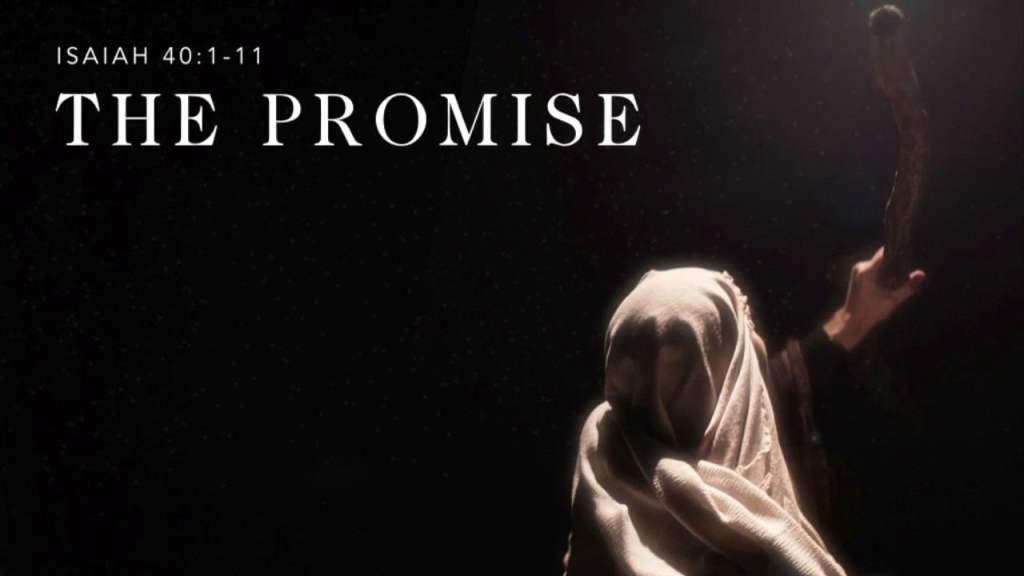
“Prepare the way of the Lord” (Isaiah 40:3) has often been interpreted as external preparation—clearing physical obstacles, making a path.
But spiritually, it’s more intimate than that: Prepare your heart. Clear away what keeps you from seeing.
For someone in recovery, “preparing the way” means:
- Honesty: Stop hiding. The obstacles you’re trying to conceal are exactly where Christ wants to shine His light. Light doesn’t shame—it reveals so it can heal.
- Repentance (Metanoia): Change how you think about yourself, about God, about what’s possible. You don’t have to stay defined by your failures.
- Surrender of Control: Recovery teaches this: You can’t fix yourself. The relief comes in admitting that and making room for Someone else to work.
- Readiness: Like the disciples who would follow Jesus in John’s Gospel, are you actually ready to have your life reorganized around encountering the living Word? It won’t leave you unchanged.
For Those Rebuilding Relationships
“Preparing the way” in relationships means:
- Removing Obstacles: What pride, shame, or fear blocks reconciliation? What needs to be cleared away?
- Speaking Truth: Like John, who spoke plainly without fear of consequences. Authentic relationship requires honest speech.
- Pointing Beyond Yourself: Healthy relationships aren’t about getting the other person to focus on you. They’re about both partners pointing toward something larger—shared values, shared faith, shared hope.
- Accepting the Other’s Freedom: John could have held onto his followers, made himself central. Instead, he released them to follow Jesus. Real love sometimes means making yourself smaller so the other can grow.
SCRIPTURE DEEP DIVE
John 1:6-9 — The Witness Function
“There came a man who was sent from God; his name was John. He came as a witness to testify concerning that light, so that through him all might believe. He himself was not the light; he came only as a witness to the light. The true light that gives light to everyone was coming into the world.”
Notice the structure:
- Verse 6: A person is introduced, sent by God for a specific purpose
- Verse 7: His purpose is witness—to testify, so others might believe
- Verse 8: Explicit denial of his own centrality
- Verse 9: The true subject is introduced—the Light itself
This is the pattern of authentic witness: It always points away from itself. The moment a witness makes the witness the focus, credibility collapses.
John 1:19-34 — Questions and Clarity
When religious authorities ask John directly who he is, he answers with negative clarity. Then:
“The next day John saw Jesus coming toward him and said, ‘Look, the Lamb of God, who takes away the sin of the world! This is the one I meant when I said, “A man who comes after me has surpassed me because he was before me.” I myself did not know him, but the reason I came baptizing with water was that he might be revealed to Israel.’ (John 1:29-31)
John testifies to something he directly witnessed—the Spirit descending on Jesus. This isn’t hearsay or theory. This is present-tense encounter. John saw it happen.
Recognition is grounded in actual encounter, not just information.
Isaiah 53:7 — The Silent Lamb
“He was oppressed and afflicted, yet he did not open his mouth; he was led like a lamb to the slaughter…”
The Lamb doesn’t defend itself or argue its case. It surrenders to what’s happening. This voluntary submission to suffering for the sake of others is the pattern of redemptive love.
Revelation 5:6-10 — The Slain Lamb Enthroned
“Then I saw a Lamb, looking as if it had been slain, standing at the center of the throne… In a loud voice they were saying: ‘Worthy is the Lamb, who was slain…'”
The Lamb who was killed is the one to whom all worship is directed. Vulnerability is not weakness. It’s the deepest power.
DISCUSSION QUESTIONS FOR GROUP & REFLECTION
Opening the Text
- What strikes you about John the Baptist’s answer when asked who he is? Why do you think he’s so clear about what he’s not?
- When John points to Jesus and says “Behold the Lamb of God,” what do you think the people who heard this understood? What Old Testament background would have shaped their response?
Moving Inward
- How do you know when someone is pointing you toward something real versus trying to draw attention to themselves? What’s the difference in how it feels?
- In your own recovery or rebuilding, who have been the “witnesses”—people whose lives pointed you toward healing or hope? What made them credible?
- What does “prepare the way” mean in your own heart right now? What obstacles do you need to remove so you can see Jesus more clearly?
Baptism & Recognition
- Jesus came for baptism (identification with humanity’s need) before He did anything else. What does that tell you about the order of importance—presence before performance?
- When the Father’s voice declares, “This is my beloved Son, in whom I am well pleased,” affirmation comes before Jesus does any work. How does that challenge the way you think about your own worth or identity?
Looking Forward
- After three weeks of preparation—seeing how God’s Word has always been active, understanding the promise of Light, and now recognizing Jesus as the Lamb—what are you expecting to encounter in John’s Gospel?
APPLICATION: EYES TO SEE
This Week’s Practice
Daily Practice: Read one passage each morning, slowly, asking one question:
- Monday-Tuesday (Mark 1:1-11): “What am I learning about how to recognize Jesus?”
- Wednesday-Thursday (John 1:6-18): “Where do I see myself in this—as witness, as seeking, as encountering?”
- Friday-Saturday (Matthew 3:13-17): “What does my baptism mean? Am I living like I’ve been marked by grace?”
- Sunday (Isaiah 53:7 + Revelation 5:6-10): “What does the Lamb’s vulnerability teach me about power?”
Reflection Prompts
“Where do I need new creation?” → Not just intellectually, but in your actual life. What area would be transformed if you truly encountered Jesus as the Word who speaks things into being?
“Where is God’s light confronting my darkness?” → Not to shame you, but to reveal what needs healing. Where is that light shining?
“What false lights compete for my attention?” → What voices are you listening to that aren’t actually guiding you toward truth? What are you worshipping that isn’t worthy of worship?
Preparation for John’s Gospel
Before next week, as you prepare to enter John’s Gospel itself, consider:
- What questions do I want to ask Jesus? Write three. Carry them into the text.
- Where am I most hungry to encounter Him? In what area of your life do you most need His presence?
- What am I willing to let change? Encountering the living Word transforms people. Are you prepared for that?
THEOLOGICAL REFLECTION: RECOGNITION AS THE GOSPEL’S CENTRAL WORK
Why Recognition Matters
Throughout Scripture, the central drama is not primarily about information—learning facts about God. It’s about recognition—seeing who God actually is, and therefore seeing who we actually are.
Adam and Eve didn’t lack information about God; they lacked recognition of their true condition and their true need. They didn’t see themselves as vulnerable or dependent.
Israel throughout the Old Testament wasn’t primarily lacking information about God; they were forgetting who they were in relation to Him. They needed to recognize themselves again as the covenant people.
The same pattern holds for those in recovery: information about addiction or grace is important, but transformation comes through recognition. Seeing yourself truly (not through shame, not through denial, but clearly). Seeing God truly (as present, as merciful, as real). And then seeing what’s possible when the two truths meet.
John’s Gospel and the Theme of Sight
Interestingly, John’s Gospel uses the language of seeing and knowing more than any other gospel. John uses the Greek word ginōskō (knowing, recognizing) 56 times—far more than Matthew, Mark, or Luke.
Recognition is the central act of faith in John.
When the Samaritan woman encounters Jesus at the well, she gradually moves from not knowing who He is, to recognizing Him as a prophet, to finally crying out, “Come, see a man who told me everything I ever did. Could this be the Messiah?” (John 4:29)
When Thomas doubts the resurrection, Jesus doesn’t scold him for lack of faith. Instead, Jesus appears and invites Thomas to see—to touch the wounds, to experience directly. And Thomas responds: “My Lord and my God!” (John 20:28)
The movement of faith in John is always: from not seeing → to seeing → to believing.
The Threshold
Week 3 is a threshold. You’re moving from preparation to encounter. From reading about the Word to meeting the Word Himself.
John the Baptist stood at that threshold too. His only job was to say: “There. That one. That’s Him. He’s real.”
SPIRITUAL PRACTICE: CORPORATE RECOGNITION
“Behold, the Lamb of God, who takes away the sin of the world.”
This is not belief yet, necessarily. It’s recognition. It’s pointing. It’s the beginning.
BRIDGE INTO JOHN’S GOSPEL
After this week, you will open John’s Gospel itself. You will read: “In the beginning was the Word, and the Word was with God, and the Word was God.”
Everything you’ve learned in these three weeks will suddenly crystallize. The Word that has been at work throughout creation and covenant and promise is now stepping into history, into presence, into recognizable form.
The Lamb. The Light. The Word made flesh.
And He will speak. And people will see. And some will believe.
That’s where we’re going. But first, we prepare. We clear the obstacles. We open our eyes. We learn to recognize.
This week, that’s the sacred work.






































 John Hargrove Seeking Truth and Reality