Back home from Comanche after a solid week on towers and microwave alignment. There is something grounding about standing under an 11 GHz path, watching signal levels lock in, knowing that invisible waves are carrying real conversations across miles of Texas pasture.
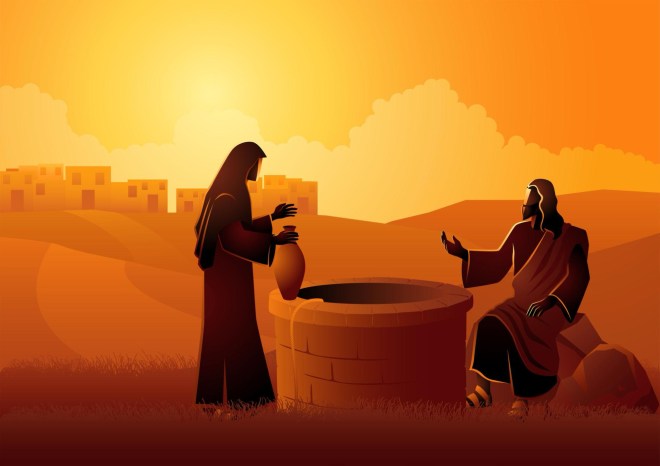
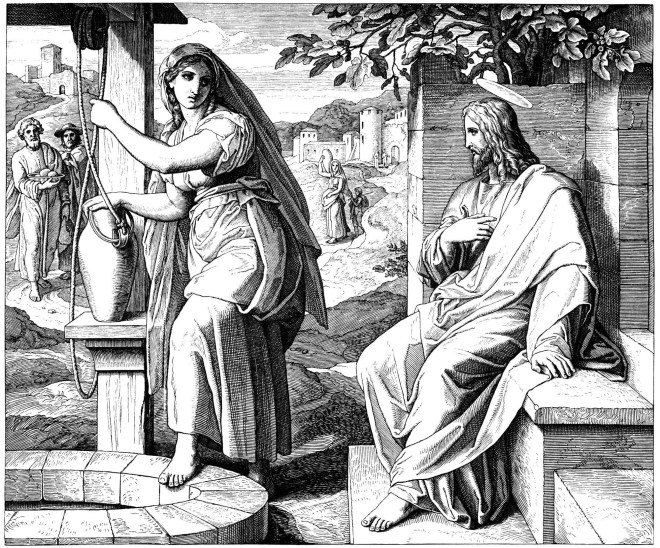
This morning we went deeper into John 4.
Jesus was tired. Dust on His feet. Thirst in His body. And still He chose to engage. He crossed ethnic lines, moral lines, religious lines, and personal pain lines. Not to win an argument. Not to prove a point. But to restore a person.
That matters right now.
We are living in a time where outrage travels faster than microwave backhaul. Blame is currency. Headlines are engineered for reaction. Facts are contested. Narratives are crafted. And too many people are exhausted.
But truth is not loud. It is steady.
At the well, Jesus did not shout the Samaritan woman down. He did not cancel her history. He named it honestly and then offered living water. Grace and truth, together. Not one without the other.
This week I worked on infrastructure — power, bandwidth, line of sight, reliability. I also wrote about AI, data centers, water supply, grid stability. All of it points to the same reality: the future will demand clarity, discipline, and stewardship. Power must be generated. Water must be sourced. Data must be moved. Systems must be resilient.
So must people.
As I step into a senior pastor role at Source of Old Faith, the call is not to build noise. It is to build a foundation. Order. Accountability. Spiritual maturity. A house built on the cornerstone, not on emotion or personality.
In a world of accusation, we need conviction without cruelty. In a world of spin, we need truth without arrogance. In a world of uncertainty, we need hope anchored in something older and stronger than the news cycle.
Jesus is still crossing barriers.
The Spirit is still building living stones. The Church must still be salt and light.
There is a particular kind of weight that comes with leadership in a small rural community. It is not loud or dramatic. It does not announce itself. It settles in quietly and stays. You carry it when you unlock buildings early in the morning, when you answer questions no one else has time to answer, when you make decisions knowing there is no backup team waiting behind you. This year has been full of that kind of weight.
In rural East Texas, leadership is less about titles and more about presence. People know where you live. They know your family. They see whether you show up consistently or disappear when things get hard. Stewardship here is personal. You are not managing abstractions; you are caring for places and people with names, histories, and long memories. That responsibility can be humbling, and it can be heavy, especially when the year brings grief alongside progress.
As an engineer, I spend much of my time working with systems, infrastructure, and technology. Fiber routes, wireless links, power systems, networks that must stay up even when conditions are less than ideal. This year reinforced something I already knew but needed to relearn: technology is never the purpose. It is a tool. It exists to serve people, not to replace presence, wisdom, or care. Infrastructure matters deeply, but only because of what it enables—connection, opportunity, safety, and dignity. When the work becomes only about equipment or metrics, something essential is lost.
There were many days this year when exhaustion and calling pulled in opposite directions. Fatigue does not always come from doing too much; sometimes it comes from caring deeply over a long period of time. There were moments when it would have been easier to step back, to delay decisions, to wait for someone else to take responsibility. But calling is persistent. It does not shout. It simply asks, again and again, whether you will show up today.
Patience has been one of the quiet lessons of this year. Progress in rural places is slow by nature, and that slowness can feel frustrating in a world accustomed to rapid change. Trust grows the same way. It is built through small, repeated acts of reliability. Showing up on time. Following through. Listening more than speaking. These habits rarely make headlines, but they form the foundation of healthy communities.
Faith has been less about answers and more about posture. There were seasons of waiting when clarity did not come quickly. In those moments, faith looked like staying present, doing the next right thing, and trusting that light does not always arrive all at once. Often it comes like morning—gradually, almost unnoticed at first, until suddenly you realize you can see farther than you could before.
Grief has been part of the landscape this year as well. Loss changes how time feels. It reshapes priorities. It has a way of stripping away what is unnecessary and leaving what truly matters. In that sense, grief has also clarified calling. It has reminded me that people are not projects, and that leadership is ultimately an act of care.
As 2026 approaches, there is plenty that could invite fear: uncertainty, resource constraints, the complexity of rural challenges. But fear is not a useful guide. Hope, grounded in faith, is steadier. It does not deny difficulty; it simply refuses to let difficulty have the final word. Looking forward, the goal is not perfection or speed, but faithfulness—continuing to build, serve, and lead with integrity, even when the work remains unfinished.
So the choice at the end of this year is a simple one. To keep walking forward. To trust that God is at work in the quiet, steady moments more than in the loud ones. To believe that showing up, again and again, is itself an act of faith. And to rest in the confidence that light, even when it comes slowly, is still light.
I’ve been thinking a lot lately about what it means to do work that matters when it feels like no one cares.
For the past few years, I’ve been advocating for rural East Texas communities—places like Buna, Newton, San Augustine. I’ve built communication frameworks, written strategic plans, installed digital kiosks, organized meetings, drafted policy briefs. I’ve tried to give voice to communities that have been systematically left out of planning conversations, to help people shape their own futures instead of having decisions made for them from far away.
Most days, it feels like pushing a boulder uphill alone.
The Generational Game
I’m starting to realize this work isn’t measured in months or even years—it’s generational. The infrastructure I’m building, these communication frameworks and pilot models and community briefs, they’re seeds that may not fully mature in my lifetime. And I think I’ve been measuring success wrong.
Maybe success isn’t getting county commissioners to read every brief I send. Maybe it’s that one local leader who picks up this work five years from now and has a template to start from. Maybe it’s just that these documents exist at all—proof that someone saw what was happening, cared enough to name it, and offered solutions.
That’s not failure. That’s foundation-building.
Celebrating What’s Actually There
When the big wins feel impossible, I’m learning to notice the small ones:
A county commissioner who actually responded to a community brief
A kiosk that’s been running for six months without breaking down
One new business owner who showed up to learn about the community
The fact that I’ve created templates other rural organizers can use
These aren’t nothing. They’re evidence of progress, even if they’re not transformation yet.
Finding My People
The San Augustine meeting this year reminded me of something important. Sitting around that table with Eddie, Nancy, Tania, and Marianne—people doing similar work in their own communities—I didn’t feel alone. We shared frustrations, traded contacts, problem-solved together.
I’ve been spending too much energy seeking alignment “up”—with county officials, state agencies, foundations—and not enough building lateral relationships with peers. Those relationships aren’t just strategic. They’re sanity-preserving. They remind me I’m not crazy for thinking this work matters.
Even when nothing changes immediately, these reports I’m writing serve a purpose:
They validate what communities are experiencing
They create a record for future organizers
They protect against institutional amnesia (“we didn’t know there was a problem”)
I need to remember that documentation is activism. Recording what’s happening, naming the gaps, proposing solutions—that’s meaningful work even when it doesn’t produce immediate results.
Not everyone is going to get it. Some officials will remain indifferent. Some developers will keep ignoring community input. Some residents will stay skeptical of any change.
That’s okay. The goal isn’t to convince everyone—it’s to build enough of a coalition to create momentum. I don’t need universal support for this work to matter.
Taking Real Breaks
I’m bad at this one. I need to take actual breaks—not performative self-care, but real disengagement. Days where I don’t mention rural development. Weeks where the kiosks can wait.
This work will always be there. It’s generational, remember? Burning out doesn’t serve anyone.
I’m trying to get more specific about what meaningful progress would look like in the next year. Not transformation—just progress:
Three communities actually using the communication framework I built
One successful regional roundtable where rural leaders are at the table
Maybe a single rural navigator position gets funded somewhere
When I make it concrete like that, I can tell the difference between “not enough impact yet” and “actually making progress.” They’re not the same thing.
Buna, Newton, San Augustine—these aren’t abstractions to me. They’re people who deserve to shape their own futures. The work I’m doing affirms their dignity and their right to be heard.
That has value independent of whether it produces immediate systemic change.
The fact that I keep showing up, keep documenting, keep building frameworks when no one asked me to—I don’t think that’s naivete anymore. I think it’s moral courage. Or stubbornness. Maybe both.
The question isn’t whether to keep going. It’s how to keep going sustainably, strategically, with enough support to avoid burning out completely.
I don’t have all the answers yet. But writing this helps. Naming what’s hard helps. Remembering I’m building foundations, not finished structures—that helps too.
If you’re doing similar work somewhere else—advocating for a place everyone else overlooks, building infrastructure no one asked for, showing up when it feels pointless—you’re not alone. And you’re not crazy.


















 John Hargrove Seeking Truth and Reality