
Keeping Going When No One’s Listening?

Photo by Zetong Li on Pexels.com

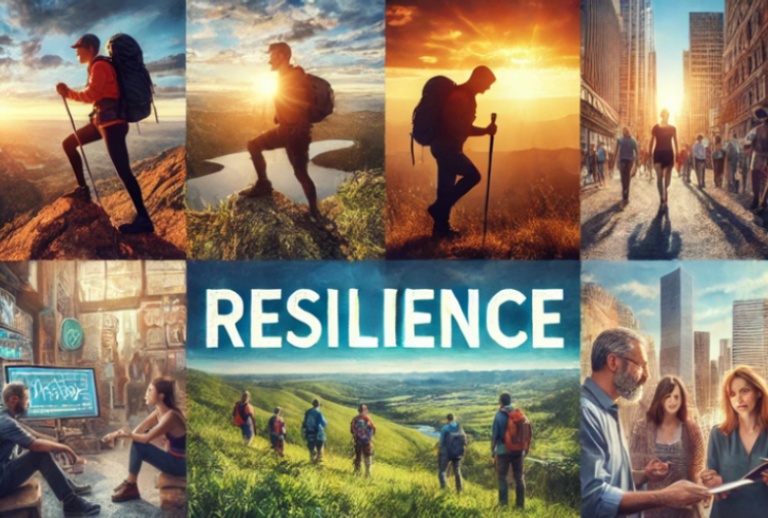
I’ve been thinking a lot lately about what it means to do work that matters when it feels like no one cares.

For the past few years, I’ve been advocating for rural East Texas communities—places like Buna, Newton, San Augustine. I’ve built communication frameworks, written strategic plans, installed digital kiosks, organized meetings, drafted policy briefs. I’ve tried to give voice to communities that have been systematically left out of planning conversations, to help people shape their own futures instead of having decisions made for them from far away.

Photo by Etha on Pexels.com

Most days, it feels like pushing a boulder uphill alone.

The Generational Game

I’m starting to realize this work isn’t measured in months or even years—it’s generational. The infrastructure I’m building, these communication frameworks and pilot models and community briefs, they’re seeds that may not fully mature in my lifetime. And I think I’ve been measuring success wrong.

Photo by Pixabay on Pexels.com

Maybe success isn’t getting county commissioners to read every brief I send. Maybe it’s that one local leader who picks up this work five years from now and has a template to start from. Maybe it’s just that these documents exist at all—proof that someone saw what was happening, cared enough to name it, and offered solutions.

That’s not failure. That’s foundation-building.

Celebrating What’s Actually There

When the big wins feel impossible, I’m learning to notice the small ones:

  • A county commissioner who actually responded to a community brief
  • A kiosk that’s been running for six months without breaking down
  • One new business owner who showed up to learn about the community
  • The fact that I’ve created templates other rural organizers can use

These aren’t nothing. They’re evidence of progress, even if they’re not transformation yet.

Finding My People

The San Augustine meeting this year reminded me of something important. Sitting around that table with Eddie, Nancy, Tania, and Marianne—people doing similar work in their own communities—I didn’t feel alone. We shared frustrations, traded contacts, problem-solved together.

I’ve been spending too much energy seeking alignment “up”—with county officials, state agencies, foundations—and not enough building lateral relationships with peers. Those relationships aren’t just strategic. They’re sanity-preserving. They remind me I’m not crazy for thinking this work matters.

Photo by Tairon Fernandez on Pexels.com

The Documentation Matters

Even when nothing changes immediately, these reports I’m writing serve a purpose:

  • They validate what communities are experiencing
  • They create a record for future organizers
  • They protect against institutional amnesia (“we didn’t know there was a problem”)

I need to remember that documentation is activism. Recording what’s happening, naming the gaps, proposing solutions—that’s meaningful work even when it doesn’t produce immediate results.

Photo by Tom Fisk on Pexels.com

Letting Go of Universal Buy-In

Not everyone is going to get it. Some officials will remain indifferent. Some developers will keep ignoring community input. Some residents will stay skeptical of any change.

That’s okay. The goal isn’t to convince everyone—it’s to build enough of a coalition to create momentum. I don’t need universal support for this work to matter.

Taking Real Breaks

I’m bad at this one. I need to take actual breaks—not performative self-care, but real disengagement. Days where I don’t mention rural development. Weeks where the kiosks can wait.

This work will always be there. It’s generational, remember? Burning out doesn’t serve anyone.

Photo by Kaique Rocha on Pexels.com

What Does “Enough” Look Like?

I’m trying to get more specific about what meaningful progress would look like in the next year. Not transformation—just progress:

  • Three communities actually using the communication framework I built
  • One successful regional roundtable where rural leaders are at the table
  • Maybe a single rural navigator position gets funded somewhere

When I make it concrete like that, I can tell the difference between “not enough impact yet” and “actually making progress.” They’re not the same thing.

Photo by Pixabay on Pexels.com

Why I Keep Going

Buna, Newton, San Augustine—these aren’t abstractions to me. They’re people who deserve to shape their own futures. The work I’m doing affirms their dignity and their right to be heard.

That has value independent of whether it produces immediate systemic change.

The fact that I keep showing up, keep documenting, keep building frameworks when no one asked me to—I don’t think that’s naivete anymore. I think it’s moral courage. Or stubbornness. Maybe both.

The question isn’t whether to keep going. It’s how to keep going sustainably, strategically, with enough support to avoid burning out completely.


Photo by Pixabay on Pexels.com

I don’t have all the answers yet. But writing this helps. Naming what’s hard helps. Remembering I’m building foundations, not finished structures—that helps too.

If you’re doing similar work somewhere else—advocating for a place everyone else overlooks, building infrastructure no one asked for, showing up when it feels pointless—you’re not alone. And you’re not crazy.

Photo by Visual Tag Mx on Pexels.com

Keep going. The work matters.

The Pain We Carry

– Lament with Jeremiah & the Psalmist

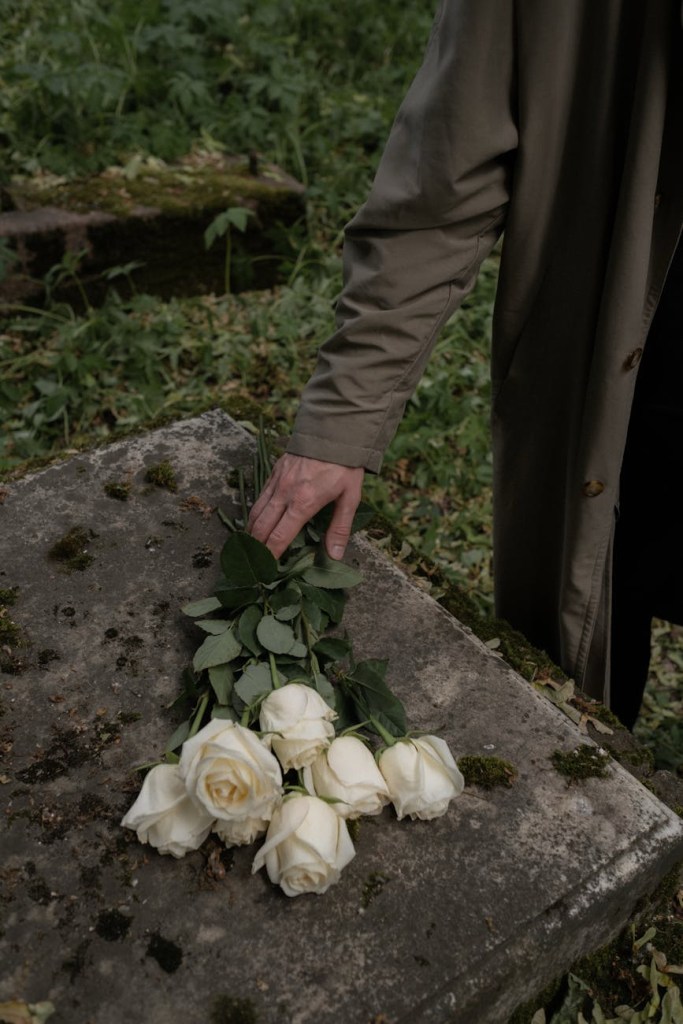
There’s a weight we don’t often talk about in church life—the grief that lingers in the soul when things don’t work out the way we prayed they would. Jeremiah knew that weight. He wrote, “Oh, that my head were a spring of water and my eyes a fountain of tears! I would weep day and night for the slain of my people” (Jeremiah 9:1). The psalmist prayed something similar: “Help us, O God of our salvation, for the glory of your name; deliver us, and forgive our sins, for your name’s sake” (Psalm 79:9).

Both voices remind us that lament is not just personal sadness—it’s a holy act of naming the pain before God.

Lament in Scripture, Lament in Life

When I read Jeremiah’s words, I hear echoes of seasons in my own journey. There have been moments where I’ve had to sit across from friends, colleagues, or family members, knowing that words couldn’t fix the brokenness we were facing. Times when projects I poured years into were stalled by forces beyond my control. Times when communities I love were fractured, and I felt powerless to heal the divides.

I’ve often carried those burdens quietly, as an engineer, a leader, a brother, a son. Like many men, I was taught to just keep going, solve the next problem, make the next call. But Scripture teaches that silence isn’t the only response—lament is.

What Lament Looks Like

Lament is not despair. It’s not quitting. It’s a turning of the heart toward God when life feels too heavy to carry. It’s saying out loud what we’d rather keep inside:

This hurts. I don’t understand. God, why does it seem like you’re far away?

Lament opens a door to hope because it refuses to let pain have the last word.

Carrying Pain in a World of Injustice

The prophet Amos points out that part of our pain comes from living in a world where injustice is real. He names those who trample the needy and cheat the poor. I’ve seen versions of that play out in Southeast Texas—families weighed down by the unfair cost of living, workers underpaid while corporations thrive, small towns overlooked when resources are allocated.

My own work in rural broadband has been shaped by that reality. It grieves me that whole communities are still left behind in an age where connection determines opportunity. That’s not just a technical problem—it’s a justice issue. And lament, at its heart, is agreeing with God that this isn’t how things should be.

Learning to Pray the Pain

Paul urges us in 1 Timothy to pray “for all people—for kings and all who are in high positions.” That’s not easy when leaders disappoint us, but it’s part of carrying pain rightly. Prayer puts lament into motion, turning grief into intercession.

I’ve had to learn this the hard way. In seasons where leadership at church or in business felt uncertain, I wanted to either fix everything or walk away. Instead, God has gently reminded me to pray—not just for outcomes, but for people. Prayer doesn’t erase pain, but it transforms how we carry it.

Choosing the Treasure That Lasts

Jesus’ parable of the dishonest manager ends with this line: “You cannot serve God and wealth.” For me, that lands like a compass point. All the work, all the projects, all the energy—none of it can become the ultimate treasure. Pain has a way of reminding us what really matters.

When I’ve lost deals, faced setbacks, or been misunderstood, the Spirit has pressed me back to what lasts: relationships, faith, hope, and love. Those are eternal treasures.

Walking Forward with Honest Hearts

So what do we do with the pain we carry? We learn to lament. We give voice to Jeremiah’s tears and the psalmist’s cries. We name injustice, we pray for people in power, and we re-orient our hearts to the treasure of God’s kingdom.

If you’re carrying something heavy today, don’t bury it. Pray it. Cry it. Write it. Let lament be your way of standing before God honestly. Because in the end, lament is not just about pain—it’s about trust. Trust that God hears. Trust that God heals. Trust that His kingdom will come, even in Southeast Texas, even in my life and yours.

A Life Cut Short: Reflections on Charlie Kirk 

Charlie Kirk was just 31 years old. A speaker about faith in God, a passionate advocate for what he believed, and—beyond all titles—a human being. Like every one of us, he was a unique creation, fashioned in the image of God. That truth alone makes his death tragic.

I am deeply saddened that someone felt motivated to murder him instead of speaking to him, listening, or even debating with him. Words may cut, but they can also build bridges. To bypass dialogue and take a life is to step into the place of God—as judge and executioner for the universe. That is a role none of us are worthy to assume.

This act is more than political. It is a wound in the fabric of our humanity. Violence against any person—friend, foe, or stranger—reveals how far we fall when we stop seeing each other as God’s handiwork. Every life is sacred, and when one is taken unjustly, we are all diminished.

As Christians, we are called to something higher. We are reminded:

“Beloved, never avenge yourselves, but leave it to the wrath of God, for it is written, ‘Vengeance is mine, I will repay, says the Lord.’” (Romans 12:19)

Judgment belongs to God. Our call is to love, to bear witness to truth with grace, and to pray for those we disagree with—even when it feels impossible.

So let us grieve. Let us pray for Charlie’s family, friends, and the countless young people who looked to him for guidance. Let us also pray for our nation, that words might replace weapons, and conversations might replace condemnation.

And let us remember: in God’s eyes, no person is disposable. Each of us carries eternal worth. May that truth shape how we speak, how we act, and how we disagree.

Origin meaning morality destiny

Four questions everyone has

Origin meaning morality destiny

Apologist Ravi Zacharias offers what he calls the 3-4-5 method of analyzing worldviews. I would like to share it with you because it will provide you a method with which to judge worldview options.
First, there are three tests that a worldview must pass. It must be:
1. logically consistent – Its teachings cannot be self-contradictory.
2. empirically adequate – Its teachings must match what we see in reality.
3. existentially relevant – Its teachings must speak directly to how we actually live our lives.
Second, each worldview must address the following fourultimate questions:
1. origin – Where do the universe and human beings come from?
2. meaning – What is the meaning or purpose of life?
3. morality – How do we know what is right and what is wrong?
4. destiny – What happens to us after we die?
Third, there are five academic disciplines that must be employed to study a worldview:
1. theology – the study of Godchurch
2. metaphysics – the study of what is ultimately real
3. epistemology – the study of how we can know things
4. ethics – the study of moral right and wrong
5. anthropology – the study of what and who humans are
Why do I believe that the worldview of biblical Christianity is the best choice? Its teachings are logically consistent, they accurately describe reality as it is, and they speak directly to the human condition.
In addition, Christianity provides compelling and powerful answers to the questions of origin, meaning, morality, and destiny.
Finally, the theology, metaphysics, epistemology, ethics, and anthropology of the Christian worldview are expansively rich and deeply profound – unsurpassed by any other worldview.
If you are a Christian and you haven’t analyzed Christianity using the 3-4-5 method, you are truly missing out. Read, and read some more. Dig into your faith, as it provides comprehensive answers to life’s most important questions.
If you are not a Christian, I plead with you to open your heart and mind, and study the Christian worldview. Apply the 3-4-5 method described above, but never forget that Christian doctrine always revolves around a person, Jesus Christ. He is the embodiment of our faith, and it is to him that we look.