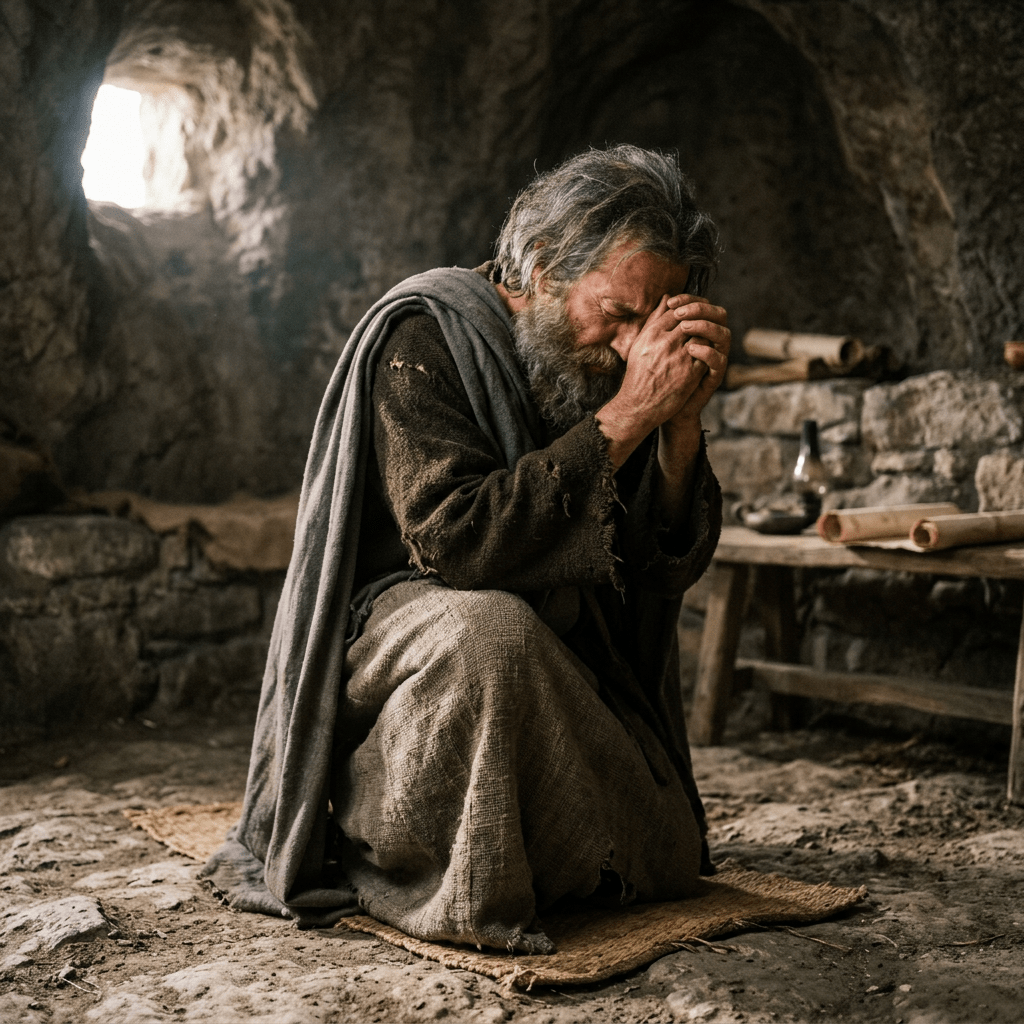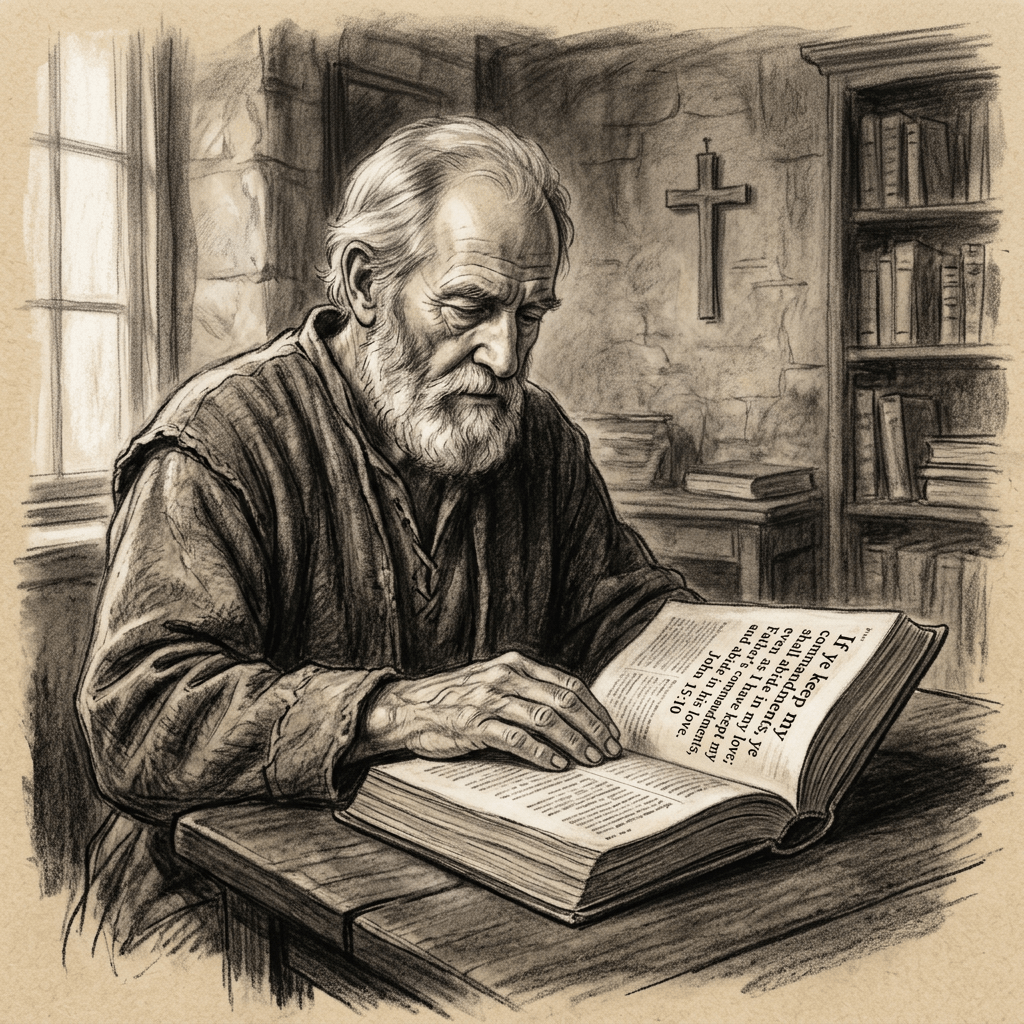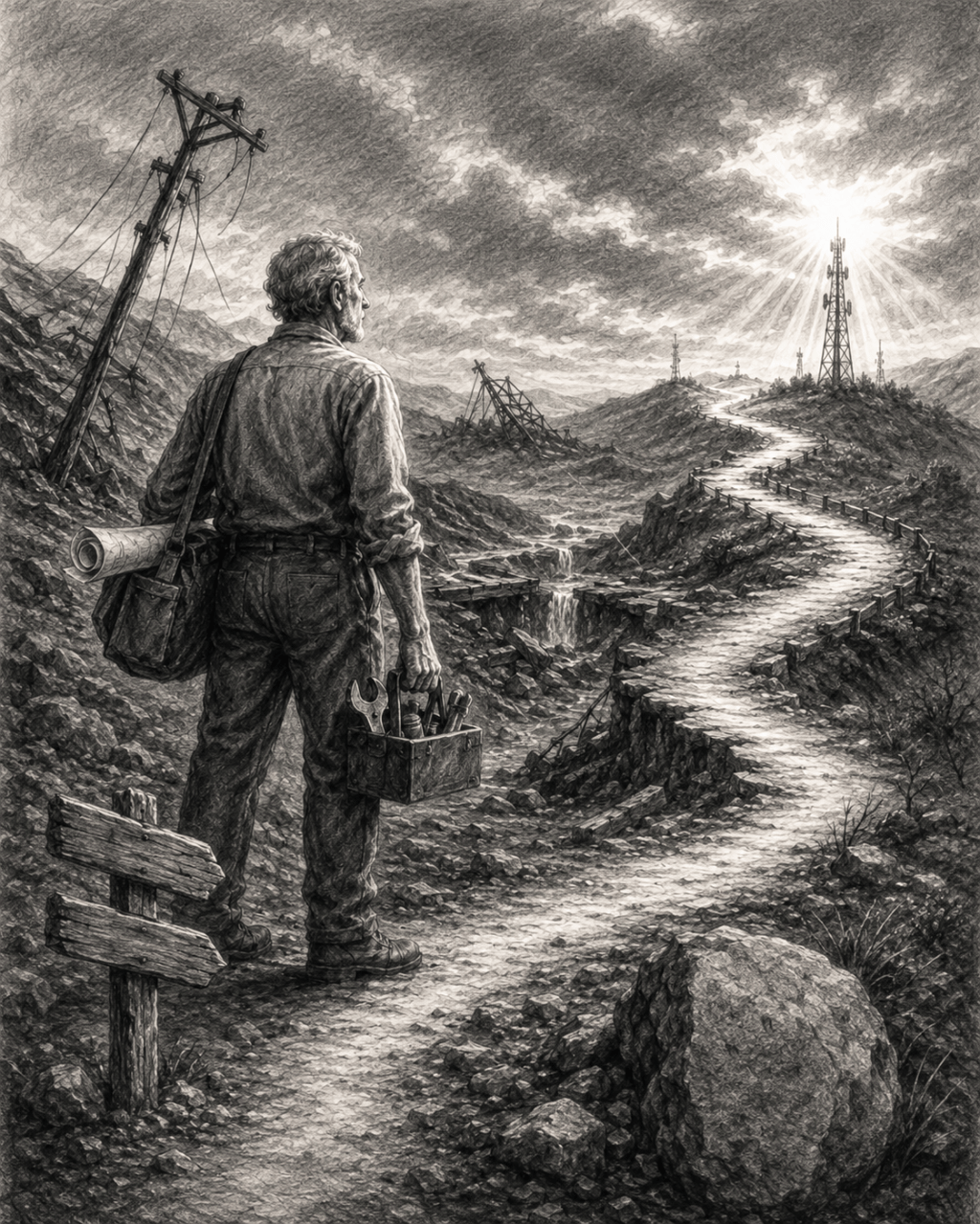
One of the quiet assumptions many believers carry—often without realizing it—is that faith should somehow shield us from hardship. When trials come, they can feel confusing or even destabilizing: If God is faithful, why am I still suffering? Scripture addresses this question directly, and its answer is both sobering and deeply hopeful.
The Bible does not promise Christians a trial-free life. What it does promise is something far better: God’s presence, preservation, and ultimate deliverance.
Trials Are Not an Accident
The New Testament is remarkably honest about the Christian life. Suffering is not presented as a failure of faith, nor as a sign of God’s absence.
Paul tells the Thessalonian church that trials should not surprise them, because “you know that we are destined for them” (1 Thessalonians 3:3). That single statement overturns the idea that hardship is an anomaly. Trials are part of the calling of discipleship in a fallen world.
Jesus Himself warned His followers that obedience would not lead to ease, but to opposition. Faith places us in alignment with God’s kingdom—and that alignment often brings friction with the world as it is.
God Knows How to Rescue the Godly
Acknowledging trials does not mean resignation to despair. Scripture is equally clear that God is not passive in the suffering of His people.
Peter writes, “The Lord knows how to rescue the godly from trials” (2 Peter 2:9). Notice what the verse does—and does not—say. It does not say God prevents all trials. It says He knows how to rescue His people from them.
That rescue may take different forms:
sustaining faith under pressure, moral protection in the midst of temptation, or final deliverance when God brings history to its appointed end.
Peter himself endured imprisonment and martyrdom, yet still testified to God’s rescuing power. For him, rescue did not mean avoidance; it meant faith preserved and hope fulfilled.
Revelation 3:10 is often quoted as a promise of exemption from suffering: “I will keep you from the hour of trial that is coming on the whole world.”
The language is important. The word “keep” in Scripture frequently means to guard or to preserve, not necessarily to remove from a situation entirely. Jesus uses the same idea in His prayer when He asks the Father not to take His disciples out of the world, but to keep them from the evil one.
In Revelation, the promise is not comfort or ease, but protection during a defined period of global testing. The emphasis is on God’s sovereignty and faithfulness, not on escape from all difficulty.
Watchfulness Assumes Ongoing Testing
Jesus’ warning in Matthew 25:13—“Keep watch, because you do not know the day or the hour”—only makes sense if believers remain engaged in a world marked by uncertainty and pressure.
If Christians were guaranteed removal before hardship, vigilance would be unnecessary. Watchfulness, endurance, and faithfulness are repeated themes precisely because trials remain part of the journey until Christ’s return.
The Pattern of Scripture Is Preservation Through, Not Removal From
When we step back and look at the whole biblical story, a consistent pattern emerges:
Noah was preserved through the flood, not taken away before it came. Israel was protected within Egypt during the plagues. Daniel was saved in the lions’ den. The early church grew stronger under persecution.
God’s people are repeatedly exposed to hardship—but never abandoned to it.
What Christians Are Actually Promised
The Bible makes these promises clear:
Christians are not promised a life without trials. They are promised God’s sustaining presence. They are promised protection from God’s final wrath. They are promised ultimate vindication, resurrection, and restoration.
Trials test the world.
Trials refine and reveal genuine faith.
A Final Word
Christian hope is not rooted in avoidance of suffering, but in confidence that suffering does not have the final word. God does not promise to keep His people from every storm—but He does promise to keep them in the storm and to bring them safely home.
Faith is not the absence of trials.
It is trust that God is faithful in the midst of them.
There is a particular kind of weight that comes with leadership in a small rural community. It is not loud or dramatic. It does not announce itself. It settles in quietly and stays. You carry it when you unlock buildings early in the morning, when you answer questions no one else has time to answer, when you make decisions knowing there is no backup team waiting behind you. This year has been full of that kind of weight.
In rural East Texas, leadership is less about titles and more about presence. People know where you live. They know your family. They see whether you show up consistently or disappear when things get hard. Stewardship here is personal. You are not managing abstractions; you are caring for places and people with names, histories, and long memories. That responsibility can be humbling, and it can be heavy, especially when the year brings grief alongside progress.
As an engineer, I spend much of my time working with systems, infrastructure, and technology. Fiber routes, wireless links, power systems, networks that must stay up even when conditions are less than ideal. This year reinforced something I already knew but needed to relearn: technology is never the purpose. It is a tool. It exists to serve people, not to replace presence, wisdom, or care. Infrastructure matters deeply, but only because of what it enables—connection, opportunity, safety, and dignity. When the work becomes only about equipment or metrics, something essential is lost.
There were many days this year when exhaustion and calling pulled in opposite directions. Fatigue does not always come from doing too much; sometimes it comes from caring deeply over a long period of time. There were moments when it would have been easier to step back, to delay decisions, to wait for someone else to take responsibility. But calling is persistent. It does not shout. It simply asks, again and again, whether you will show up today.
Patience has been one of the quiet lessons of this year. Progress in rural places is slow by nature, and that slowness can feel frustrating in a world accustomed to rapid change. Trust grows the same way. It is built through small, repeated acts of reliability. Showing up on time. Following through. Listening more than speaking. These habits rarely make headlines, but they form the foundation of healthy communities.
Faith has been less about answers and more about posture. There were seasons of waiting when clarity did not come quickly. In those moments, faith looked like staying present, doing the next right thing, and trusting that light does not always arrive all at once. Often it comes like morning—gradually, almost unnoticed at first, until suddenly you realize you can see farther than you could before.
Grief has been part of the landscape this year as well. Loss changes how time feels. It reshapes priorities. It has a way of stripping away what is unnecessary and leaving what truly matters. In that sense, grief has also clarified calling. It has reminded me that people are not projects, and that leadership is ultimately an act of care.
As 2026 approaches, there is plenty that could invite fear: uncertainty, resource constraints, the complexity of rural challenges. But fear is not a useful guide. Hope, grounded in faith, is steadier. It does not deny difficulty; it simply refuses to let difficulty have the final word. Looking forward, the goal is not perfection or speed, but faithfulness—continuing to build, serve, and lead with integrity, even when the work remains unfinished.
So the choice at the end of this year is a simple one. To keep walking forward. To trust that God is at work in the quiet, steady moments more than in the loud ones. To believe that showing up, again and again, is itself an act of faith. And to rest in the confidence that light, even when it comes slowly, is still light.
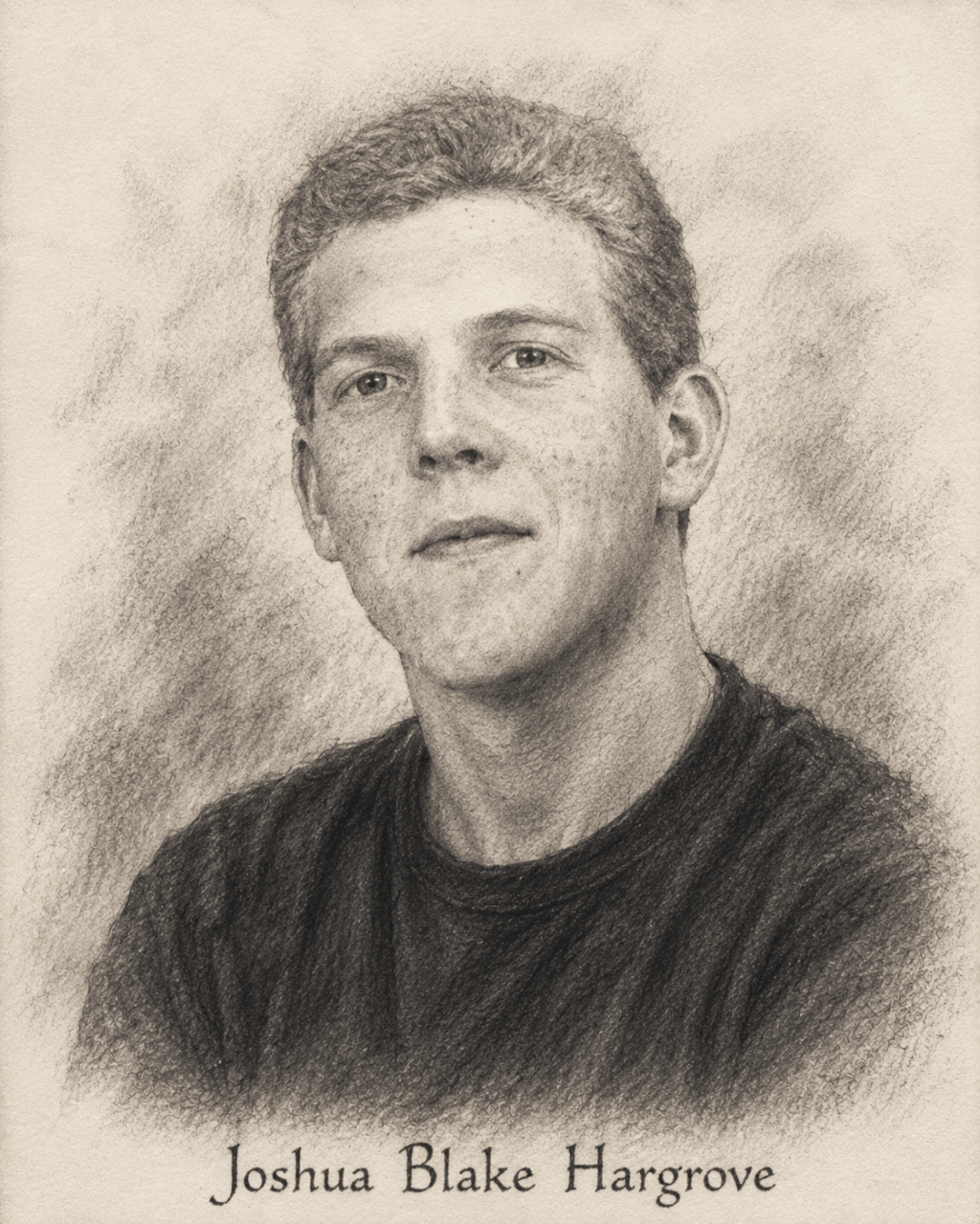
For Joshua Blake Hargrove from John Hagrove his dad June 2025 1984–2002
My son,
If I could sit across from you today—twenty-three years after you left this world—I would begin with the words that still rise unbidden in my heart: I miss you. Every day. Not with the same sharp ache as before, but with a quiet, steady presence that stays with me like breath. You are never far from my thoughts, never absent from my soul.
I would tell you honestly: a piece of me went quiet the day you died—and another part went angry. I wasn’t just broken. I was furious. Angry at the unfairness, the helplessness, the fact that the world kept spinning without you in it. I didn’t know how to carry the weight of that kind of grief, so I buried it. I buried the part of me that laughed freely, dreamed boldly, and felt things too deeply.
And in its place, I went to work. I built things. I solved problems. I became dependable and productive. But underneath it all, I was still just a father who had lost his son. The music stopped. The prayers faded. I kept going because I didn’t know how to stop—but I also didn’t know how to live fully anymore.
If I could tell you anything now, it would be this: Your death didn’t end me—but it did remake me. And over time, with grace and patience, something inside me began to stir again.
I would tell you that God didn’t abandon me. He held me through it all, though I didn’t always recognize His presence. And in the years that followed, a few key people—some family, some unexpected friends—entered my life and helped awaken parts of me I thought were gone forever. None of them replaced you. They couldn’t. But somehow, through their kindness, gentleness, and love, I began to feel again. I began to believe that I could be fully alive, even while still carrying your absence. I hold those relationships with reverence. They brought back to life the part of me that knows how to love without fear.
I would tell you about your mama. She’s still the strongest woman I’ve ever known. Her grief was quiet, but it ran deep. We’ve grown older together, and we still speak your name. Sometimes in words, sometimes in silence. You are still part of our home, our hearts, our story.
I’d tell you about the little ones in our family—your cousins’ children, great-nieces and nephews you never got to meet. I watch them play, laugh, stumble and grow, and I see glimpses of you. Their lives are full of light, and I imagine the kind of uncle you would have been—funny, kind, full of mischief and wisdom. Your absence in those moments is a presence all its own.
I’d tell you that I’ve come to believe in resurrection—not just of bodies, but of broken hearts, of joy, of purpose. I’ve come to believe that the deepest love isn’t erased by death. It changes form, but it remains. And I carry you as part of that resurrection. You are part of what brought me back to life.
Most of all, I would tell you that you are still my son. Nothing—not time, not distance, not death—can ever take that from us. You made me a father. You taught me the kind of love that doesn’t fade. And though I never got to watch you grow old, you’ve shaped the man I’ve become more than anyone else ever could.
If I could hold your face in my hands one more time, I would say what I still say in the silence of prayer:
You are my boy. I love you. And I will carry you until the day I see you again.
With all I am, Dad
And I would tell you—humbly—that someone came into my life many years later who helped awaken something that had gone dormant inside me. That I could still feel. Maybe I was allowed to be fully alive again. I hold that chapter of my life with reverence. As strange and sacred as it was, it brought something back to me I thought was lost forever: the part of me that knows how to love without fear.
With Reflections from Various Theologies, Early Church Fathers, and Zola Levitt Studies
Names & Meaning Adam means “earth” or “ground,” referencing his formation from the dust. Eve means “life” or “living,” reflecting her role as “the mother of all who live” (Genesis 3:20).
Scriptural Origin Genesis 1–5 tells the story of Adam and Eve: the first humans, created in God’s image (Genesis 1:27), given the sacred task of stewardship over creation (Genesis 2:15), and placed in the Garden of Eden to live in communion with God and one another.
God formed Adam from dust and breathed into him the breath of life (Genesis 2:7). Eve was created from Adam’s side (Genesis 2:22), indicating not inferiority, but equality and partnership. Their union represented the first human covenant and family.
The Fall and the First Gospel Tempted by the serpent, Eve ate from the tree of the knowledge of good and evil and gave the fruit to Adam, who ate knowingly (Genesis 3:6). Their eyes were opened, shame entered the world, and they hid from God. Yet, even in judgment, God sought them out (Genesis 3:9) and promised redemption through the “seed of the woman” (Genesis 3:15)—the first gospel.
Christian Perspectives John Wesley, in Sermon 44: Original Sin, wrote that Adam’s disobedience “infected the very root of our nature,” but that God’s grace “goes before” to awaken us. He insisted on shared guilt and shared grace. Adam was passive; Eve was deceived. Both sinned and both were recipients of prevenient grace.
For Wesley, the story of Adam and Eve is not about assigning blame, but about recognizing the universal condition of sin and the universal availability of redemption. Their expulsion from Eden was not the end—it marked the beginning of God’s saving work.
Early Church Fathers
Irenaeus of Lyons (2nd century)
Irenaeus taught that Adam’s sin introduced corruption into humanity, not merely by imitation but by a real distortion of human nature. He emphasized that humanity fell “in Adam” because Adam was the head of the human race. Simultaneously, Irenaeus introduced the earliest full articulation of prevenient grace through the theme of “recapitulation”: God moves first to heal what Adam broke, and Christ retraces Adam’s steps to restore human freedom. Eve is portrayed as genuinely deceived; Adam knowingly chose disobedience.
Tertullian (late 2nd–early 3rd century)
Tertullian argued that Adam transmitted guilt and corruption biologically (“seminal identity”). He stressed the seriousness of the Fall and saw all humans as implicated in Adam’s act. He also affirmed that divine grace initiates repentance—though not systematically developed.
Origen (3rd century)
Origen taught that humanity inherited a condition of moral weakness because of Adam, even if he avoided later Western language of “imputed guilt.” He explicitly states that God’s grace must “precede and assist” the soul’s turning to God. Eve’s deception and Adam’s disobedience are both treated as components of the Fall, but Adam carries the headship responsibility.
Athanasius (4th century)
In On the Incarnation, Athanasius depicts Adam’s sin as plunging humanity into corruption and death. He presents grace as wholly prior—God must act first to restore the human will, because the human will has lost its capacity to return to God unaided.
Augustine of Hippo (late 4th–early 5th century)
Augustine is the most decisive early voice on inherited guilt and divine initiative:
Adam’s sin caused a real corruption of human nature inherited by all.
Humans are morally unable to initiate faith or love of God.
Grace must come first—gratia praeveniens—to awaken the will. Augustine also distinguished between Eve’s deception and Adam’s knowing rebellion (1 Tim. 2:14), but he held both fully responsible.
John Cassian (5th century)
Cassian moderated Augustine slightly: humanity is wounded by Adam, unable to save itself, but still retains some capacity to cooperate when grace first stirs the soul. He preserved the idea that grace initiates, but emphasized synergy.
Medieval Christian Writers
Anselm of Canterbury (11th century)
In Cur Deus Homo, Anselm presents original sin as the loss of original righteousness and the inheritance of guilt. Anselm is firmly Augustinian: the will cannot return to God without God beginning the work.
Thomas Aquinas (13th century)
Aquinas taught that Adam’s sin deprived humanity of supernatural grace and disordered human nature. Original sin is both guilt and the “privation of original justice.” He emphasizes that actual grace precedes every movement of the will—a clear affirmation of prevenient grace. He distinguishes the modes of Adam and Eve’s sin: Eve fell by deception; Adam by consent; both equally contributed to humanity’s corruption.
Bonaventure (13th century)
Bonaventure strongly emphasized that grace is always prior to human action and that no one can reach God unless God first inclines the heart.
Reformation-Era Voices (16th century)
Martin Luther
Luther held that original sin corrupts the entire human nature and that no part of the will remained untainted. He described fallen humanity as spiritually “dead.” Grace—specifically the work of the Holy Spirit—must awaken faith; it always precedes. He kept the distinction of Eve’s deception and Adam’s headship responsibility.
John Calvin
Calvin articulated that Adam’s disobedience “contaminated” human nature. Original sin is both guilt and corruption. The will is so bound that it cannot even desire God unless God first acts—praeveniens gratia is implicit in his doctrine of regeneration. Both Adam and Eve sinned, but Adam’s role as covenant head made his act determinative.
Seventeenth and Eighteenth-Century Writers (Wesley’s Context)
Jacobus Arminius (1560–1609)
Arminius, whom Wesley later followed, taught that original sin leaves humanity totally unable to turn to God without grace. But he insisted on a universal, enabling grace restorative to free will—“prevenient grace”—given through the Spirit on the basis of Christ’s atonement. Adam and Eve jointly sinned; Adam, as representative head, transmitted the fallen condition.
The Arminian Remonstrants (17th century)
They reinforced:
corrupted human nature inherited from Adam;
salvation’s first movement from God;
universal enabling grace restoring the ability to believe.
Richard Baxter (1615–1691)
Baxter accepted inherited corruption and affirmed that God must first stir the will. He drew heavily from Augustine but maintained human response as genuinely free, once grace awakens it.
Jeremy Taylor (1613–1667)
Taylor taught that humanity inherits the consequences of Adam’s sin (mortality and corruption), and that divine grace precedes repentance. He leaned toward the Eastern emphasis: human nature is wounded, not annihilated.
Jonathan Edwards (1703–1758)
A contemporary of Wesley with a sharply different view. Edwards asserted:
Adam’s sin causes a “moral inability” for humans to choose good.
Depravity is total and affects affections, not just intellect.
Only sovereign, effectual grace can awaken the soul. He did not affirm universal prevenient grace; he affirmed monergistic regeneration.
John Fletcher (1729–1785)
Wesley’s closest theological ally. Fletcher defended prevenient grace as universally extended to all humanity and described it as the restorative presence of the Spirit enabling repentance, faith, and obedience. He affirmed inherited corruption but rejected imputed guilt in the strict Calvinist sense.
Across the Centuries
Wesley’s position in Sermon 44 stands in a long Christian tradition with several consistent themes:
Humanity inherits a real corruption from Adam. From Irenaeus to Aquinas to Arminius, this is nearly universal.
Adam and Eve share responsibility, though in different modes. The distinction (Eve deceived, Adam knowingly choosing) is common, but shared sin and shared consequences remain.
Grace always initiates. Augustine, Aquinas, Cassian, Luther, Calvin, Arminius, and Wesley all affirm that God must move first—though they differ on whether this grace is universal (Arminius, Wesley) or selective (Calvin, Edwards).
Wesley fits into the synergistic, grace-first tradition rooted in the East, moderated Augustine, and developed through Arminian theology. His emphasis on universal prevenient grace is deeply indebted to both the early fathers (Irenaeus, Cassian) and Reformation-era Arminians.
Terms
Life After Eden Outside the garden, Adam and Eve lived long lives. They worked the land, bore children, and experienced grief, especially after Cain murdered Abel. Yet in the birth of Seth (Genesis 4:25), hope continued. Through Seth’s line came Noah, Abraham, and eventually Christ (Luke 3:38).
The apocryphal Life of Adam and Eve imagines their post-Eden life as one of repentance, fasting, and longing for restoration—resonant with early Christian and Wesleyan themes of grace-empowered transformation.
Zola Levitt Connections In A Christian Love Story, Zola Levitt draws on Jewish wedding imagery to show how God’s covenant with humanity began in Eden and will culminate in the marriage supper of the Lamb. Adam and Eve’s creation and separation mirror the model of bride and groom—God forming a people for Himself.
In The Seven Feasts of Israel, the Eden narrative foreshadows the structure of God’s redemptive calendar. The Passover feast points to the need for blood to cover sin—a concept introduced when God clothed Adam and Eve with garments of skin (Genesis 3:21).
Theological Legacy Adam and Eve are not merely figures of failure. They are the beginning of both the problem and the promise. Their lives teach us:
That sin breaks relationships—with God, others, and creation.
That shame does not stop God from pursuing us.
That redemption is planned, promised, and possible from the very beginning.
Application for Today Here and beyond, their story reminds us that every broken moment is also an invitation to return to God. The church becomes a new garden—where grace grows, forgiveness is cultivated, and the promise of full restoration blooms.
Glossary of Terms – Adam and Eve Study
Biblical and Theological Terms
Image of God (Imago Dei) The unique identity given to humans reflects God’s nature—reason, moral agency, relational capacity (Genesis 1:27).
Protoevangelium Latin term meaning “first gospel,” referring to Genesis 3:15—the promise that the seed of the woman would crush the serpent.
Terms from Church History and Wesleyan Thought
Second Adam A title for Christ, used in 1 Corinthians 15:45, to describe His role in reversing the sin of the first Adam.
Greek:eschatos Adam (ἔσχατος Ἀδάμ) – “last Adam”
Typology A theological method where Old Testament persons or events (types) foreshadow New Testament fulfillment (antitypes). Eve–Mary and Adam–Christ are classic examples.
Sanctification The process by which a believer is made holy. In Wesleyan thought, this includes entire sanctification, a heart perfected in love.
Exile The condition of being separated from one’s rightful place. Adam and Eve’s removal from Eden foreshadows Israel’s exile and humanity’s spiritual separation from God.
Here lies John E. Hargrove January 24, 1958 – [date yet to be written]
A boy from Buna who never stopped wondering how things worked and never stopped trying to make them work for others.
He chased signals across microwave towers and fiber miles, built networks that carried light to forgotten places, and in the darkest valleys carried the light of Christ to broken hearts.
Husband to Leisa for a lifetime and beyond, father to Joshua—whose brief life taught him how to love forever, son of Robert and Lavee, brother, friend, mentor, builder.
He knew grief intimately, yet chose every morning to show up, to do the quiet work that lasts when applause has long faded.
He was not perfect. He was faithful.
Still learning. Still building. Still becoming. Now, at last, fully known and fully home.
Some days I’m reminded to go back to the starting point. “In the beginning was the Word…” That truth centers me. It reminds me that everything we’re doing—family, work, community—rests on something solid and steady.
The scriptures in the RCL today lean into that same hope.
Daniel talks about God standing with His people even in hard seasons. Psalm 16 says our security isn’t in what we build, but in the One who holds us. Hebrews encourages us to keep lifting each other up. And in Mark, Jesus tells us not to get lost in the noise or fear when the world feels shaky.
Then He brings it all home: “I came that they may have life, and have it more abundantly.”
That’s the thread that runs through it all. A reminder that real life—steady, grounded, meaningful—comes from the One who speaks light into dark places and hope into tired hearts.
So if you’re carrying a lot today, take a breath. The One who was there in the beginning is still speaking life now. We can walk forward with that.
(inspired by Pete Townshend’s song and the words of Jesus in Matthew 22:37–40)
When Pete Townshend sang, “Let my love open the door to your heart,” he probably wasn’t trying to preach a sermon—but he touched on something deeply spiritual. Love is the master key. Jesus said it even more plainly:
“‘Love the Lord your God with all your heart and with all your soul and with all your mind.’
This is the first and greatest commandment.
And the second is like it: ‘Love your neighbor as yourself.’
All the Law and the Prophets hang on these two commandments.”
—Matthew 22:37–40
Everything—every rule, every teaching, every act of faith—hinges on love. When Jesus boiled down the whole of Scripture into two laws, He was saying that religion isn’t about gates and guards; it’s about open doors.
When we love God fully, our hearts unlock to His presence. When we love others sincerely, their hearts begin to open too. The power that heals, restores, and reconciles begins to flow freely—because love always finds a way through.
So maybe today the invitation is simple:
Let His love open the door.
Let it unlock your fears, your grudges, your guarded places.
Let it swing wide the door of compassion for your neighbor, the one who’s hard to love, the one who doesn’t love you back.
The song says, “When people keep repeating that you’ll never fall in love… let my love open the door.”
Jesus says the same, only deeper. His love isn’t just romantic—it’s redemptive. It doesn’t just make life better; it makes life new.
For some, it’s addiction that never seems to let go.
For others, it’s broken promises, betrayal, or the crushing weight of loss.
In moments like these, faith can feel more like a whisper than a roar.
But here’s the good news: God does not ask us to have perfect faith. He asks us to trust Him with what little faith we have — even when it feels shaky.
What the Bible Says About Faith
Hebrews 11 begins with this powerful reminder:
“Now faith is confidence in what we hope for and assurance about what we do not see… without faith it is impossible to please God, because anyone who comes to Him must believe that He exists and that He rewards those who earnestly seek Him.”
And in Mark 9, a desperate father brings his suffering child to Jesus. He cries out words that feel so familiar to anyone who has struggled:
“I believe; help my unbelief.”
That’s the heart of real faith. Not having it all together. Not pretending to be strong. But admitting, “I’m weak, but I need You, Jesus.”
Faith with Scars
The heroes of faith in Hebrews 11 weren’t perfect people.
Abraham lied. Moses killed a man. David committed adultery.
Yet, they are remembered for one thing: they trusted God enough to keep moving forward. Faith doesn’t erase scars. But it gives us courage to walk into tomorrow with hope.
A Simple Step
If your life feels shaky right now, try this:
Take a piece of paper. Write one thing that feels impossible to trust God with. Pray: “Lord, I believe. Help my unbelief.” Tear that paper up as a sign of releasing it into God’s hands.
It doesn’t fix everything in a moment. But it’s a start — a step toward faith.
Faith Grows in Community
No one heals in isolation. Faith gets stronger when we walk together. That’s why church, recovery groups, and safe friendships matter so much. Someone else can remind you of hope when you forget it yourself.
Final Word
Faith that holds in shaky times is not about never doubting. It’s about turning to Jesus with your doubts in hand.
If you are battling addiction, shame, or pain today, remember:
God doesn’t demand perfect faith. He honors honest faith. And He meets us right where we are.
There’s a weight we don’t often talk about in church life—the grief that lingers in the soul when things don’t work out the way we prayed they would. Jeremiah knew that weight. He wrote, “Oh, that my head were a spring of water and my eyes a fountain of tears! I would weep day and night for the slain of my people” (Jeremiah 9:1). The psalmist prayed something similar: “Help us, O God of our salvation, for the glory of your name; deliver us, and forgive our sins, for your name’s sake” (Psalm 79:9).
Both voices remind us that lament is not just personal sadness—it’s a holy act of naming the pain before God.
Lament in Scripture, Lament in Life
When I read Jeremiah’s words, I hear echoes of seasons in my own journey. There have been moments where I’ve had to sit across from friends, colleagues, or family members, knowing that words couldn’t fix the brokenness we were facing. Times when projects I poured years into were stalled by forces beyond my control. Times when communities I love were fractured, and I felt powerless to heal the divides.
I’ve often carried those burdens quietly, as an engineer, a leader, a brother, a son. Like many men, I was taught to just keep going, solve the next problem, make the next call. But Scripture teaches that silence isn’t the only response—lament is.
What Lament Looks Like
Lament is not despair. It’s not quitting. It’s a turning of the heart toward God when life feels too heavy to carry. It’s saying out loud what we’d rather keep inside:
This hurts. I don’t understand. God, why does it seem like you’re far away?
Lament opens a door to hope because it refuses to let pain have the last word.
Carrying Pain in a World of Injustice
The prophet Amos points out that part of our pain comes from living in a world where injustice is real. He names those who trample the needy and cheat the poor. I’ve seen versions of that play out in Southeast Texas—families weighed down by the unfair cost of living, workers underpaid while corporations thrive, small towns overlooked when resources are allocated.
My own work in rural broadband has been shaped by that reality. It grieves me that whole communities are still left behind in an age where connection determines opportunity. That’s not just a technical problem—it’s a justice issue. And lament, at its heart, is agreeing with God that this isn’t how things should be.
Learning to Pray the Pain
Paul urges us in 1 Timothy to pray “for all people—for kings and all who are in high positions.” That’s not easy when leaders disappoint us, but it’s part of carrying pain rightly. Prayer puts lament into motion, turning grief into intercession.
I’ve had to learn this the hard way. In seasons where leadership at church or in business felt uncertain, I wanted to either fix everything or walk away. Instead, God has gently reminded me to pray—not just for outcomes, but for people. Prayer doesn’t erase pain, but it transforms how we carry it.
Choosing the Treasure That Lasts
Jesus’ parable of the dishonest manager ends with this line: “You cannot serve God and wealth.” For me, that lands like a compass point. All the work, all the projects, all the energy—none of it can become the ultimate treasure. Pain has a way of reminding us what really matters.
When I’ve lost deals, faced setbacks, or been misunderstood, the Spirit has pressed me back to what lasts: relationships, faith, hope, and love. Those are eternal treasures.
Walking Forward with Honest Hearts
So what do we do with the pain we carry? We learn to lament. We give voice to Jeremiah’s tears and the psalmist’s cries. We name injustice, we pray for people in power, and we re-orient our hearts to the treasure of God’s kingdom.
If you’re carrying something heavy today, don’t bury it. Pray it. Cry it. Write it. Let lament be your way of standing before God honestly. Because in the end, lament is not just about pain—it’s about trust. Trust that God hears. Trust that God heals. Trust that His kingdom will come, even in Southeast Texas, even in my life and yours.